Artwork
The Artist and his Model. Jealousy-Theme
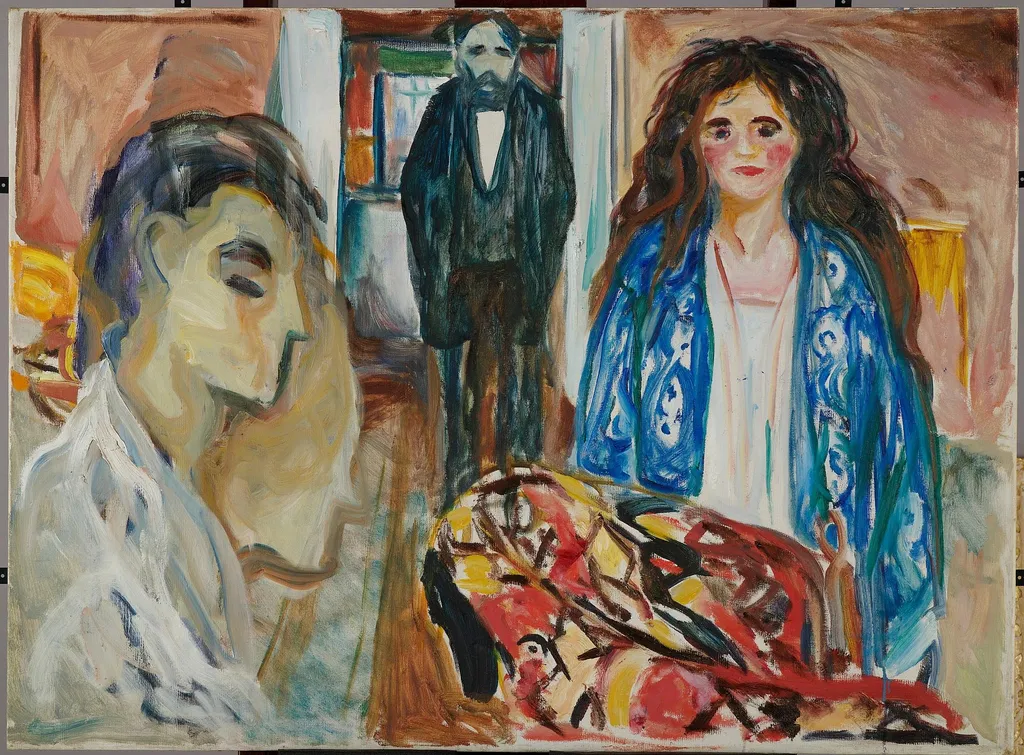
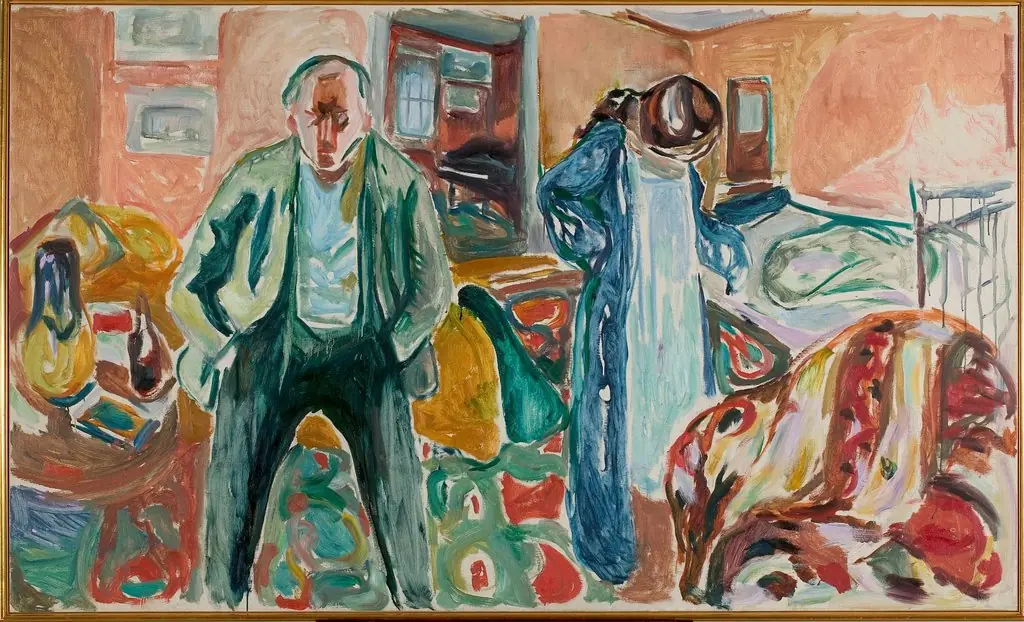
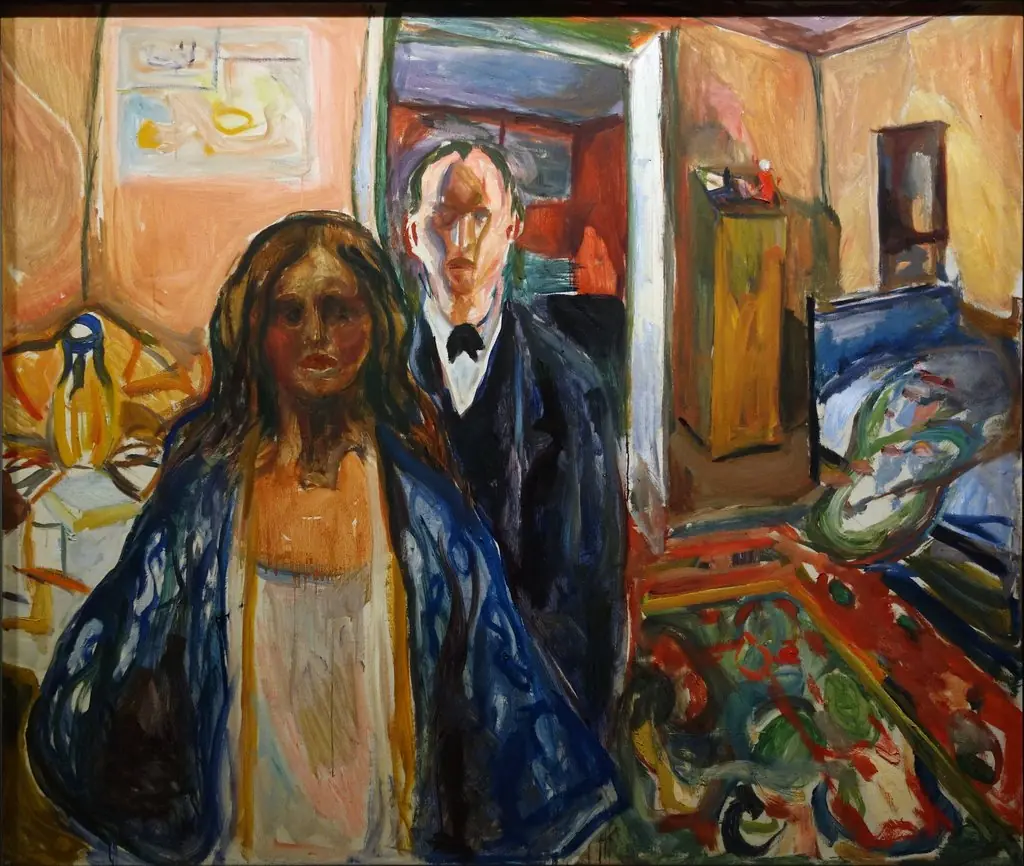
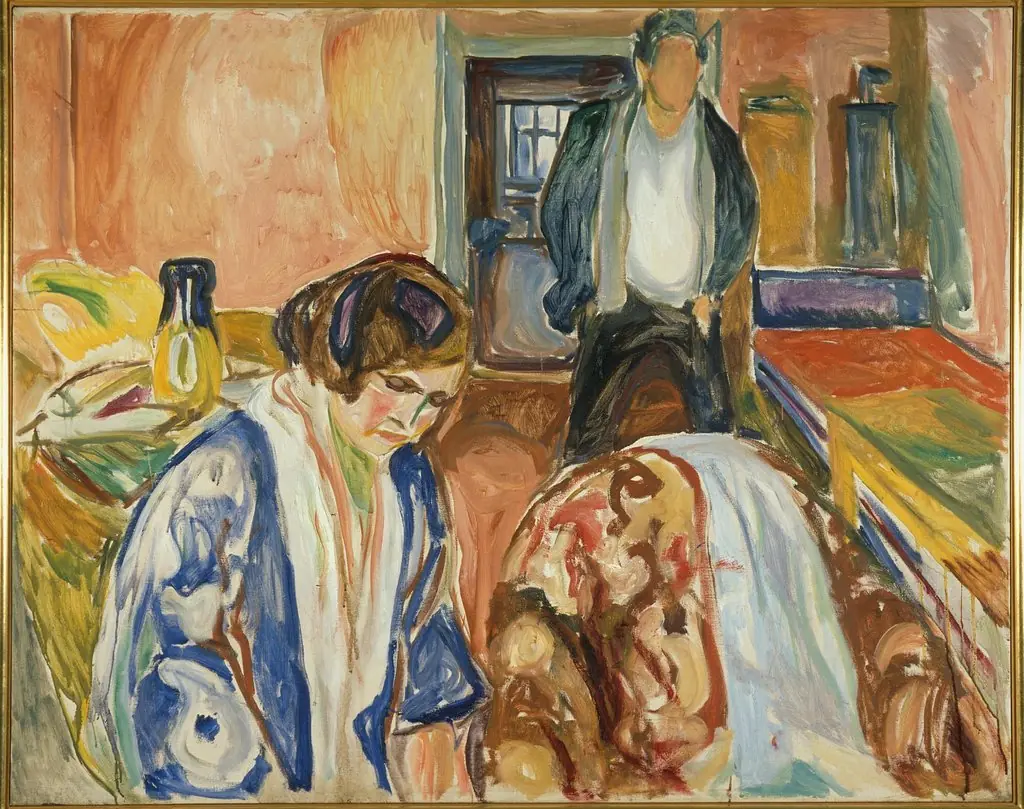
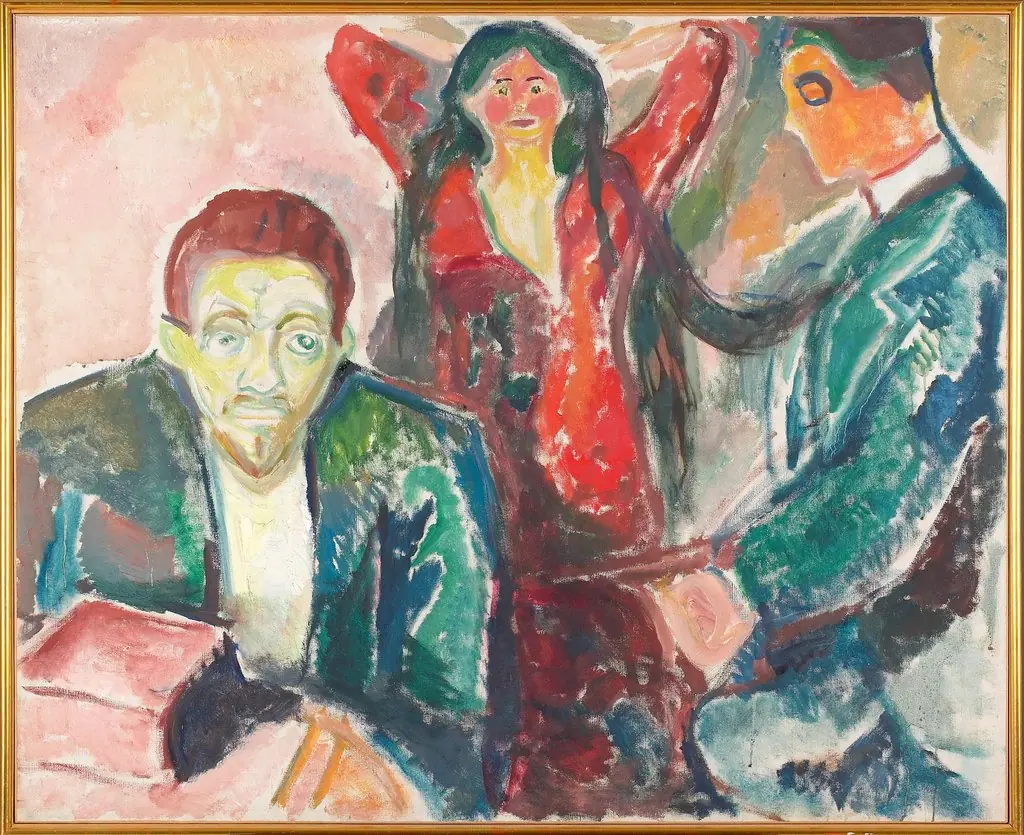
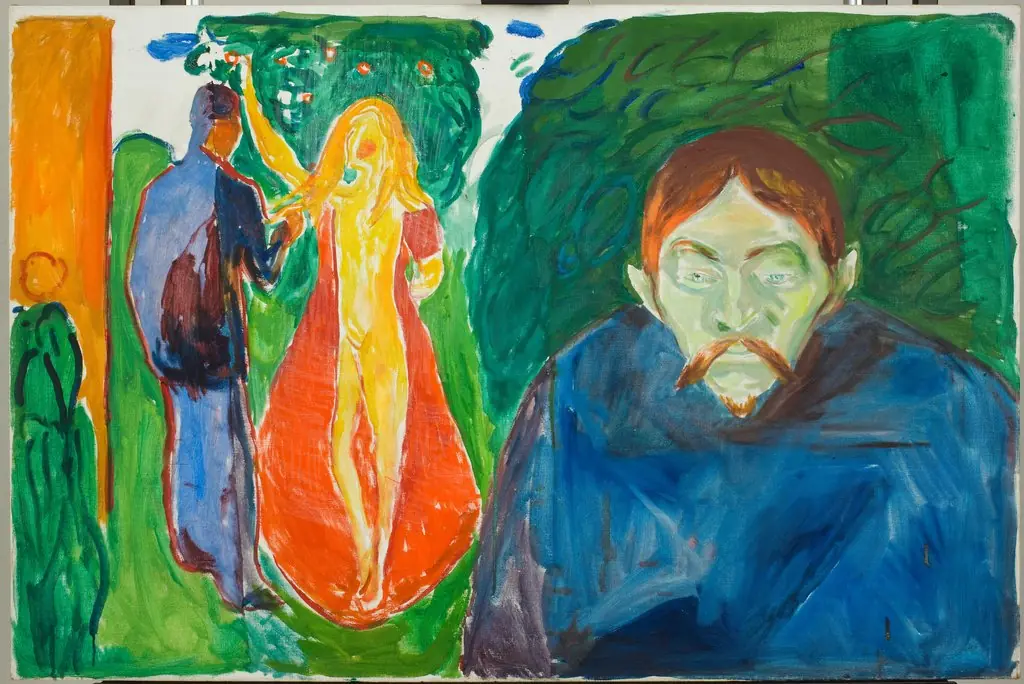
The Artist and his Model. Jealousy-Theme is an oil painting by the Post-Impressionist artist Edvard Munch. It dates from 1919 and is held in the collection of the Munch Museum.
About this work
Overview
Painted in 1919 by Norwegian artist Edvard Munch, this oil-on-canvas work explores emotional friction within an artistic relationship. It features three figures in a confined interior, their postures and gazes suggesting unspoken conflict. The painting is part of the Munch Museum’s permanent collection, reflecting the artist’s sustained interest in psychological states and interpersonal tension.
Subject & Meaning
The title explicitly links the composition to jealousy, framing the studio as a space where personal and creative boundaries blur under emotional strain.
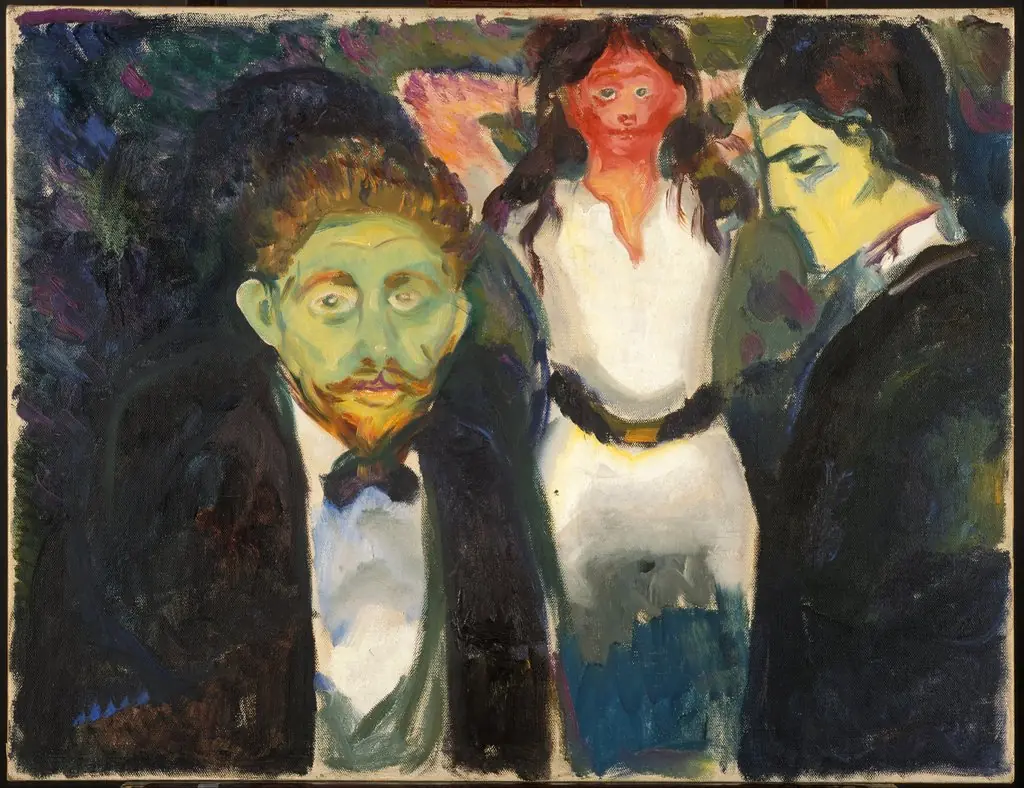
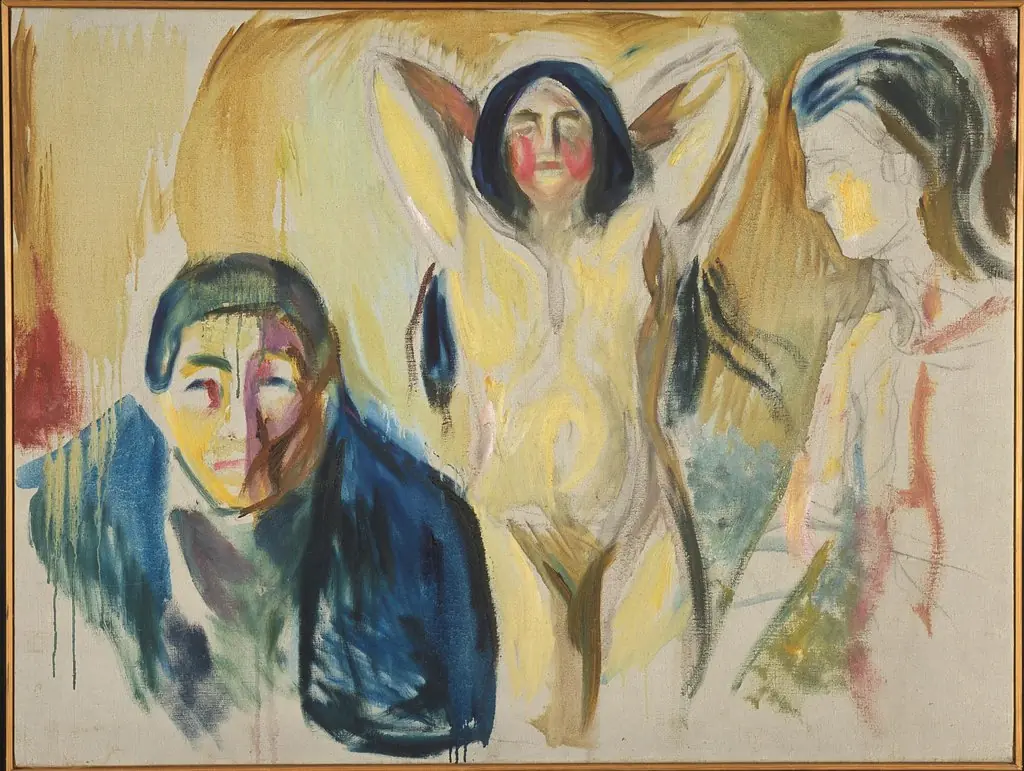
The scene centers on a triangular dynamic between the artist, a cloaked observer, and a female model. The man’s averted gaze and the figure’s watchful stance imply surveillance and resentment, while the model’s composed expression contrasts with the surrounding unease. The title explicitly links the composition to jealousy, framing the studio as a space where personal and creative boundaries blur under emotional strain.
Technique & Style
Munch employs thick, textured brushwork characteristic of impasto, building surfaces that vibrate with emotional intensity. Colors—deep greens, muted flesh tones, and a striking blue dress—clash without harmony, amplifying psychological dissonance. The rough handling of paint and compressed spatial depth reject naturalism, prioritizing inner feeling over external accuracy.
History & Provenance
The painting was completed during Munch’s later years, a period marked by introspection and recurring themes of isolation. It depicts Annie Fjeldbu, a model and acquaintance, whose presence in his work coincided with personal upheavals. The piece remained in Munch’s possession until his death, later entering the Munch Museum’s collection as part of his bequest to Norway.
Context
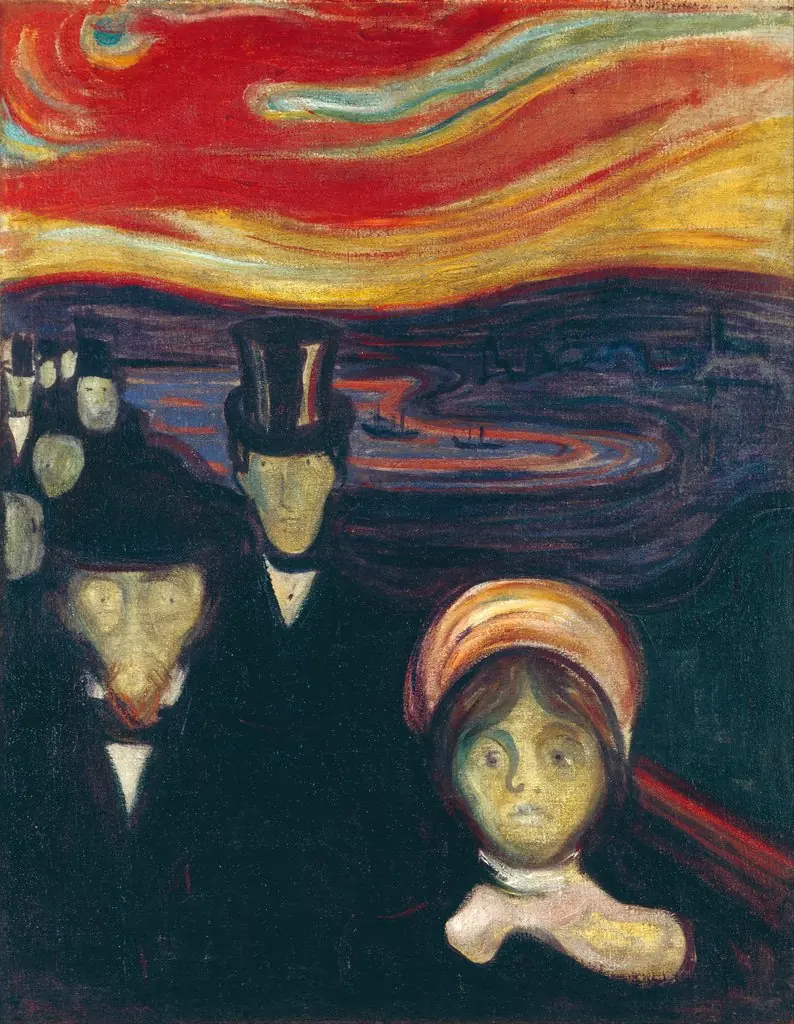
Created after World War I, the work reflects a broader cultural shift toward psychological realism in art. Munch, long preoccupied with anxiety and desire, revisited domestic and artistic relationships with renewed intensity. The painting aligns with his broader exploration of how emotional states distort perception, continuing themes from earlier works like 'The Scream.'
Legacy
Though less widely exhibited than his most famous pieces, this painting remains a key example of Munch’s mature style—where form and color serve emotional truth over narrative clarity. It contributes to the understanding of his late-period focus on interpersonal dynamics, influencing later artists who sought to visualize psychological complexity through expressive brushwork and symbolic composition.
Own this work as a print
Artist & collection
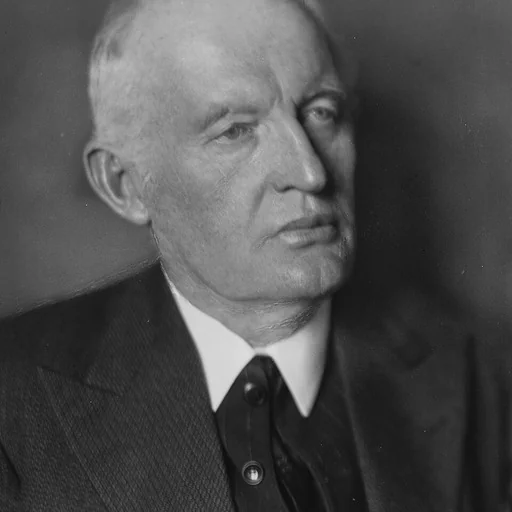
Artist
Edvard Munch ( MUUNK; Norwegian: ; 12 December 1863 – 23 January 1944) was a Norwegian painter.