Artwork
Nightingale Monument
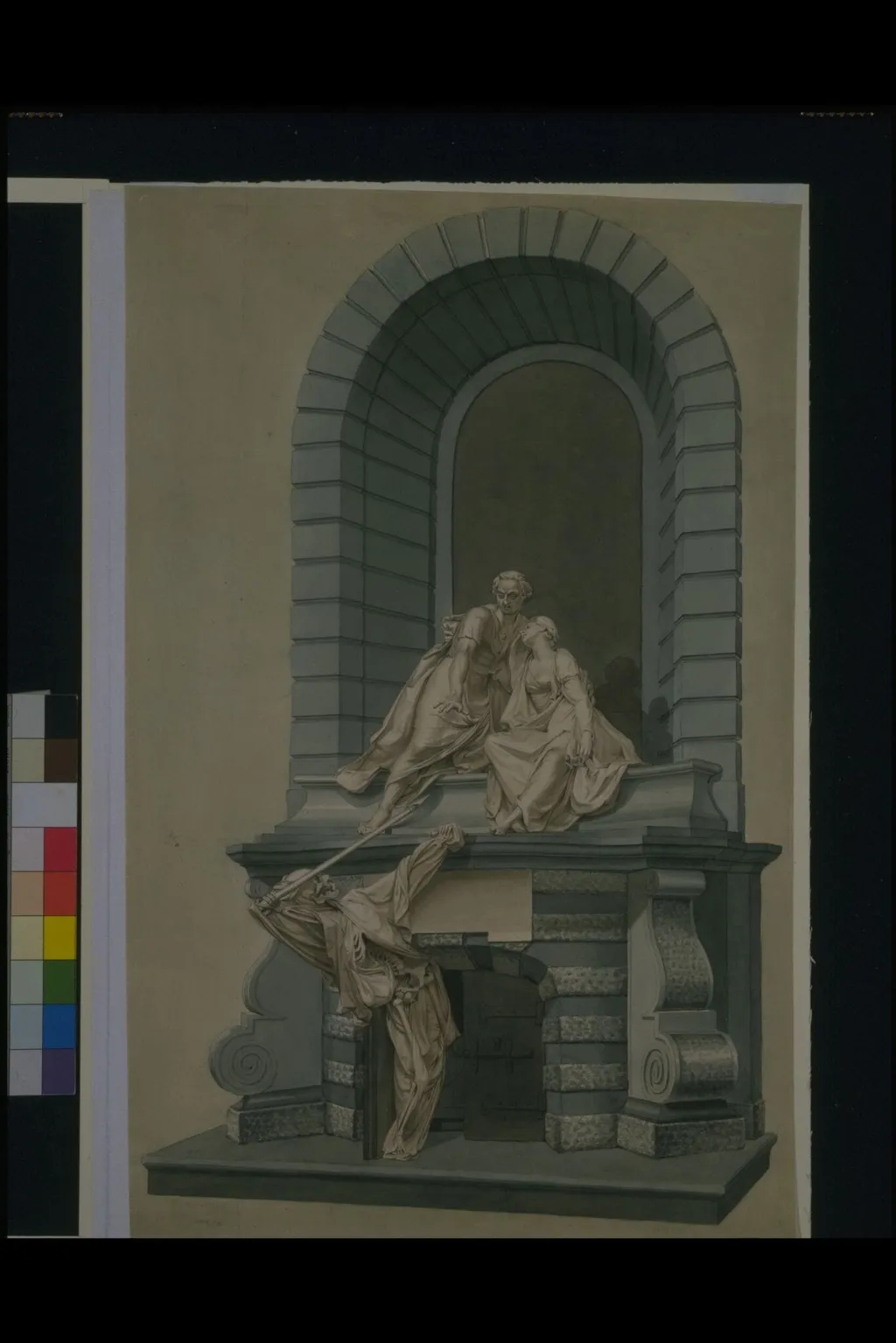
Nightingale Monument is a watercolor work on paper by the British Romanticist artist Edward Burney. It dates from 1800 and is held in the collection of the Victoria and Albert Museum.
About this work
Overview
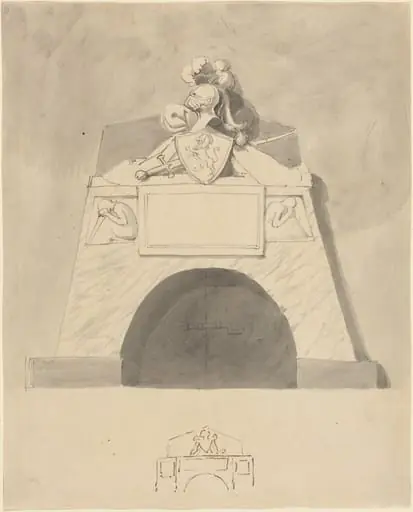
The painting meticulously renders the monument’s sculpted figures and ornate base, rendered in delicate washes to suggest stone without pigment.
This watercolour by Edward Burney captures the Nightingale Monument in Westminster Abbey, a funerary structure commissioned in 1761 to commemorate Lady Elizabeth Nightingale, who died in 1731. The painting meticulously renders the monument’s sculpted figures and ornate base, rendered in delicate washes to suggest stone without pigment. Burney signed the work and included a reference number, indicating its role as a documented study rather than a finished piece.
Subject & Meaning
The monument honors Lady Elizabeth Nightingale and her family, depicting her as a reclining figure supported by a standing allegorical form, likely representing Virtue or Eternity. Below, a kneeling figure—possibly their son Washington—reaches upward in a gesture of mourning or reverence. The inscription contains an error, listing her death year as 1734 instead of 1731. The composition reflects 18th-century funerary symbolism, blending familial remembrance with classical ideals of virtue and loss.
Technique & Style
Burney employed transparent watercolour washes to simulate the texture and depth of carved stone, using subtle gradations of tone to suggest volume and shadow. The figures are rendered with soft edges and minimal line work, avoiding harsh contours. The background is left unadorned, focusing attention on the monument’s form. The precision of the shading and the restraint in color reflect a topographical approach, typical of architectural studies of the period.
History & Provenance
The monument was erected in 1761 in St Michael’s Chapel, north transept of Westminster Abbey, for Lady Elizabeth Nightingale and her husband, Joseph Gascoigne Nightingale, who died in 1758. Their son Washington is also commemorated. Burney’s watercolour likely dates from the late 18th century, possibly created as part of a series documenting abbey monuments. Its survival suggests it was retained within the artist’s circle or collected by an antiquarian.
Context
During the 18th century, watercolours were increasingly used by artists and antiquarians to record architectural and sculptural details of historic sites. Burney’s work aligns with this trend, serving as both documentation and artistic interpretation. The Nightingale Monument itself reflects the era’s taste for allegorical funerary art, blending classical motifs with personal commemoration, a practice common among the British gentry.
Legacy
Burney’s watercolour remains a valuable record of the monument’s appearance before potential weathering or restoration. While the monument itself is not widely known outside architectural circles, the painting contributes to the broader understanding of how 18th-century artists engaged with heritage sites. It exemplifies the quiet, methodical documentation that underpinned antiquarian scholarship of the time.
Artist & collection
Artist
Edward Burney’s watercolors feel like overheard gossip—quick, precise, and a little mischievous.

![Designs for a Monument [recto and verso], by John Flaxman](https://artifactworldgallery.com/img/john-flaxman--designs-for-a-monument-recto-and-verso--99d236b9666f8c6a-w320.webp)