Artwork
Designs for a Monument [recto and verso]
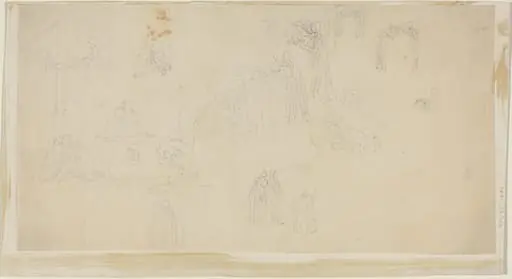
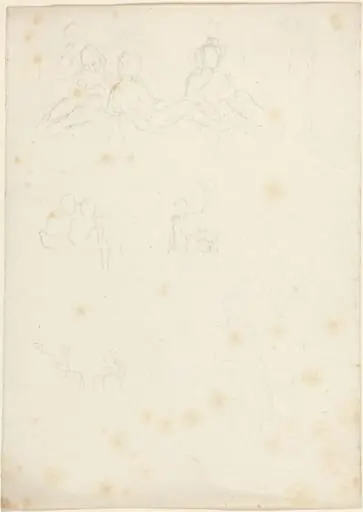
![Designs for a Monument [recto and verso], by John Flaxman, graphite, 1790](https://artifactworldgallery.com/img/john-flaxman--designs-for-a-monument-recto-and-verso--99d236b9666f8c6a-w1024.webp)
Designs for a Monument [recto and verso] is a graphite drawing by the Romanticist artist John Flaxman. It dates from 1790 and is held in the collection of the National Gallery of Art.
About this work
Overview
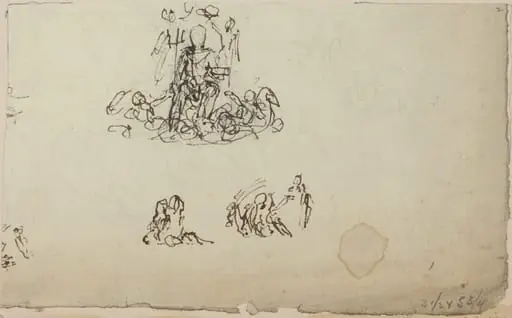
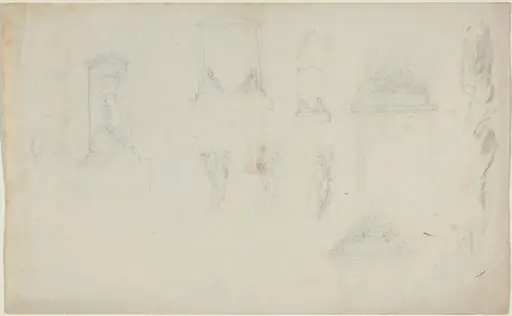
Designs for a Monument, created by John Flaxman in 1790, is a graphite drawing featuring two sides (recto and verso) that likely explore sculptural concepts for funerary monuments.
Subject & Meaning
The recto side depicts three figures in quick, loose graphite sketches: two tall, robed figures on pedestals holding cross-like objects, and a smaller, seated, cloaked figure with an arm raised. These compositions may represent explorations of memorial or commemorative sculpture designs.
Technique & Style
Executed in light, loose graphite lines, the drawing reflects a prioritization of conceptual exploration over detailed finish, aligning with the expressive tendencies of the late 18th-century artistic landscape.
History & Provenance
Created during Flaxman's established career, following his training with Josiah Wedgwood and formative time in Rome, this work exemplifies his Neoclassical leanings and his role as a prominent British and European artist of the period.
Context
While often associated with Neoclassicism due to Flaxman's style, the drawing's emphasis on expressive linearity and conceptual sketching also touches on the burgeoning Romantic era's values of emotional and thematic exploration.
Legacy
As part of Flaxman's extensive output of monument designs, this work contributes to the broader legacy of Neoclassical sculpture in Britain and Europe, though its direct influence or exhibition history is not specified.
Artist & collection
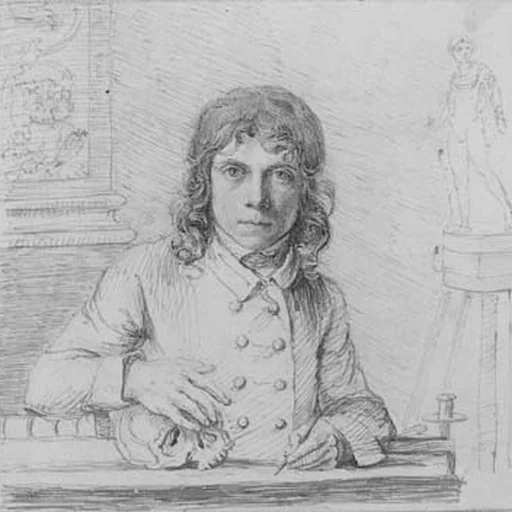
Artist
John Flaxman (6 July 1755 – 7 December 1826) was an English sculptor and draughtsman who was a leading figure in British and European Neoclassicism.

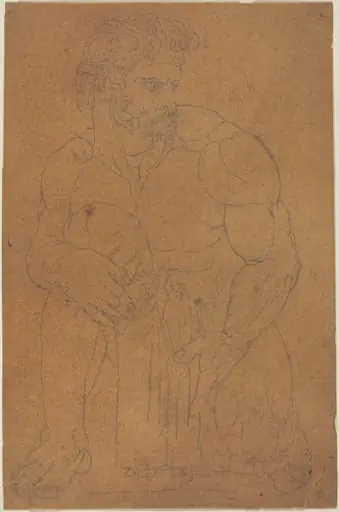
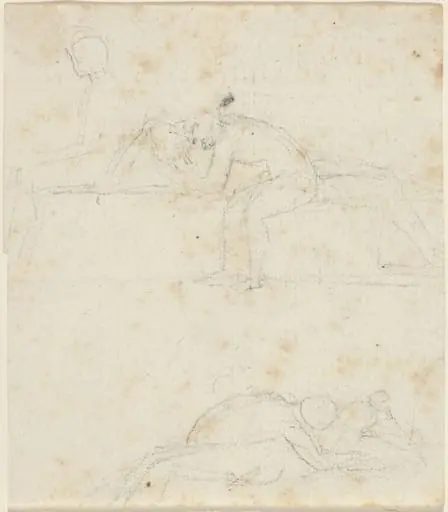
 Studies for a Monument
 Designs for Monuments
![Designs for a Monument to Sir William Jones (?) [recto and verso], by John Flaxman](https://artifactworldgallery.com/img/john-flaxman--designs-for-a-monument-to-sir-william-jones-recto-and-verso--3c78a3064cfa399d-w320.webp) Designs for a Monument to Sir William Jones (?) [recto and verso]
Designs for a Monument to Sir William Jones (?) [recto and verso] Design for Monument or Metalwork
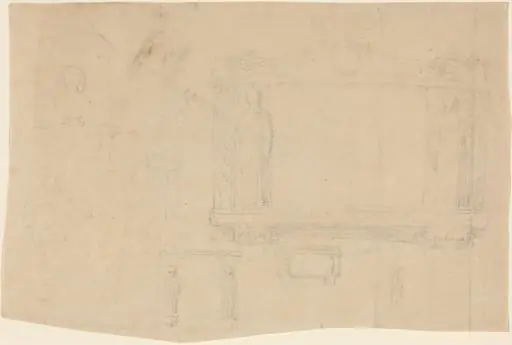 Designs for Monuments
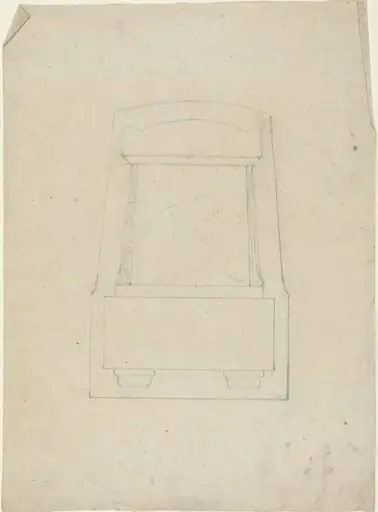 Design for a Monument
![Study for a Monument to a Clergyman [recto and verso], by John Flaxman](https://artifactworldgallery.com/img/john-flaxman--study-for-a-monument-to-a-clergyman-recto-and-verso--c5e3374976ecf5f9-w320.webp) Study for a Monument to a Clergyman [recto and verso]
Study for a Monument to a Clergyman [recto and verso]![Designs for Monuments [recto and verso], by John Flaxman](https://artifactworldgallery.com/img/john-flaxman--designs-for-monuments-recto-and-verso--d8870bd37cddf1cb-w320.webp) Designs for Monuments [recto and verso]
Designs for Monuments [recto and verso]![Studies for a Monument with the Crowning of a Figure [recto and verso], by John Flaxman](https://artifactworldgallery.com/img/john-flaxman--studies-for-a-monument-with-the-crowning-of-a-figure-recto-a--20bffea3c9de8b94-w320.webp) Studies for a Monument with the Crowning of a Figure [recto and verso]
Studies for a Monument with the Crowning of a Figure [recto and verso]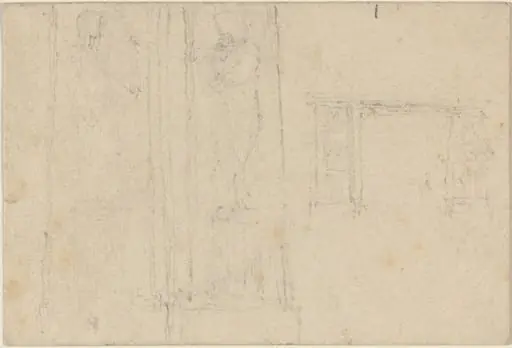 Designs for a Monument
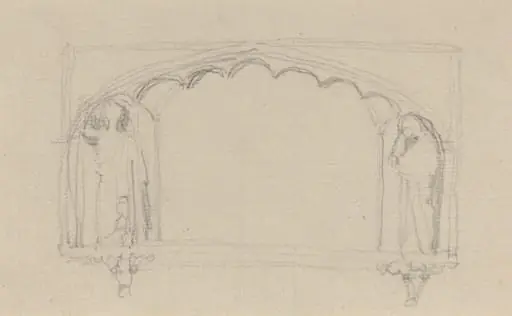 Sketch for a Gothic Monument (the Simcoe Monument?)