Artwork
The Senses: Touch (after Boucher)
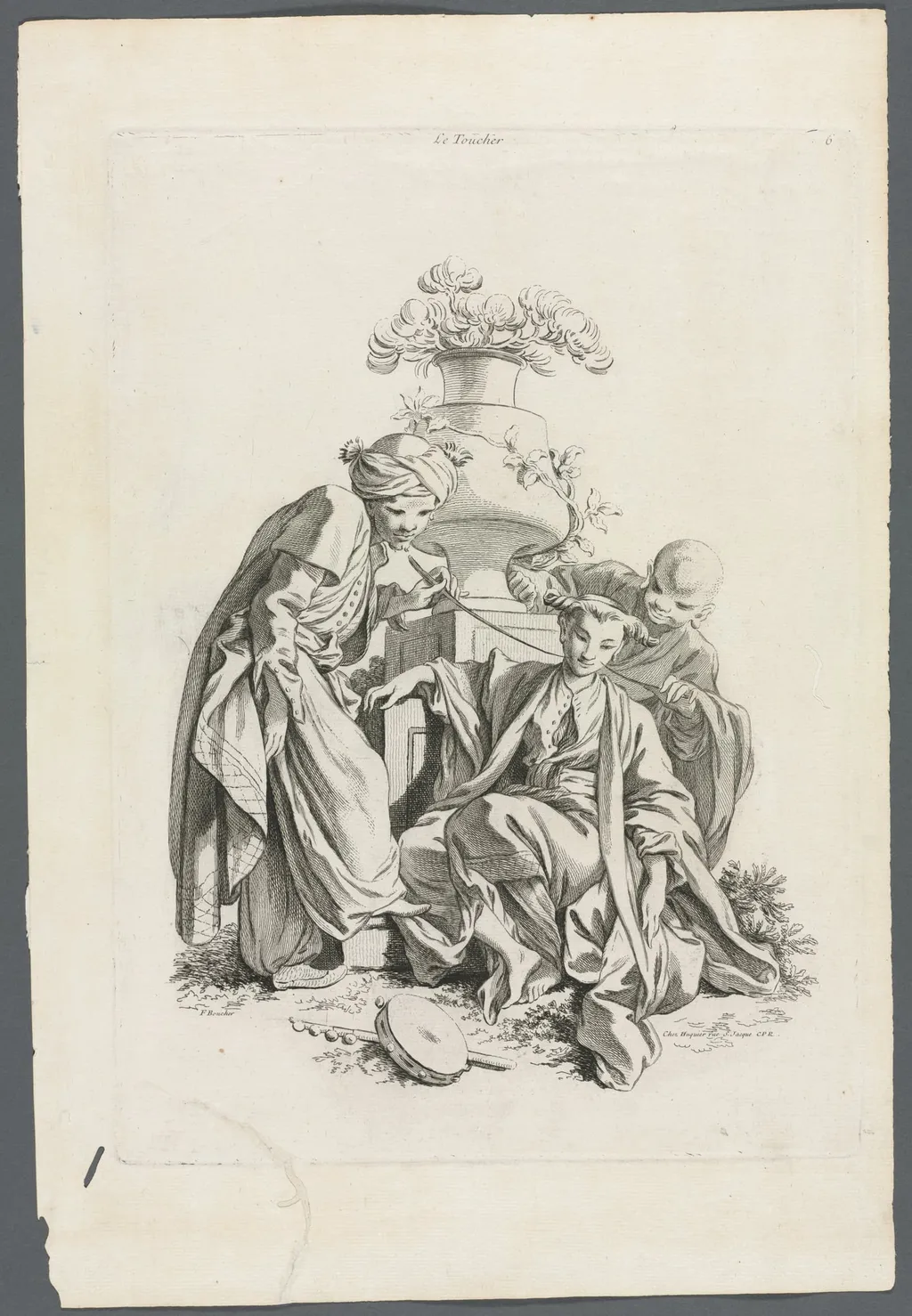
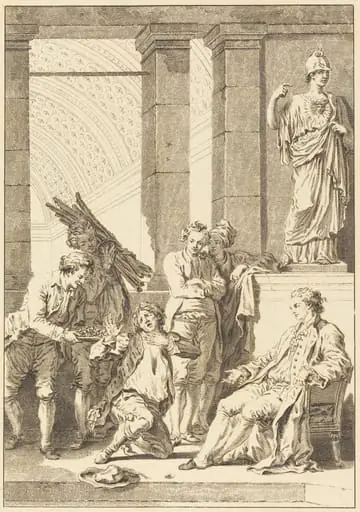
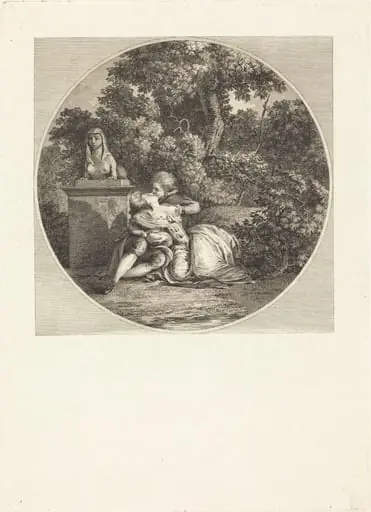
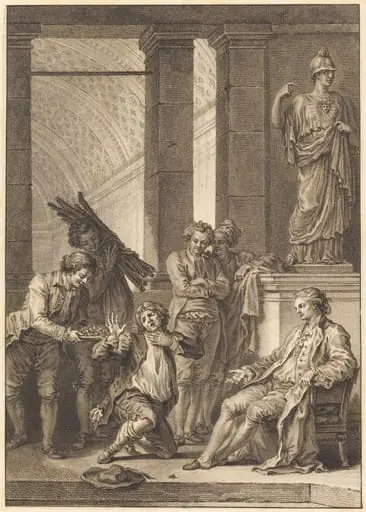
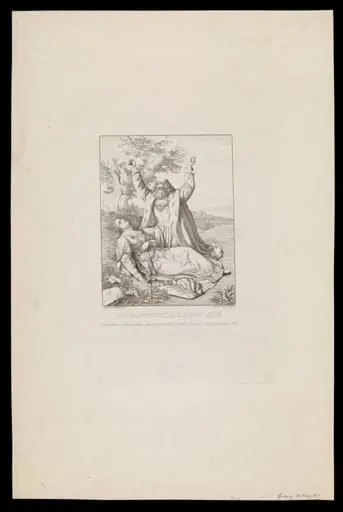
The Senses: Touch (after Boucher) is a print by the Baroque artist Gabriel Huquier. It dates from 1704 and is held in the collection of the Cleveland Museum of Art.
About this work
Overview
The work is currently held in the collection of The Cleveland Museum of Art, where it serves as an example of 18th-century French printmaking practices.
This black-and-white print, attributed to Gabriel Huquier around 1704, is a reproductive engraving inspired by François Boucher’s compositions. It depicts a quiet domestic scene in a garden setting and was produced as part of a series exploring the five senses. The work is currently held in the collection of The Cleveland Museum of Art, where it serves as an example of 18th-century French printmaking practices.
Subject & Meaning
The scene illustrates the sense of touch through a tender interaction among three figures: an older man in a turban gently guides a seated woman’s hand, while a boy leans in, observing. The gesture suggests a moment of instruction or shared sensation, possibly conveying the transmission of tactile awareness across generations. The calm, intimate arrangement emphasizes quiet connection over theatricality, aligning with the theme’s subtle, personal nature.
Technique & Style
Executed as a line engraving, the print uses fine, controlled strokes to render texture and form in monochrome. The figures are rendered with soft contours and delicate shading, reflecting the Rococo preference for grace and fluidity. The tree’s fluffy branches and the figures’ draped garments echo Boucher’s decorative sensibility, adapted here into a restrained, linear idiom suited to print reproduction.
History & Provenance
Created in the early 18th century, the print was likely produced for a broader audience through commercial print shops in Paris. Gabriel Huquier, a noted engraver and publisher, specialized in reproducing works by popular painters like Boucher. The print entered The Cleveland Museum of Art’s collection through documented acquisitions, preserving its role as a cultural artifact of French visual culture during the Rococo period.
Context
This print belongs to a series representing the five senses, a popular theme in European art since the Renaissance. Such series often blended allegory with everyday life, reflecting Enlightenment interests in human perception and sensory experience. While Baroque art emphasized drama, this work’s intimacy and restraint align more closely with emerging Rococo ideals, favoring elegance and quiet narrative over grandeur.
Legacy
Huquier’s engraving helped disseminate Boucher’s aesthetic beyond paintings and into domestic interiors, influencing how tactile themes were visually codified in print. Though not widely known today, such works contributed to the popularization of sensory allegories in decorative arts and illustrated books, bridging fine art and mass reproduction in the 18th century.
Artist & collection

Artist
Gabriel Huquier (1695–1772) was an entrepreneurial French drawer (artist), engraver, printmaker, publisher, and art collector, who became a pivotal figure in the production of French 18th-century ornamental etchings and engravings

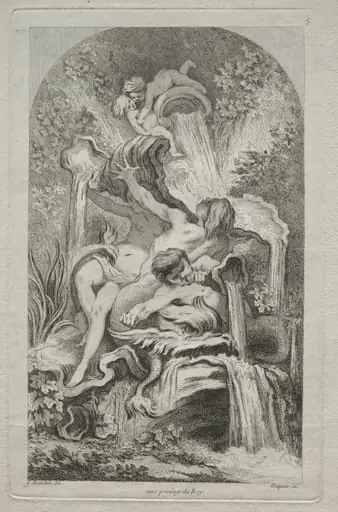 Book of Fountains: No. 5
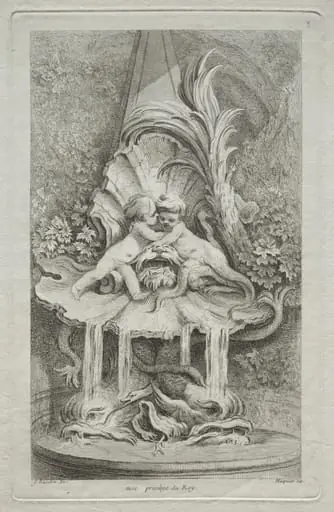 Book of Fountains: No. 3
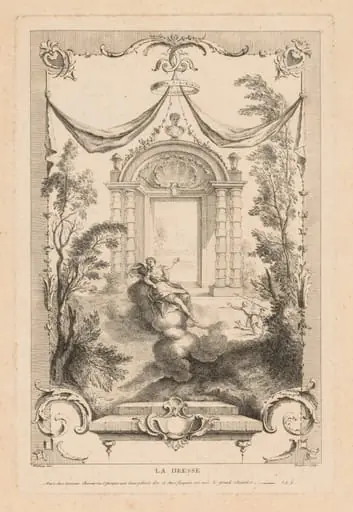 The Goddess, Diana on the Clouds
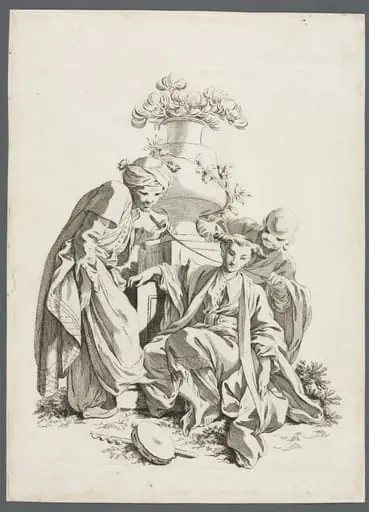 The Senses: Touch (after Boucher)
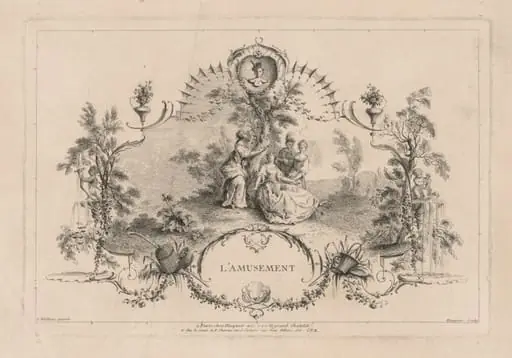 Amusement, Arabesque
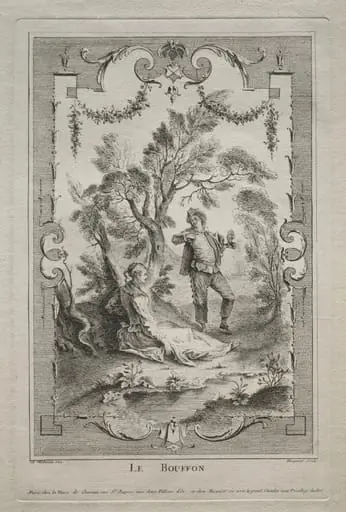 The Buffoon, Arabesque
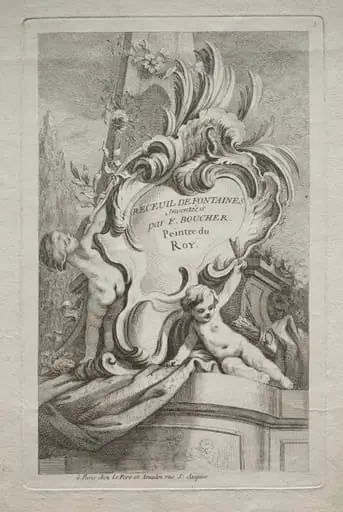 No. 1: Title Page
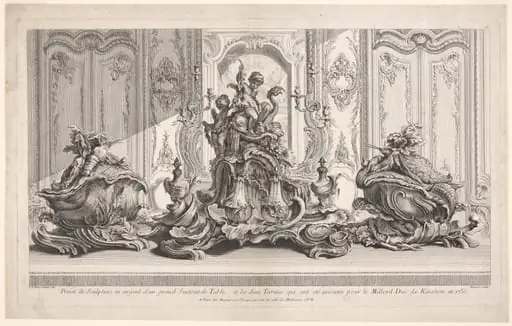 Silver Sculptural Project for a Large Centerpiece and Two Tureens Which Have Been Executed for His Lordship the Duke of Kingston, plate 115 from Works of Juste-Aurèle Meissonier (Oeuvre de Juste-Aurèle Meissonier)