Artwork
The Death of Abel
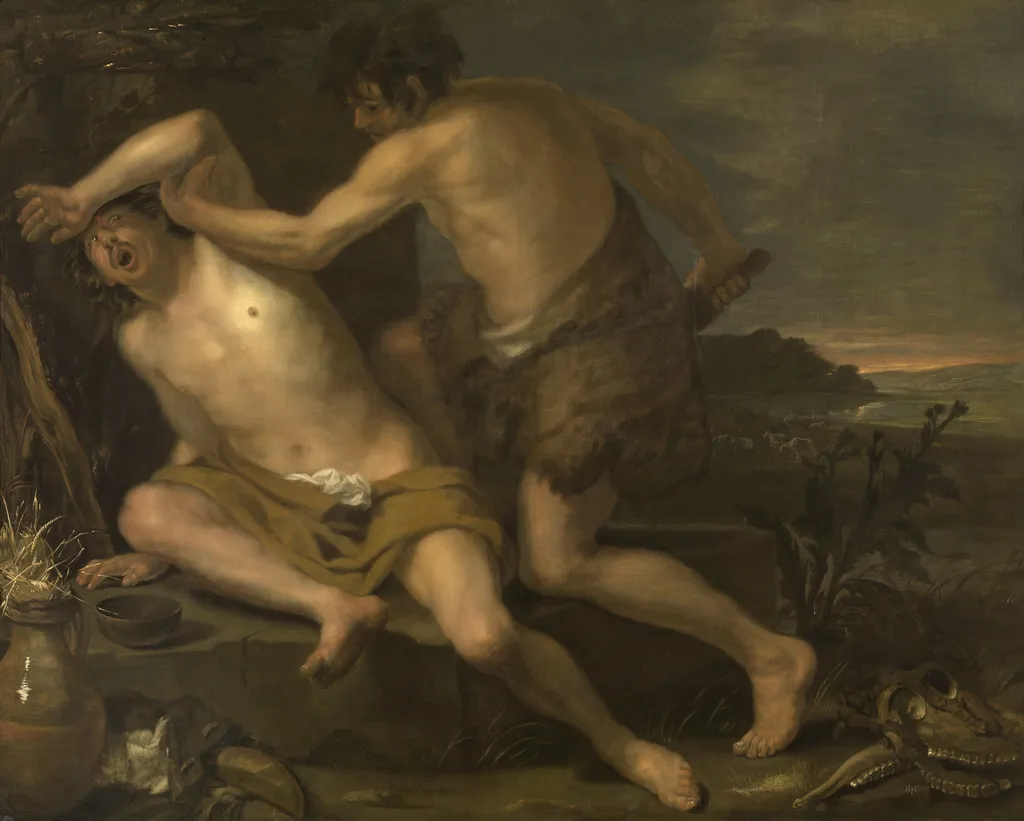
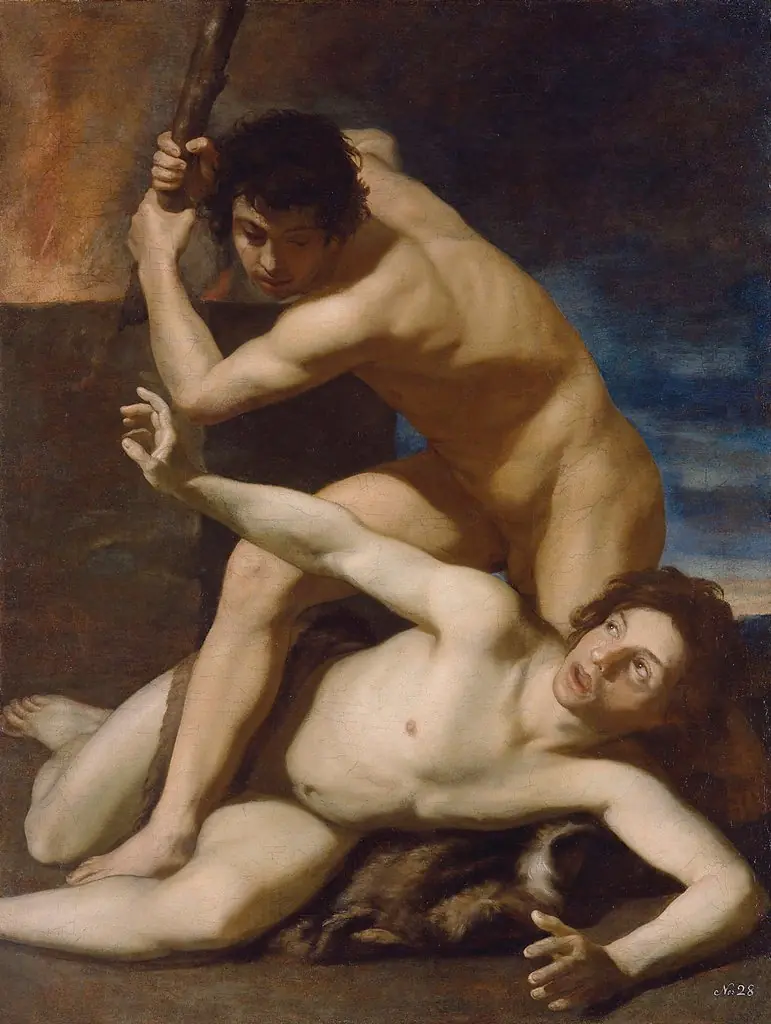
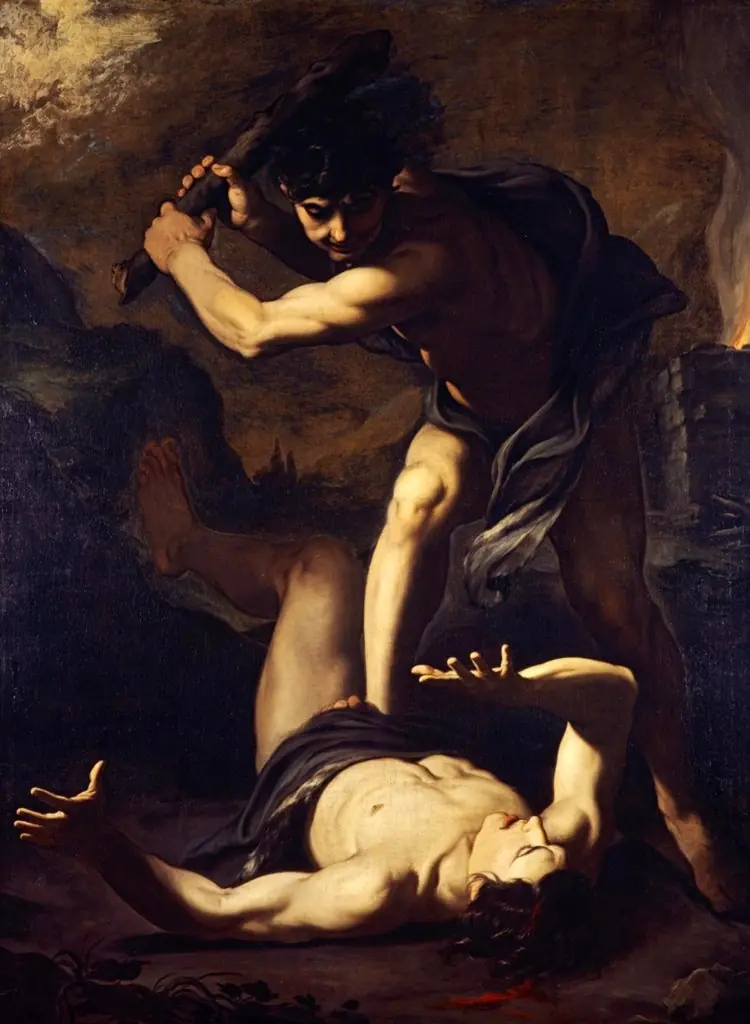
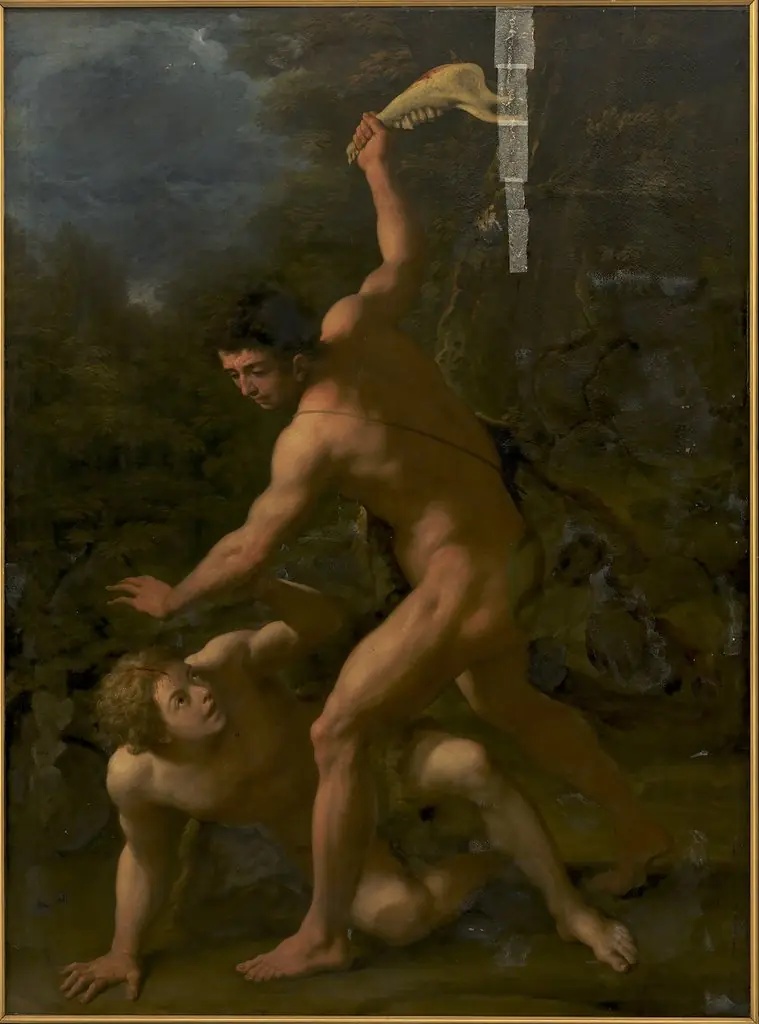
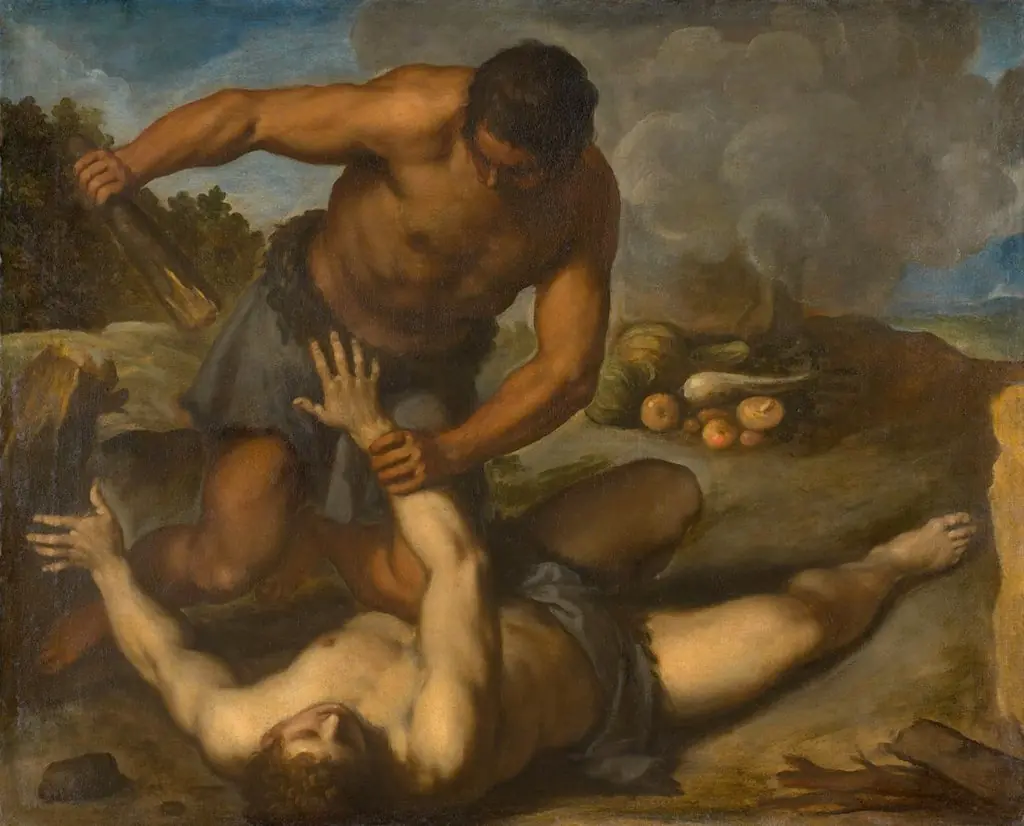
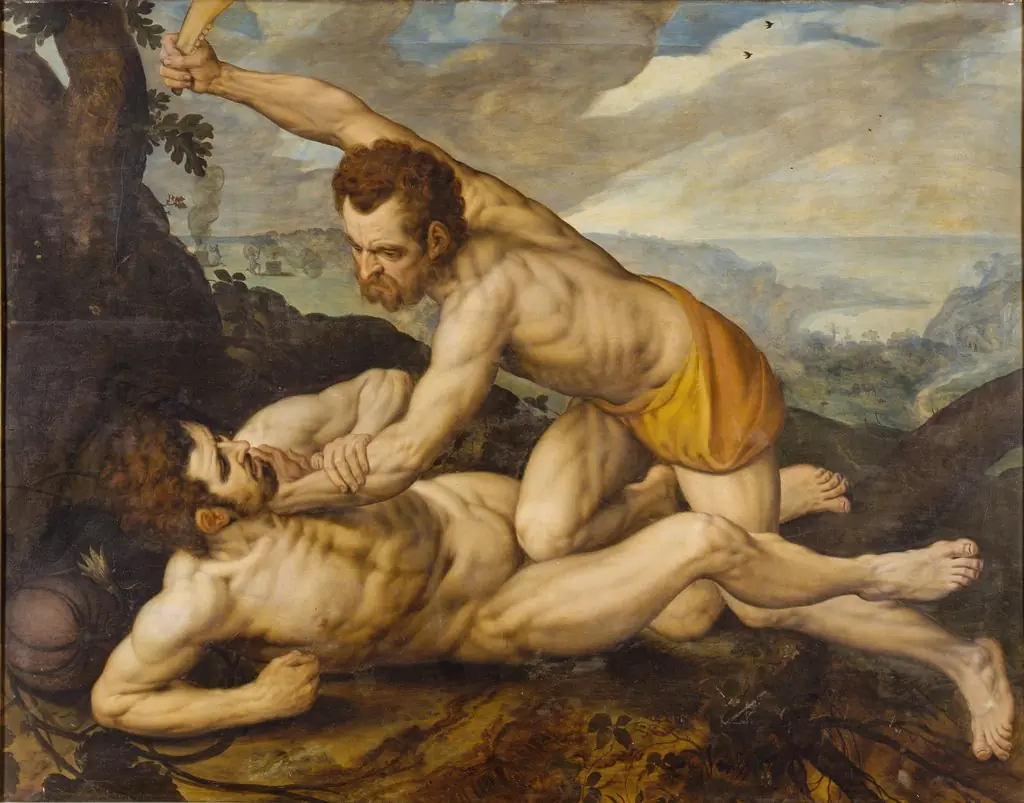
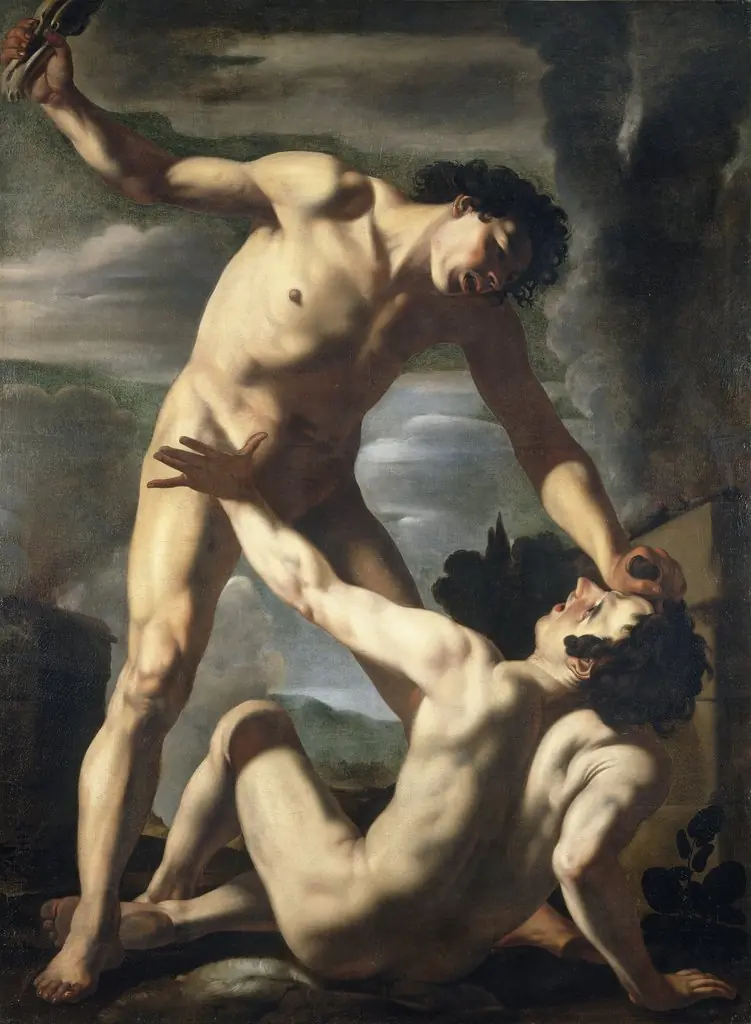
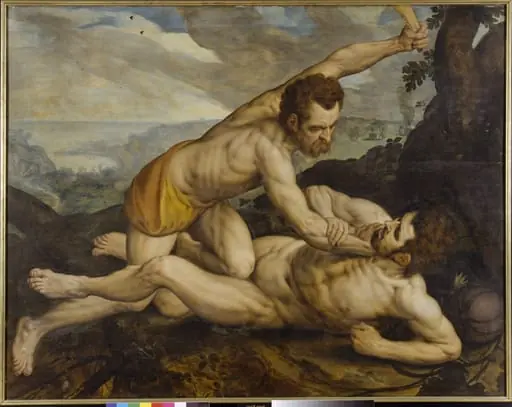
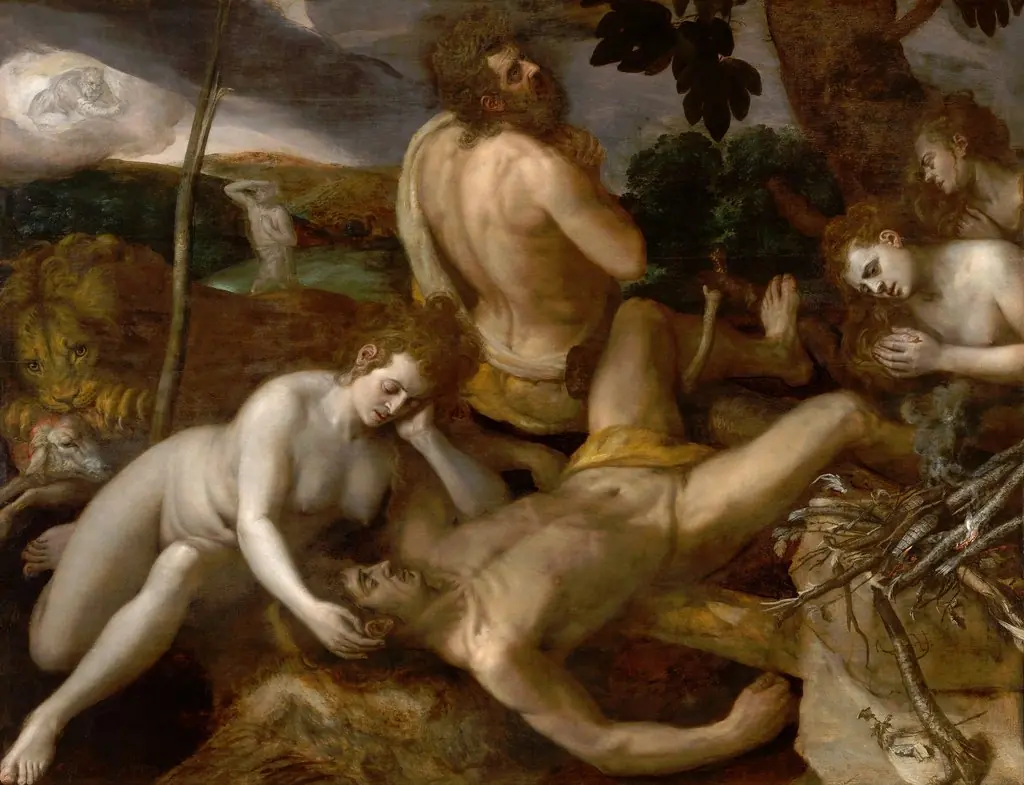
The Death of Abel is an oil painting by the Early Baroque Italian artist Unknown. It dates from 1650 and is held in the collection of the Royal Museum of Fine Arts Antwerp. The work is an oil painting that presents a stark, violent tableau set within a natural landscape.
About this work
Overview
Dark, clouded skies loom above, and a distant body of water recedes into the background, reinforcing the somber tone.
The work is an oil painting that presents a stark, violent tableau set within a natural landscape. A nude male figure stands over a seated companion who appears mortally wounded, clutching a club in his right hand while his left arm is raised in a gesture that suggests shock or grief. Dark, clouded skies loom above, and a distant body of water recedes into the background, reinforcing the somber tone.
Subject & Meaning
The composition suggests a narrative of fraternal conflict, with the standing figure poised as the aggressor and the seated figure rendered as the victim. The raised left hand may convey a moment of realization or lament, inviting viewers to contemplate themes of betrayal, loss, and the consequences of violence.
Technique & Style
The artist employs chiaroscuro to model the figures, using strong contrasts of light and shadow to create depth and emphasize the central drama. A muted palette of dark hues dominates the scene, enhancing the melancholic atmosphere. The handling of oil paint allows for smooth transitions between illuminated flesh and the brooding sky, reinforcing the emotional weight of the moment.
Context
While specific details about the painter and date are not provided, the work aligns with a tradition of biblical or mythological representations of fraternal strife, often rendered in the dramatic, baroque-influenced style that emphasizes emotional intensity and theatrical lighting.
Artist & collection

 Domestic Scene
 Giacomo and Cardinal Marco, investing Andrea, Abbot of San Zeno, with his Benefice
 The Nymph of Fontainebleau
 Portrait of a Woman
 Madonna and Child with Saints in the Enclosed Garden
 Venus and Minerva
 Family Group of Four on Sofa
 Wall painting from Room H of the Villa of P. Fannius Synistor at Boscoreale