Artwork
Saint Agostino from Bulagajo, Perugia (San Agostino dalla parte del Bulagajo, Perugia)
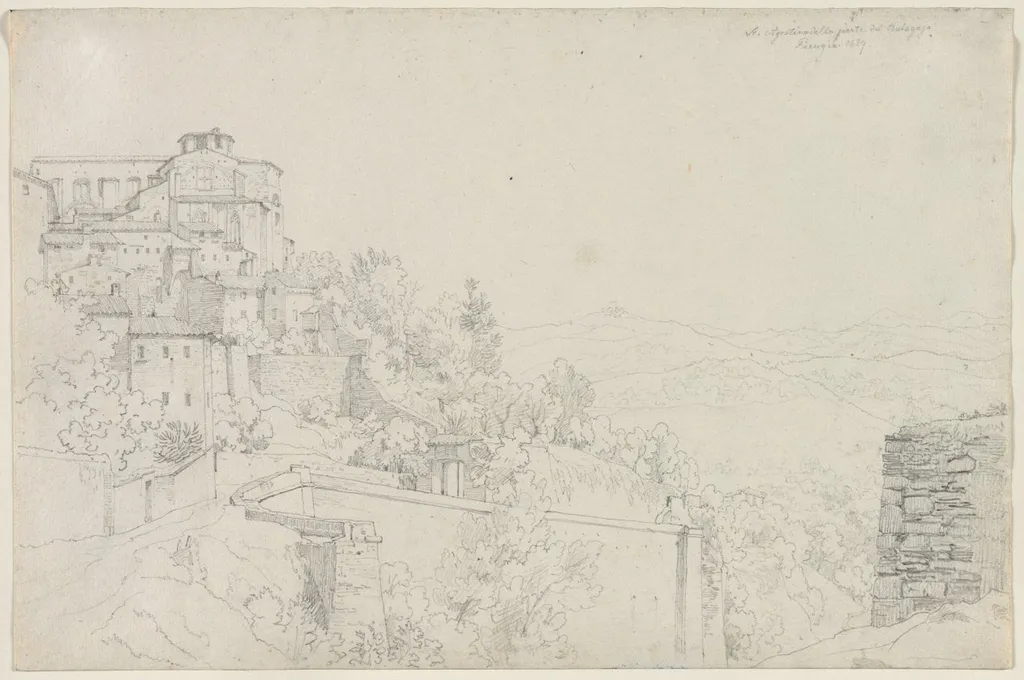
Saint Agostino from Bulagajo, Perugia (San Agostino dalla parte del Bulagajo, Perugia) is a drawing by the Romanticist artist Eduard von Steinle. It dates from 1829 and is held in the collection of the Cleveland Museum of Art.
About this work
This painting shows a scene from Perugia.
It's an early work by the artist, created during his time in Rome. The artist was part of a group that wanted to bring back older styles of art from Germany and Italy.
You can learn more about this style by looking into the work of artist: Edward Jakob von Steinle (Austrian, 1810–1886)
Overview
Steinle, an Austrian artist, adopted the Nazarenes’ disciplined approach to religious subject matter and historical form, which would define his artistic path.
This drawing by Edward Jakob von Steinle was made during his early years in Rome, between 1828 and 1833, shortly after joining the Nazarene movement. It depicts Saint Augustine in a landscape near Perugia, reflecting the group’s dedication to reviving pre-Renaissance artistic values. Steinle, an Austrian artist, adopted the Nazarenes’ disciplined approach to religious subject matter and historical form, which would define his artistic path.
Subject & Meaning
The figure of Saint Augustine, seated contemplatively within a quiet Italian landscape, evokes spiritual introspection. The setting, drawn from the surroundings of Perugia, grounds the saint in a tangible, reverent environment rather than an idealized heavenly space. This alignment of sacred figure with earthly terrain reflects the Nazarenes’ belief in connecting divine themes with authentic, observed nature.
Technique & Style
Steinle employed fine, precise linework and subtle tonal gradations, echoing the clarity and detail of early Renaissance engravings. The composition avoids dramatic lighting or emotional excess, favoring calm balance and restrained expression. These choices reflect the Nazarenes’ rejection of contemporary academic conventions in favor of a more meditative, historically informed aesthetic.
History & Provenance
Created during Steinle’s formative stay in Rome, the drawing emerged from the circle of the Brotherhood of Saint Luke, a group of German-speaking artists who relocated to Italy to study medieval and early Renaissance art. The work remains tied to his early period before he returned to Vienna, where he later became a professor and continued to refine this stylistic approach.
Context
The Nazarenes reacted against Neoclassical formalism by returning to the spiritual intensity and linear clarity of Quattrocento art. Steinle’s engagement with this movement placed him among artists seeking to renew religious imagery through historical study rather than invention. His focus on Saint Augustine aligns with the group’s preference for figures embodying theological depth and moral seriousness.
Legacy
Though less widely known than some of his contemporaries, Steinle’s early works like this drawing illustrate the sustained influence of the Nazarene ideals beyond their initial circle. His commitment to disciplined draftsmanship and sacred narrative informed his later teaching and contributed to the persistence of medievalist aesthetics in 19th-century German-speaking art circles.
Artist & collection
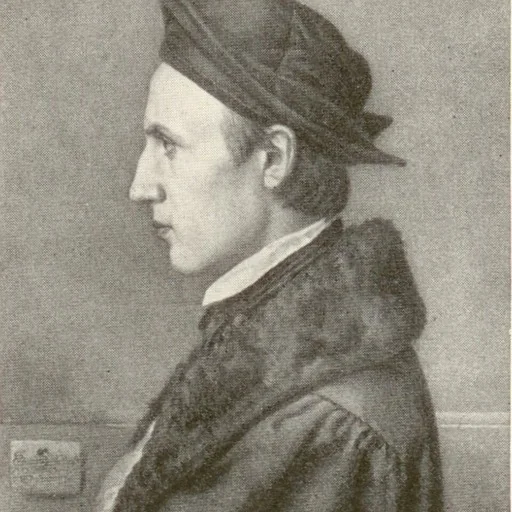
Artist
Eduard von Steinle (2 July 1810 – 16 September 1889) was a painter and a printmaker.

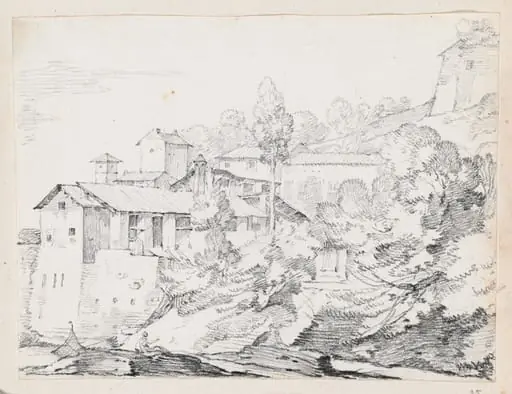 Italian Buildings on a Hillside
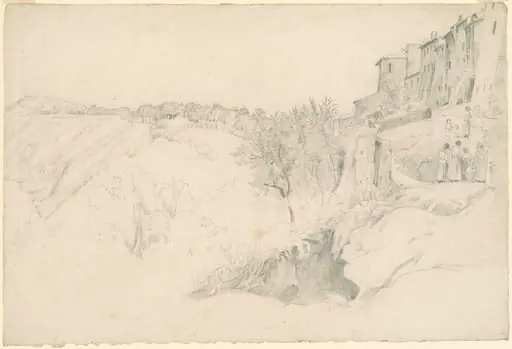 Hillside with Houses and Figures
![Convent of Theokiario [Dochiarion], by Unknown](https://artifactworldgallery.com/img/unknown--convent-of-theokiario-dochiarion--203f17a28859cf34-w320.webp) Convent of Theokiario [Dochiarion]
Convent of Theokiario [Dochiarion]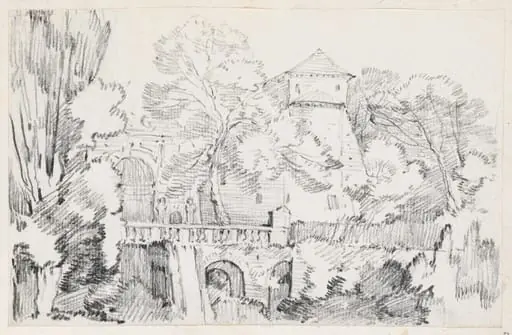 The Water Organ in the Gardens of the Villa d'Este, Tivoli
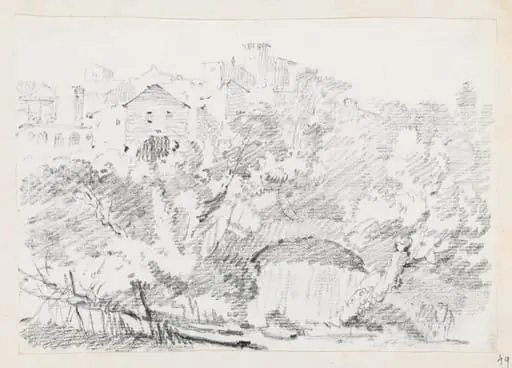 A Waterfall near a Hilltown in Italy
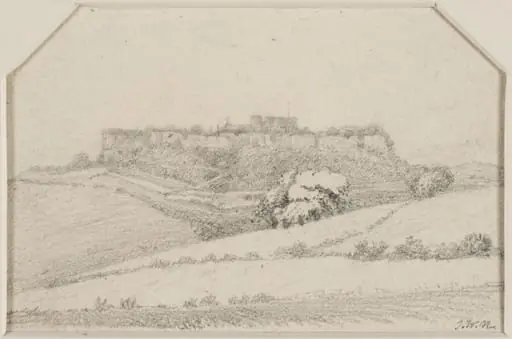 Untitled
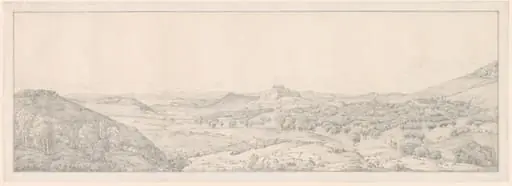 Panorama toward Athens from the Garden of Aphrodite
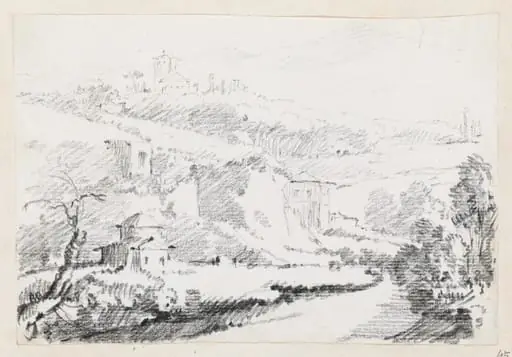 Landscape in the Alban Hills
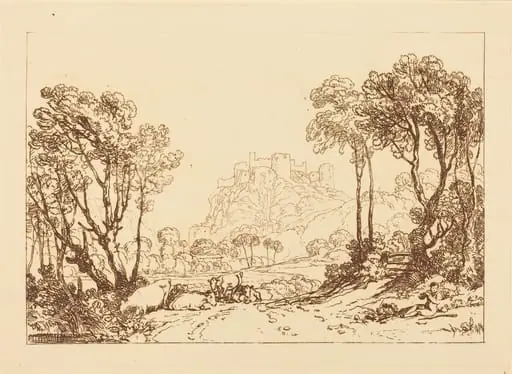 The Castle Above the Meadows
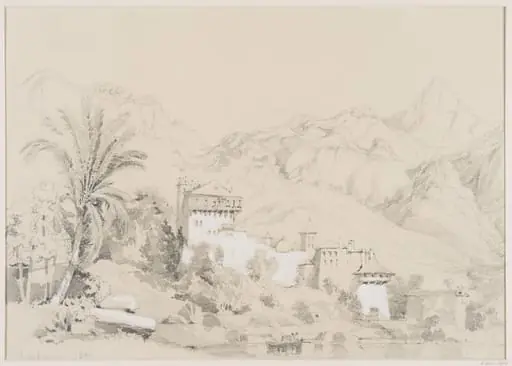 Russikon, 1843
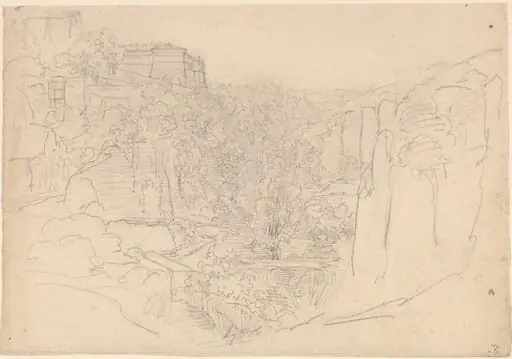 Fortified Castle Above a Narrow Valley
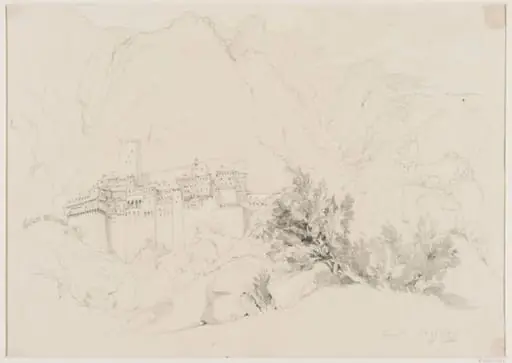 Convent F<sup>t</sup> of Paul, M<sup>t</sup> Athos