Artwork
Copy after the painting The Creation of Eve attributed to Jacobo Torriti in the Upper Church, San Francesco, Assisi.
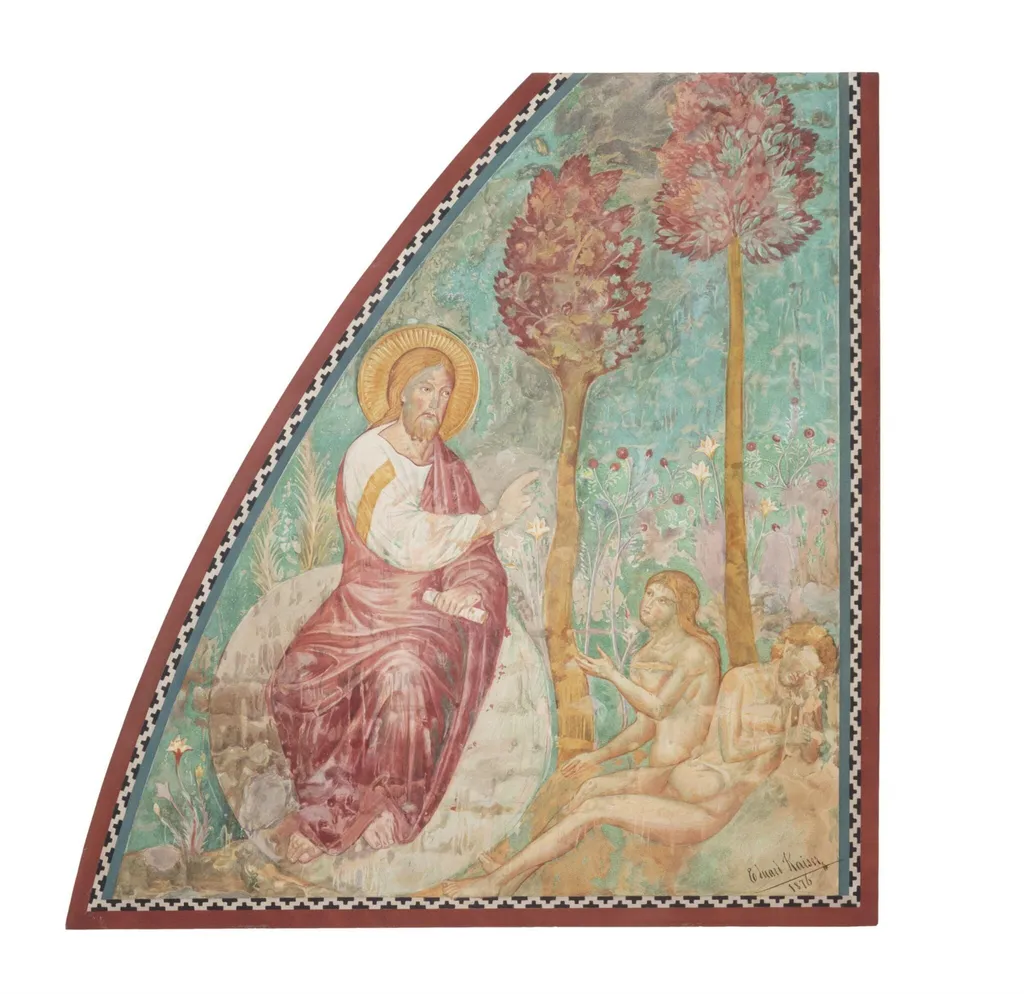
Copy after the painting The Creation of Eve attributed to Jacobo Torriti in the Upper Church, San Francesco, Assisi. is a watercolor work on paper by the Impressionist artist Edward Kaiser. It dates from 1876 and is held in the collection of the Victoria and Albert Museum. This watercolour painting is a 19th-century reproduction of a 13th-century fresco in Assisi’s Upper Church of San Francesco.
About this work
Overview
This watercolour painting is a 19th-century reproduction of a 13th-century fresco in Assisi’s Upper Church of San Francesco.
This watercolour painting is a 19th-century reproduction of a 13th-century fresco in Assisi’s Upper Church of San Francesco. Created by Eduard Kaiser in 1876, it was commissioned by the Arundel Society to document medieval religious art. The work was later displayed at the Victoria and Albert Museum in London between 1996 and 1997, reflecting its role in the Victorian-era movement to preserve and circulate copies of historic artworks.
Subject & Meaning
The scene depicts the biblical moment of Eve’s creation, as described in Genesis. A bearded male figure, identified as God, sits on a rock, holding a flower and wearing a halo. Eve, nude and seated before him, reaches out in response to his gaze. The composition emphasizes divine intention and the moment of life’s first human connection, rendered with quiet solemnity rather than dramatic intensity.
Technique & Style
Kaiser employed fine brushwork and translucent watercolour layers to capture subtle textures in skin, fabric, and foliage. The figures are rendered with naturalistic detail, while the background—pale blue-green with scattered trees and blooms—suggests a serene, symbolic Eden. The style reflects 19th-century academic precision, prioritizing fidelity to the original fresco over expressive interpretation.
History & Provenance
Commissioned by the Arundel Society, a British organization dedicated to documenting medieval art, this watercolour was part of a broader effort to make Italian frescoes accessible to Northern European audiences. Kaiser signed and dated the work in 1876. It entered the V&A’s collection and was exhibited there in 1996–1997 as part of a survey of 19th-century art reproductions.
Context
In the 19th century, institutions like the Arundel Society sought to preserve and disseminate images of deteriorating medieval frescoes through careful copies. Kaiser’s work reflects this scholarly impulse, aligning with Victorian interests in religious art, historical documentation, and the moral authority of early Christian imagery. Such reproductions served educational and devotional purposes before widespread photography.
Legacy
Kaiser’s watercolour remains a testament to the 19th-century practice of art documentation. Though not an original fresco, it preserves visual details of Jacopo Torriti’s lost or faded composition and illustrates how Victorian audiences engaged with medieval religious narratives. It now functions as both a historical record and an artifact of collecting culture.
Artist & collection

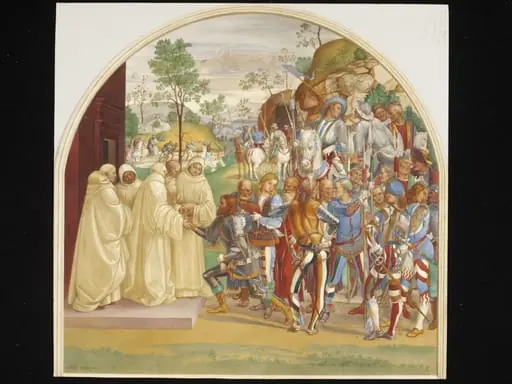 St Benedict and the True King Totila
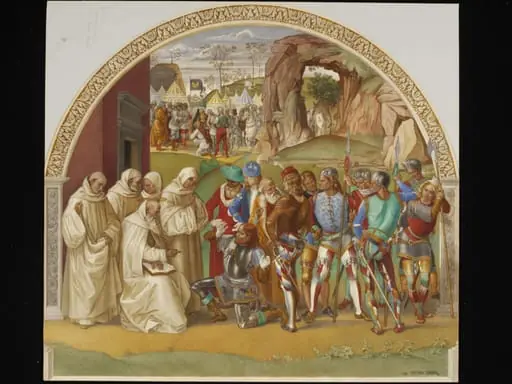 St Benedict and the False King Totila
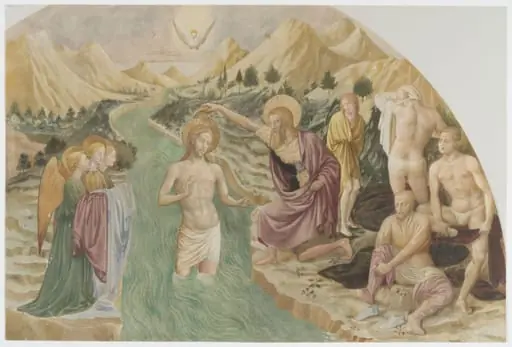 Copy after the painting Baptism of Christ by Masolino in Castiglione d'Olona
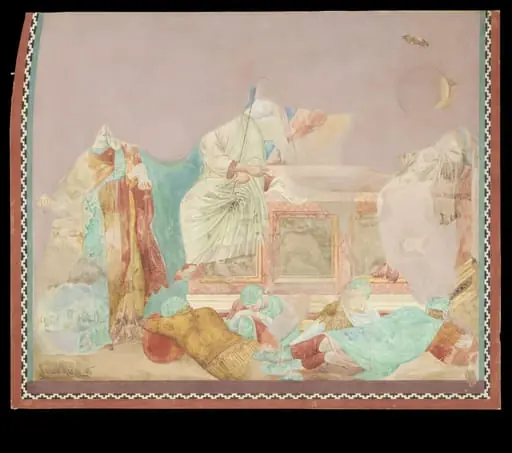 Copy after the painting The Maries at the Sepulchre attributed to the Isaac Master in the Upper Church, San Francesco, Assisi
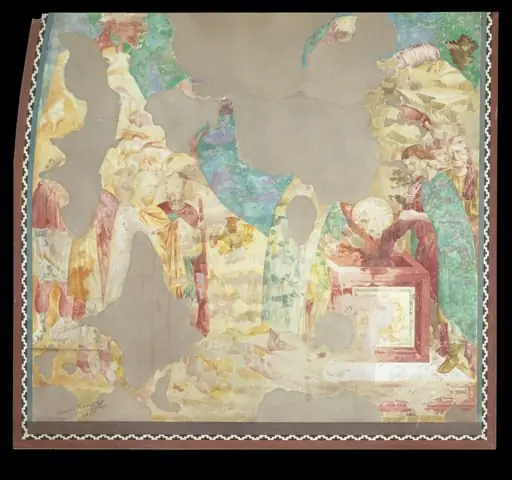 Copy after the painting Joseph and his brothers at the Well attributed to the Isaac Master in the Upper Church, San Francesco, Assisi
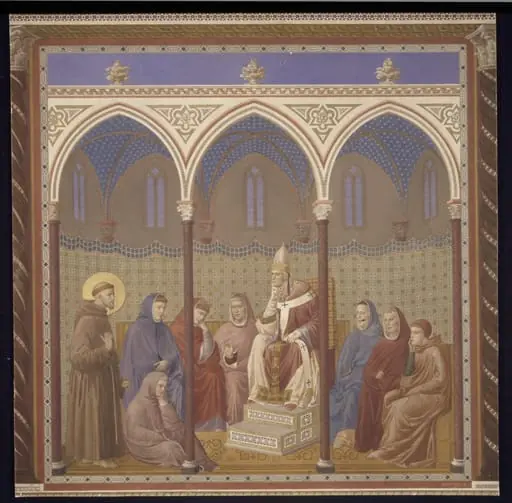 Copy after the painting St Francis before Pope Honorius by the Master of the St Francis cycle in the Upper Church, San Francesco, Assisi
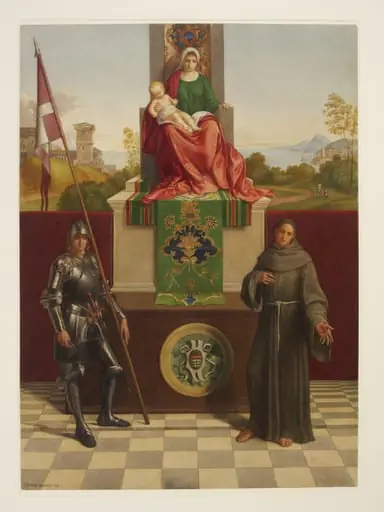 Copy after the painting Virgin and Child with Saints (Castelfranco Altarpiece) by Giorgione in S. Liberale, Castelfranco
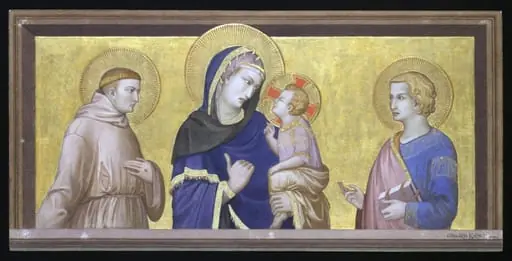 Copy after the painting Virgin and Child with St John and St Francis by Pietro Lorenzetti ??? in the Lower Church, San Francesco, Assisi
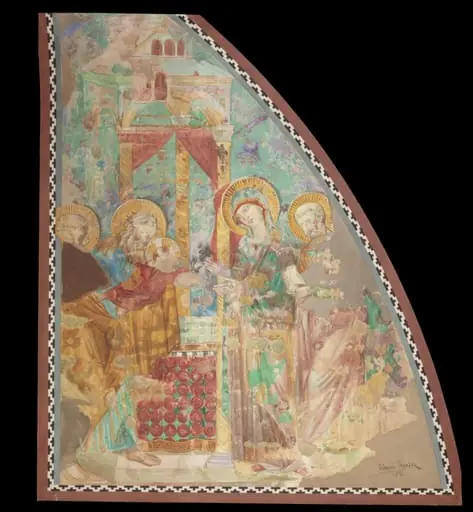 Copy after the painting The Presentation in the Temple attributed to Jacobo Torrit in the Upper Church, San Francesco, Assisi
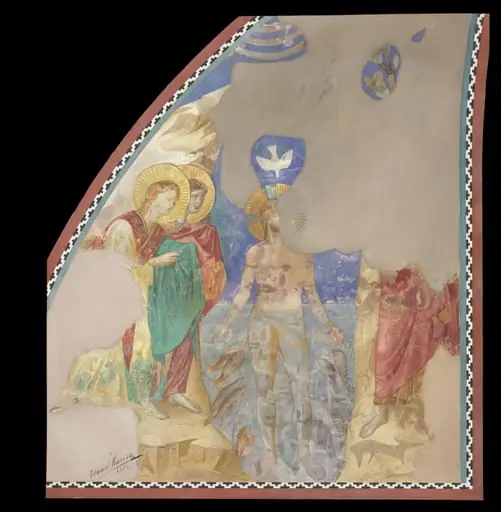 Copy after the painting The Baptism of Christ attributed to the Isaac Master in the Upper Church, San Francesco, Assisi
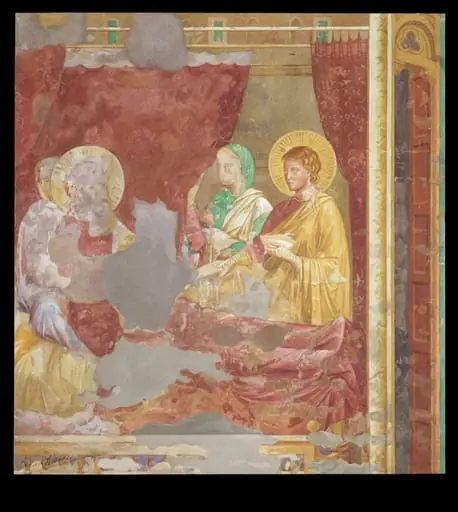 Copy after the painting Isaac blessing Jacob attributed to the Isaac Master in the Upper Church, San Francesco, Assisi.
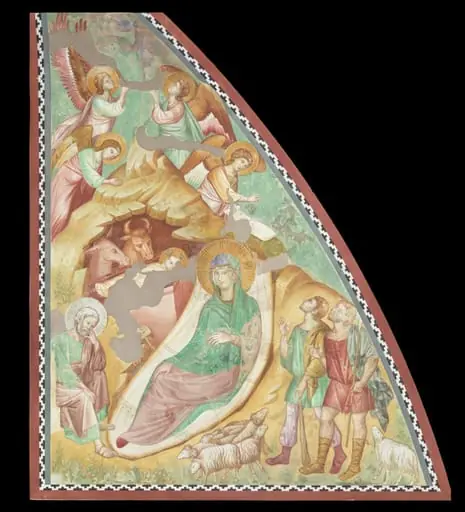 Copy after the painting The Nativity attributed to Jacobo Torriti in the Upper Church, San Francesco, Assisi
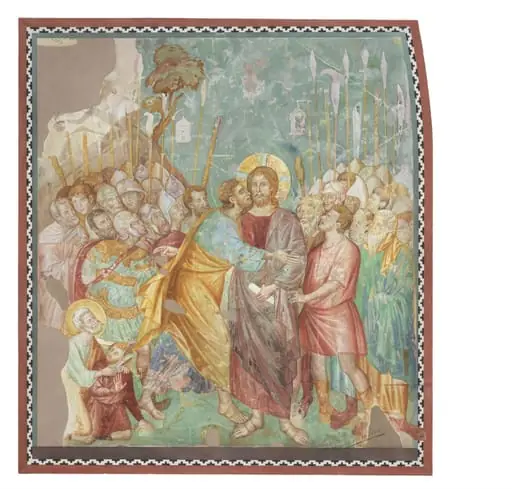 Copy after the painting The Betrayal of Christ attributed Jacobo Torrit in the Upper Church, San Francesco, Assisi
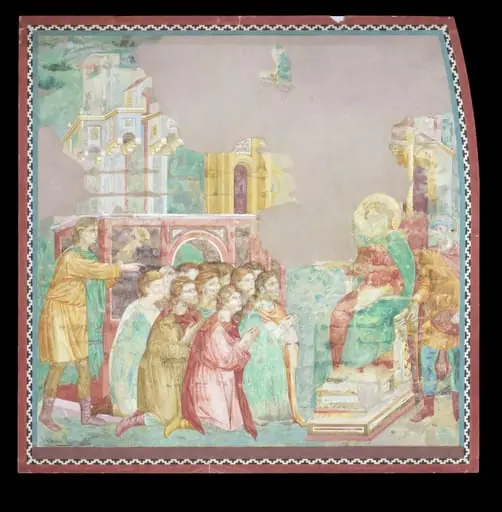 Copy after the painting Joseph and his brothers in Egypt attributed to the Isaac Master in the Upper Church, San Francesco, Assisi
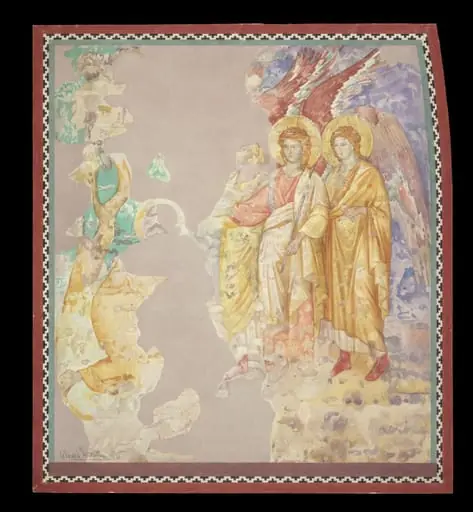 Copy after the painting The Expulsion attributed to Jacobo Torriti in the Upper Church, San Francesco, Assisi.
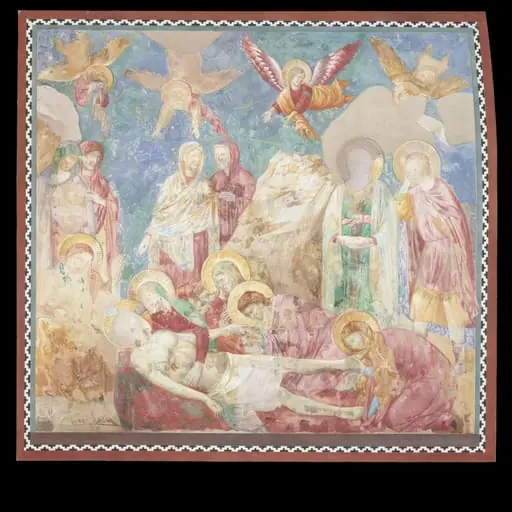 Copy after the painting The Pieta attributed to the Isaac Master in the Upper Church, San Francesco, Assisi