Artwork
Copy after the painting Baptism of Christ by Masolino in Castiglione d'Olona
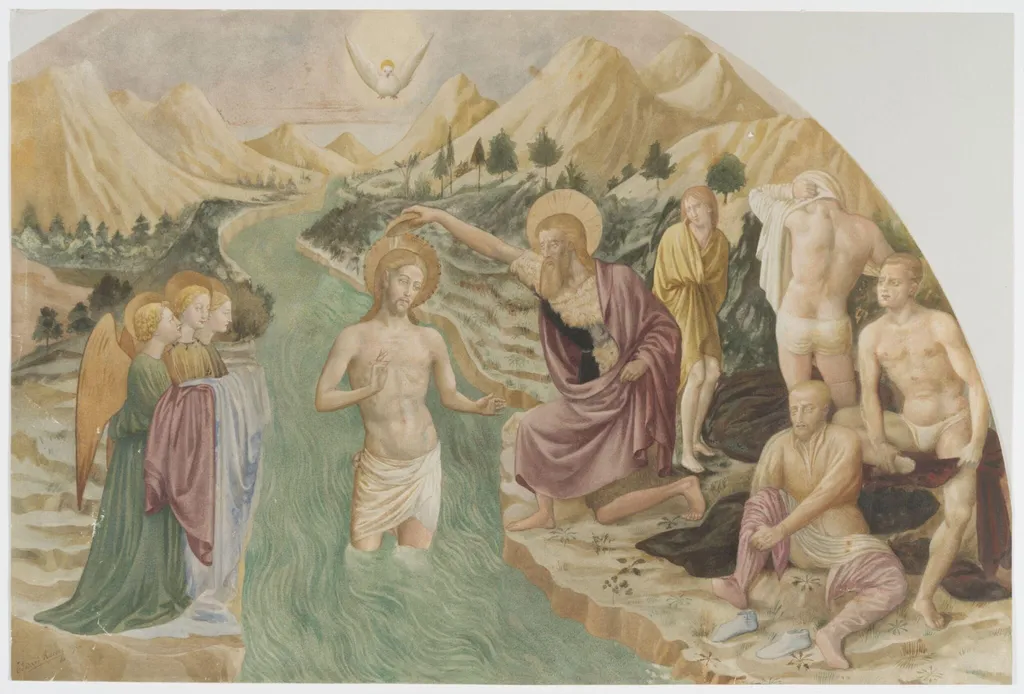
Copy after the painting Baptism of Christ by Masolino in Castiglione d'Olona is a watercolor work on paper by the Impressionist artist Edward Kaiser. It dates from 1885 and is held in the collection of the Victoria and Albert Museum. This watercolor is a faithful reproduction of Masolino’s original Baptism of Christ, executed in delicate washes.
About this work
Overview
This watercolor is a faithful reproduction of Masolino’s original Baptism of Christ, executed in delicate washes. It captures the biblical scene with quiet precision, emphasizing atmospheric softness over dramatic intensity. The composition follows the architectural rhythm of the source painting, with a curved horizon and balanced figures arranged along a winding riverbank.
Subject & Meaning
The scene illustrates Christ’s baptism by John the Baptist, a moment of divine affirmation. John, in a red robe, leans over Christ, who stands barefoot in the water, wrapped in a white loincloth. Above, a dove hovers as a symbol of the Holy Spirit. Three angels hold Christ’s garments nearby, while four observers stand on the opposite bank, their postures suggesting reverence and witness.
Technique & Style
Rendered in translucent watercolor, the work employs muted greens, pale blues, and soft ochres to evoke a serene, early morning light. The brushwork is restrained, with subtle gradations defining form and space. The landscape is simplified yet harmonious, with gentle hills, sparse vegetation, and a hazy sky that enhances the spiritual stillness of the moment.
History & Provenance
This watercolor derives from Masolino’s fresco in the church of Castiglione d’Olona, painted around 1425. It likely originated in a workshop setting, where artists copied compositions for study or devotional use. Its survival suggests continued interest in Masolino’s early Renaissance style, particularly among collectors and students in the 15th and 16th centuries.
Context
During the early 15th century, watercolor copies of frescoes were common tools for artistic training and dissemination. Masolino’s composition, with its balanced figures and naturalistic landscape, reflected emerging humanist ideals. This watercolor preserves the structure of the original while adapting its scale and medium for intimate, portable use.
Legacy
Though not an original work, this watercolor contributes to the understanding of how Renaissance compositions were transmitted and studied. It reflects the enduring influence of Masolino’s early style and the role of reproductive drawings in preserving visual culture before the age of printmaking.
Artist & collection

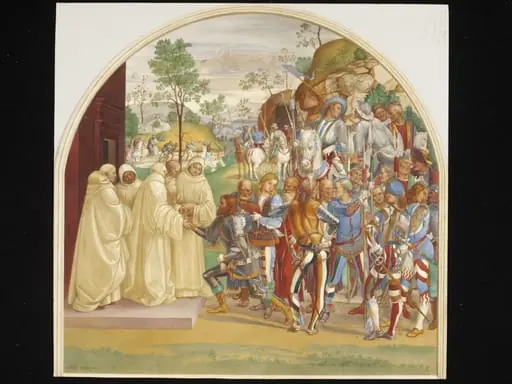 St Benedict and the True King Totila
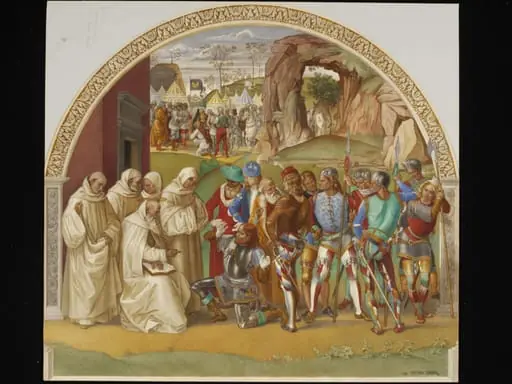 St Benedict and the False King Totila
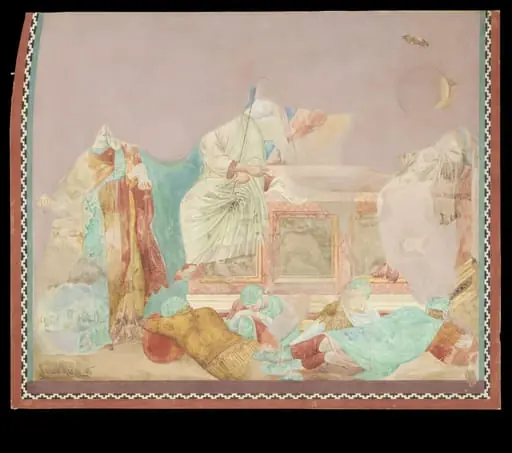 Copy after the painting The Maries at the Sepulchre attributed to the Isaac Master in the Upper Church, San Francesco, Assisi
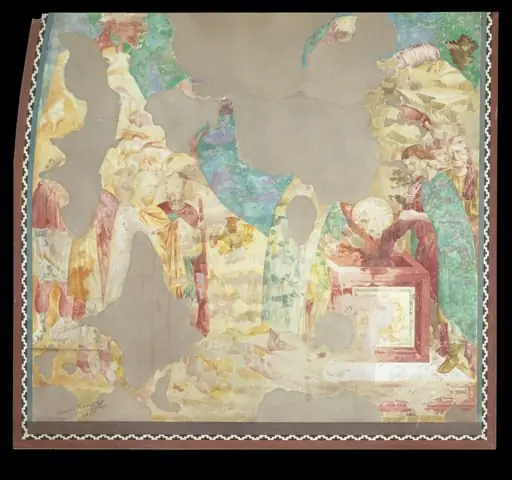 Copy after the painting Joseph and his brothers at the Well attributed to the Isaac Master in the Upper Church, San Francesco, Assisi
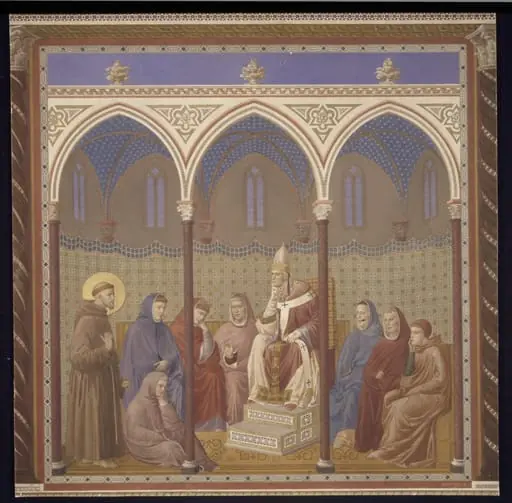 Copy after the painting St Francis before Pope Honorius by the Master of the St Francis cycle in the Upper Church, San Francesco, Assisi
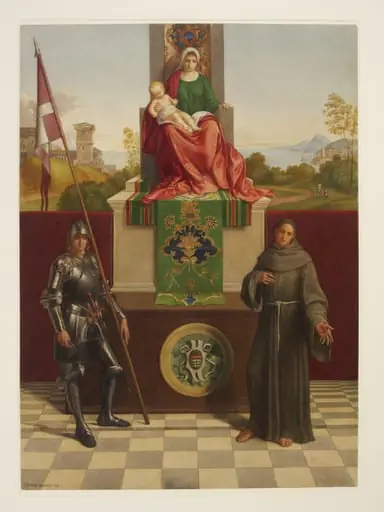 Copy after the painting Virgin and Child with Saints (Castelfranco Altarpiece) by Giorgione in S. Liberale, Castelfranco
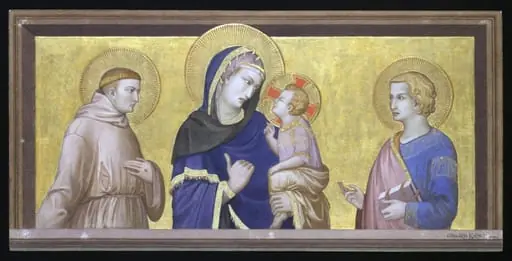 Copy after the painting Virgin and Child with St John and St Francis by Pietro Lorenzetti ??? in the Lower Church, San Francesco, Assisi
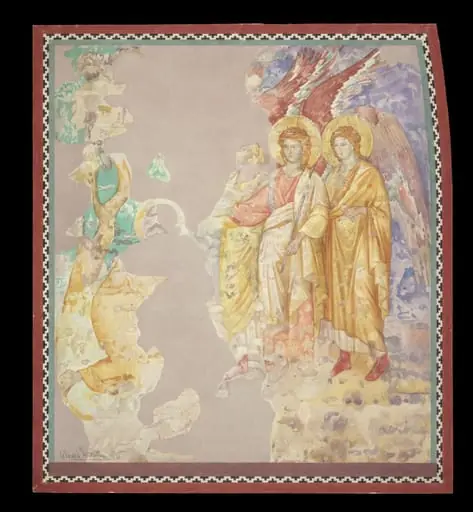 Copy after the painting The Expulsion attributed to Jacobo Torriti in the Upper Church, San Francesco, Assisi.
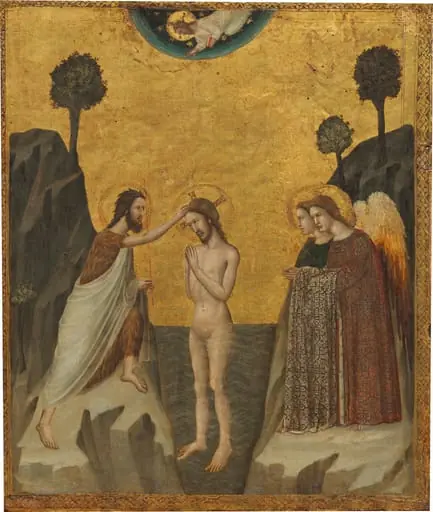 The Baptism of Christ
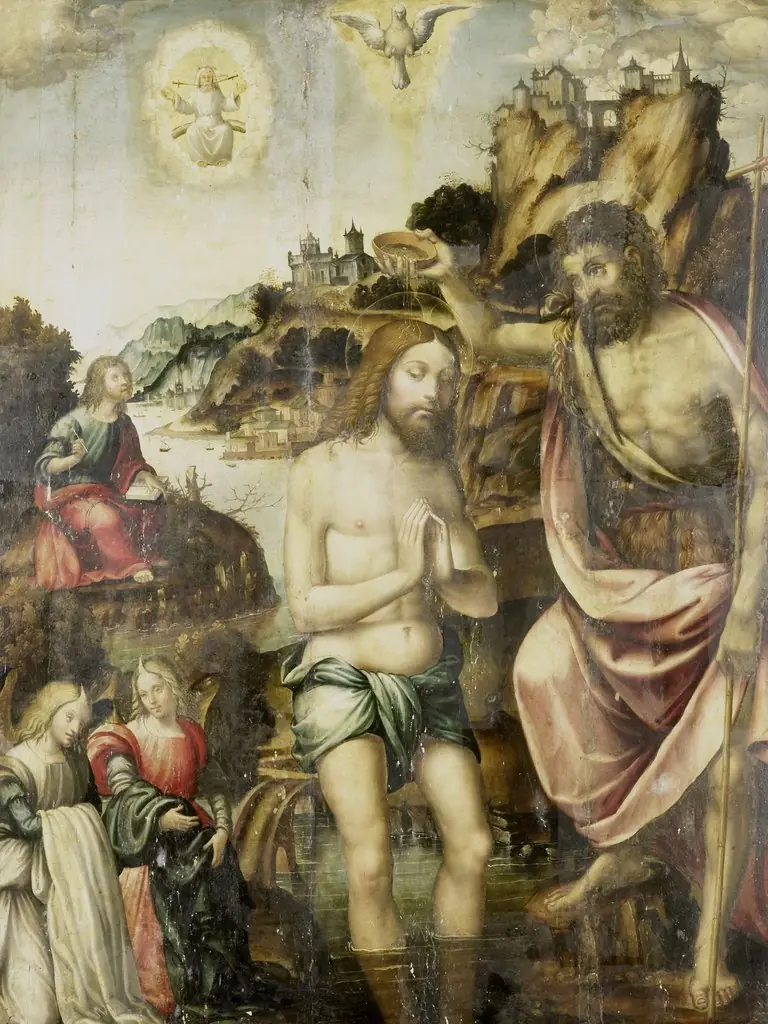 The Baptism of Christ
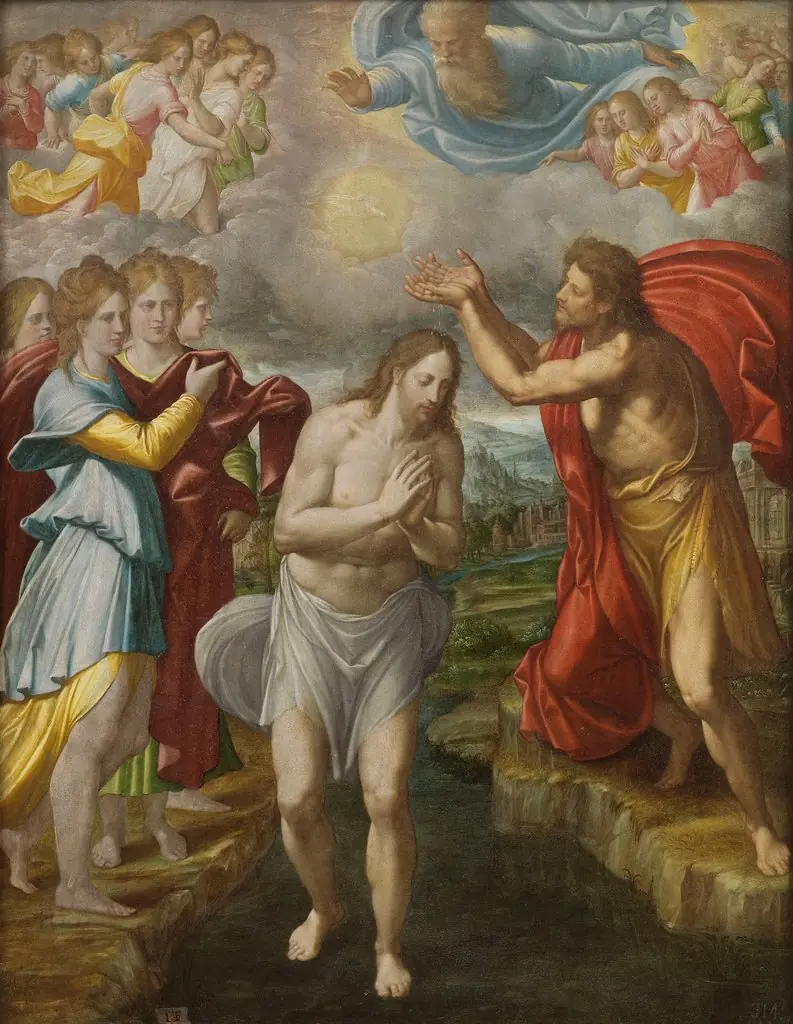 The Baptism of Christ
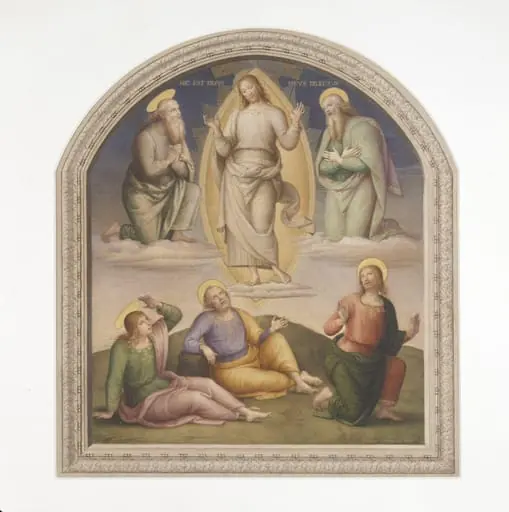 Copy after the painting The Transfiguration by Perugino in the Collegio del Cambio, Perugia.
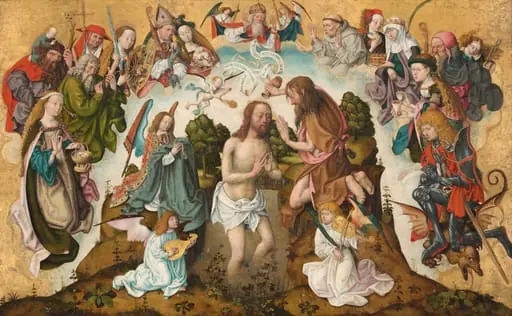 The Baptism of Christ
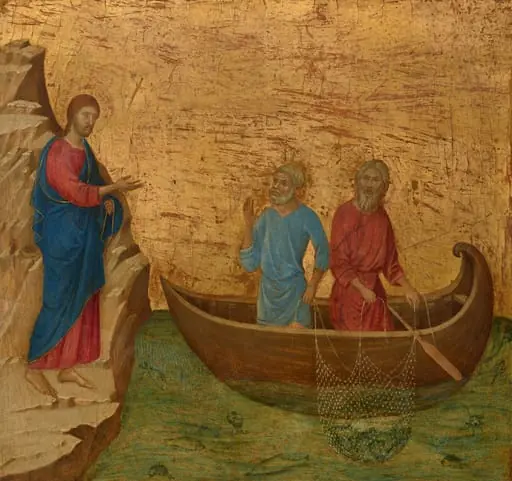 The Calling of the Apostles Peter and Andrew
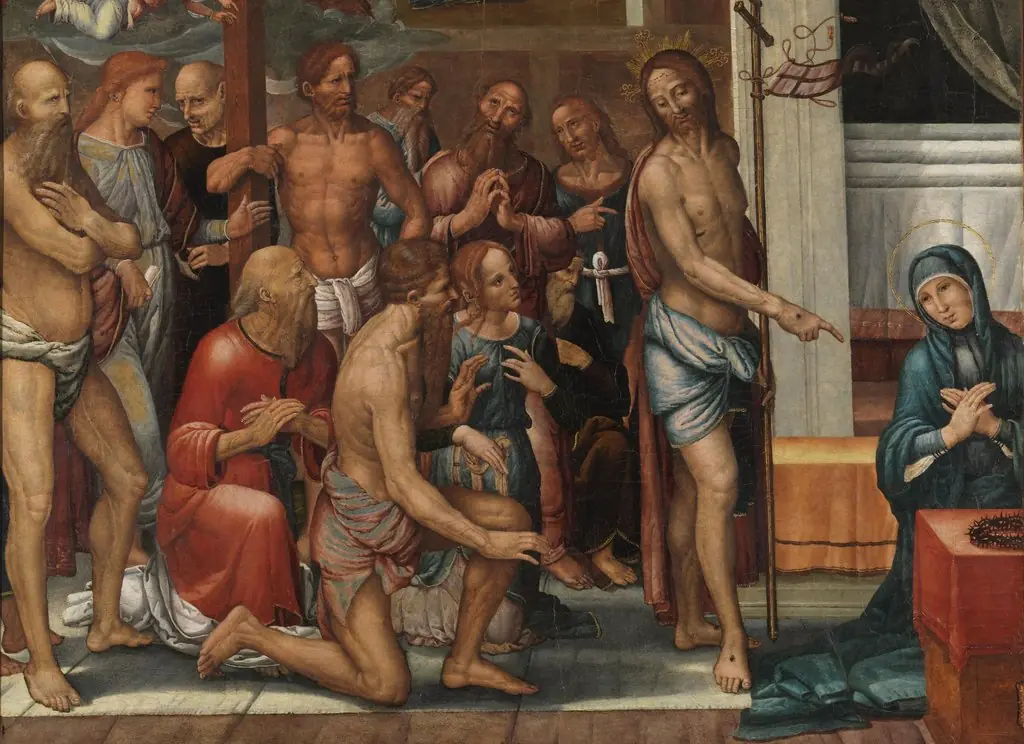 Christ presents the Redeemed from Limbo to the Virgin
 Ecce Agnus Dei
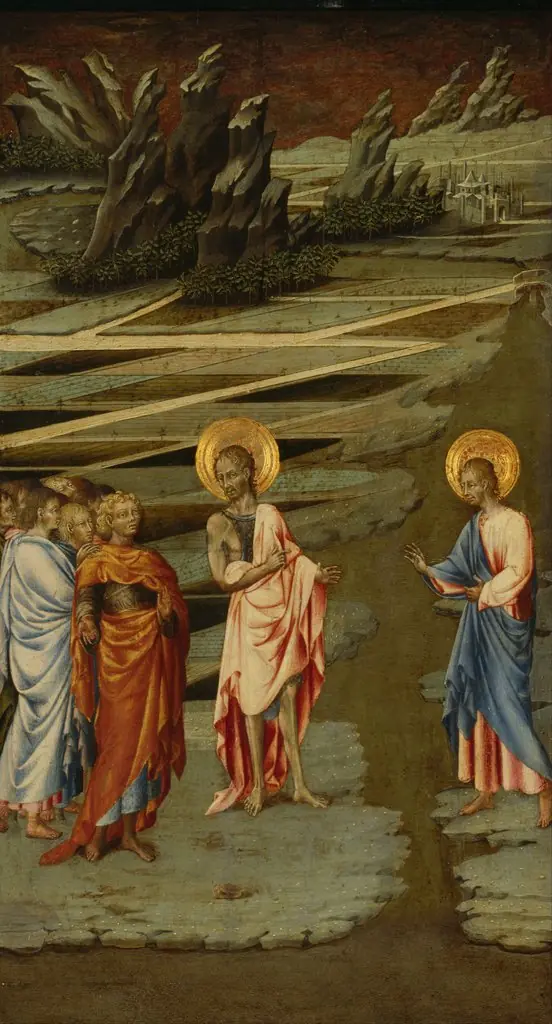 Ecce Agnus Dei
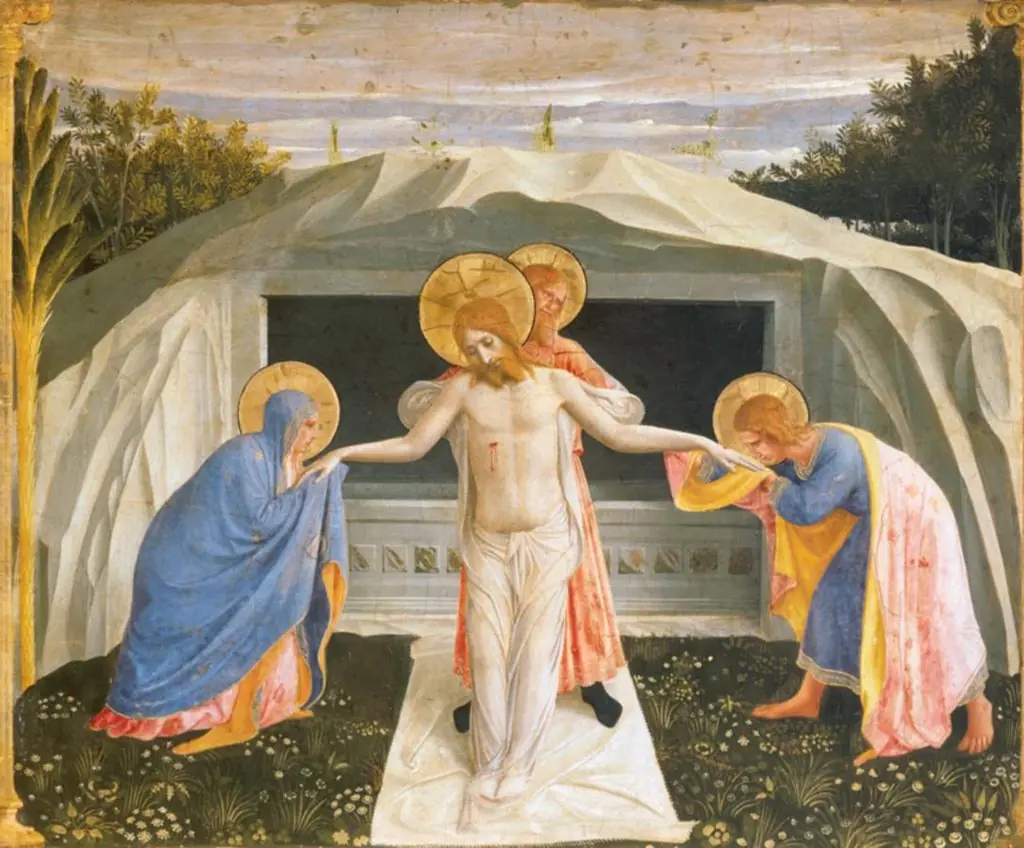 Entombment of Christ