Artwork
Olevano
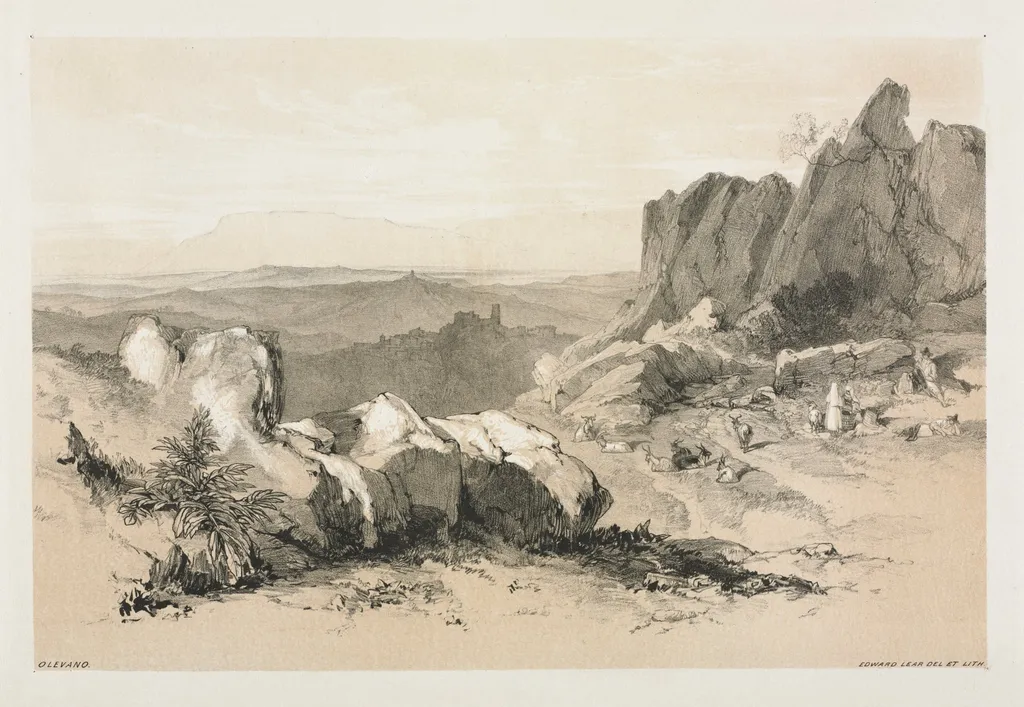
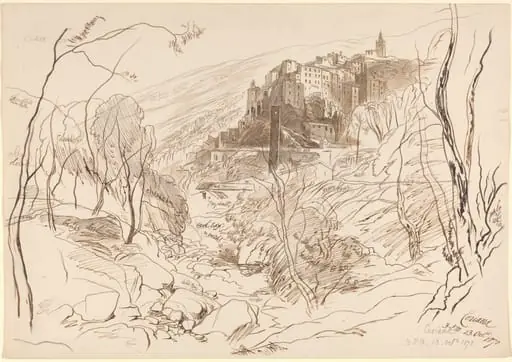
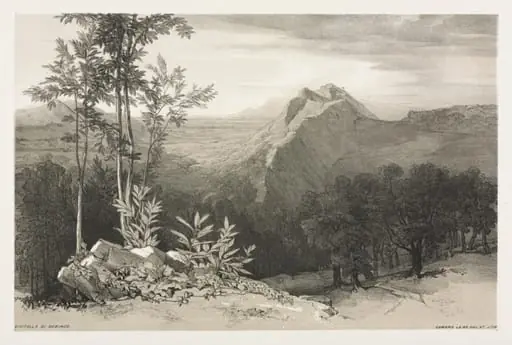
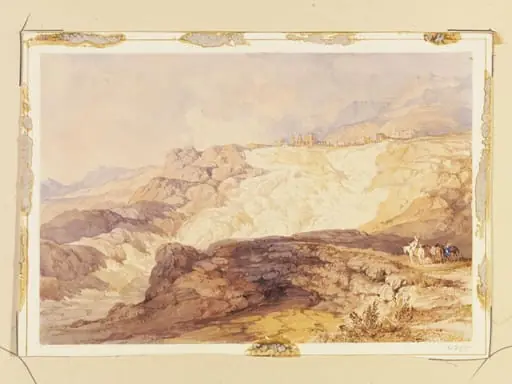
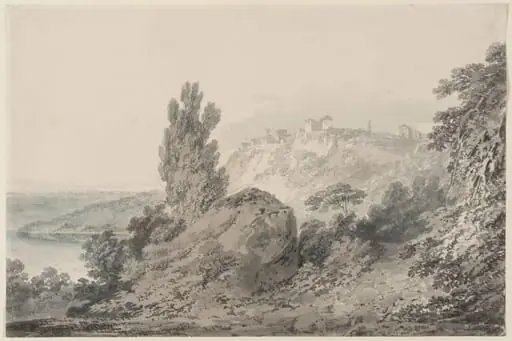
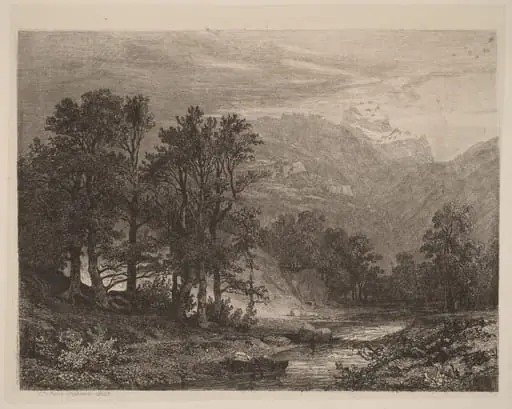
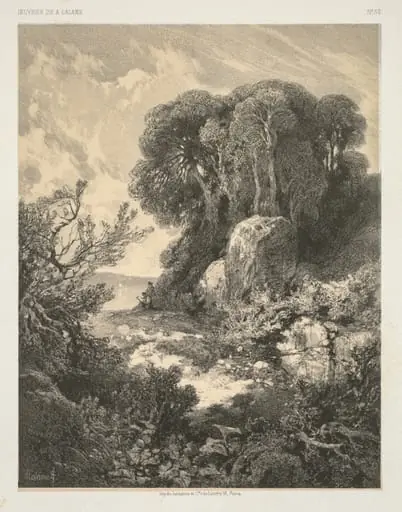
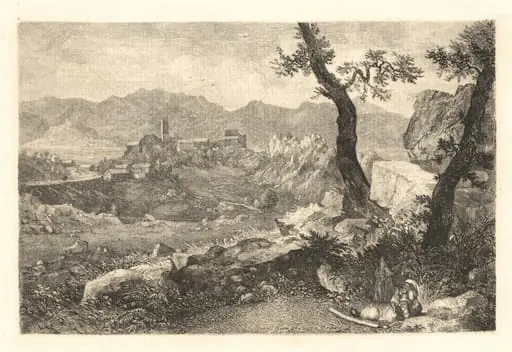
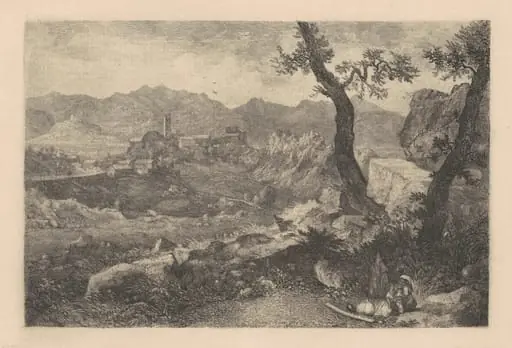
Olevano is a print by the Romanticist artist Edward Lear. It dates from 1841 and is held in the collection of the Cleveland Museum of Art.
About this work
Overview
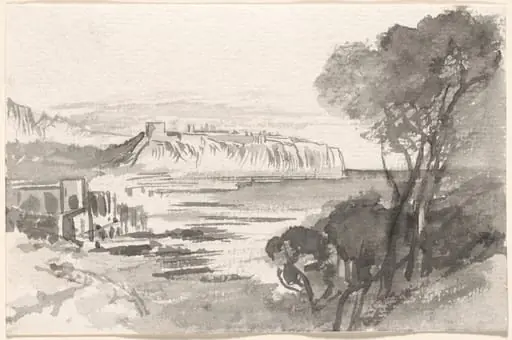
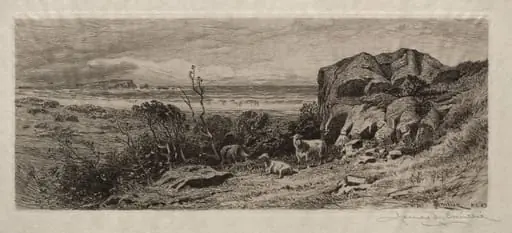
Created in 1841, *Olevano* is a print by the English artist Edward Lear, best known for his literary nonsense and extensive travel sketches. The work captures a solitary Italian landscape, featuring a craggy hillside, distant ruins, and a small flock of sheep beside a stream. It is part of the Cleveland Museum of Art’s collection.
Subject & Meaning
The composition presents a stark, rocky slope punctuated by jagged boulders and a faintly outlined castle perched on a hill beyond. Sparse vegetation and grazing sheep occupy the foreground, while the quiet, uninhabited setting conveys a sense of isolation and the untamed character of the Italian countryside that fascinated many 19th‑century travelers.
Technique & Style
Lear employs a restrained line drawing, using simple, confident strokes to suggest texture on rock faces and the undulating forms of the hills. The minimal shading and absence of colour focus attention on the structural qualities of the terrain, aligning the image with Romantic interests in the sublime aspects of nature.
History & Provenance
The print originates from Lear’s series of Italian sketches made during his frequent journeys through the peninsula. After its creation, the work entered the collection of the Cleveland Museum of Art, where it remains accessible for study of Lear’s dual role as a draughtsman and travel illustrator.
Artist & collection
Artist
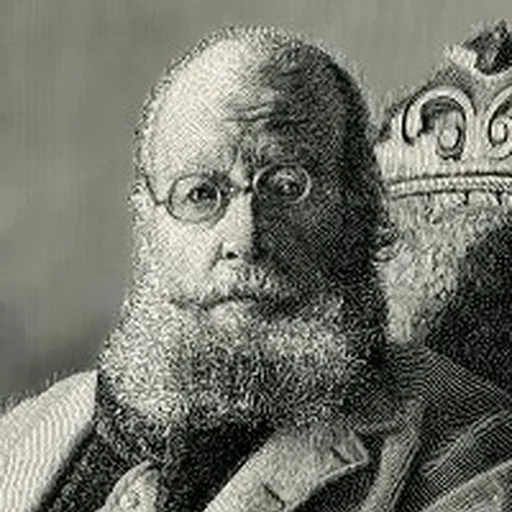
Edward Lear (12 May 1812 – 29 January 1888) was an English artist, illustrator, musician, author and poet, who is known mostly for his literary nonsense in poetry and prose and especially his limericks, a form he popularised but which term…