Artwork
Band-tailed Pigeon
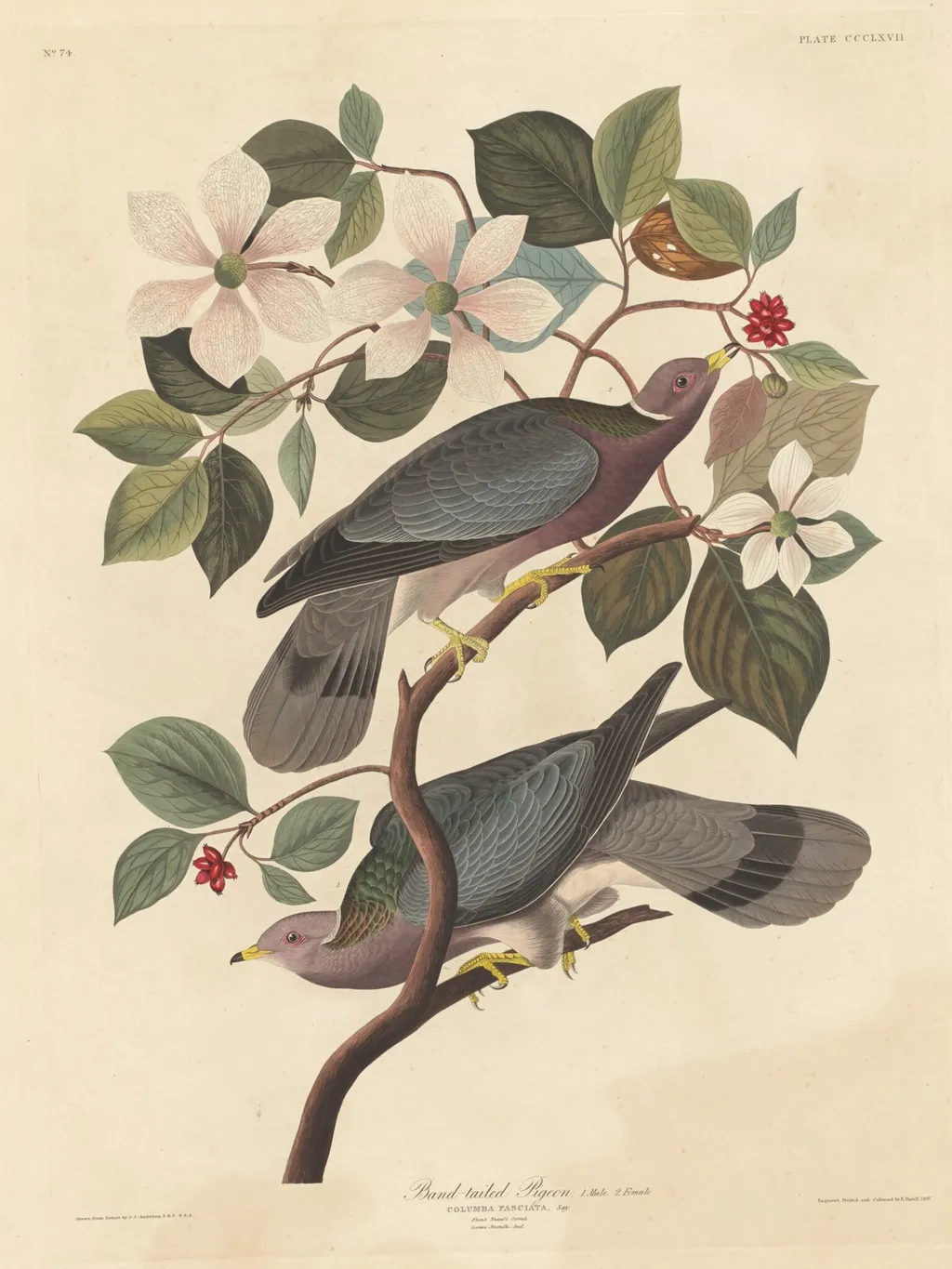
Band-tailed Pigeon is an ink print by the Romanticist artist Robert Havell Jr.. It dates from 1837 and is held in the collection of the National Gallery of Art.
About this work
Overview
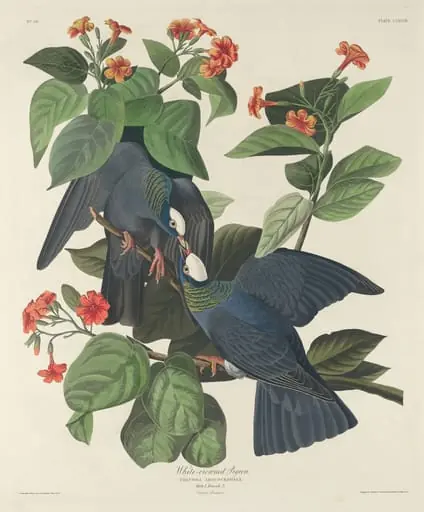
Band-tailed Pigeon is a hand-colored engraving and aquatint print created by Robert Havell Jr. in 1837 on Whatman wove paper. It showcases the artist's proficiency in printmaking techniques, characteristic of the Havell family's expertise.
Subject & Meaning
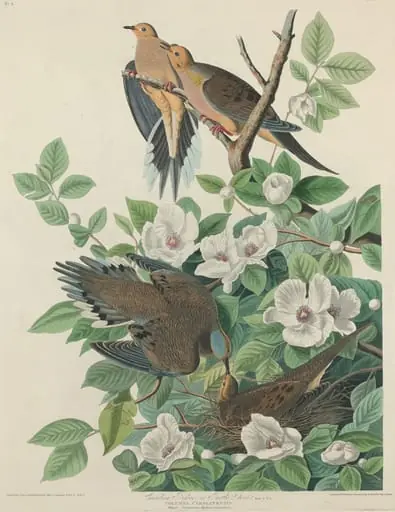
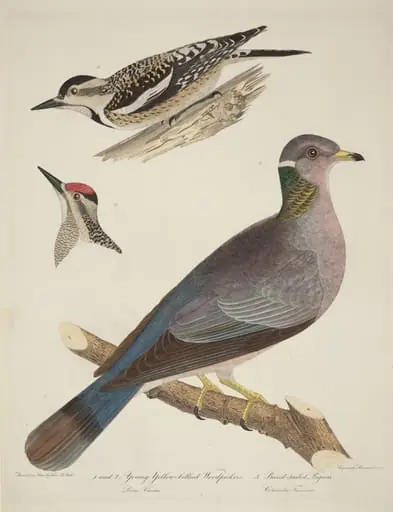
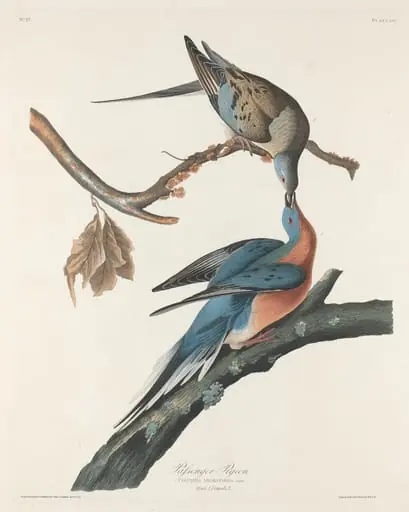
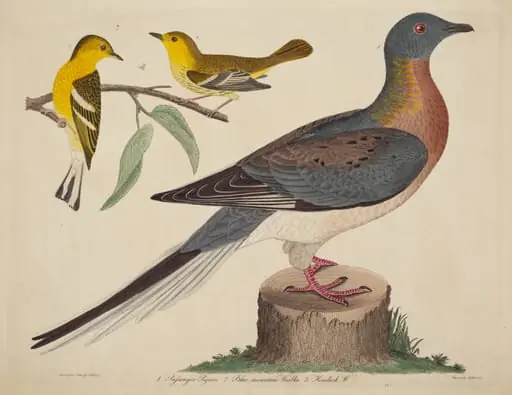
The print depicts two band-tailed pigeons perched on a tree branch, facing opposite directions with heads turned towards the viewer. The serene composition, set amidst large green leaves and white flowers, evokes a sense of tranquility.
Technique & Style
Havell Jr. employed hand-colored engraving and aquatint to achieve intricate textures and shading, lending depth and dimension to the image. The soft, muted background highlights the detailed, subtly sheened feathers and yellow beaks of the pigeons.
History & Provenance
Robert Havell Jr. of the renowned Havell family, known for aquatint expertise and connections to Indian art, created this work. The family's long tradition in engraving and printmaking is exemplified in this piece.
Context
Produced in 1837, the work reflects the Havell family's ongoing contribution to the development of printmaking techniques in the 19th century, blending technical skill with naturalistic depiction.
Legacy
While specific lasting impacts of *Band-tailed Pigeon* are not detailed, it contributes to the broader recognition of the Havell family's influence on 19th-century printmaking and their ability to capture natural beauty through meticulous technique.
Artist & collection

Artist
The Havell family of Reading, Berkshire, England, included a number of notable engravers, etchers and painters, as well as writers, publishers, educators, and musicians.