Artwork
Passenger Pigeon, Blue-mountain Warbler, and Hemlock Warbler
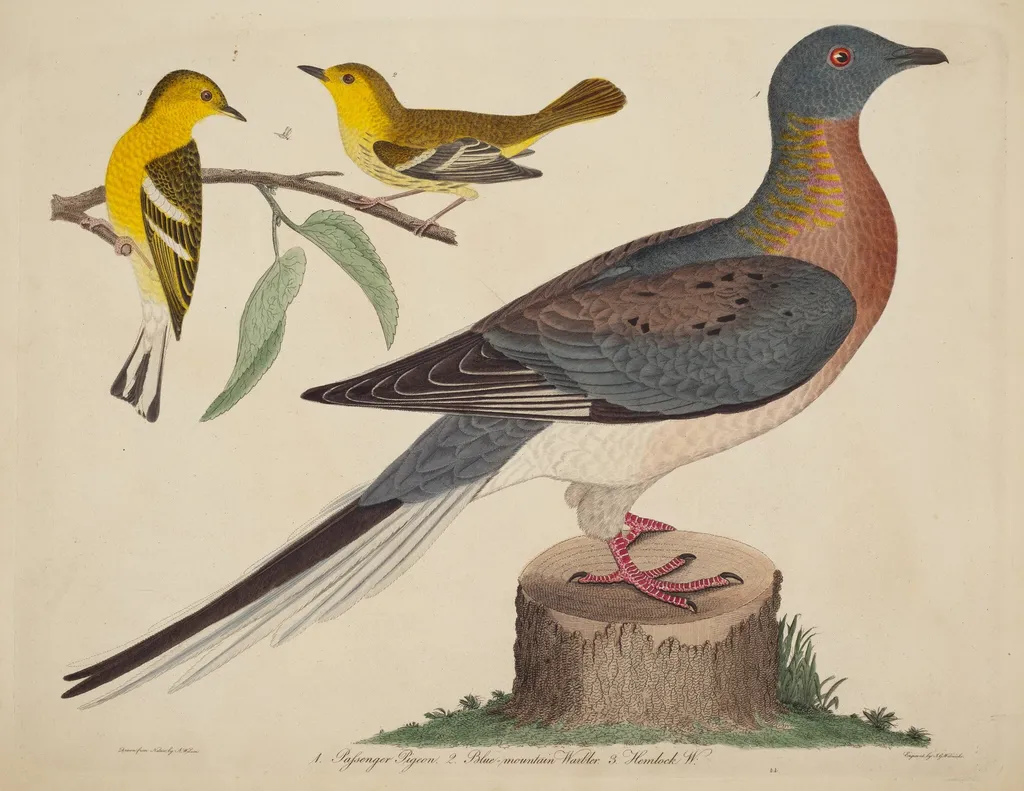
Passenger Pigeon, Blue-mountain Warbler, and Hemlock Warbler is an ink print by the Romanticist artist John G. Warnicke. It dates from 1811 and is held in the collection of the National Gallery of Art.
About this work
Overview
Passenger Pigeon, Blue-mountain Warbler, and Hemlock Warbler is a hand-colored engraving with etching on wove paper, created by John G. Warnicke in 1811. The print depicts three bird species alongside a tree stump.
Subject & Meaning
The composition highlights a Passenger Pigeon on the right, contrasting with the Blue-mountain Warbler and Hemlock Warbler on the left, perched on a leafy branch. The arrangement may reflect contemporary interest in North American ornithology.
Technique & Style
The engraving showcases intricate details, particularly in the birds' feathers and beaks, achieved through a combination of etching and hand-coloring. The color palette features earthy tones (browns, yellows, grays) with notable accents (red eye, pink feet of the Passenger Pigeon) against a soft off-white background.
History & Provenance
Created in 1811 by John G. Warnicke, specific provenance details are not provided in the available information.
Context
This work likely contributed to the early 19th-century fascination with American wildlife, potentially serving educational or scientific purposes alongside its aesthetic appeal.
Legacy
The enduring significance of this engraving lies in its historical representation of species, including the now-extinct Passenger Pigeon, offering a visual record of late 18th to early 19th-century ornithological illustration.
Artist & collection


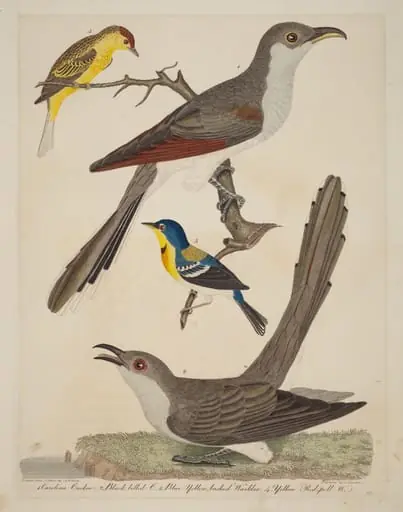 Carolina Cuckoo, Black-billed Cuckoo, Blue Yellow-backed Warbler, and Yellow Red-poll Warbler
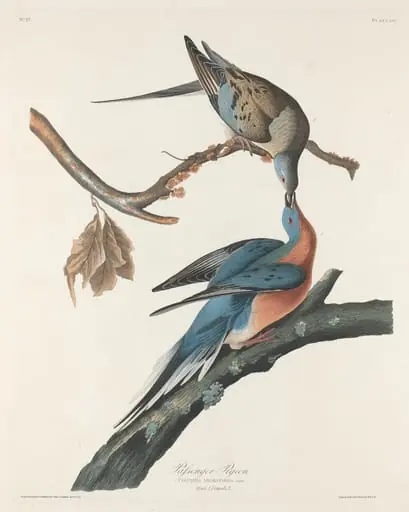 Passenger Pigeon
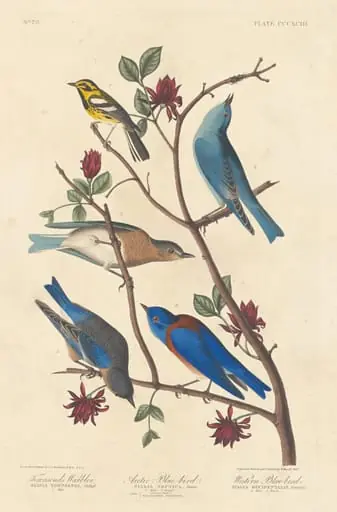 Townsend's Warbler, Arctic Blue Bird and Western Blue Bird
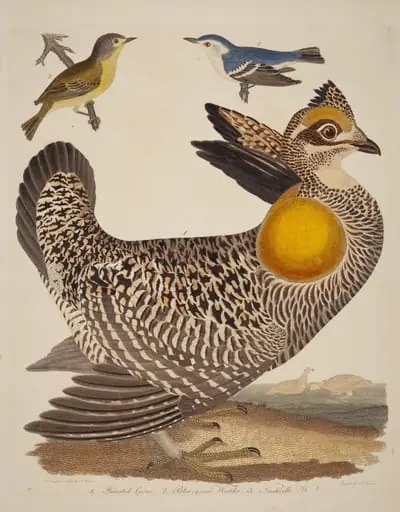 Pinnated Grous, Blue-green Warbler, and Nashville Warbler
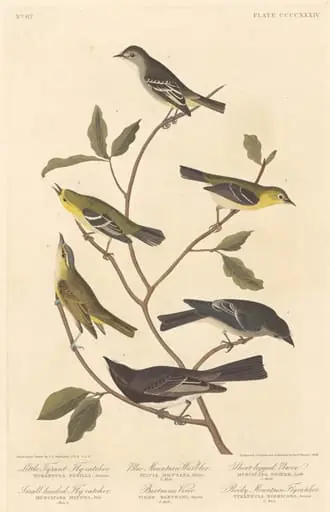 Little Tyrant Flycatcher, Small-Headed Flycatcher, Blue Mountain Warbler, Bartram's Vireo, Short-Legged Pewee, and Rocky Mountain Flycatcher
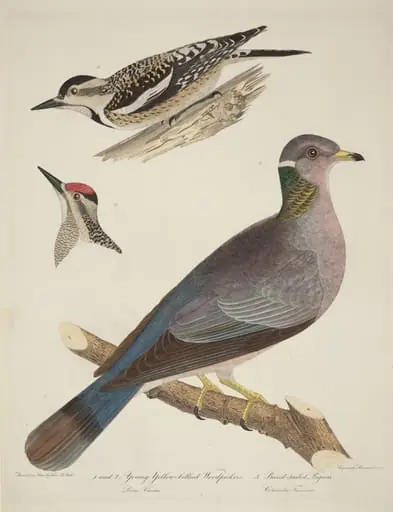 Young Yellow-bellied Woodpeckers and Band-tailed Pigeon
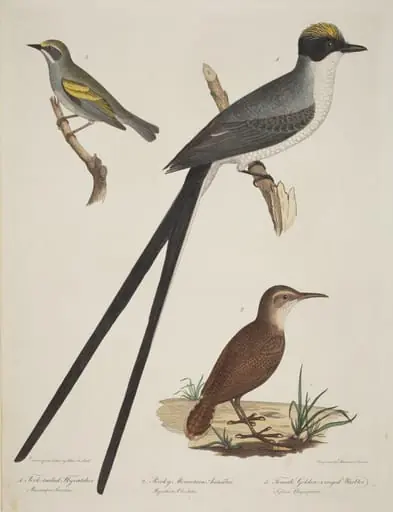 Fork-tailed Flycatcher, Rocky Mountain Anteater, and Female Golden-winged Warbler
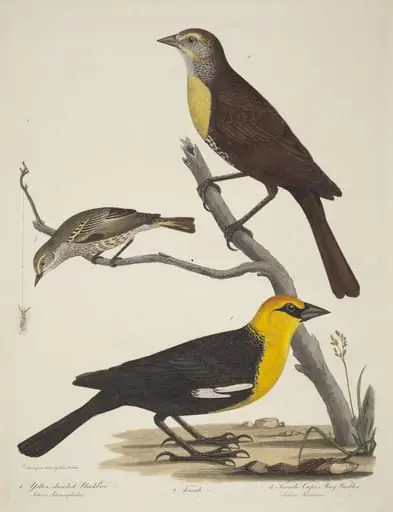 Yellow-headed Blackbird, Female Blackbird, and Female Cape May Warbler
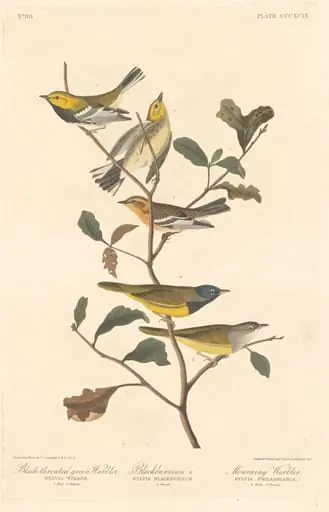 Black-throated Green Warbler, Blackburnian Warbler and Mourning Warbler
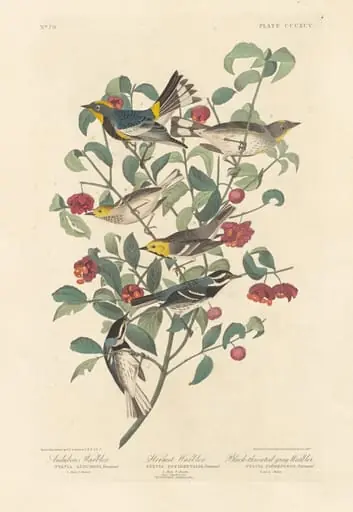 Audubon's Warbler, Hermit Warbler and Black-throated Gray Warbler
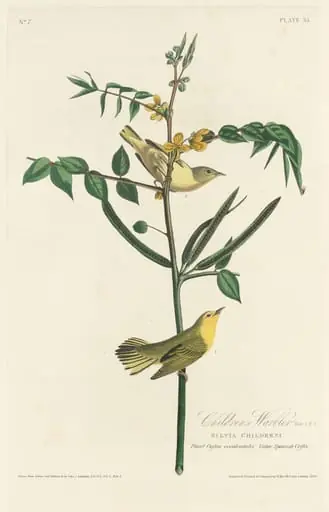 Children's Warbler