Artwork
Game. A Pheasant and an Eider
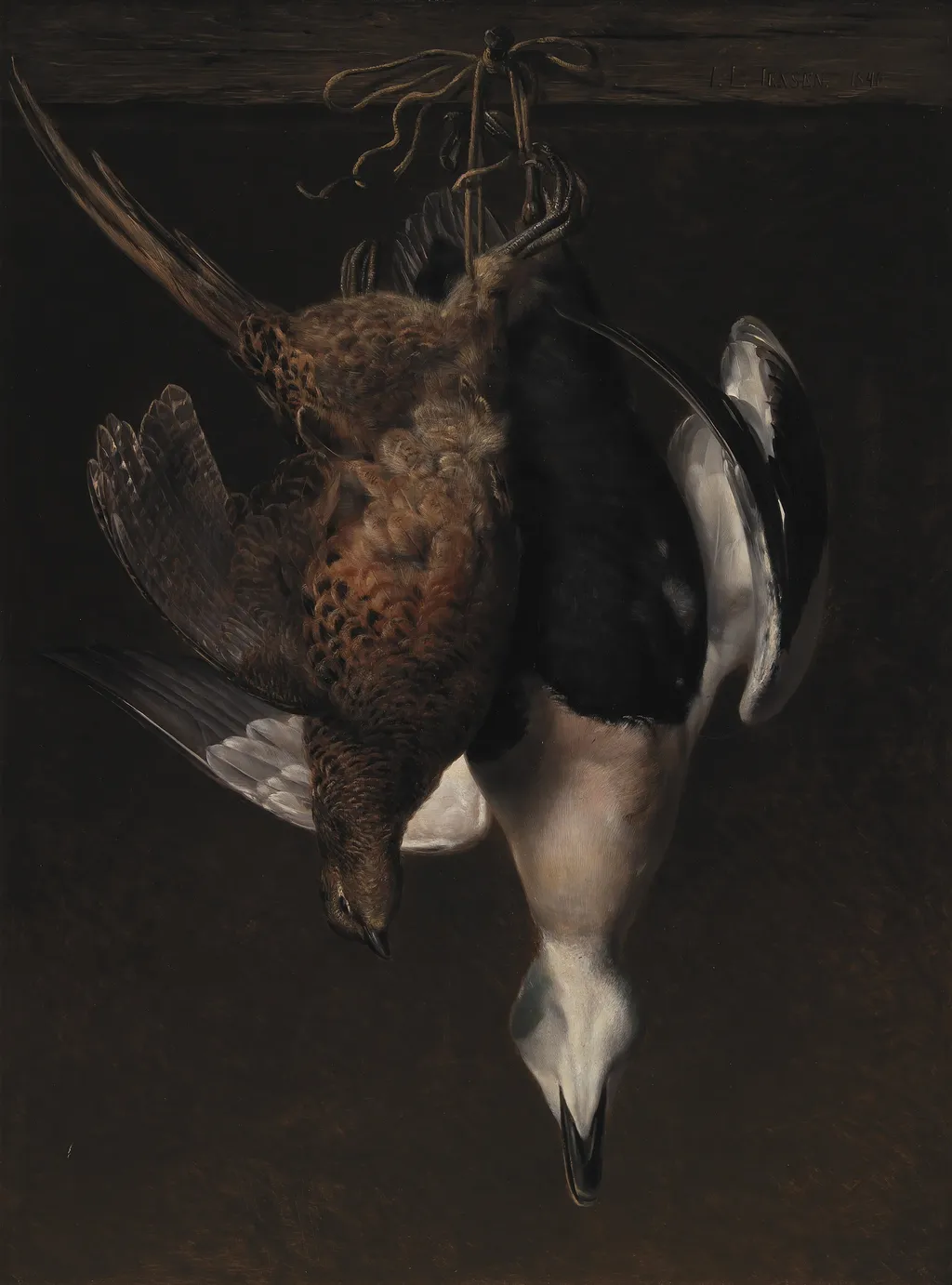
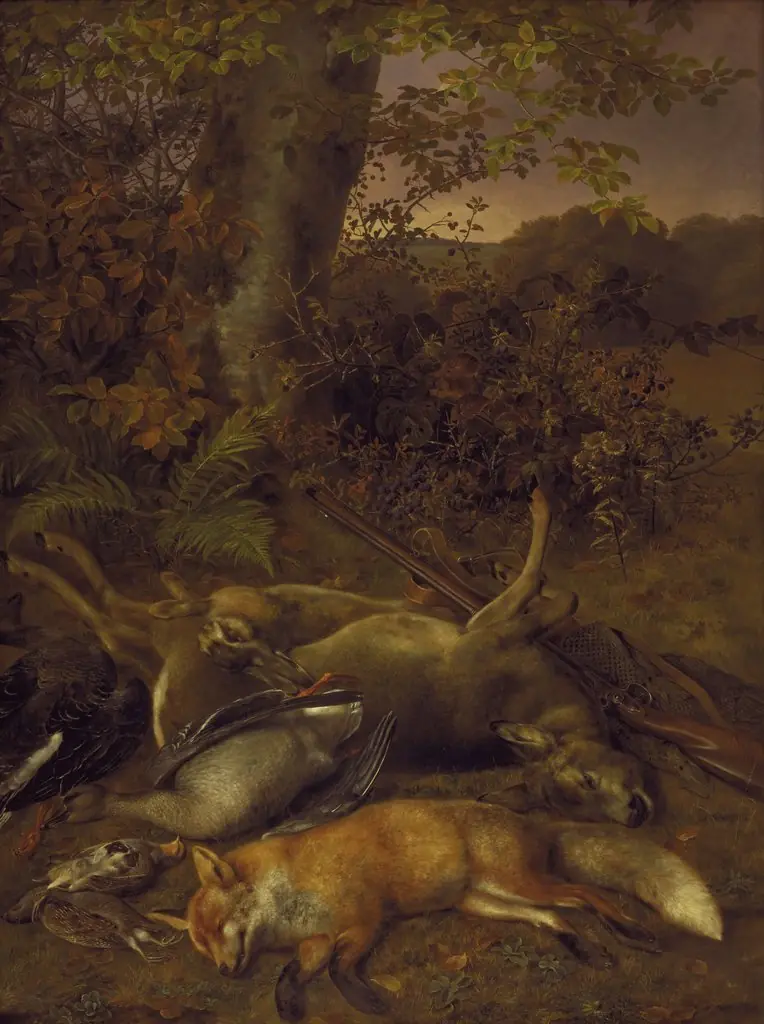
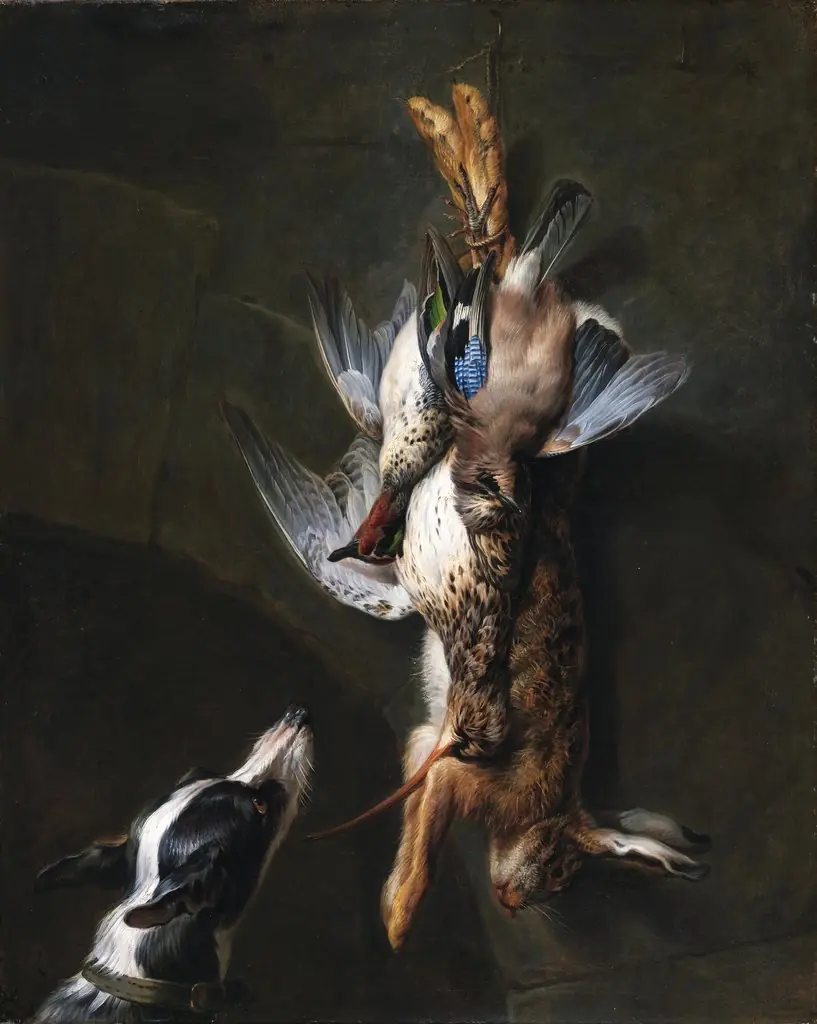
Game. A Pheasant and an Eider is an oil painting by Johan Laurentz Jensen. It dates from 1846 and is held in the collection of the Statens Museum for Kunst.
About this work
Overview
Jensen’s focus on precise anatomical detail and material texture aligns with his broader practice in depicting natural subjects, particularly flora and fauna.
Painted in 1846 by Danish artist Johan Laurentz Jensen, this oil-on-canvas still life presents two game birds— a pheasant and an eider duck—suspended upside down from a wooden beam. The composition is spare, with no landscape or props beyond the dark background and the support structure. Jensen’s focus on precise anatomical detail and material texture aligns with his broader practice in depicting natural subjects, particularly flora and fauna.
Subject & Meaning
The pheasant and eider duck, both hunted birds, are presented not as trophies but as studied specimens. Their inverted position suggests a moment after the hunt, frozen in stillness. The absence of human figures or narrative context shifts attention to the birds’ physical presence, inviting contemplation of their form, plumage, and mortality. The work reflects a quiet, observational tradition in Danish art rather than symbolic or allegorical intent.
Technique & Style
Jensen employed oil paint to achieve fine gradations of color and texture, particularly in the birds’ feathers. Each contour and barb is rendered with meticulous care, capturing the sheen of the pheasant’s iridescent neck and the dense, water-resistant plumage of the eider. A restrained chiaroscuro model forms subtle volume, with light falling from above to define the birds’ curves against the deep, neutral background, enhancing their three-dimensionality without theatricality.
History & Provenance
The painting entered the collection of Statens Museum for Kunst in Copenhagen, where it remains today. It was created during a period when Jensen was refining his reputation as a specialist in naturalistic still lifes, particularly those featuring birds and flowers. Though not widely exhibited in his lifetime, the work has been consistently recognized for its technical precision and quiet intensity within Danish 19th-century painting.
Context
In mid-19th century Denmark, there was growing interest in natural history and scientific observation, reflected in art through detailed depictions of animals and plants. Jensen’s work fits within this trend, paralleling the rise of naturalist studies in museums and scientific journals. Unlike grand historical or mythological scenes, his paintings valued close looking and fidelity to the physical world, appealing to a public increasingly engaged with empirical knowledge.
Legacy
Jensen’s *Game. A Pheasant and an Eider* exemplifies a quiet strand of Danish realism that prioritized observation over drama. While not influential in a broad stylistic sense, it endures as a refined example of technical discipline in animal portraiture. The painting continues to be studied for its handling of texture and light, offering insight into how Danish artists engaged with nature outside of romanticized or idealized frameworks.
Own this work as a print
Artist & collection
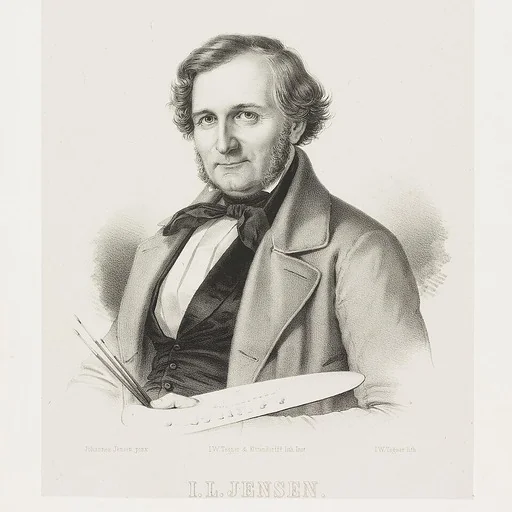
Artist
Johan Laurentz Jensen, often referred to as J. L. Jensen (8 March 1800 – 26 March 1856), was a Danish artist who specialized in flower painting.