Artwork
Portrait of Gerti Schiele
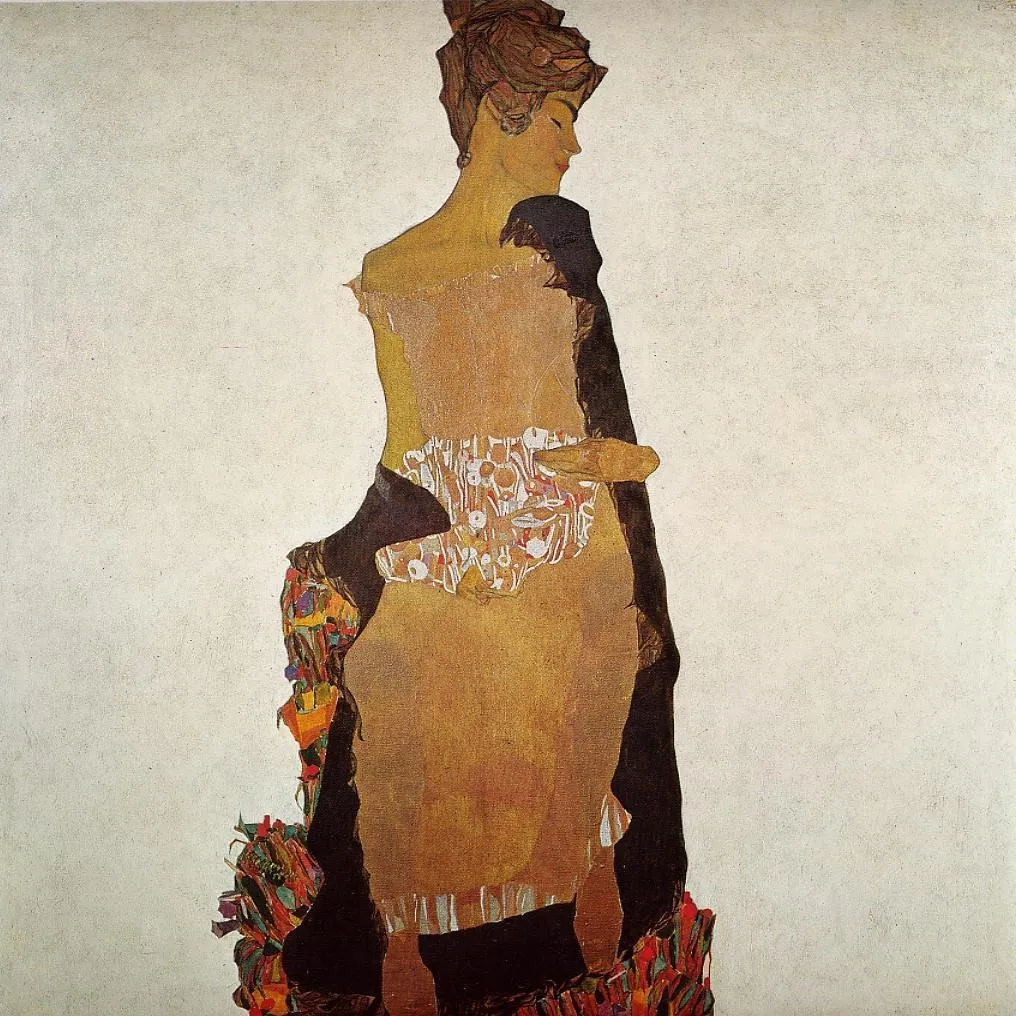
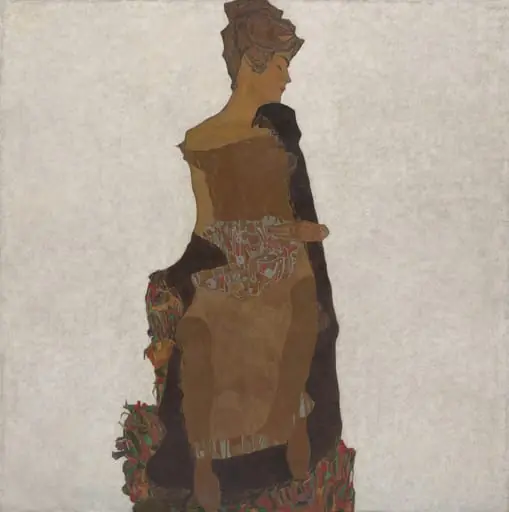
Portrait of Gerti Schiele is an unspecified painting by Egon Schiele. It dates from 1909 and is held in the collection of the Museum of Modern Art.
About this work
Overview
The composition is restrained, focusing on a quiet, frontal profile against a neutral backdrop, reflecting a transitional moment in his approach to portraiture.
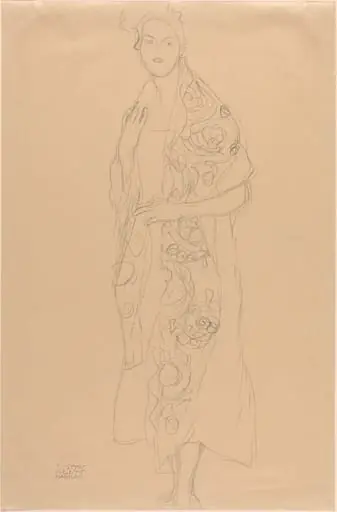
Painted in 1909, this portrait by Egon Schiele captures Gertrude Peschka, known as Gerti, a figure connected to the artist’s circle. Executed in oil on canvas, the work belongs to the early phase of Schiele’s career, preceding his more intense, angular style. The composition is restrained, focusing on a quiet, frontal profile against a neutral backdrop, reflecting a transitional moment in his approach to portraiture.
Subject & Meaning
The sitter, Gertrude Peschka, was a friend and occasional model for Schiele during his formative years. Her calm demeanor and unadorned posture suggest intimacy rather than formal commission. The absence of dramatic expression or symbolic elements points to a personal, observational intent—less about psychological depth and more about capturing a moment of ordinary presence within his social world.
Technique & Style
Schiele employs soft brushwork and muted tones, contrasting with his later, more fractured lines. The floral pattern on the dress is rendered with delicate precision, while the contours of the figure remain smooth and rounded. The beige background isolates the subject without distraction, emphasizing texture over drama. This technique reveals his early engagement with Viennese Secessionist aesthetics before his expressionist turn.
History & Provenance
The painting entered the Museum of Modern Art’s collection in the mid-20th century, likely through acquisition from a European private collection. Its provenance traces back to Schiele’s immediate circle, though documentation from the early 1910s is sparse. It has remained in institutional hands since, with no known public exhibitions prior to its MoMA acquisition.
Context
Created during Schiele’s time in Vienna, this portrait reflects the influence of Gustav Klimt and the broader Viennese art scene. While Klimt favored ornamental elegance, Schiele here opts for simplicity, signaling his move toward psychological realism. The work aligns with early 20th-century shifts in portraiture, where everyday subjects replaced idealized types, and personal observation gained artistic legitimacy.
Legacy
Though less known than Schiele’s later, more provocative works, this portrait offers insight into his artistic evolution. It demonstrates his capacity for quiet observation before embracing distortion and emotional intensity. As one of the few early portraits of a non-family member to survive in public collections, it remains a quiet but significant marker of his developing voice.
Artist & collection

Artist
Egon Leo Adolf Ludwig Schiele (German: ; 12 June 1890 – 31 October 1918) was an Austrian Expressionist painter.