Artwork
Three Putti with a Fishing Net
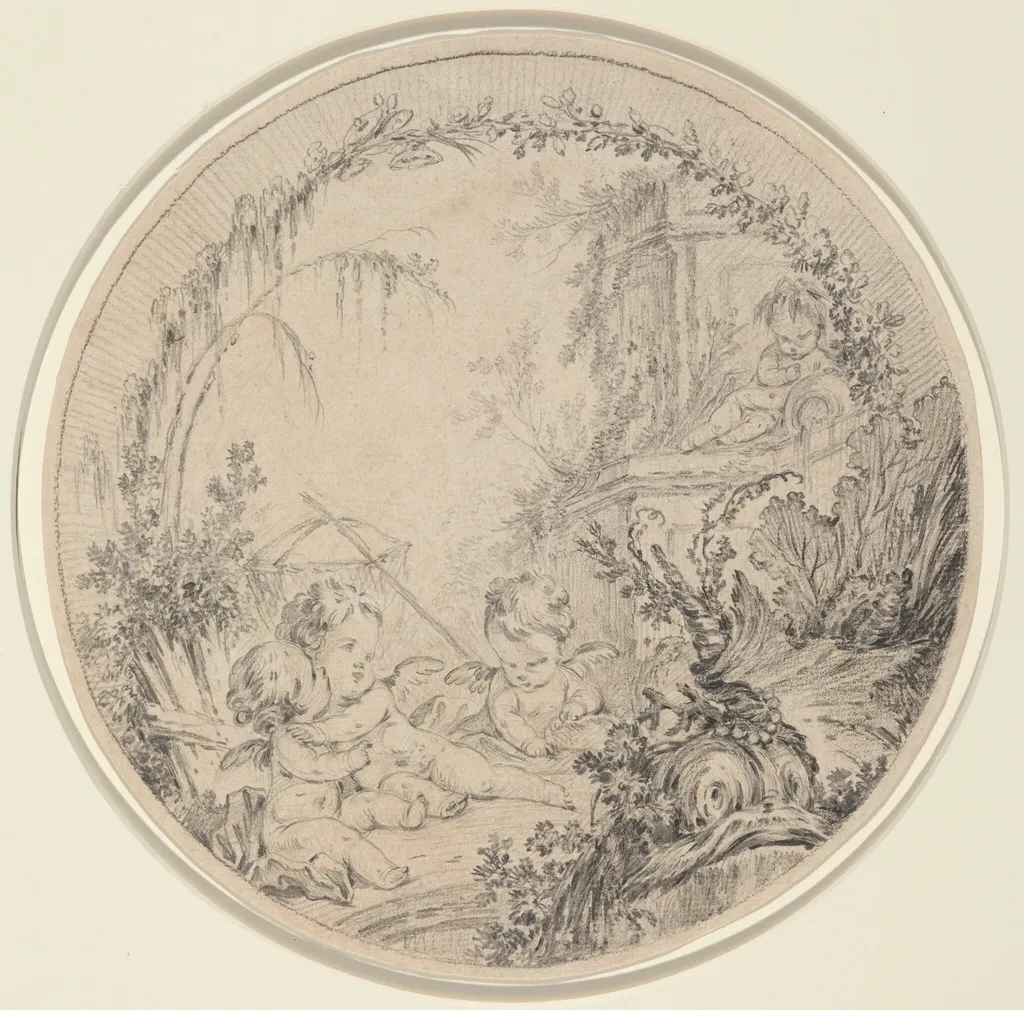
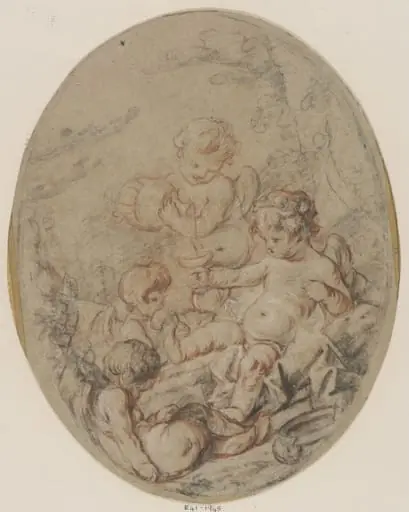
Three Putti with a Fishing Net is a chalk drawing by the Baroque artist Charles Eisen. It dates from 1749 and is held in the collection of the National Gallery of Art.
About this work
Overview
Created in 1749 by Charles Eisen, this drawing depicts three putti engaged in playful activity with a fishing net. Executed in black chalk on laid paper, the work exemplifies 18th-century draftsmanship through its economical linework and expressive gesture. The medium’s tonal range allows for subtle modeling, capturing movement and light without elaborate detail.
Subject & Meaning
The putti—mythological child figures often associated with love and play—are shown in a moment of lighthearted interaction, suggesting themes of innocence and leisure. Their unstructured play with a net evokes a sense of spontaneous joy, typical of Rococo sensibilities. No overt narrative or moral is present; the focus lies in the charm of their animated forms.
Technique & Style
Eisen employed black chalk with precision, using varied pressure to achieve soft gradients and sharp contours. The lines are fluid and confident, suggesting rapid, observational sketching. Contrast between the figures and the paper’s tone enhances volume, while minimal background elements direct attention to the figures’ dynamic poses.
History & Provenance
The drawing is documented as originating from Eisen’s hand in 1749, during his active years in France. It likely served as a preparatory study or independent work for decorative arts, given Eisen’s association with printmaking and ornamental design. Its survival in good condition reflects careful preservation within private or institutional collections.
Context
Eisen worked within the Rococo tradition, where delicate, playful subjects were favored in decorative arts. Drawings like this often informed engravings or ceiling decorations in aristocratic interiors. The use of chalk on paper aligned with contemporary practices among artists seeking spontaneity and immediacy over finished oil paintings.
Legacy
Though not widely exhibited, this drawing illustrates Eisen’s mastery of linear expression and his ability to convey motion with minimal means. It contributes to the understanding of how Rococo draftsmen translated whimsical themes into intimate, tactile works, influencing later generations of illustrators and printmakers.
Artist & collection


 Untitled
 Allegory of Music
 Young Woman, Surrounded by Cupids (The Garden of Charity, vertical version)
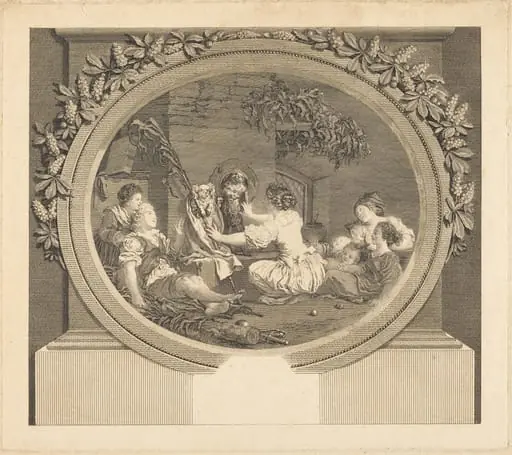 L'Education fait tout
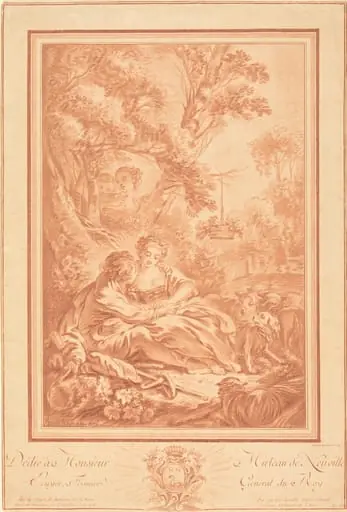 Two Lovers Seated at the Foot of a Large Tree, Surprised by Two Girls
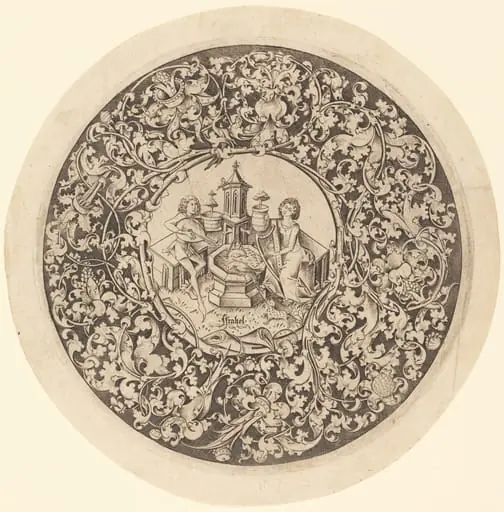 Circular Ornament with Musicians Playing near a Well
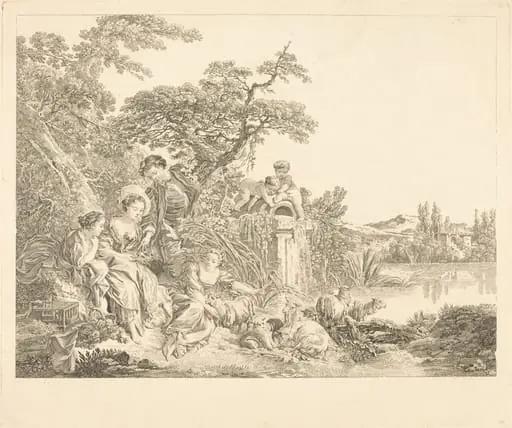 Les présents du berger
 Holy Family with Putti
 La Bonne Aventure
 Cupid
Cupid The Flight into Egypt