Artwork
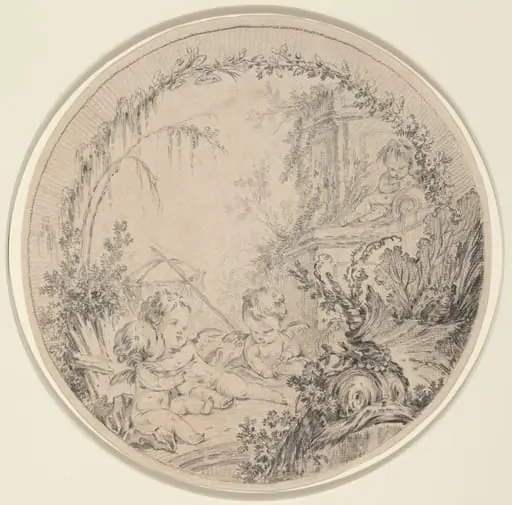
Two Putti Playing with Swans
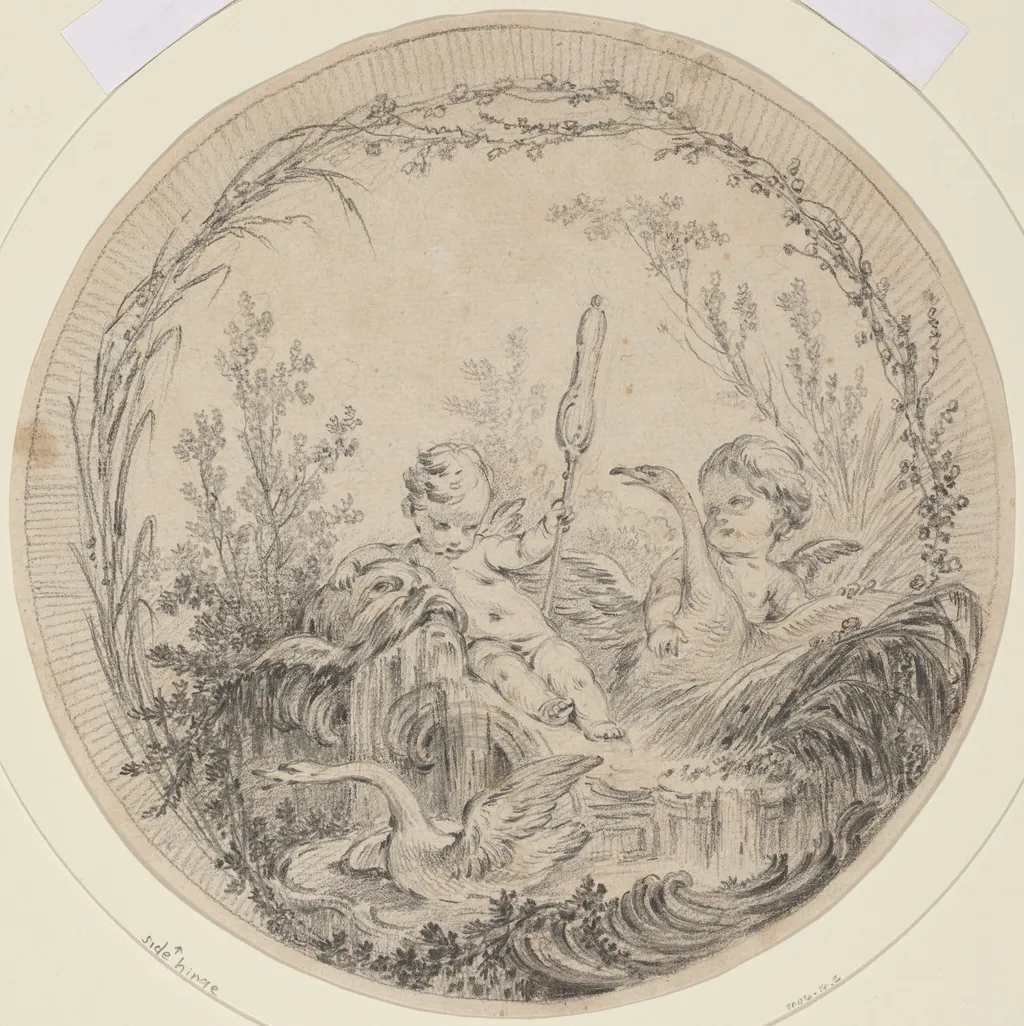
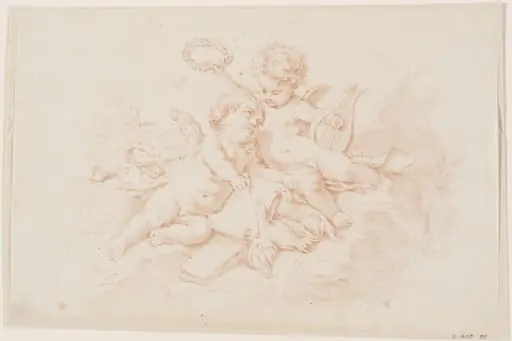
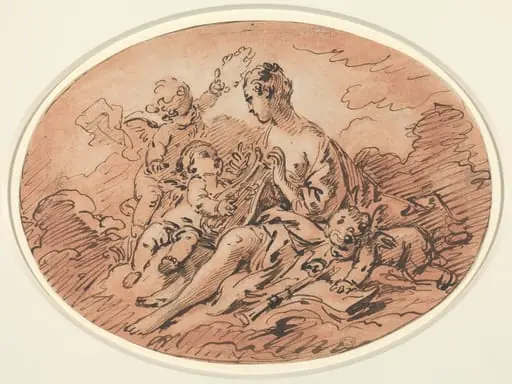
Two Putti Playing with Swans is a chalk drawing by the Baroque artist Charles Eisen. It dates from 1749 and is held in the collection of the National Gallery of Art.
About this work
Overview
Created in 1749 by Charles Eisen, this drawing depicts two putti interacting with swans. Executed in black chalk on laid paper, it belongs to a tradition of delicate, intimate figure studies common in 18th-century French draftsmanship. Unlike grand Baroque paintings, this work emphasizes quiet motion and tender detail rather than theatricality.
Subject & Meaning
The two putti, infantile winged figures from classical mythology, engage playfully with swans, animals often associated with grace and purity. Their interaction suggests a pastoral ideal, blending mythological symbolism with natural observation. The scene evokes innocence and harmony, typical of Rococo sensibilities that favored light, lyrical themes over dramatic narratives.
Technique & Style
Eisen employed black chalk with subtle tonal variations to model forms softly, exploiting the texture of laid paper to enhance the delicacy of the lines.
Eisen employed black chalk with subtle tonal variations to model forms softly, exploiting the texture of laid paper to enhance the delicacy of the lines. The composition is intimate and uncluttered, with figures arranged in a gentle, rhythmic balance. The absence of dramatic lighting or intense emotion distinguishes it from Baroque conventions, aligning instead with the refined elegance of Rococo draftsmanship.
History & Provenance
The drawing is attributed to Charles Eisen, a French artist active in the mid-18th century known for illustrations and decorative designs. While its early ownership is undocumented, it likely originated as a preparatory study or independent work for print reproduction, a common practice among artists of the period seeking wider dissemination of their imagery.
Context
Created during the height of the Rococo era in France, the drawing reflects a cultural shift toward intimate, decorative art suited to private collections. While Baroque grandeur still influenced public monuments, domestic spaces favored lighter, more playful subjects. Eisen’s work fits within this trend, emphasizing charm and naturalism over monumental expression.
Legacy
Eisen’s drawings, including this one, contributed to the popularity of printmaking in 18th-century France. Though not widely celebrated today, his precise draftsmanship influenced illustrators and engravers who adapted such studies for books and decorative arts, preserving the Rococo aesthetic in printed form.
Artist & collection