Artwork
The Holy Family in the Carpenter's Shop
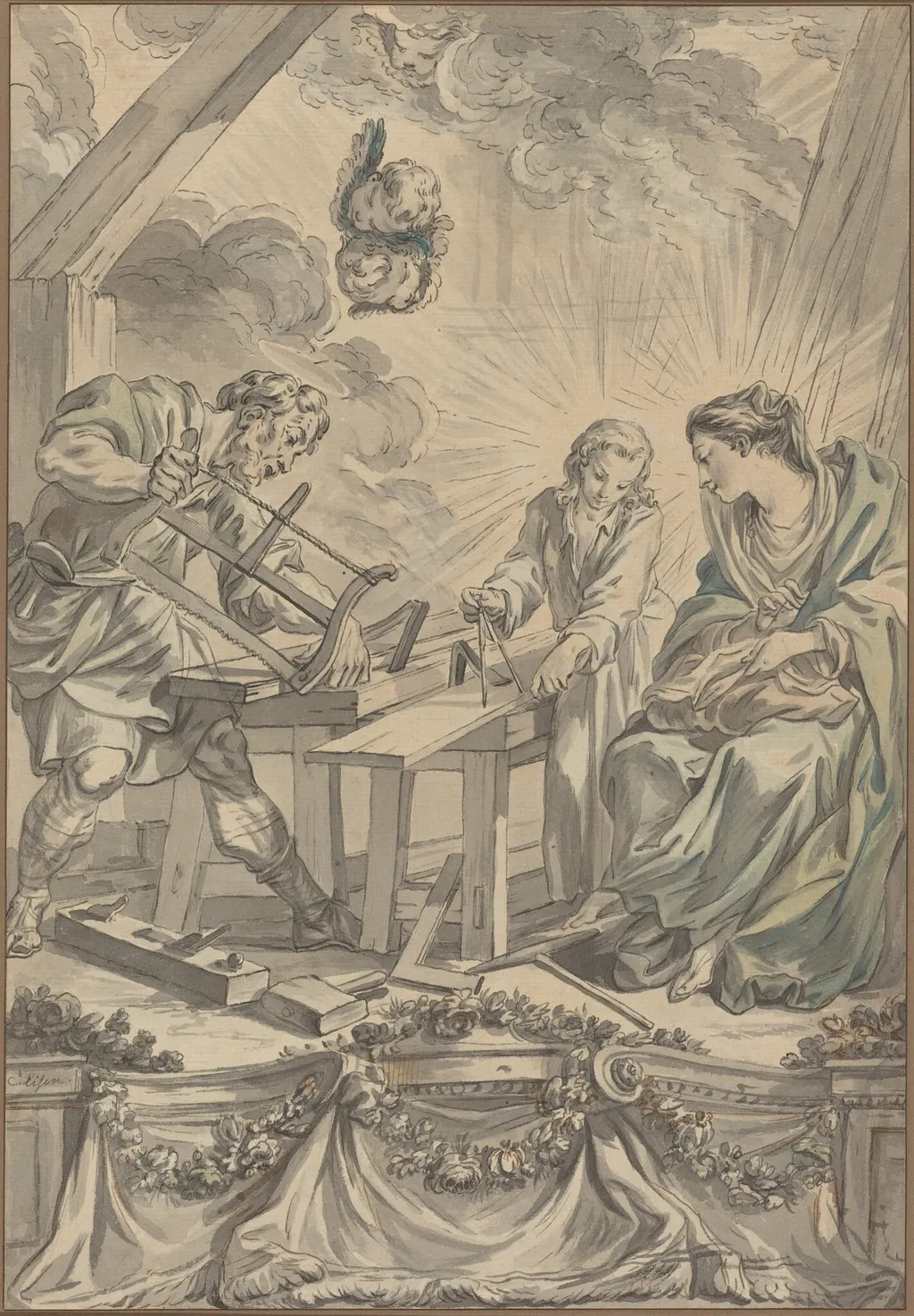
The Holy Family in the Carpenter's Shop is an ink drawing by the Romanticist artist Charles Eisen. It dates from 1755 and is held in the collection of the National Gallery of Art.
About this work
Overview
Charles Eisen’s drawing, dated around 1755, depicts a domestic workshop where the Holy Family is presented in a humble, everyday setting. Executed on laid paper, the work combines pen, gray ink, watercolor, white gouache and touches of brown ink, creating a muted palette that emphasizes the scene’s quiet intimacy.
Subject & Meaning
The composition brings together three figures: a bearded man handling a saw and a wooden crosspiece, a boy perched on a workbench observing, and a woman seated and sewing. By placing the Holy Family within a carpenter’s shop, the image underscores themes of labor, humility and the sanctity of ordinary life.
Technique & Style
Eisen employs a restrained gray wash over delicate pen work, allowing the ink lines to define form while the watercolor adds subtle tonal variation. The application of white gouache highlights highlights on the figures and tools, and thin layers of brown ink suggest the texture of wood, giving the drawing a sketch‑like yet carefully rendered quality.
History & Provenance
Created in the mid‑18th century, the drawing reflects the period’s interest in devotional images that merged religious narrative with genre scenes. Its provenance traces back to private collections before entering a museum holding, where it is catalogued as a representative example of Eisen’s religious illustrations.
Context
During the 1750s, artists often used modest media such as ink and watercolor to produce works for personal devotion or small‑scale circulation. Eisen’s choice of a workshop setting aligns with contemporary efforts to make sacred stories relatable to everyday viewers.
Legacy
The piece remains a valuable illustration of how 18th‑century artists integrated religious iconography with domestic realism, offering insight into both devotional practice and the visual culture of the period.
Artist & collection


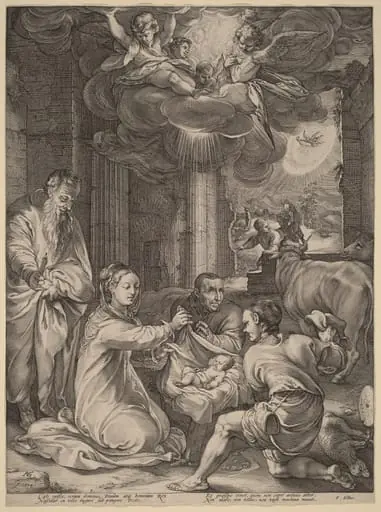 The Adoration of the Shepherds
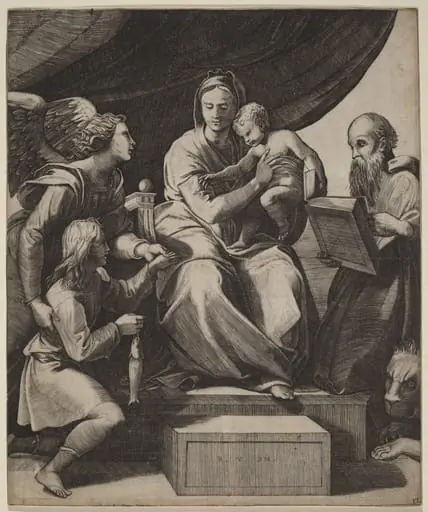 The Virgin with a Fish
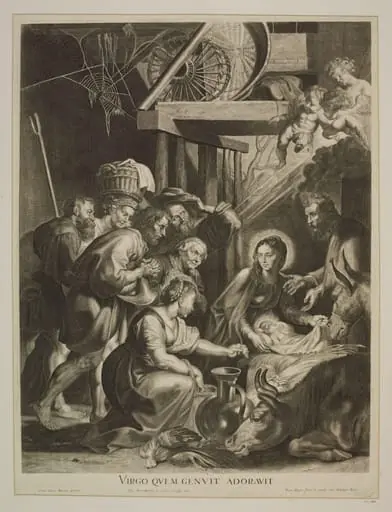 Adoration of the Shepherds
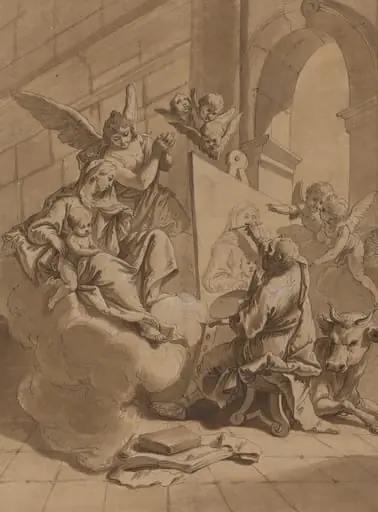 Saint Luke Painting the Virgin
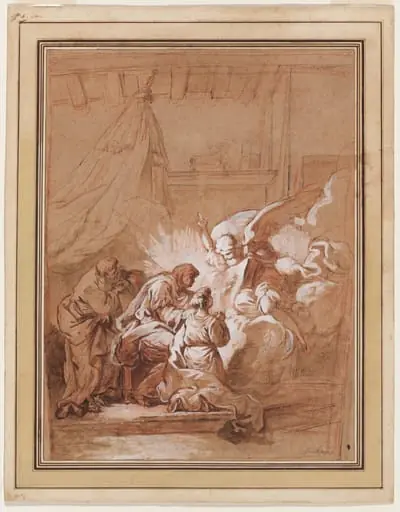 The Education of the Virgin
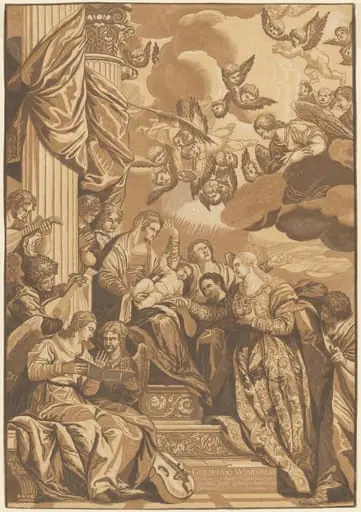 Mystic Marriage of St. Catherine
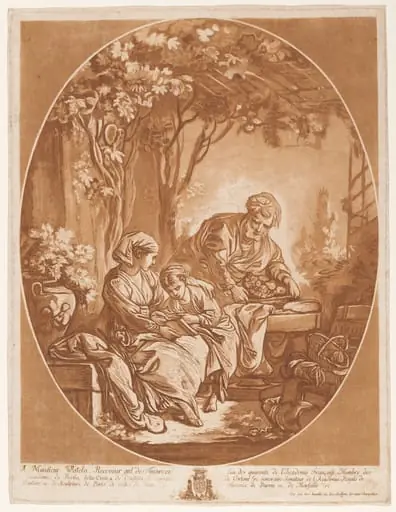 Education of the Virgin
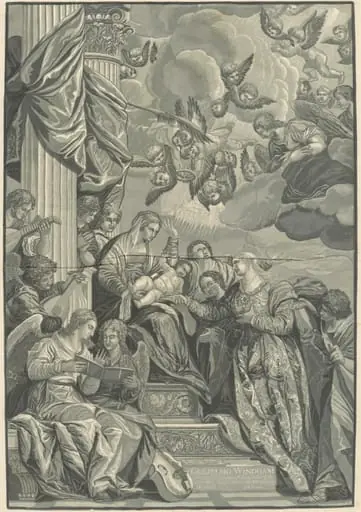 Mystic Marriage of Saint Catherine
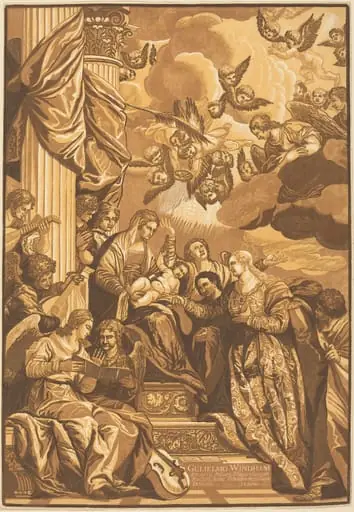 The Mystic Marriage of Saint Catherine
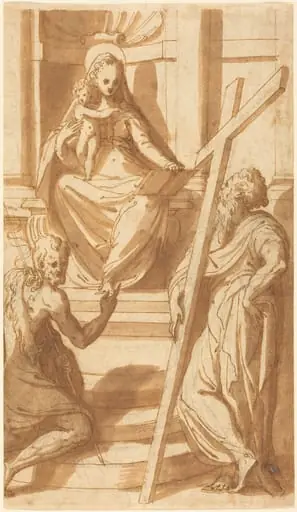 The Madonna and Child Enthroned with Saint John the Baptist and Saint Andrew
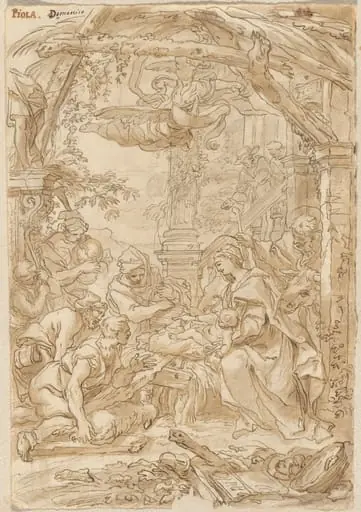 The Adoration of the Shepherds
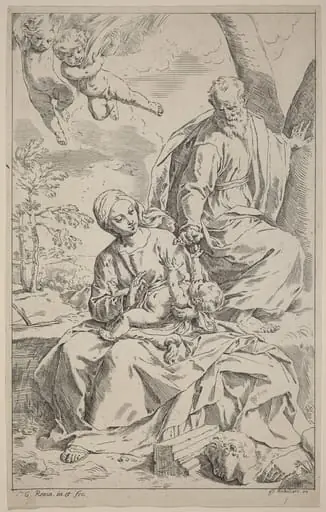 The Rest on the Flight into Egypt