Artwork
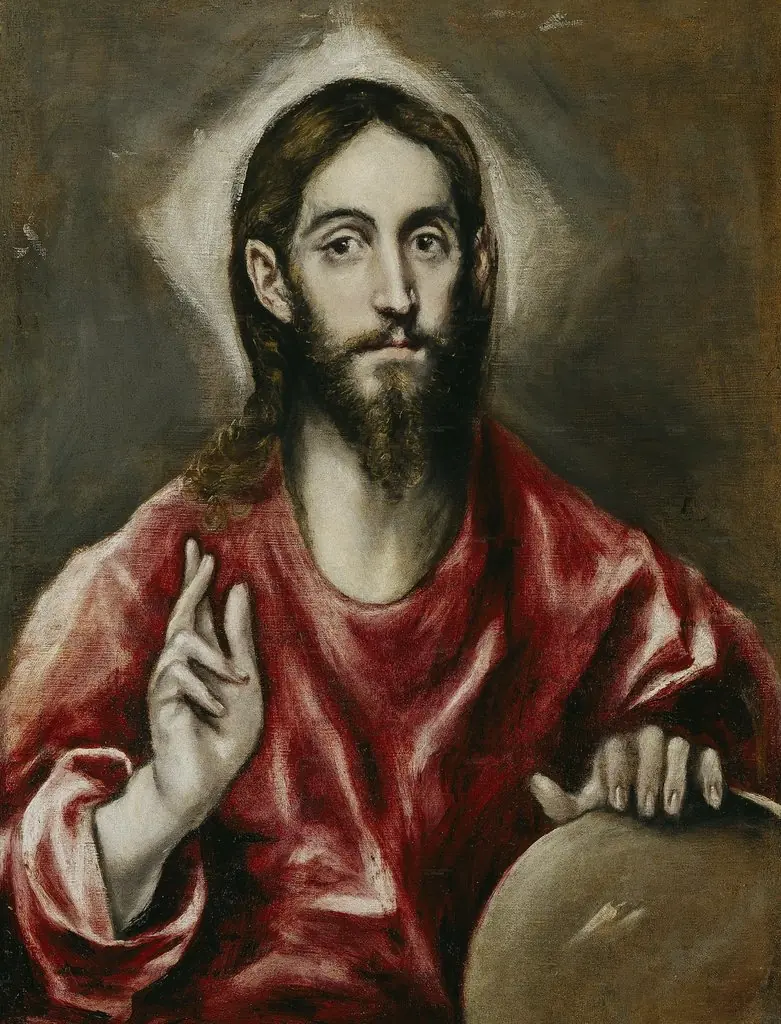
Christ Blessing, The Saviour of the World
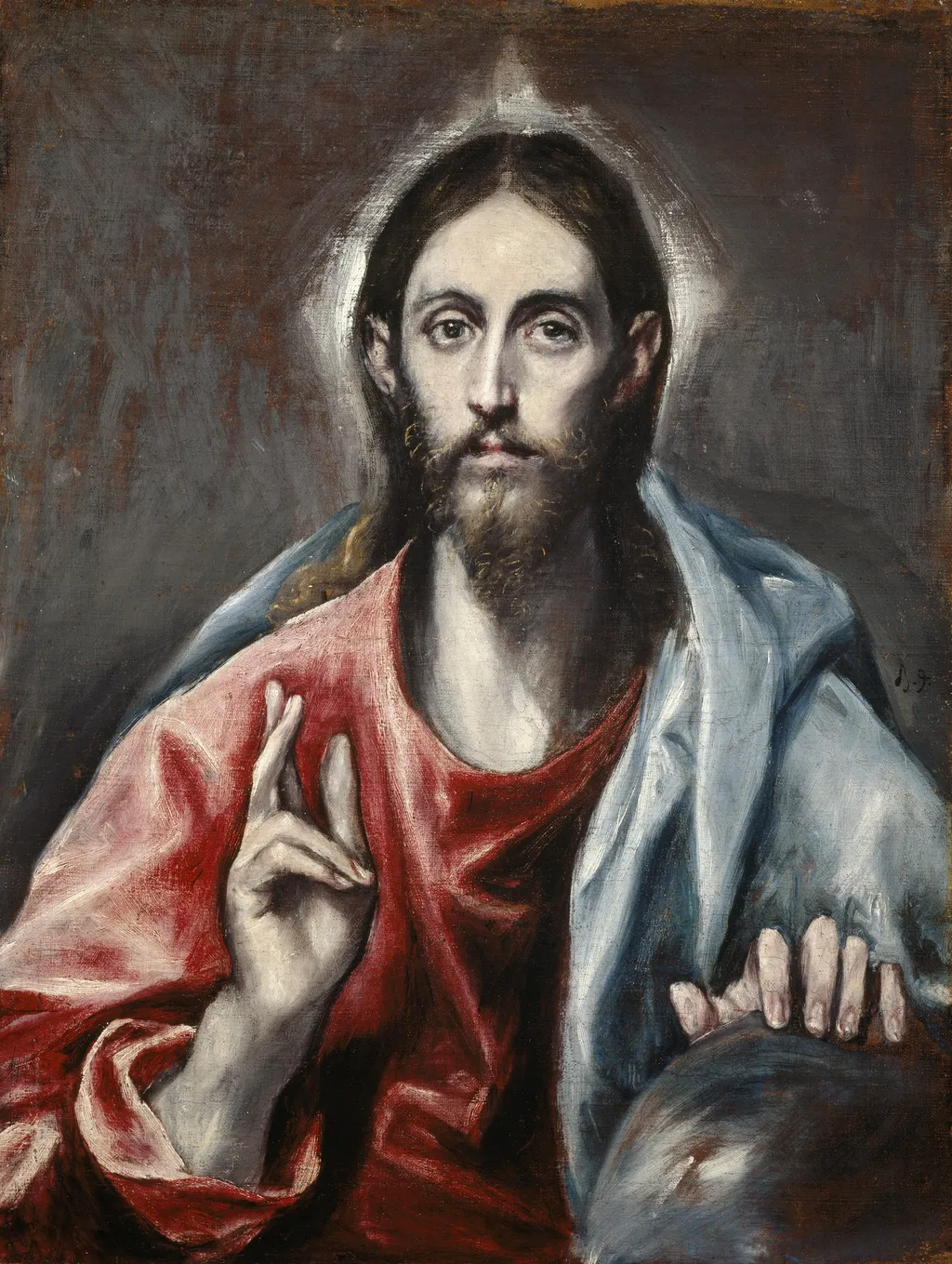
Christ Blessing, The Saviour of the World is an oil painting by the Mannerist artist El Greco. It dates from 1600 and is held in the collection of the National Galleries Scotland.
About this work
Overview
The painting is currently housed in the Scottish National Gallery, where it remains a key example of the artist’s later religious output.
Painted around 1600, this oil on canvas work by El Greco portrays Christ as the Saviour of the World. It belongs to the Mannerist tradition, characterized by expressive distortion and heightened emotional tone. The painting is currently housed in the Scottish National Gallery, where it remains a key example of the artist’s later religious output. Its compact scale and intense focus reflect the Counter-Reformation emphasis on personal devotion.
Subject & Meaning
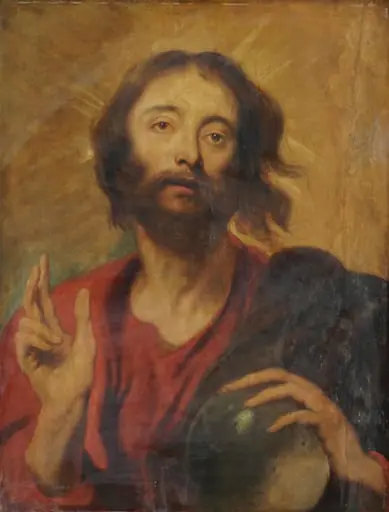
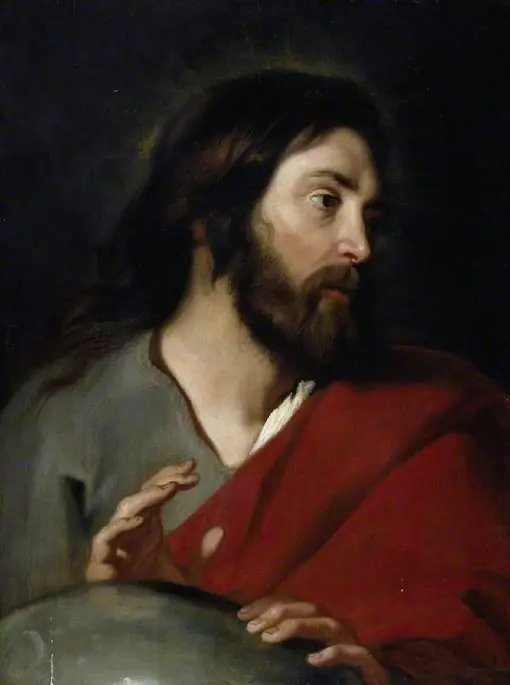
Christ is depicted with long dark hair and a beard, clad in a crimson robe and deep blue mantle, his right hand raised in benediction while his left rests upon a globe. The globe symbolizes his dominion over the earth, and the blessing gesture affirms his divine authority. The dark, undefined background isolates the figure, reinforcing his spiritual presence as the central object of veneration. The composition invites contemplation rather than narrative engagement.
Technique & Style
El Greco employs dramatic chiaroscuro to model Christ’s form, enhancing the three-dimensionality of his face and hands. Bold, fluid brushwork gives texture to the drapery, while the vivid red and blue garments contrast sharply against the shadowy surroundings. A faint halo of light encircles the head, not as a traditional aureole but as an atmospheric glow, suggesting inner radiance. The elongated proportions and heightened emotional intensity are hallmarks of his mature Mannerist style.
History & Provenance
The painting entered the Scottish National Gallery’s collection in the 19th century, though its earlier ownership remains unclear. It was likely commissioned for private devotion, possibly by a Spanish or Italian patron familiar with El Greco’s work in Toledo. No documentary evidence confirms its original context, but its intimate scale suggests it was intended for personal or small-scale religious use rather than public display.
Context
Created during the height of the Counter-Reformation, the image aligns with Catholic efforts to reinforce Christ’s divine role through emotionally resonant imagery. El Greco, working in Spain after training in Venice and Rome, synthesized Byzantine iconography with Italian Mannerism. His approach diverged from naturalism, favoring spiritual expression over physical accuracy, reflecting the theological priorities of the era.
Legacy
Though not among El Greco’s most widely reproduced works, this painting exemplifies his unique fusion of spiritual intensity and formal innovation. It influenced later artists drawn to expressive religious portraiture and remains a significant reference in studies of late Renaissance spirituality. Its presence in a major public collection ensures continued scholarly and public engagement with his distinctive visual language.
Own this work as a print
Artist & collection
Artist
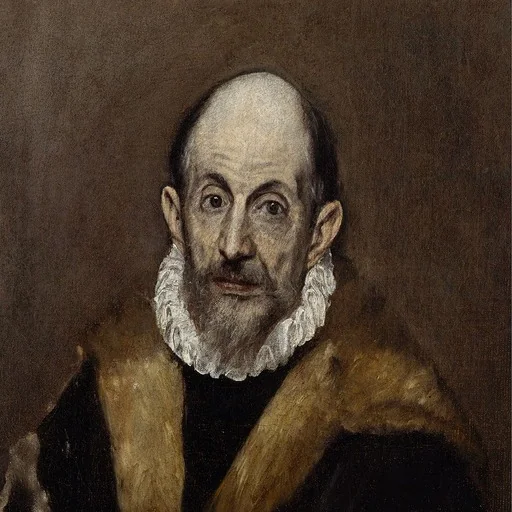
Doménikos Theotokópoulos was born in 1541 in Candia (modern Heraklion), the capital of Venetian-ruled Crete, where he was trained in the post-Byzantine tradition of icon painting.