Artwork
Christ Blessing
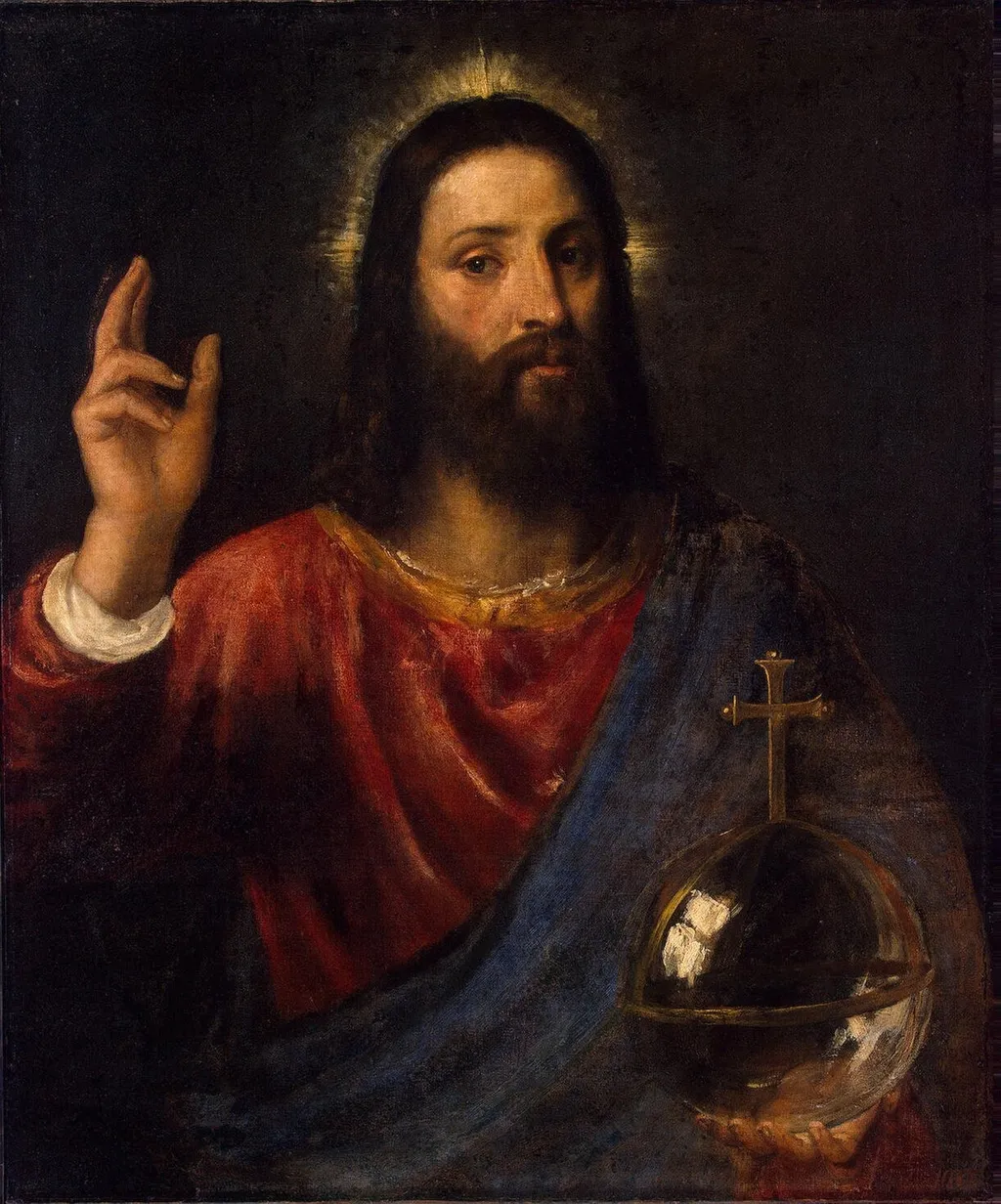
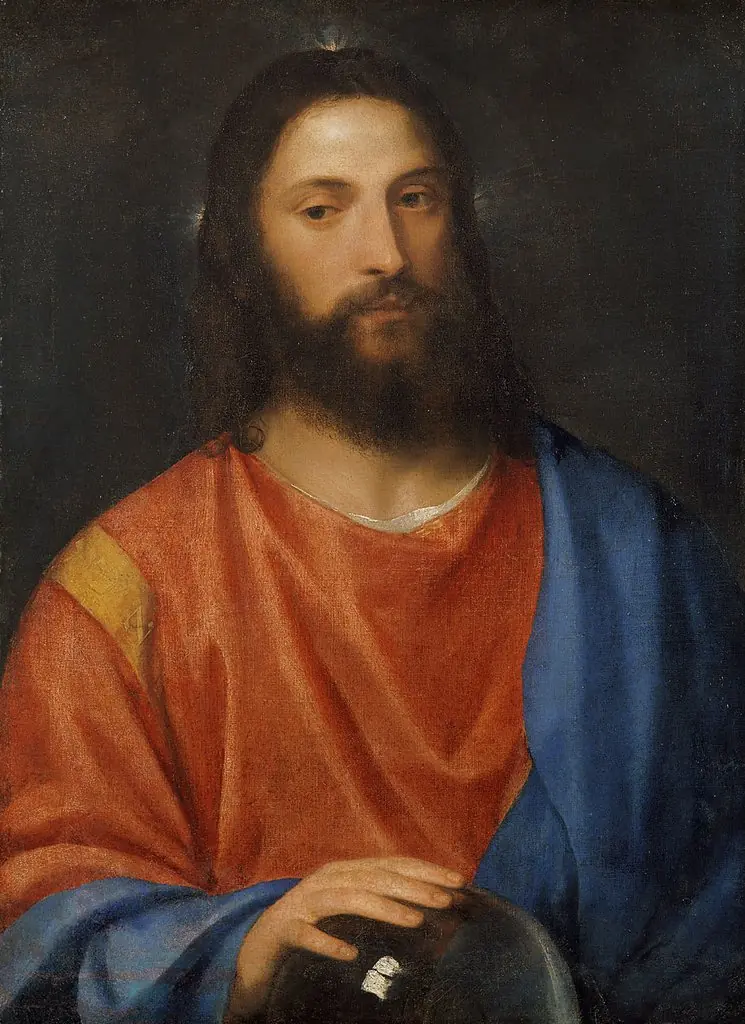
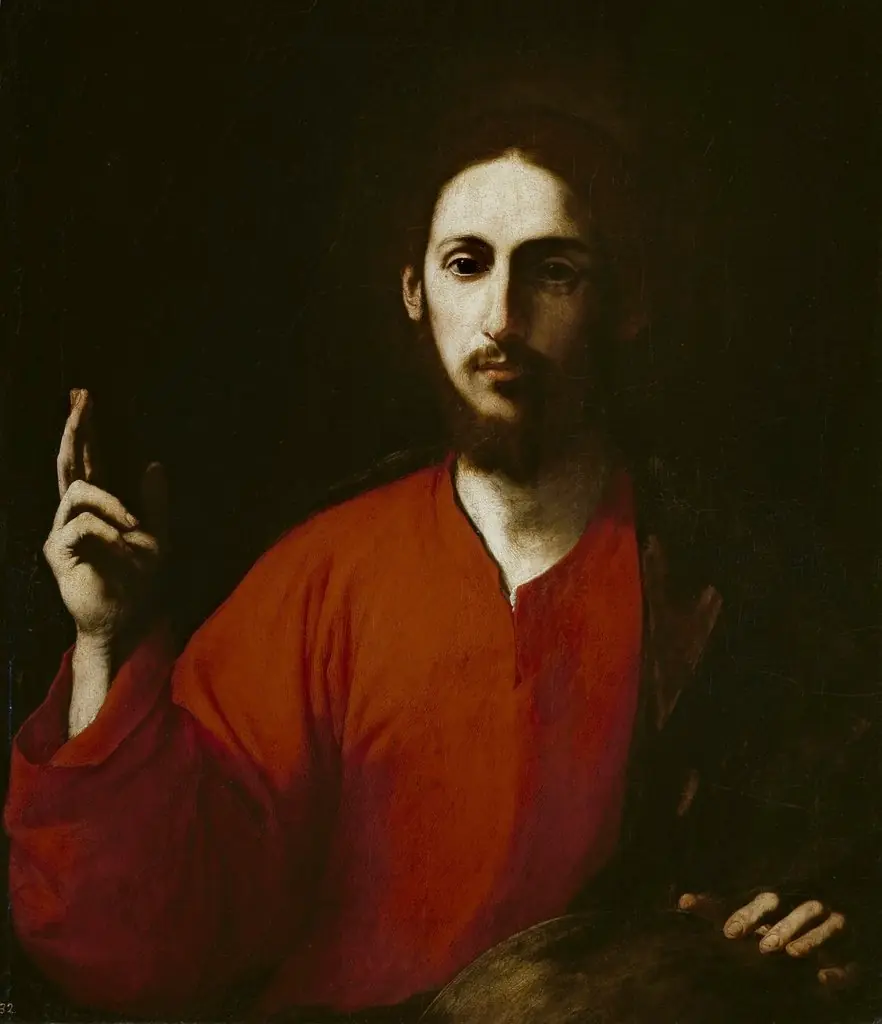
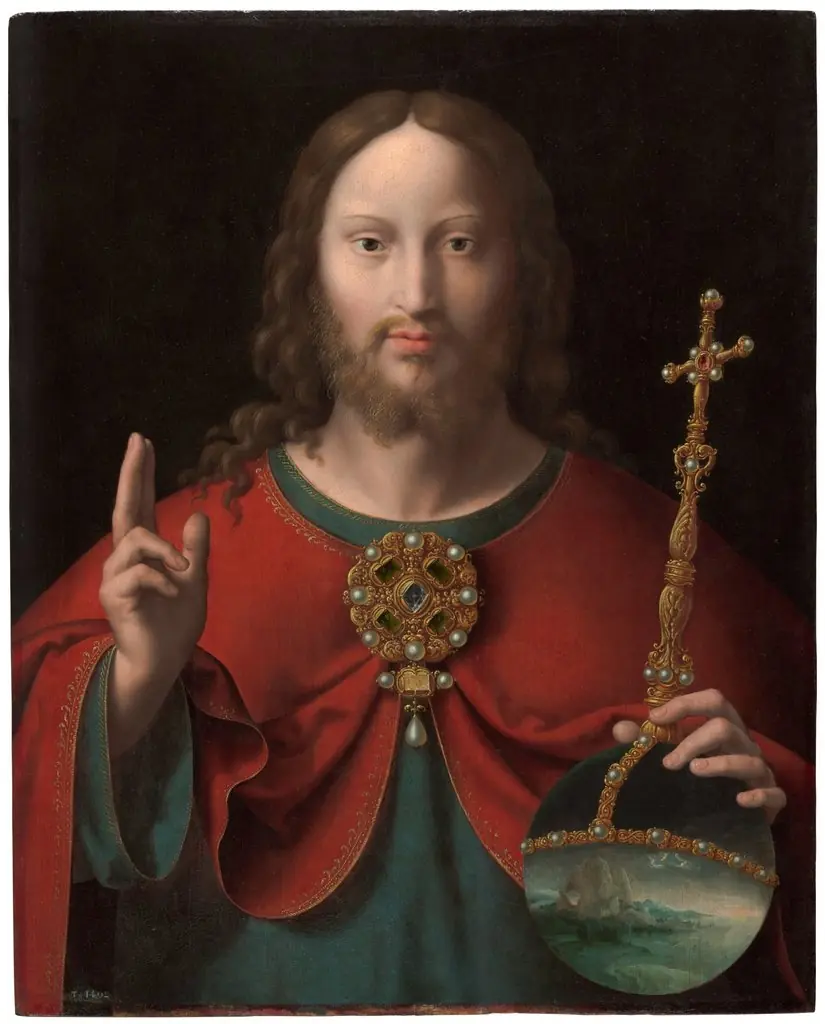
Christ Blessing is an oil painting by the Mannerist artist Titian. It dates from 1570 and is held in the collection of the Hermitage Museum.
About this work
Overview
Christ Blessing, painted in 1570 by Titian, is an oil-on-canvas work depicting Jesus Christ as Salvator Mundi. It exemplifies the Mannerist style within the Italian Renaissance.
Subject & Meaning
The painting portrays Jesus Christ with symbolic attributes: a halo, a globe (representing worldly dominion), and a blessing gesture. These elements convey Christ's divine authority and benevolence.
Technique & Style
Titian's mastery of color and chiaroscuro is evident in the contrast between Christ's vibrant robes (red, white, and blue) and the dark, gradient background, which creates depth and volume.
History & Provenance
Created by Titian (c. 1488–1490 – 1576), a leading Venetian painter, the work is now part of the State Hermitage Museum's collection.
Context
As a product of the Italian Renaissance's Mannerist phase, Christ Blessing reflects Titian's versatility in religious themes, influencing subsequent artistic generations.
Legacy
Titian's impact on later artists stems from his innovative use of color and composition, as seen in Christ Blessing, which continues to be studied for its artistic and thematic depth.
Artist & collection

Artist
Tiziano Vecellio (Italian: ; c. 1488/1490 – 27 August 1576), Latinized as Titianus, hence known in English as Titian ( TISH-ən), was an Italian Renaissance painter. The most important artist of Renaissance Venetian…