Artwork
Christ with the cross
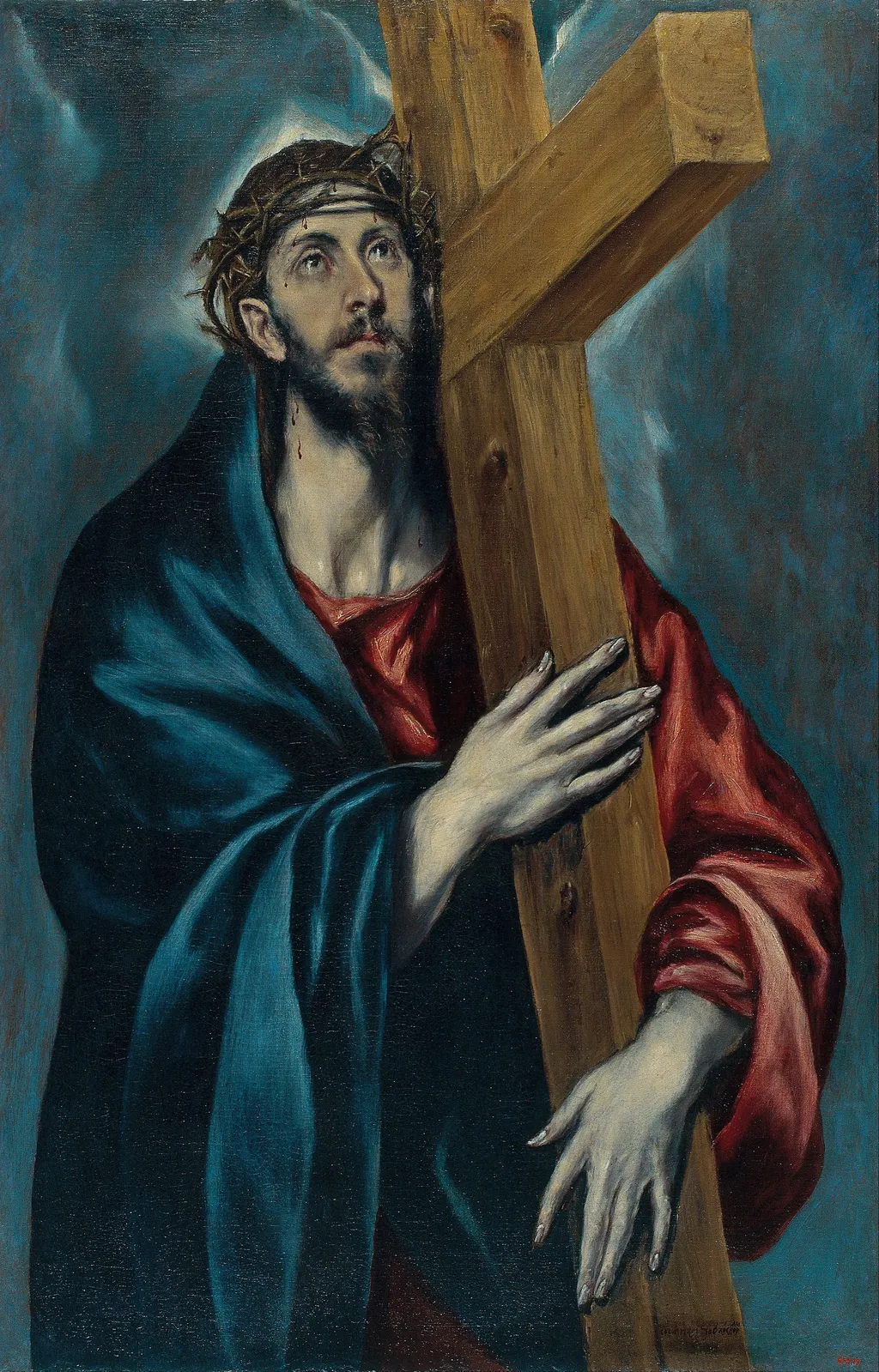
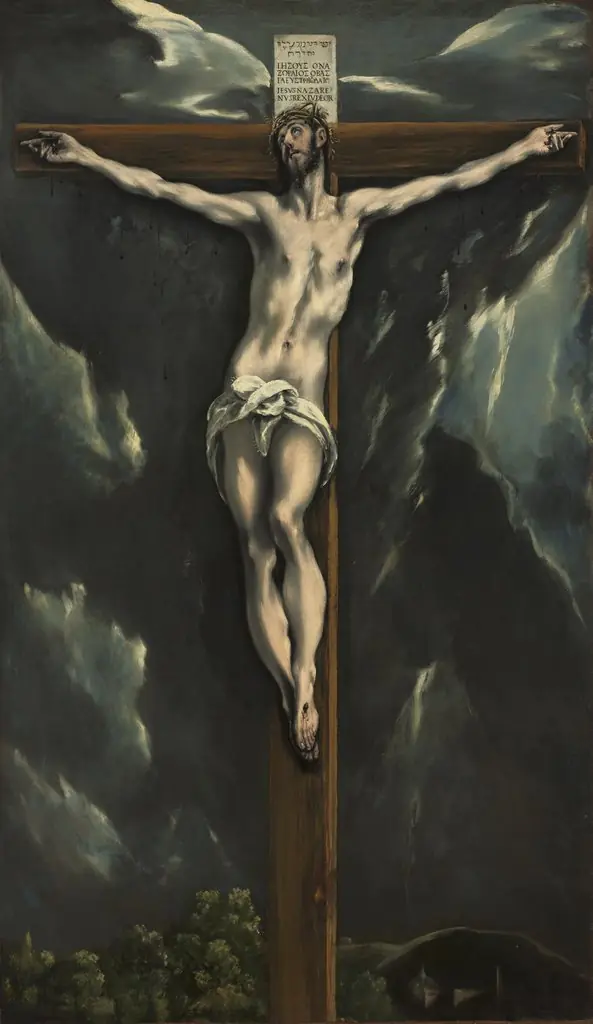
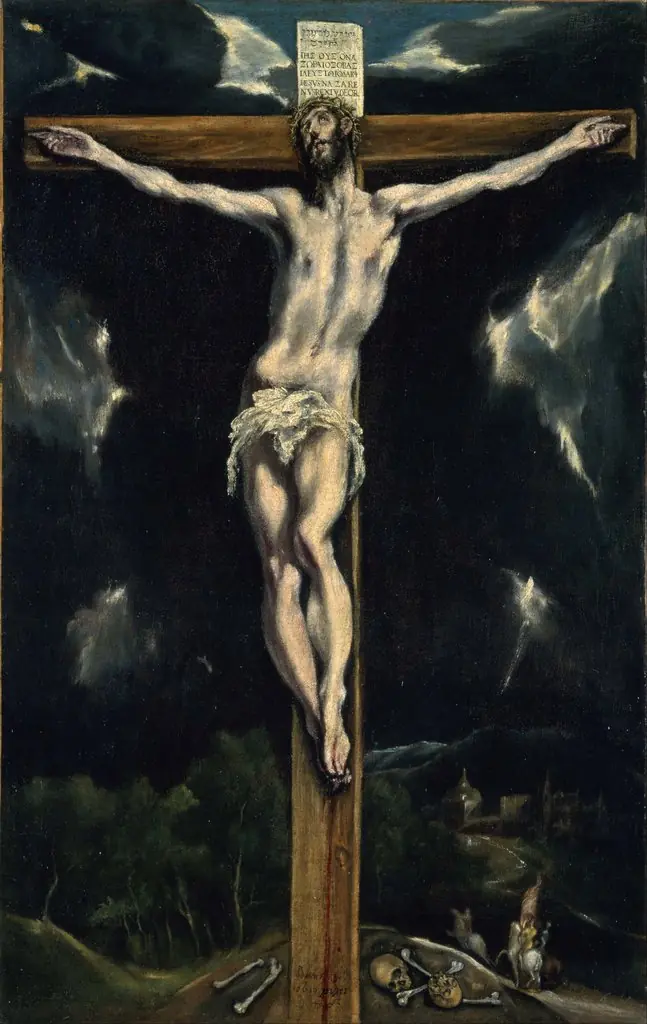
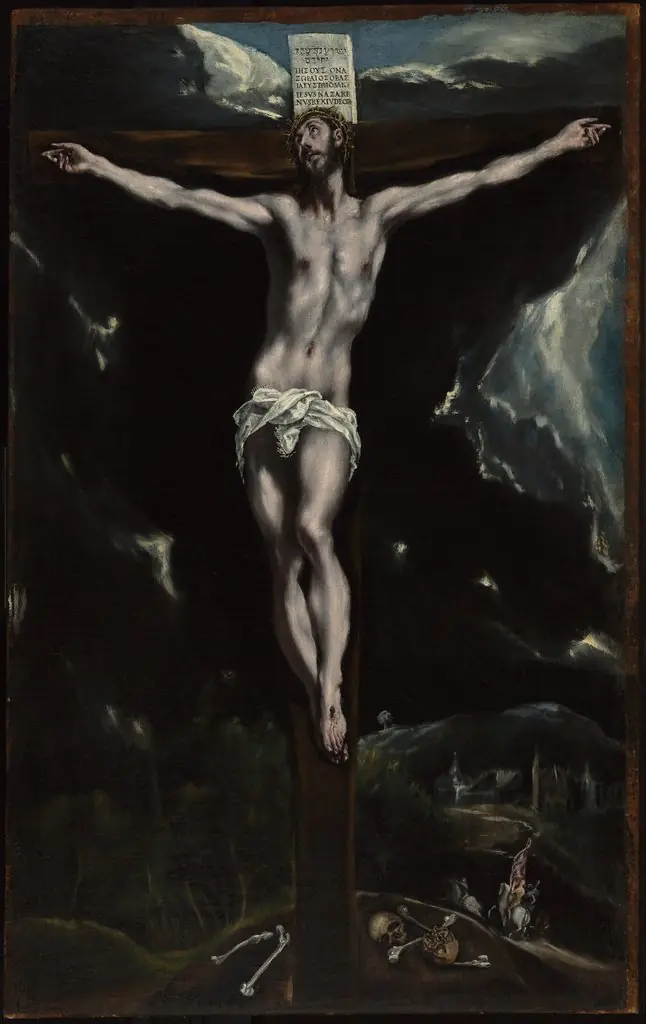
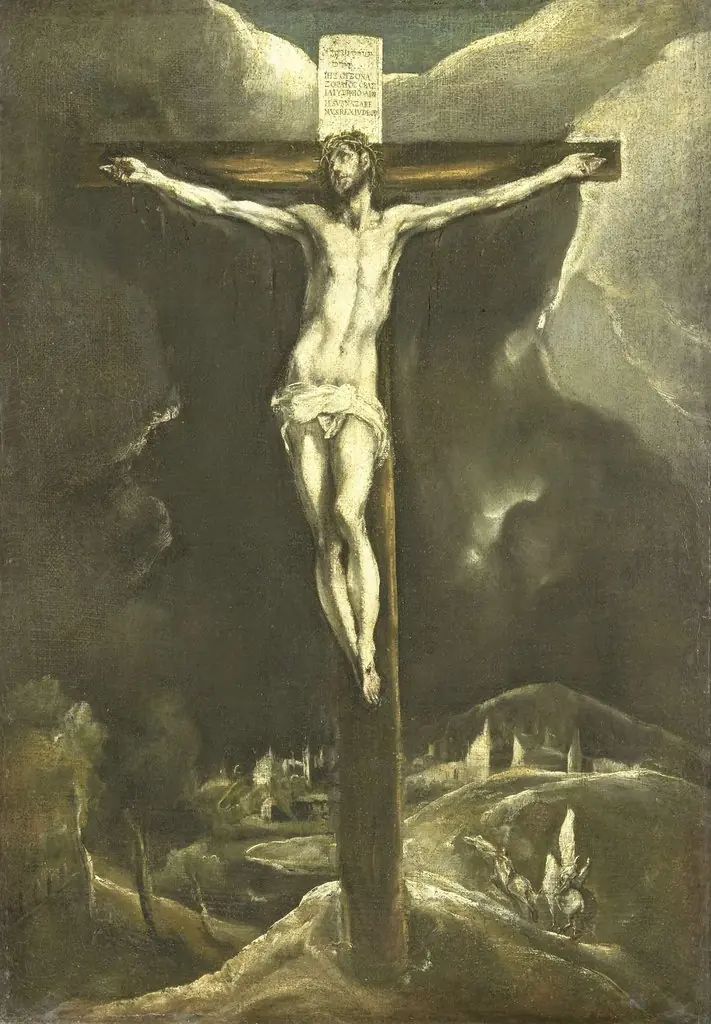
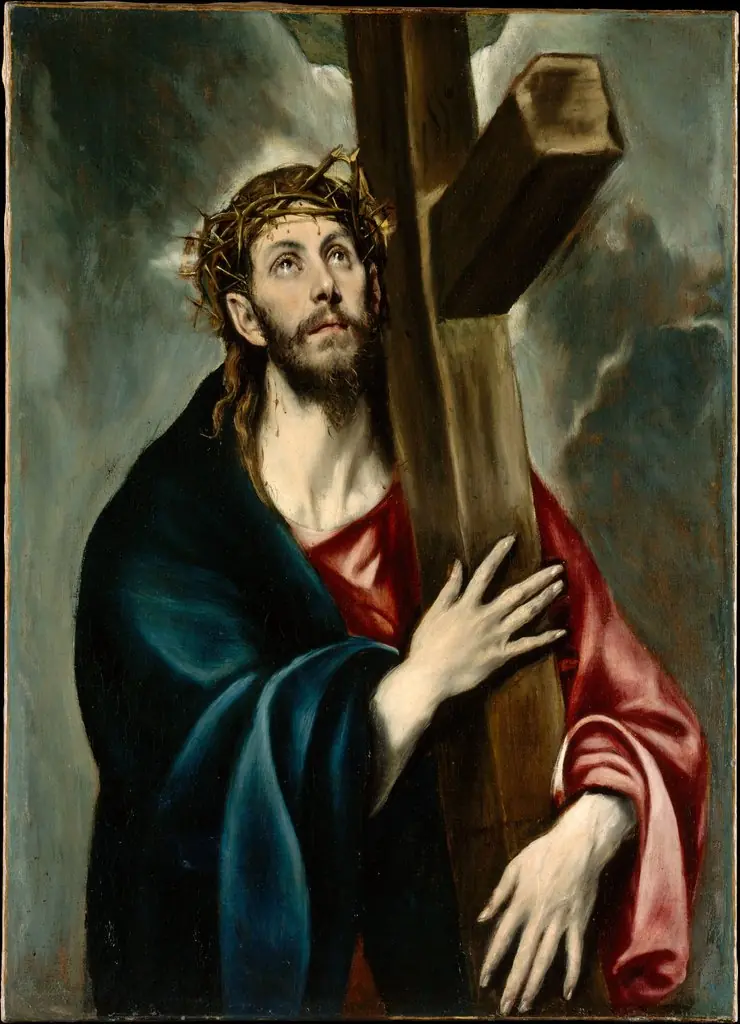
Christ with the cross is an oil painting by the Mannerist artist El Greco. It dates from 1596 and is held in the collection of the Museu Nacional d'Art de Catalunya.
About this work
Overview
Christ with the cross is a painting executed in oil paint, created between 1590 and 1595 by the renowned artist El Greco. The work depicts a pivotal moment in Christian iconography.
Subject & Meaning
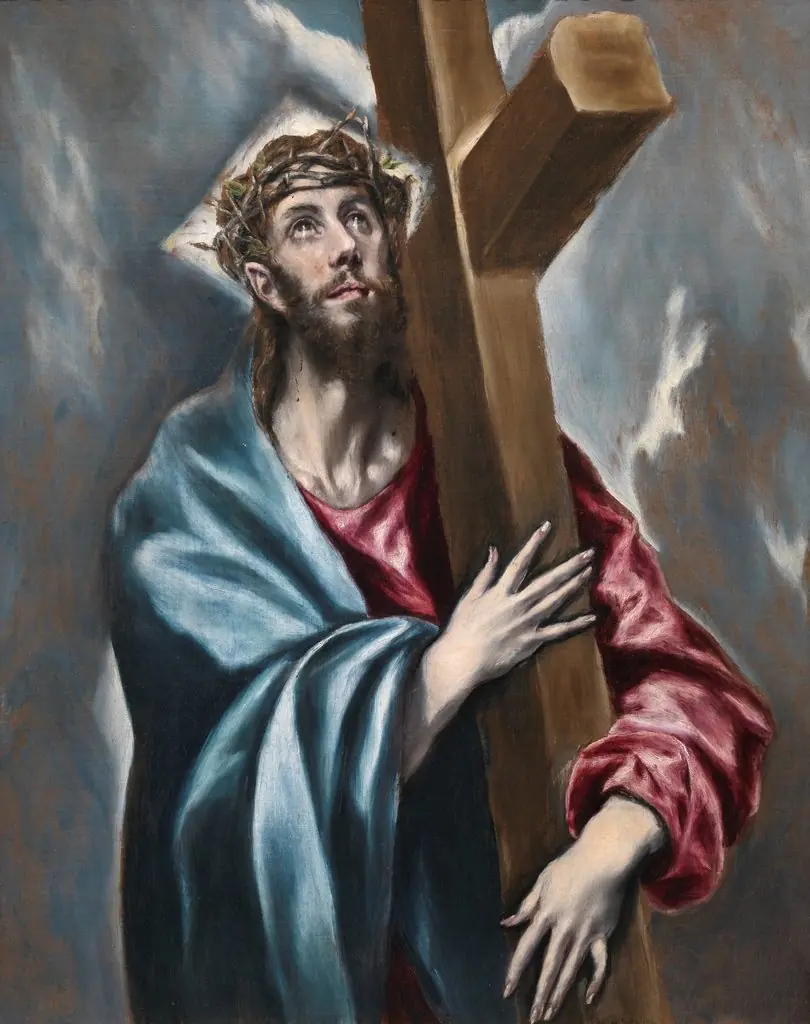
The painting portrays Christ bearing the cross, symbolizing his journey to crucifixion. Christ is dressed in a red robe overlaid with a blue shawl, and wears a crown of thorns. His upward gaze and grasping pose convey a somber, contemplative mood, inviting reflection on sacrifice and redemption.
Technique & Style
El Greco's characteristic style is evident in the dramatic pose, expressive use of color (notably the red and blue attire against a muted, dark blue-gray background suggestive of a cloudy sky), and the emotional intensity of Christ's figure, all hallmarks of the artist's unique blend of Byzantine and Western influences.
History & Provenance
The painting was owned by Aureliano de Beruete, a painter and critic, before passing to Santiago Espona, a Catalan collector, who bequeathed it to the National Art Museum of Catalonia in 1958, where it remains part of the collection.
Context
Created during the late 16th century, this work reflects El Greco's establishment in Spain and his interpretation of Christian themes for a European audience, blending spiritual depth with artistic innovation.
Legacy
As one of El Greco's works from his mature period, 'Christ with the cross' contributes to the artist's legacy of emotionally charged, spiritually profound depictions of religious subjects, continuing to influence perceptions of Christian art.
Own this work as a print
Artist & collection
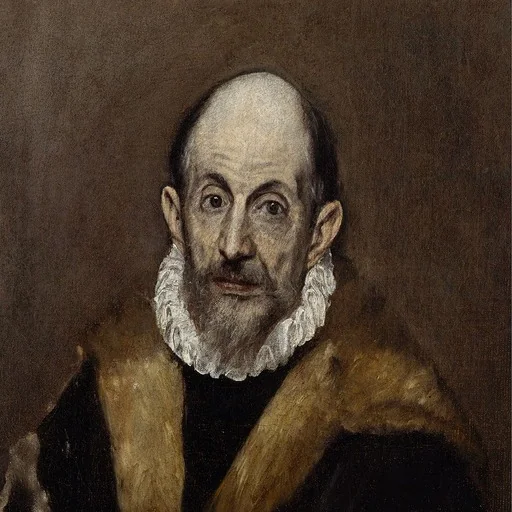
Artist
Doménikos Theotokópoulos was born in 1541 in Candia (modern Heraklion), the capital of Venetian-ruled Crete, where he was trained in the post-Byzantine tradition of icon painting.