Artwork
The Annunciation
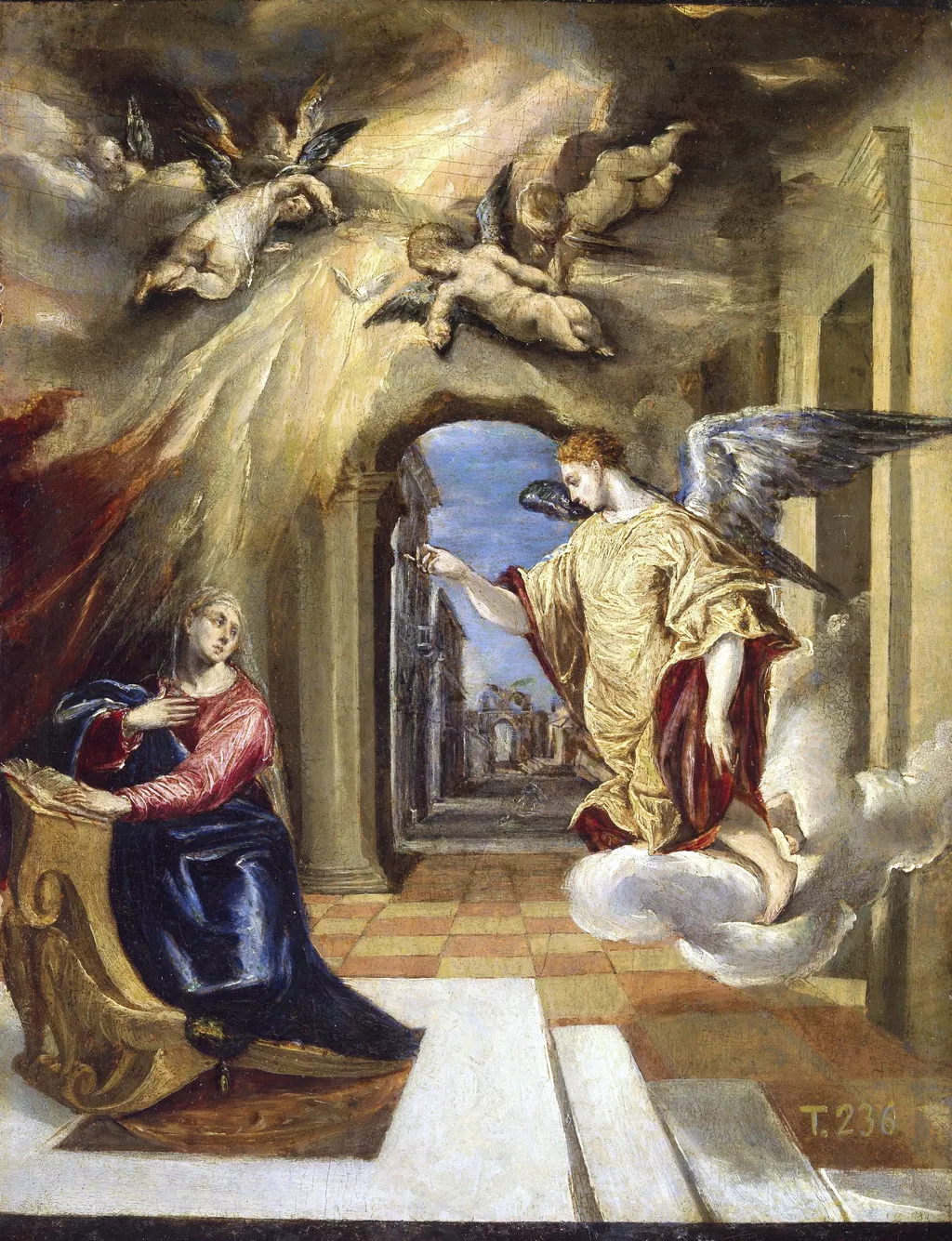
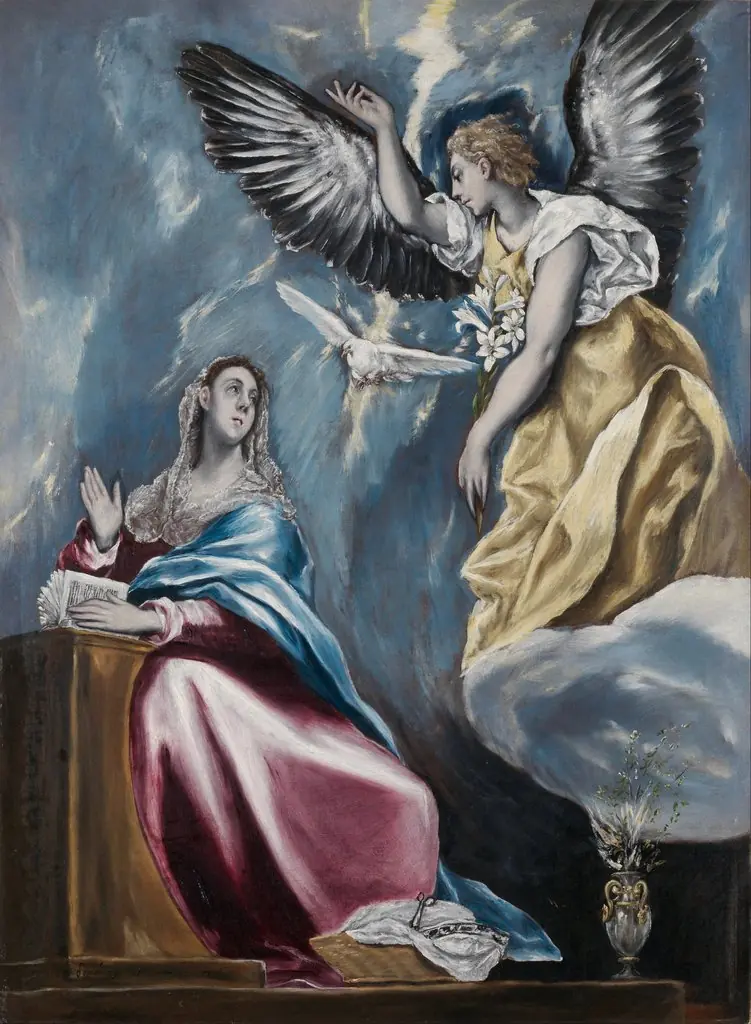
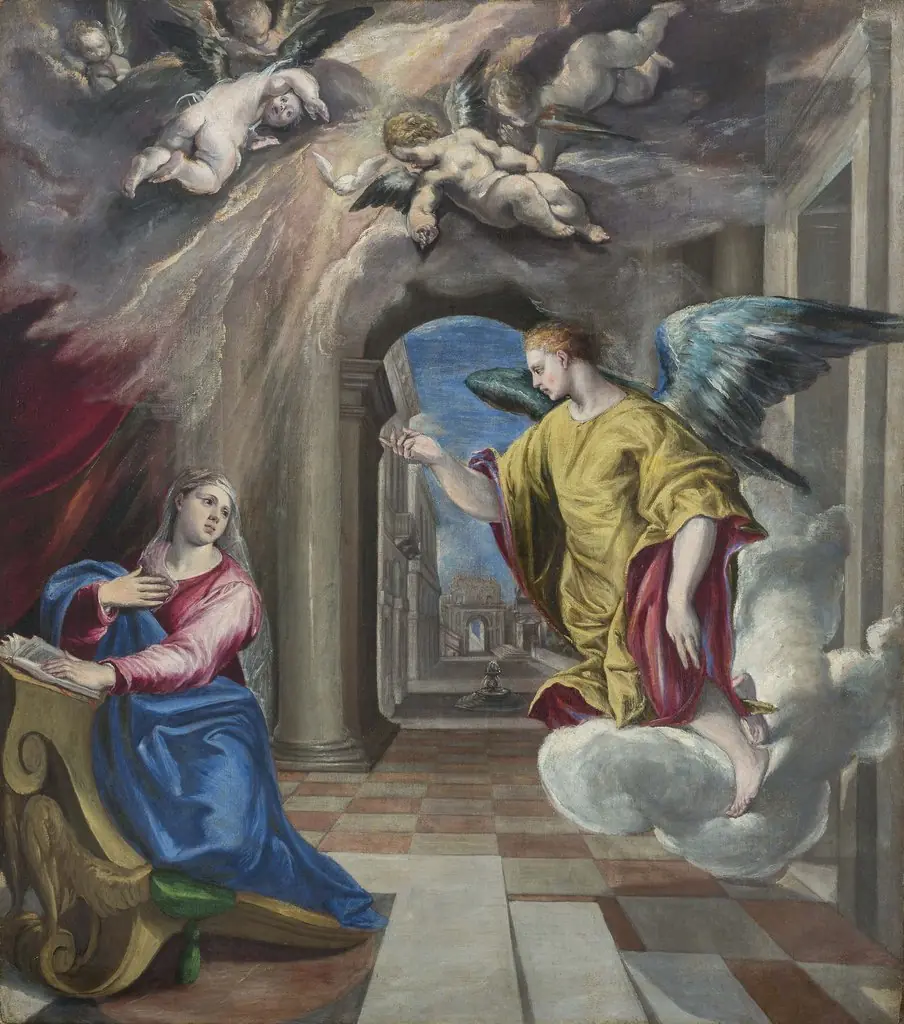
The Annunciation is an oil painting by the Mannerist artist El Greco. It dates from 1570 and is held in the collection of the Museo del Prado.
About this work
Overview
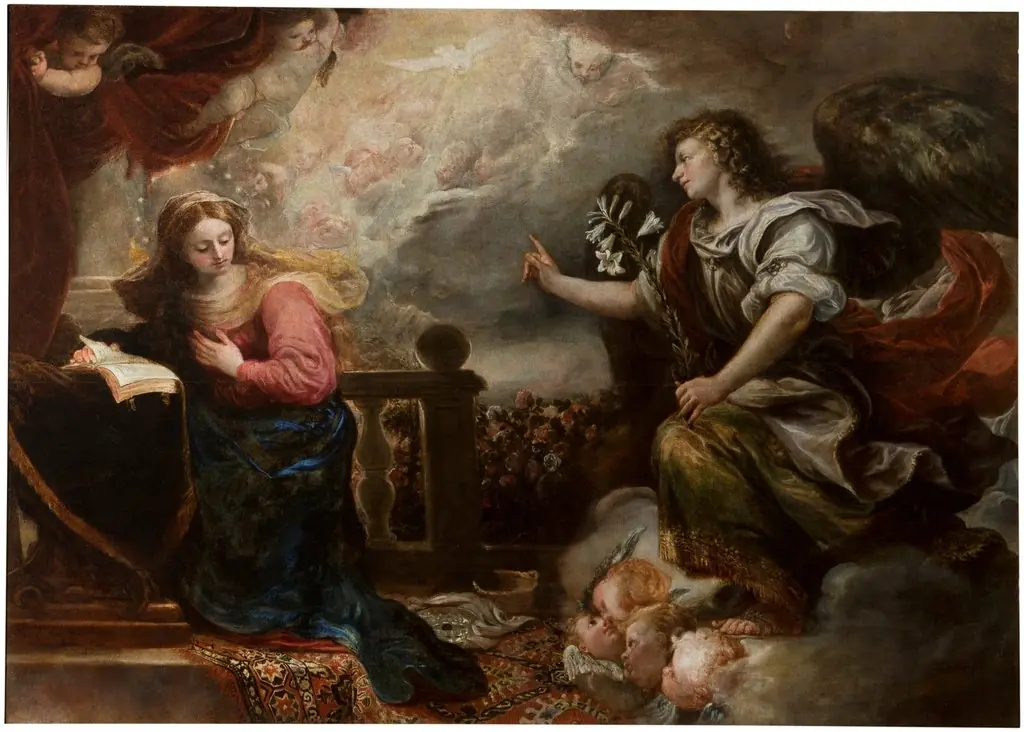
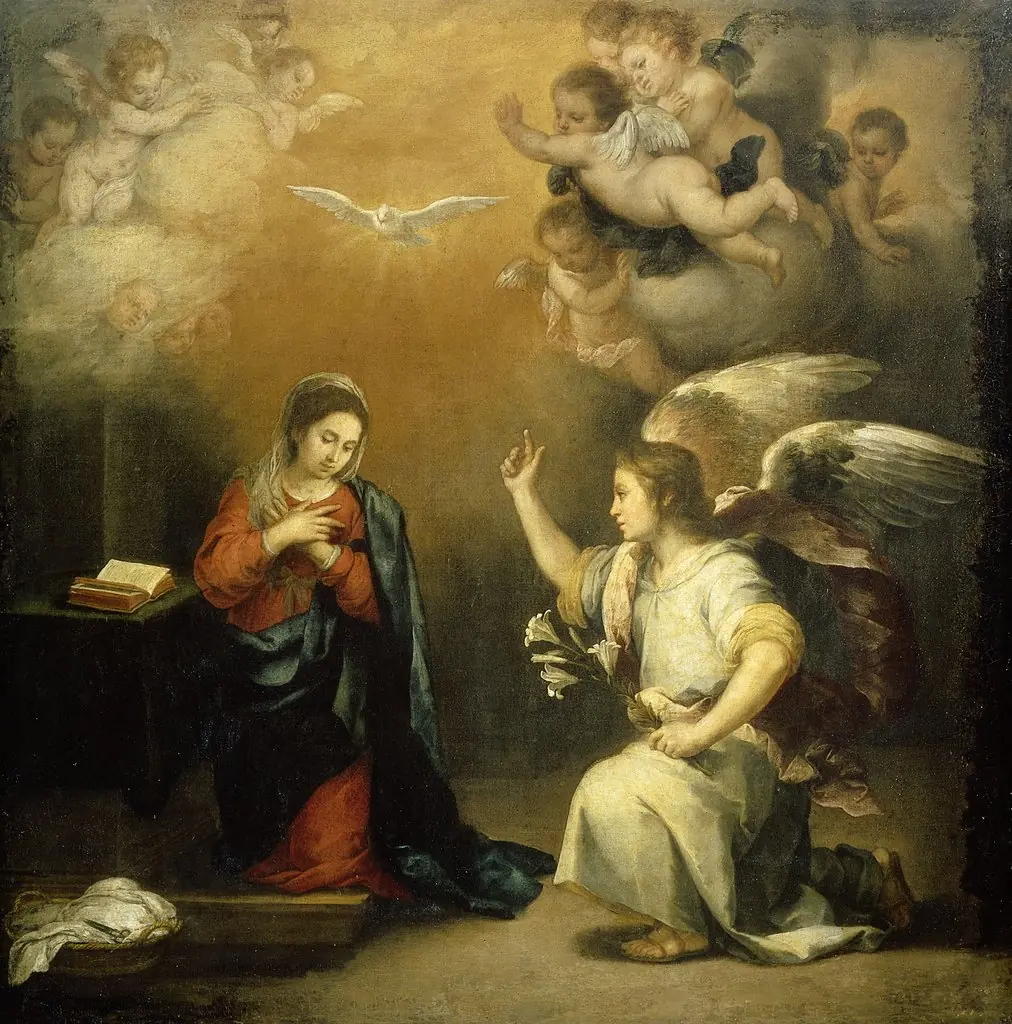
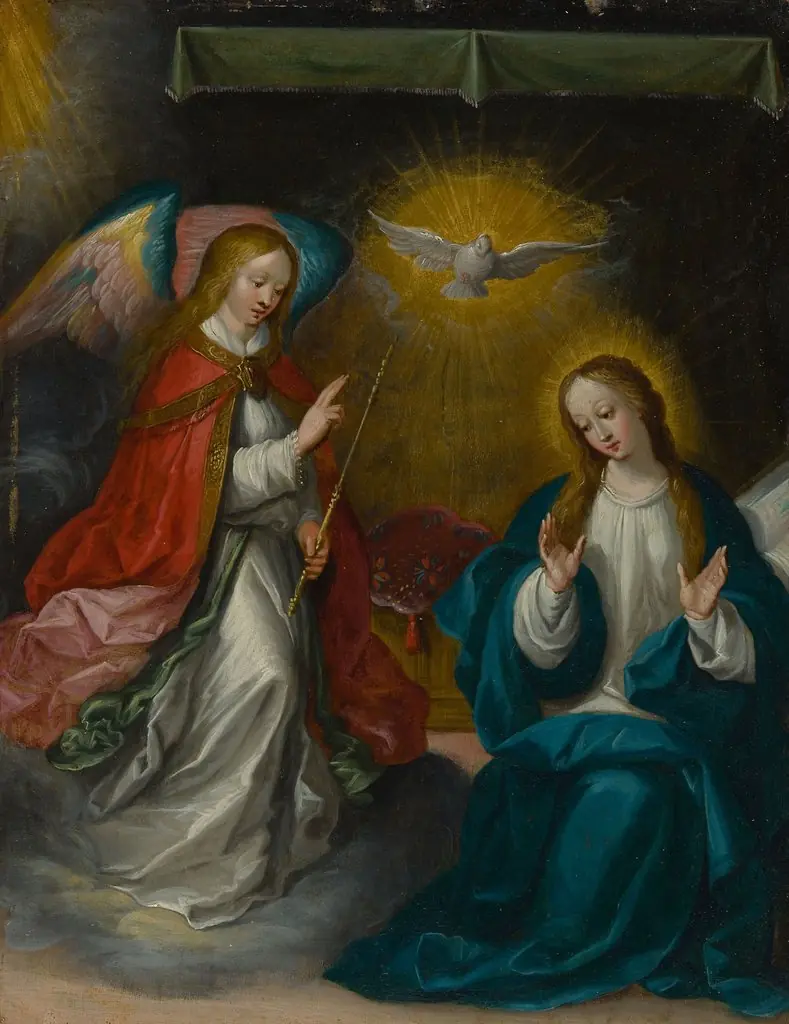
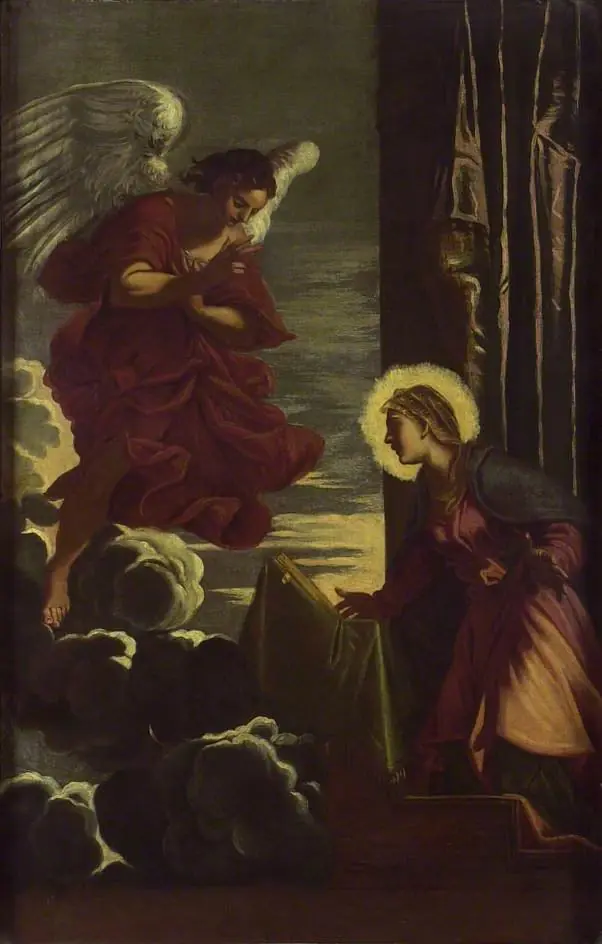
Created in 1570, this oil painting by El Greco—born Doménikos Theotokópoulos and active in the Spanish Renaissance—depicts the biblical Annunciation. It is part of the Prado Museum’s collection in Madrid and is thought to be based on an earlier engraving by the Italian printmaker Jacopo Caraglio.
Subject & Meaning
The composition shows the Archangel Gabriel delivering the news to Mary that she will bear the Christ child. Mary is seated on a throne, hands placed over her chest in a gesture of humility, while Gabriel, winged and robed in yellow with red trim, points toward her, emphasizing the moment of divine revelation.
Technique & Style
El Greco employs strong chiaroscuro to model the figures, giving them a three‑dimensional presence against a cloudy sky populated by cherubs and a distant cityscape. The use of vivid reds, blues, and golds highlights the figures, while the expansive wings and dramatic lighting reflect the influence of Venetian masters.
Historical Context
The work belongs to El Greco’s Venetian period, where he absorbed Titian’s treatment of female figures and Tintoretto’s dynamic compositional schemes. Scholars suggest it may have served as a preparatory study for the Modena Triptych, linking it to the artist’s broader religious output.
Provenance
After its creation, the painting entered various private collections before being acquired by the Museo del Prado, where it has remained on public display, offering insight into El Greco’s early stylistic development.
Own this work as a print
Artist & collection
Artist
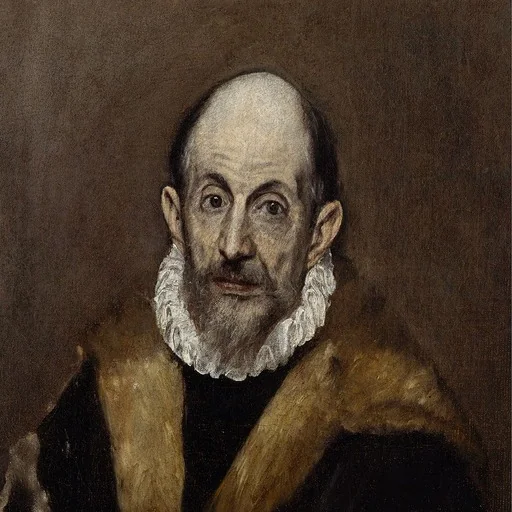
Doménikos Theotokópoulos was born in 1541 in Candia (modern Heraklion), the capital of Venetian-ruled Crete, where he was trained in the post-Byzantine tradition of icon painting.