Artwork
The Disrobing of Christ. Lyon half painting version
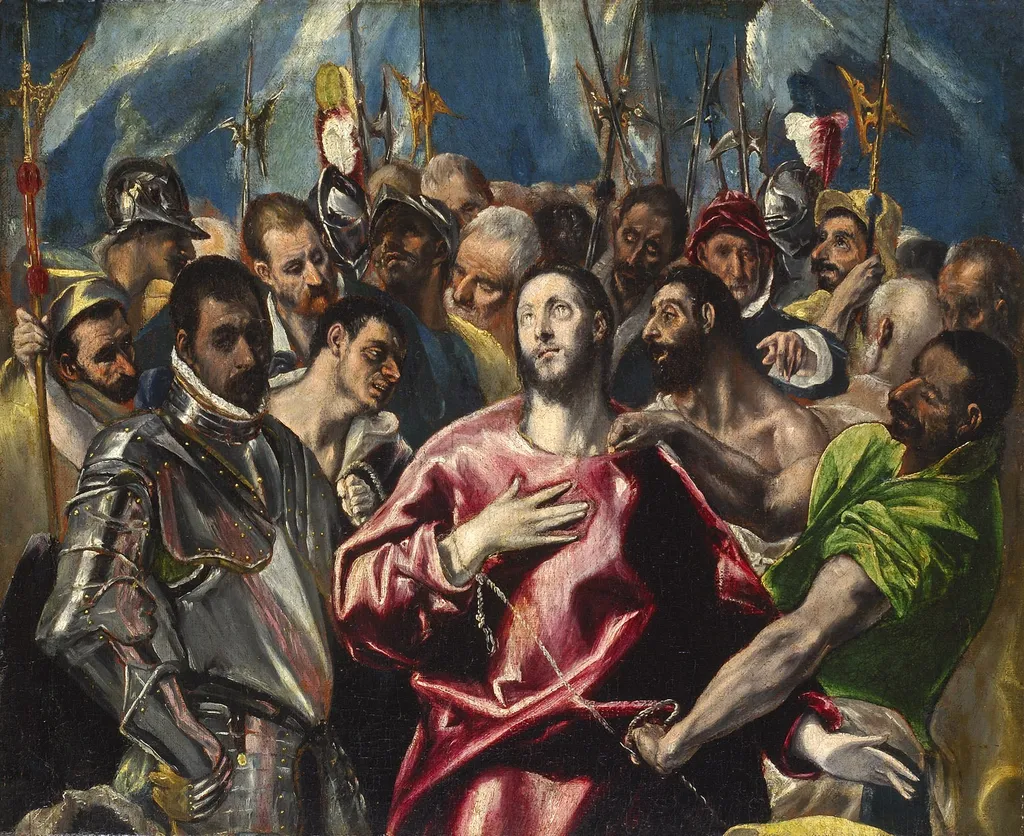
The Disrobing of Christ. Lyon half painting version is an oil painting by the Mannerist artist El Greco. It dates from 1592 and is held in the collection of the Museum of Fine Arts of Lyon.
About this work
Overview
The Disrobing of Christ (Lyon half painting version) is a 1592 oil painting by El Greco, depicting a pivotal moment in Christian iconography. The work is part of the collection at the Museum of Fine Arts of Lyon.
Subject & Meaning
The painting illustrates the moment before Christ's crucifixion, where he is stripped of his garments by a figure amidst a crowd of onlookers, including armed soldiers. The scene conveys tension and drama, emphasizing the emotional depth of the biblical event.
Technique & Style
El Greco employs chiaroscuro to create depth and volume, while vibrant colors, particularly the central red robe, direct the viewer's attention. The composition's energy and movement are heightened by the contrast between the blue sky with white clouds and the densely grouped figures.
History & Provenance
Created in 1592, the painting's history prior to its acquisition by the Museum of Fine Arts of Lyon is not detailed here, highlighting the need for further research into its provenance.
Context
This work reflects El Greco's interpretation of religious themes, characteristic of his oeuvre, blending Byzantine and Western European artistic influences.
Legacy
As one of El Greco's works from his later period, it contributes to the artist's legacy in depicting religious subjects with intense emotional and spiritual depth, influencing subsequent artistic interpretations of similar themes.
Own this work as a print
Artist & collection
Artist
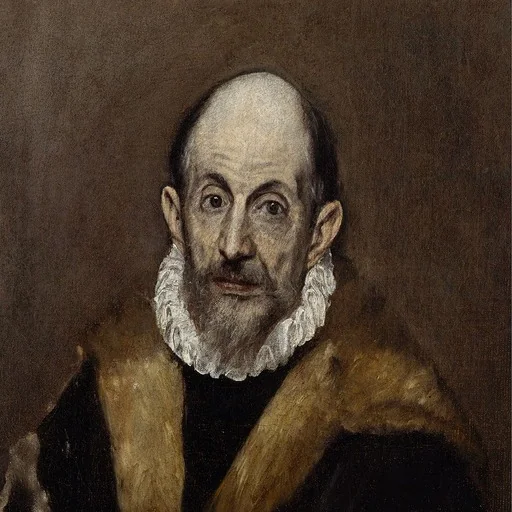
Doménikos Theotokópoulos was born in 1541 in Candia (modern Heraklion), the capital of Venetian-ruled Crete, where he was trained in the post-Byzantine tradition of icon painting.