Artwork
Tablou, pictură pe șevalet, ”Nicolae Ceaușescu”, nesemnat, atribuit Elena Popovici Brăila. Tablou realizat după primul portret oficial a lui Nicolae Ceaușescu. Oferit cadou de autoare, Elena Popovici Brăila din Câmpulung Muscel, lui Nicolae Ceaușescu cu ocazia aniversării zilei de naștere, ianuarie 1978.
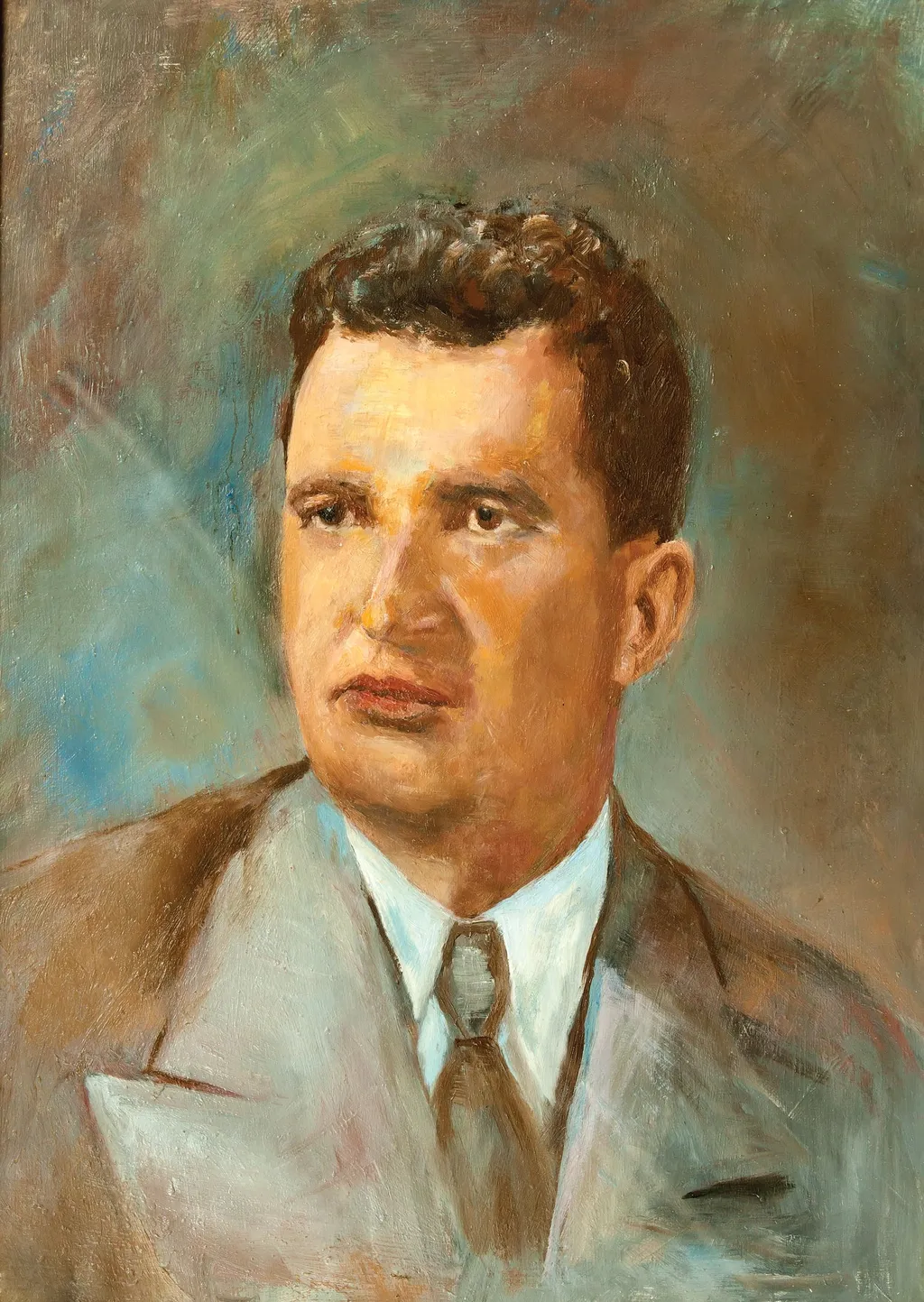
Tablou, pictură pe șevalet, ”Nicolae Ceaușescu”, nesemnat, atribuit Elena Popovici Brăila. Tablou realizat după primul portret oficial a lui Nicolae Ceaușescu. Oferit cadou de autoare, Elena Popovici Brăila din Câmpulung Muscel, lui Nicolae Ceaușescu cu ocazia aniversării zilei de naștere, ianuarie 1978. is a print by Elena Popovici. It is held in the collection of the National Museum of Romanian History. This unsigned oil painting on canvas portrays Nicolae Ceaușescu in formal attire, based on his first official portrait.
About this work
Overview
This unsigned oil painting on canvas portrays Nicolae Ceaușescu in formal attire, based on his first official portrait. Created by Elena Popovici Brăila of Câmpulung Muscel, it was presented as a birthday gift in January 1978. The work reflects the conventions of state-commissioned portraiture of the era, emphasizing dignity and authority through restrained composition and muted tones.
Subject & Meaning
The painting functions as a ceremonial object, intended to reinforce his public image during a period of heightened personality cult.
The subject is Nicolae Ceaușescu, depicted with dark hair, a suit, and a neutral, forward gaze. His expression is solemn, avoiding any hint of informality. The painting functions as a ceremonial object, intended to reinforce his public image during a period of heightened personality cult. The absence of symbolic elements or background details focuses attention solely on the figure as a representation of leadership.
Technique & Style
Rendered in traditional oil on canvas, the technique is academic and unadorned, prioritizing likeness over expressive brushwork. The background blends muted browns and greens, creating a subdued atmosphere. Lighting is even and flat, minimizing shadows to avoid dramatic emphasis. The style aligns with state-approved portraiture of the time, favoring clarity and restraint over artistic innovation.
History & Provenance
The painting was gifted by Elena Popovici Brăila to Nicolae Ceaușescu in January 1978, coinciding with his birthday. Its origin as a personal offering from an artist in Câmpulung Muscel suggests a localized, non-institutional commission. After the 1989 revolution, the work entered private or public collections, though its exact trajectory remains undocumented beyond its initial presentation.
Context
Produced during the height of Ceaușescu’s regime, the portrait reflects the pervasive use of visual propaganda to cultivate a cult of personality. Official imagery was tightly controlled, yet this piece originated outside state studios, indicating that even non-official artists participated in the cultural ritual of honoring the leader. Its modest scale and lack of signature distinguish it from state-sanctioned monuments.
Legacy
The painting survives as a quiet artifact of a suppressed era, offering insight into how ordinary citizens engaged with state symbolism. Unlike grandiose public monuments, it represents a personal act of homage, now historically significant for its unassuming nature. It contributes to understanding the diffuse, everyday mechanisms of political iconography under authoritarian rule.
Artist & collection
Artist
Elena Popovici painted official portraits by day and hid her own work under the floorboards.

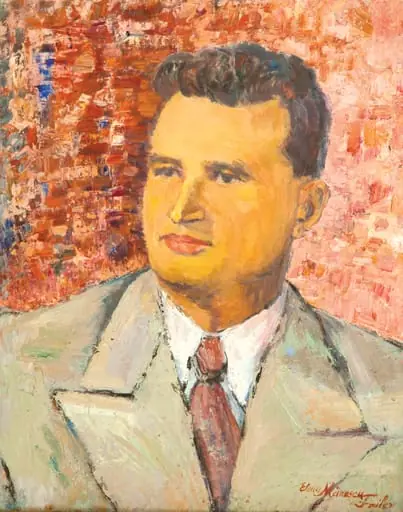 Tablou, ulei pe pânză, ”Portret Nicolae Ceaușescu”, semnat Elena Mănescu-Failer în partea dreaptă jos. Autoarea tabloului a folosit ca sursă de inspirație pentru acest tablou primul portret oficial a lui Nicolae Ceaușescu. Oferit lui Nicolae Ceaușescu de autoare, Elena Mănescu-Failer, 1978.
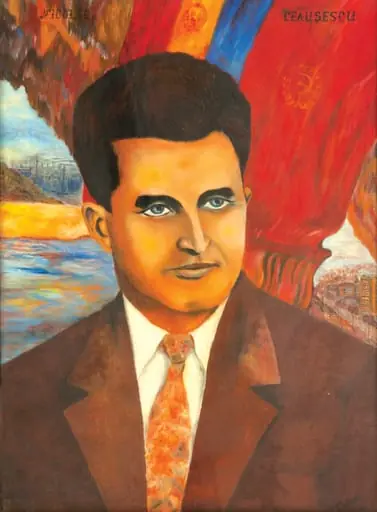 Tablou, ulei pe pânză, ”Portret Nicolae Ceaușescu”, nesemnat, atribuit lui Teodor Istrati. Portret Nicolae Ceaușescu pe fundal steagul cu stema R.S.R. și steagul cu sigla P.C.R., elemente de peisaj urban, inscripție cu majuscule în partea de sus ”NICOLAE CEAUȘESCU”. Oferit de autor lui Nicolae Ceaușescu, București, 25 iunie 1971.
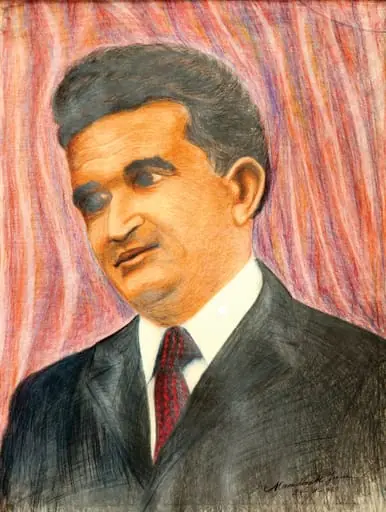 Tablou, desen pe carton, ”Nicolae Ceaușescu”, semnat cu tuș negru Jeana Macedonschi și datat 24.IX.1974, în partea dreaptă jos. Tablou oferit lui Nicolae Ceaușescu de către autor.
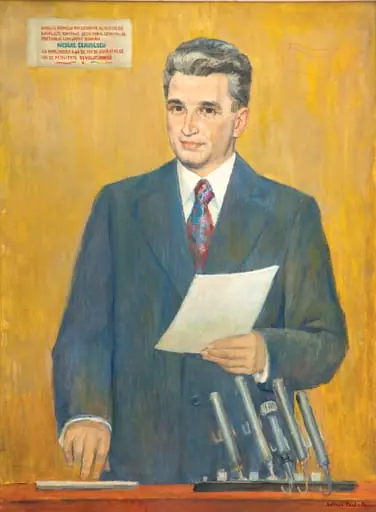 Tablou reprerzentându-l pe Nicolae Ceauțescu ținând un discurs. Semnat în partea dreaptă jos ”Adina Paula Moscu”. Oferit cadou lui Nicolae Ceaușescu pe 26 ianuarie 1978 cu ocazia aniversării vârstei de 60 de ani. În stânga sus dedicație ”Omagiu primului președinte al Republicii Socialiste România, secretar general al Partidului Comunist Român, Nicolae Ceaușescu, la împlinirea a 60 de ani de viață și 45 de ani de activitate revoluționară.”
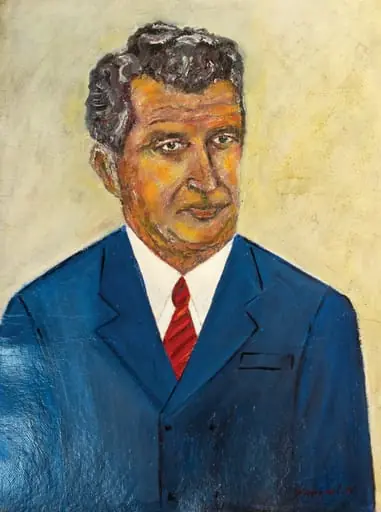 Tablou, ulei pe carton,”Nicolae Ceaușescu”, semnat în pertea dreaptă jos Savopol N., nedatat. Oferit cadou de autor, Nicola Savopol, lui Nicolae Ceaușescu cu ocazia zilei de naștere, București.
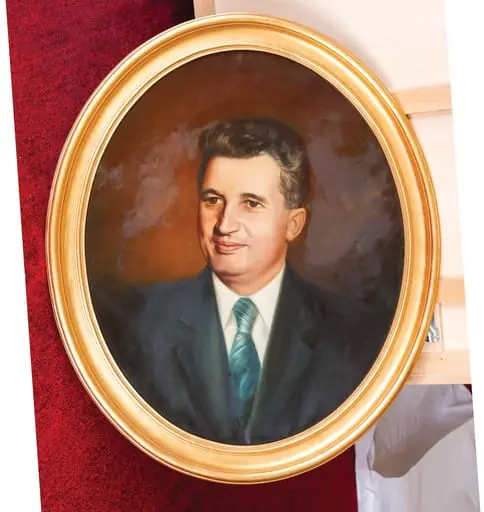 Tablou, ulei pe pânză, portret Nicolae Ceaușescu, atribuit Corneliu Brudașcu. Oferit de Uniunea Artiștilor Plastici (1979).
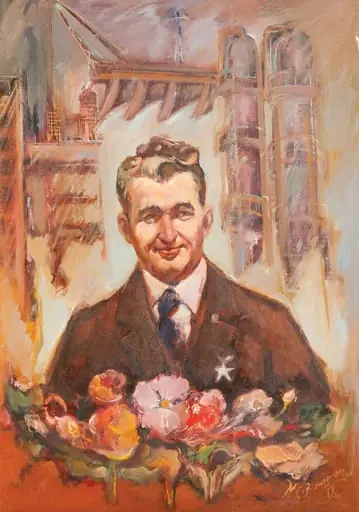 Tablou, ulei pe pânză, „Portret Nicolae Ceaușescu”, semnat C. Radovan și datat în partea dreaptă jos 1978. Nicolae Ceaușescu este reprezentat înt-o atitudine jovială, în piept are însemnul ”Erou al Republicii Socialiste România”. Pe fundal realizări ale regimului comunist. Oferit de Comitetul Județean de Partid Timiș, 22 ianuarie 1978.
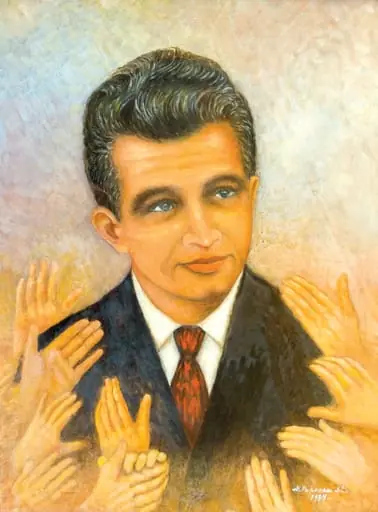 Tablou, pictură pe carton, ”Nicolae Ceaușescu”, semnat M. Popescu-Stănești și datat 1974 în partea dreaptă jos . Nicolae Ceaușescu este reprezentat înconjurat de mâini care aplaudă, îl ating și care par că vor să-l prindă. Oferit cadou lui Nicolae Ceaușescu de către autor, București, 1974.
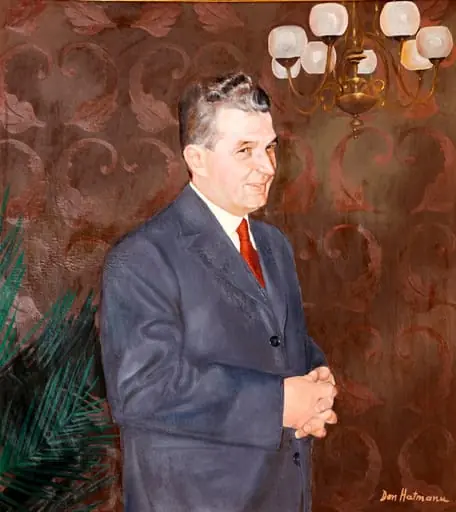 Tablou reprezentându-l pe Nicolae Ceaușescu, semnat dreapta jos Dan Hatmanu. Oferit cadou cu ocazia împlinirii vârstei de 60 de ani de către președintele RSR (ianuarie 1978).
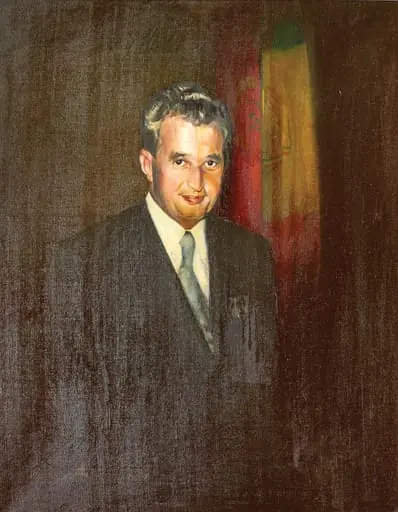 Tablou, ulei pe pânză, Portretul lui Nicolae Ceaușescu, nesemnat, atribiut lui Eugen Palade. Nicolae Ceaușescu cu două însemne de ”Erou al Republicii Socialiste România”, în spatele său steagul cu stema RSR și steagul PCR. Comandat și oferit de Ministerul de Interne, Direcția de Securitate și Gardă, 25 ianuarie 1978.
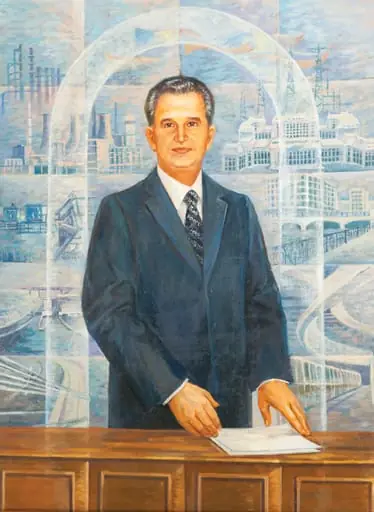 Tablou, „Epoca de aur”, atribuit Doina Catargiu. Tabloul îl prezintă pe Nicolae Ceaușescu într-un cadru oficial, la tribună. În spatele său marile realizări ale epocii sale: Casa Republicii, metroul, Canalul Dunăre - Marea Neagră, rafinării, combinate etc. Comandat și oferit de Comitetul Județean de Partid Suceava (1988).
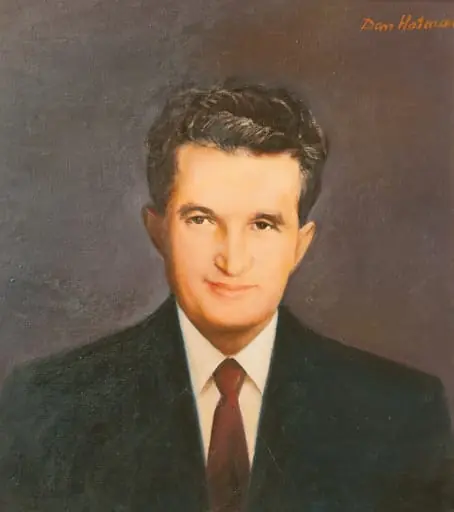 Tablou ulei pe pânză, „Nicolae Ceaușescu” semnat Dan Hatmanu în partea dreaptă sus, nedatat. Comandat de Consiliul Național al Femeilor și oferit cu ocazia aniversării zilei de naștere (ianuarie 1989).