Artwork
Tablou, ulei pe pânză, ”Portret Nicolae Ceaușescu”, semnat Elena Mănescu-Failer în partea dreaptă jos. Autoarea tabloului a folosit ca sursă de inspirație pentru acest tablou primul portret oficial a lui Nicolae Ceaușescu. Oferit lui Nicolae Ceaușescu de autoare, Elena Mănescu-Failer, 1978.
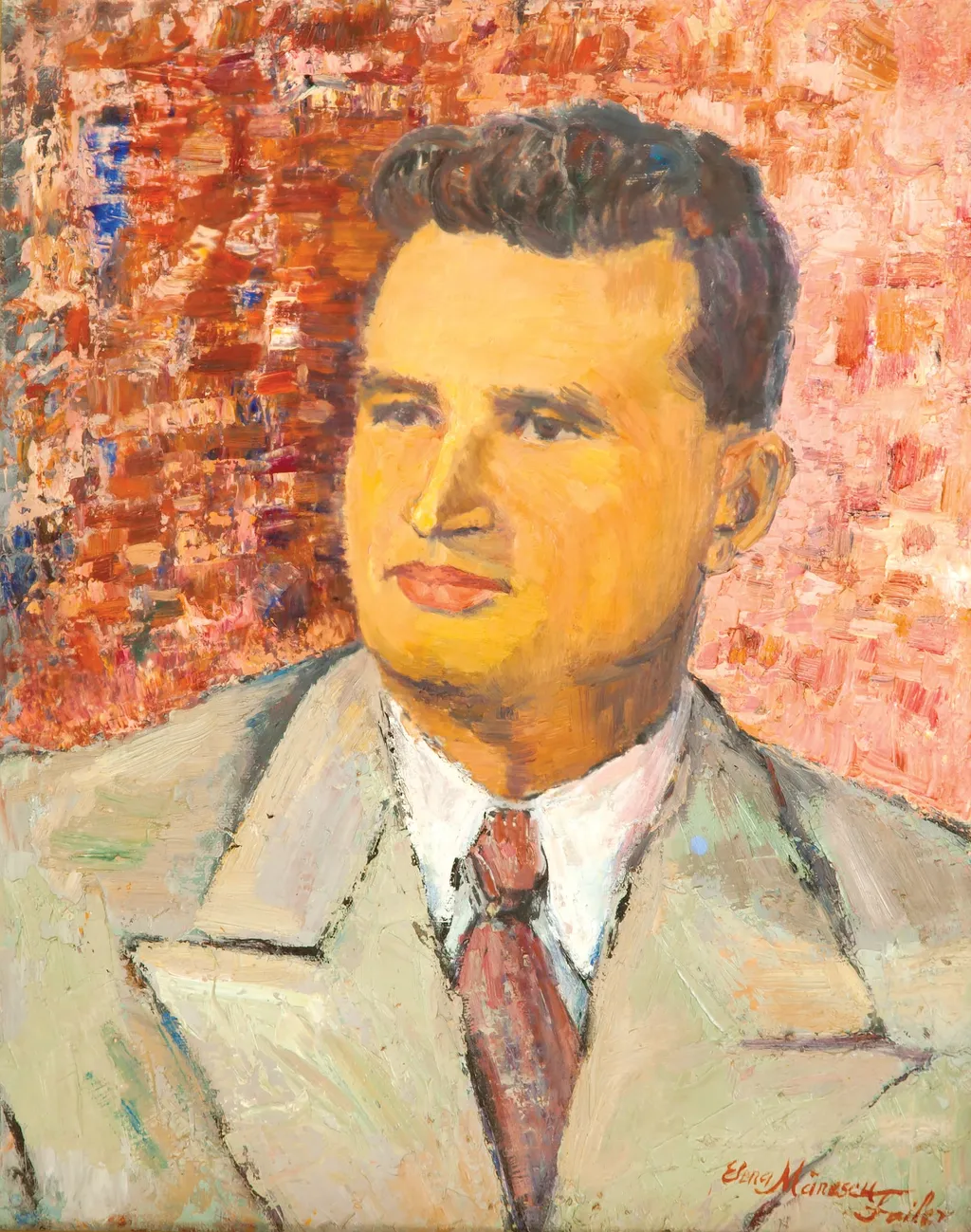
Tablou, ulei pe pânză, ”Portret Nicolae Ceaușescu”, semnat Elena Mănescu-Failer în partea dreaptă jos. Autoarea tabloului a folosit ca sursă de inspirație pentru acest tablou primul portret oficial a lui Nicolae Ceaușescu. Oferit lui Nicolae Ceaușescu de autoare, Elena Mănescu-Failer, 1978. is a print by Elena Mănescu-Failer. It is held in the collection of the National Museum of Romanian History.
About this work
Overview
The oil on canvas portrait, signed by Elena Mănescu‑Failer in the lower right corner, depicts Nicolae Ceaușescu in a dark suit with a red tie. The composition emphasizes his face, illuminated from below, against a chaotic backdrop of red, orange and blue brushstrokes that heighten the figure’s prominence.
Subject & Meaning
The work presents the former Romanian leader in a composed, solemn demeanor, his hair slicked back and gaze directed forward. By focusing on his expression and using a warm under‑lighting, the artist conveys a controlled authority, reflecting the official image promoted during his rule.
Technique & Style
Mănescu‑Failer employs a loose, expressive handling of paint, allowing vivid color fields and energetic brushwork to dominate the background while the portrait itself remains more defined. The contrast between the gestural, impasto‑like strokes and the smoother rendering of the figure creates visual tension.
History & Provenance
Created in 1978, the painting was presented by the artist directly to Ceaușescu as a gift. It draws its compositional reference from the first official portrait of the leader, indicating an intention to align with state‑sanctioned iconography.
Context
The portrait emerges from the late‑1970s Romanian cultural climate, when visual representations of political figures were tightly regulated. Artists working within this framework often had to balance personal expression with the expectations of the regime’s visual propaganda.
Artist & collection
Artist
Elena painted faces for a living—she did portraits of doctors, teachers, even a few party officials.

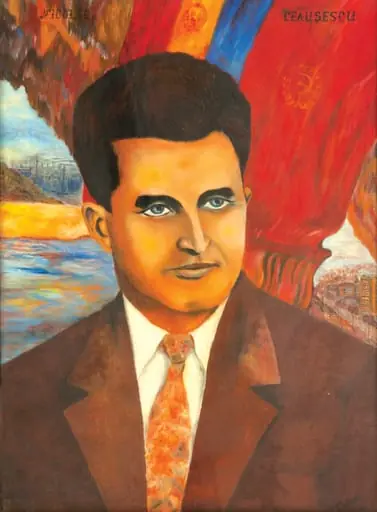 Tablou, ulei pe pânză, ”Portret Nicolae Ceaușescu”, nesemnat, atribuit lui Teodor Istrati. Portret Nicolae Ceaușescu pe fundal steagul cu stema R.S.R. și steagul cu sigla P.C.R., elemente de peisaj urban, inscripție cu majuscule în partea de sus ”NICOLAE CEAUȘESCU”. Oferit de autor lui Nicolae Ceaușescu, București, 25 iunie 1971.
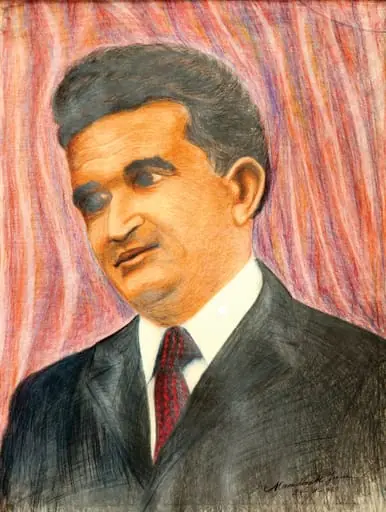 Tablou, desen pe carton, ”Nicolae Ceaușescu”, semnat cu tuș negru Jeana Macedonschi și datat 24.IX.1974, în partea dreaptă jos. Tablou oferit lui Nicolae Ceaușescu de către autor.
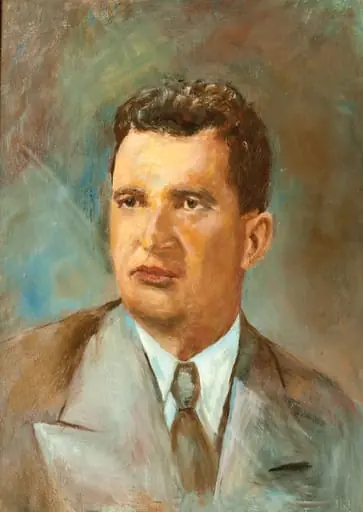 Tablou, pictură pe șevalet, ”Nicolae Ceaușescu”, nesemnat, atribuit Elena Popovici Brăila. Tablou realizat după primul portret oficial a lui Nicolae Ceaușescu. Oferit cadou de autoare, Elena Popovici Brăila din Câmpulung Muscel, lui Nicolae Ceaușescu cu ocazia aniversării zilei de naștere, ianuarie 1978.
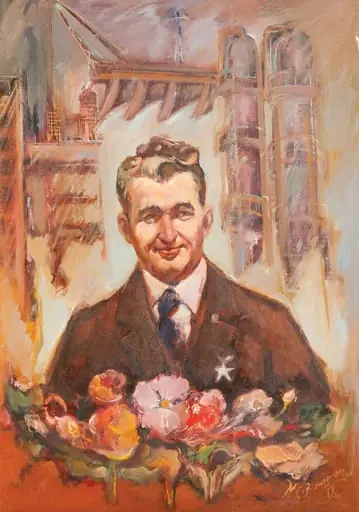 Tablou, ulei pe pânză, „Portret Nicolae Ceaușescu”, semnat C. Radovan și datat în partea dreaptă jos 1978. Nicolae Ceaușescu este reprezentat înt-o atitudine jovială, în piept are însemnul ”Erou al Republicii Socialiste România”. Pe fundal realizări ale regimului comunist. Oferit de Comitetul Județean de Partid Timiș, 22 ianuarie 1978.
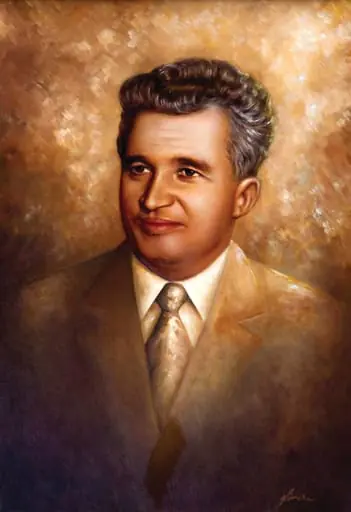 Tablou ulei pe pânză, portret Nicolae Ceaușescu semnat Gheorghe Pîrvu si datat în partea dreaptă jos. Comandat de Comitetul Municipal de Partid Călărași (1982).
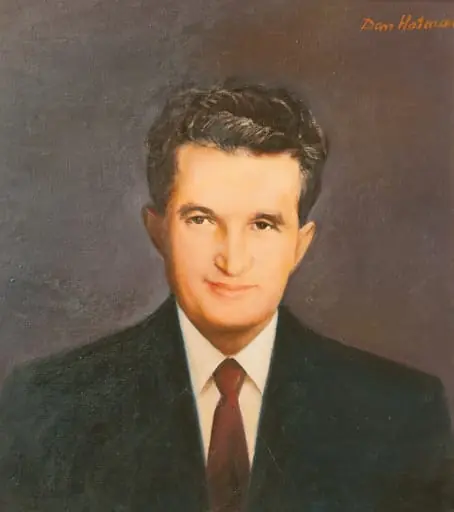 Tablou ulei pe pânză, „Nicolae Ceaușescu” semnat Dan Hatmanu în partea dreaptă sus, nedatat. Comandat de Consiliul Național al Femeilor și oferit cu ocazia aniversării zilei de naștere (ianuarie 1989).
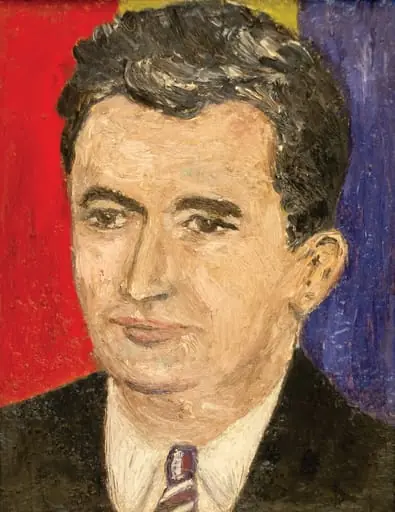 Pablou, ulei pe carton, portret Nicolae Ceaușescu. Oferit lui Nicolae Ceaușescu de Aurica Pânzaru, prof. de matematică fizică din Dorohoi, 23 ianuarie 1978.
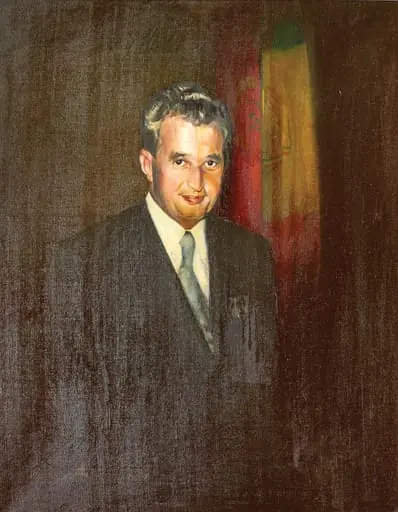 Tablou, ulei pe pânză, Portretul lui Nicolae Ceaușescu, nesemnat, atribiut lui Eugen Palade. Nicolae Ceaușescu cu două însemne de ”Erou al Republicii Socialiste România”, în spatele său steagul cu stema RSR și steagul PCR. Comandat și oferit de Ministerul de Interne, Direcția de Securitate și Gardă, 25 ianuarie 1978.
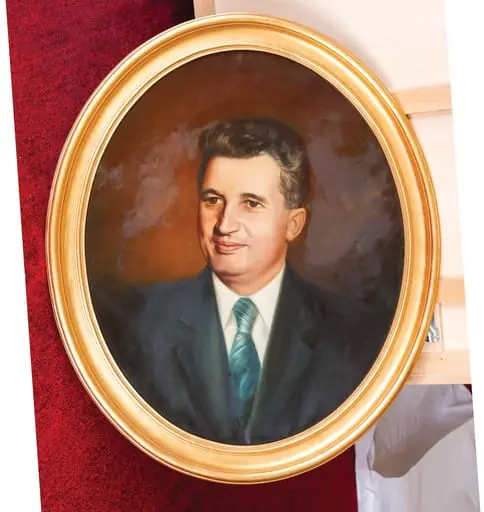 Tablou, ulei pe pânză, portret Nicolae Ceaușescu, atribuit Corneliu Brudașcu. Oferit de Uniunea Artiștilor Plastici (1979).
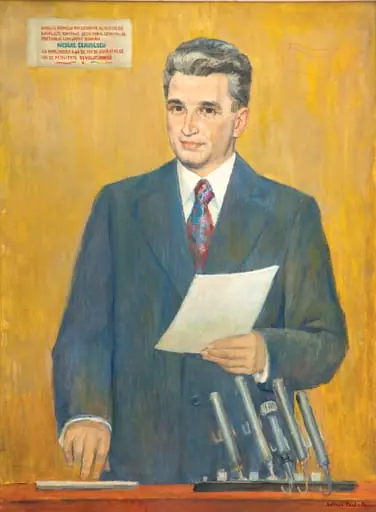 Tablou reprerzentându-l pe Nicolae Ceauțescu ținând un discurs. Semnat în partea dreaptă jos ”Adina Paula Moscu”. Oferit cadou lui Nicolae Ceaușescu pe 26 ianuarie 1978 cu ocazia aniversării vârstei de 60 de ani. În stânga sus dedicație ”Omagiu primului președinte al Republicii Socialiste România, secretar general al Partidului Comunist Român, Nicolae Ceaușescu, la împlinirea a 60 de ani de viață și 45 de ani de activitate revoluționară.”
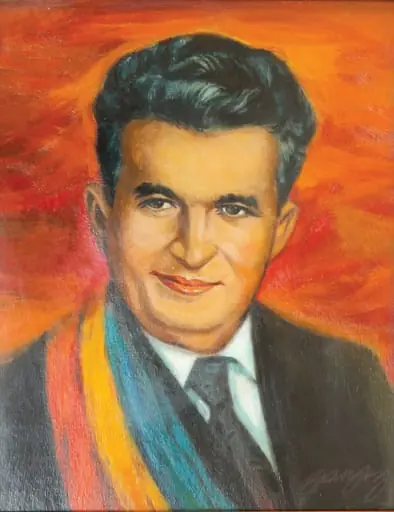 Tablou, „Portret Nicolae Ceaușescu”, semnat Barany în partea dreaptă jos, nedatat. Tabloul prezintă portretul lui Nicolae Caușescu cu banderolă tricoloră pe un fundal roșu - oranj. Comandat și oferit de Comitetul Județean de Partid Arad cu ocazia unei aniverări.
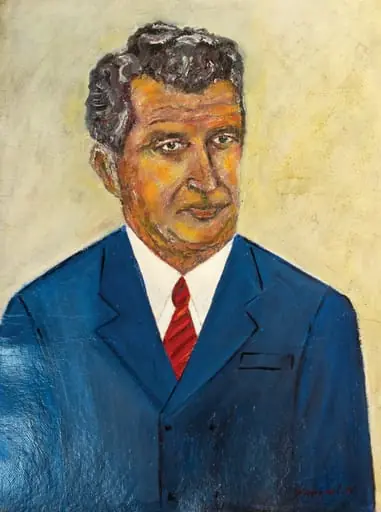 Tablou, ulei pe carton,”Nicolae Ceaușescu”, semnat în pertea dreaptă jos Savopol N., nedatat. Oferit cadou de autor, Nicola Savopol, lui Nicolae Ceaușescu cu ocazia zilei de naștere, București.
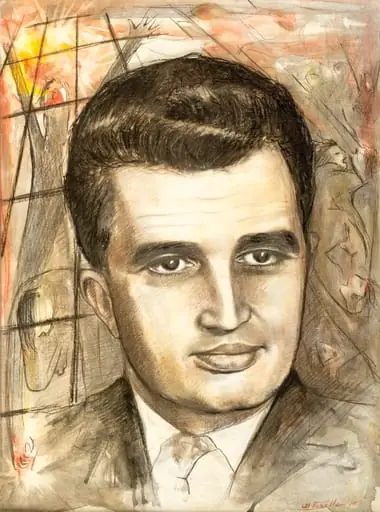 Portret Nicolae Ceaușescu, tablou realixat prin tehnică mixtă, semnat Al. Torella și datat 1975 în partea dreaptă jos.A fost oferit lui Nicolae Ceaușescu de delegația italiană condusă de Benito Craxi cu ocazia vizitei în România din noiembrie 1978
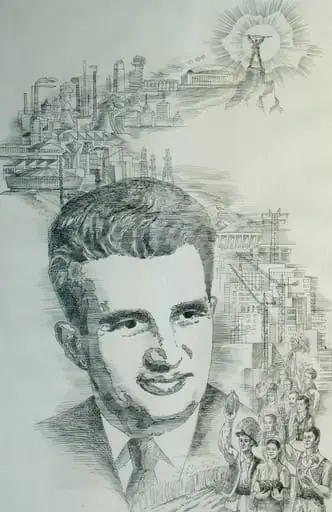 Tablou, desen cu tuș, portret Nicolae Ceaușescu pe fundal industrial, nesemnat, nedatat; atribuit lui Levente Csutak. Fundalul industrial este prezentat sub forma unui drum al realizărilor socialismului - la baza drumului stau oamenii muncii, continuă cu realizările: fabrici, uzine, combinate, hidrocentrala de la Porțile de Fier, clădirea Circului de Stat, Sala Palatului, statuia lui Prometeu de la Barajul Vidraru este luminată de un soare în formă de harta RSR. Deși nu este o realizare a socialismului este reprezentată și Coloana Infinitului a lui Brâncuși. Oferit de Comitetul Județean de Partid Brașov (1983).
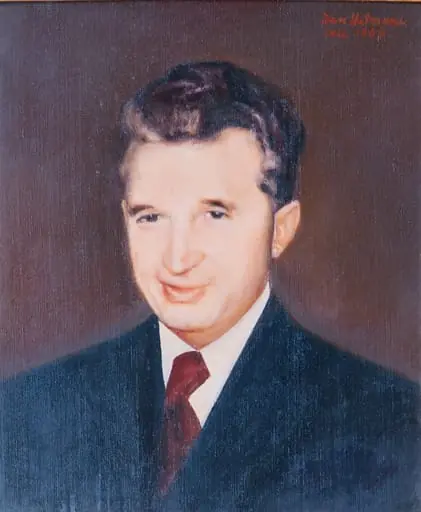 Tablou reprezentându-l pe Nicolae Ceaușescu, semnat Dan Hatmanu. Comandat de Comitetul Județean de Partid Iași și oferit cu ocazia zilei de naștere a președintelui RSR (ianuarie 1989).
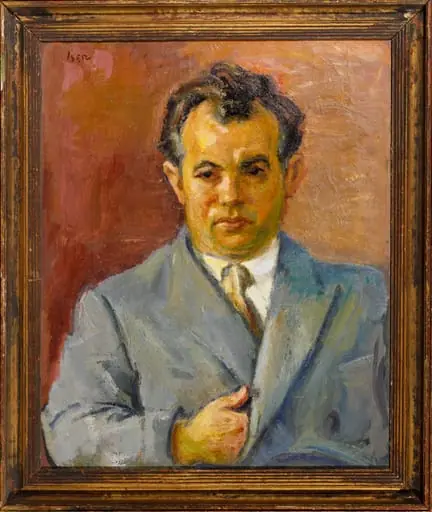 Portretul poetului Mihail Beniuc
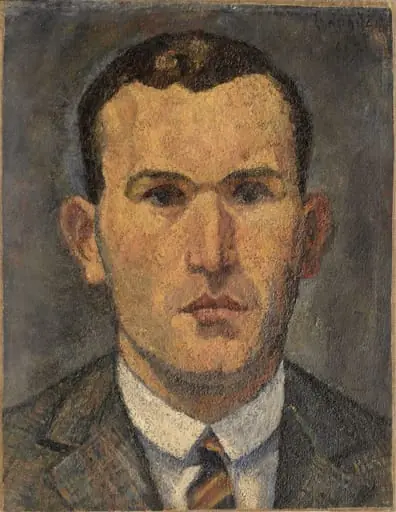 Portretul Dr. Anca Emanoil