Artwork
Christ's Charge to St Peter
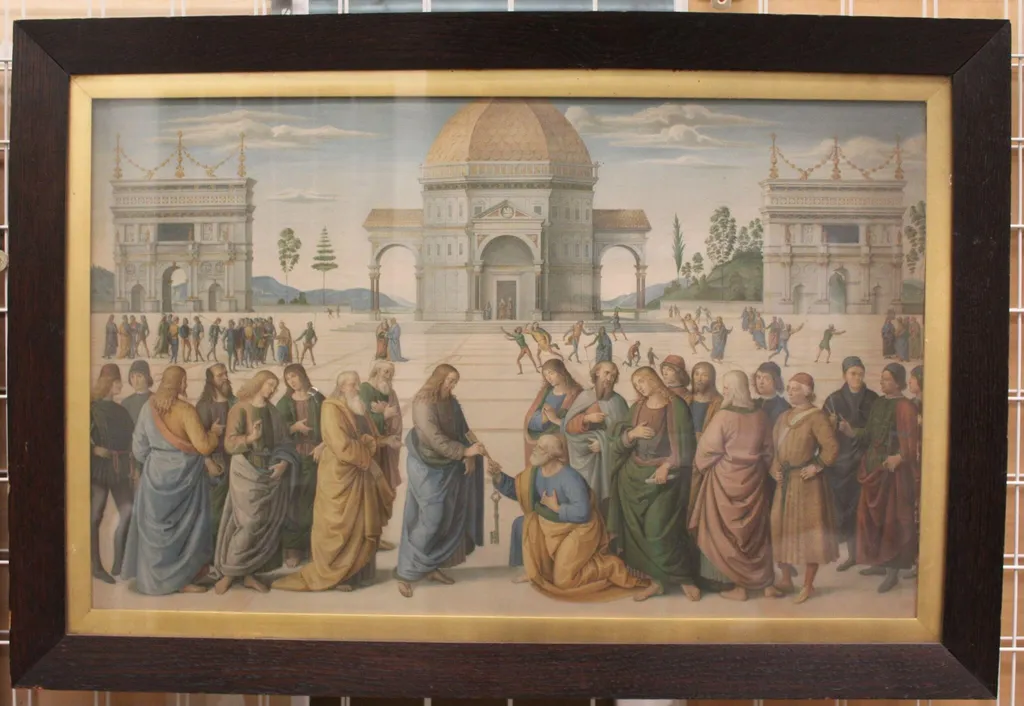
Christ's Charge to St Peter is a print by the Impressionist artist Eliseo Fattorini. It dates from 1877 and is held in the collection of the Victoria and Albert Museum. Christ’s Charge to St Peter is an 1877 chromolithograph produced for the Arundel Society.
About this work
Eliseo Fattorini made a print called *Christ’s Charge to St Peter* in 1877. It’s a chromolithograph, a fancy color print made by inking wet stone. The Arundel Society sold these prints to subscribers.
The image shows a religious scene called a visitation. Prints like this copied famous art so people could hang it at home.
Check out the Victoria and Albert Museum for more prints like this.
Overview
Each hue required a separate stone, resulting in a richly layered image intended for wide distribution among society subscribers.
Christ’s Charge to St Peter is an 1877 chromolithograph produced for the Arundel Society. The work reproduces a religious scene in vivid colour, employing the lithographic technique that transfers a design drawn with greasy material onto a stone, then inks it and presses paper onto the surface. Each hue required a separate stone, resulting in a richly layered image intended for wide distribution among society subscribers.
Subject & Meaning
The print depicts the biblical moment when Christ entrusts the keys of the Church to Saint Peter, a pivotal episode in Christian tradition symbolising apostolic authority. By rendering this narrative, the image served both devotional and educational purposes, allowing viewers to contemplate the foundational moment of ecclesiastical leadership.
Technique & Style
Chromolithography, the method used, involved drawing the composition on a lithographic stone with a greasy chalk, wetting the stone, and applying ink that adhered only to the greasy areas. Multiple stones, each corresponding to a different colour, were sequentially printed onto the paper, creating a detailed, polychrome reproduction that mirrors the appearance of original frescoes and paintings.
History & Provenance
The Arundel Society, founded to disseminate knowledge of Italian fresco cycles from the 14th to 16th centuries, commissioned artists to copy such works in watercolour. These copies were then selected by the society’s council and sent to printers for chromolithographic reproduction. By the time the society dissolved in 1897, over 200,000 prints, including this one, had been circulated to members across varied social backgrounds.
Context
Printed copies like this entered schools, churches, and community halls, extending the reach of Renaissance art beyond museums. Their widespread presence contributed to 19th‑century visual education and helped preserve awareness of historic fresco narratives, influencing later public art programs and the appreciation of reproduced artworks.
Artist & collection

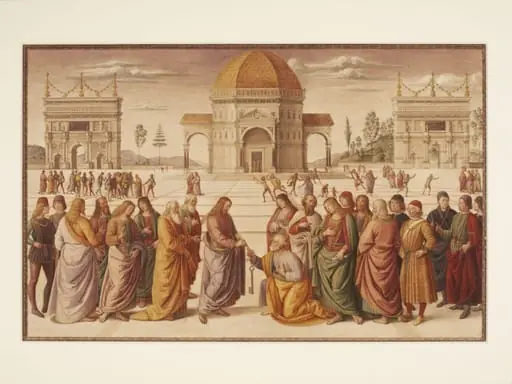 The Delivery of Keys to St Peter
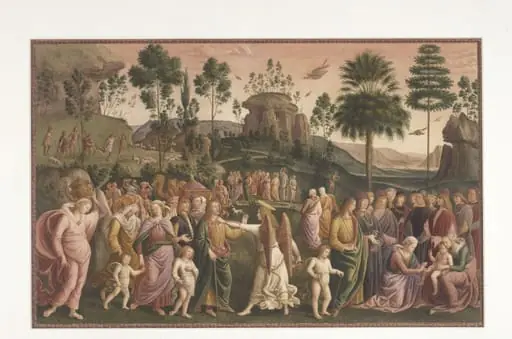 Copy after the painting Moses and the Angel by Perugino in the Collegio del Cambio, Perugia.
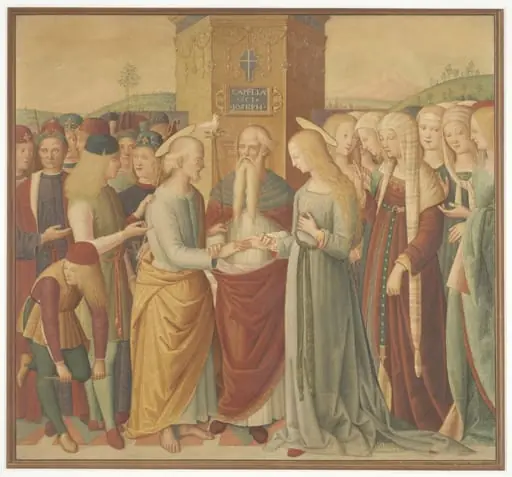 Copy after the painting Marriage of the Virgin by Perugino in S. Girolamo, Spello.
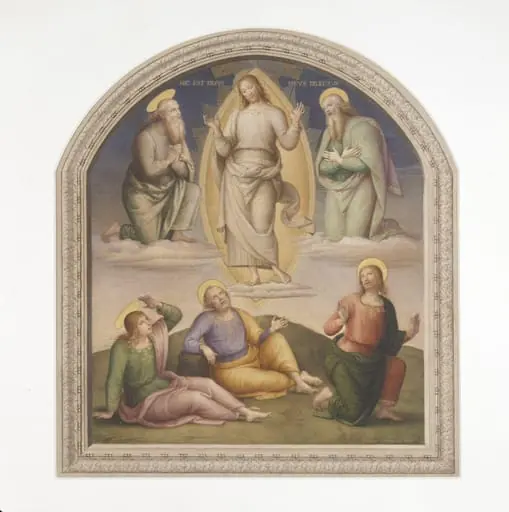 Copy after the painting The Transfiguration by Perugino in the Collegio del Cambio, Perugia.
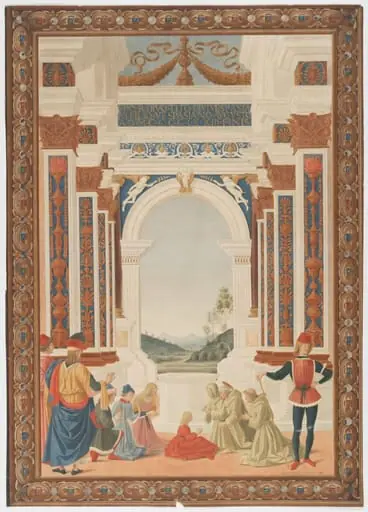 Copy after the painting St Bernard healing a man by Fiorenzo di Lorenzo in the Galleria Nazionale, Perugia.
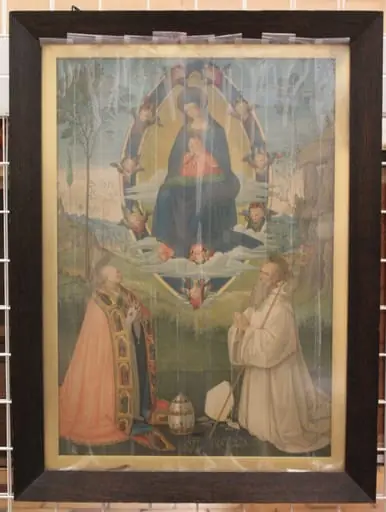 The Virgin in Glory
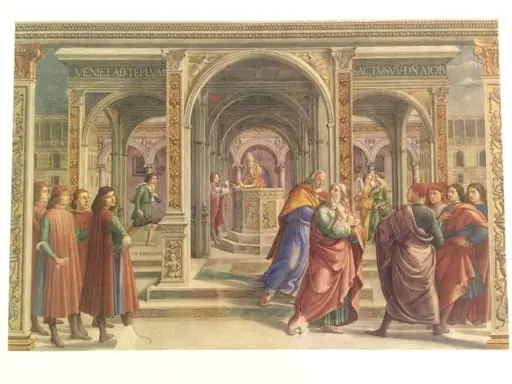 Copy after The Expulsion of Joachim from the Temple, Domenico Ghirlandaio in the Tornabuoni Chapel, Santa Maria Novella (Florence)
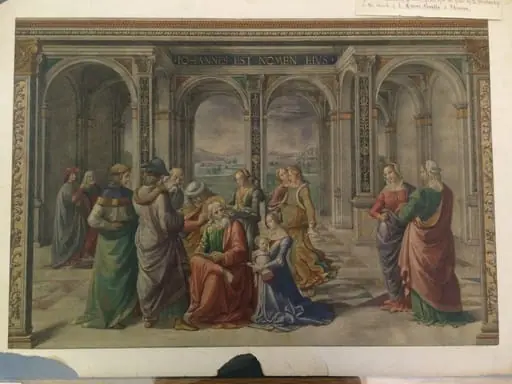 Copy after Zacharias writes down the name of his Son, Domenico Ghirlandaio in the Tornabuoni Chapel, Santa Maria Novella (Florence)
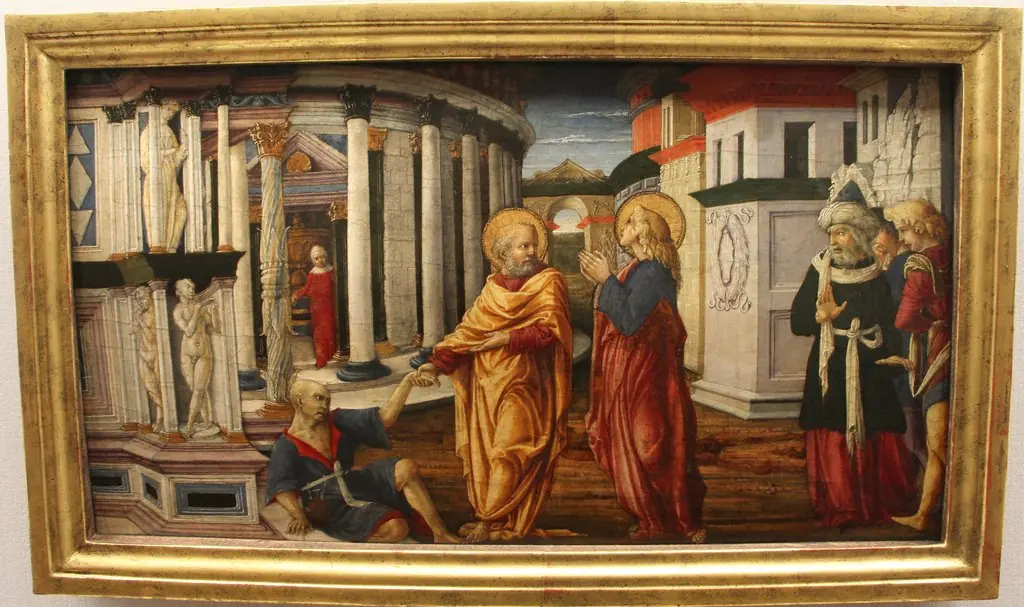 Petrus heilt einen Lahmen
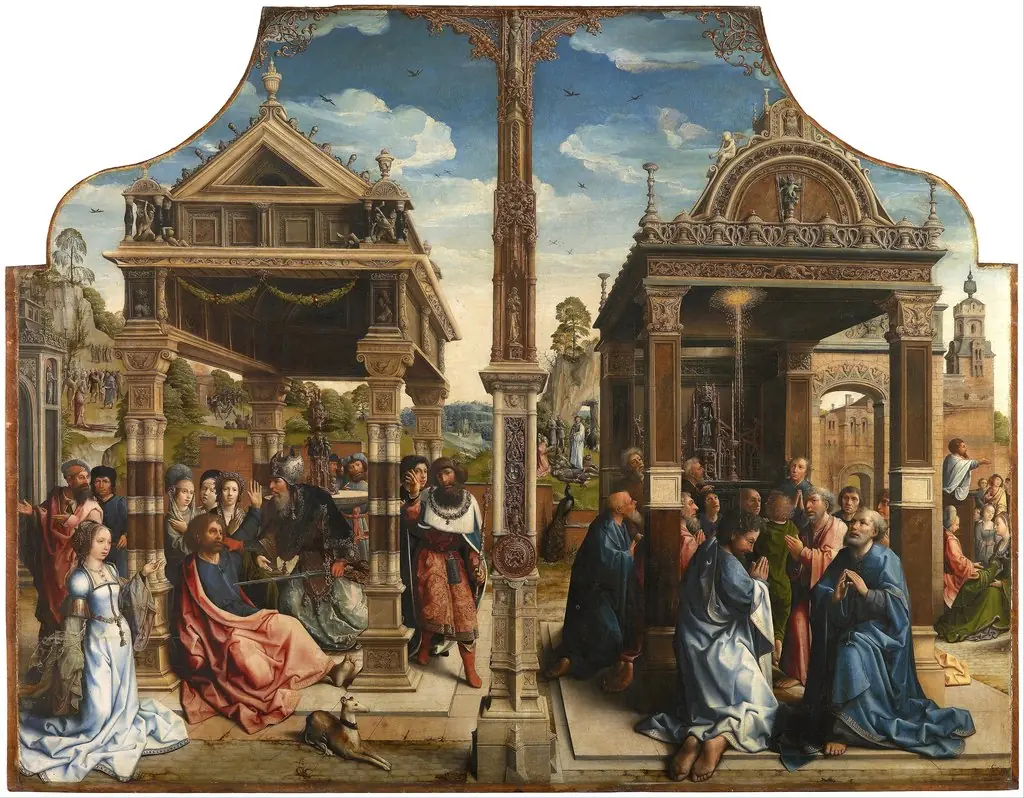 Altarpiece of Saints Thomas and Matthias
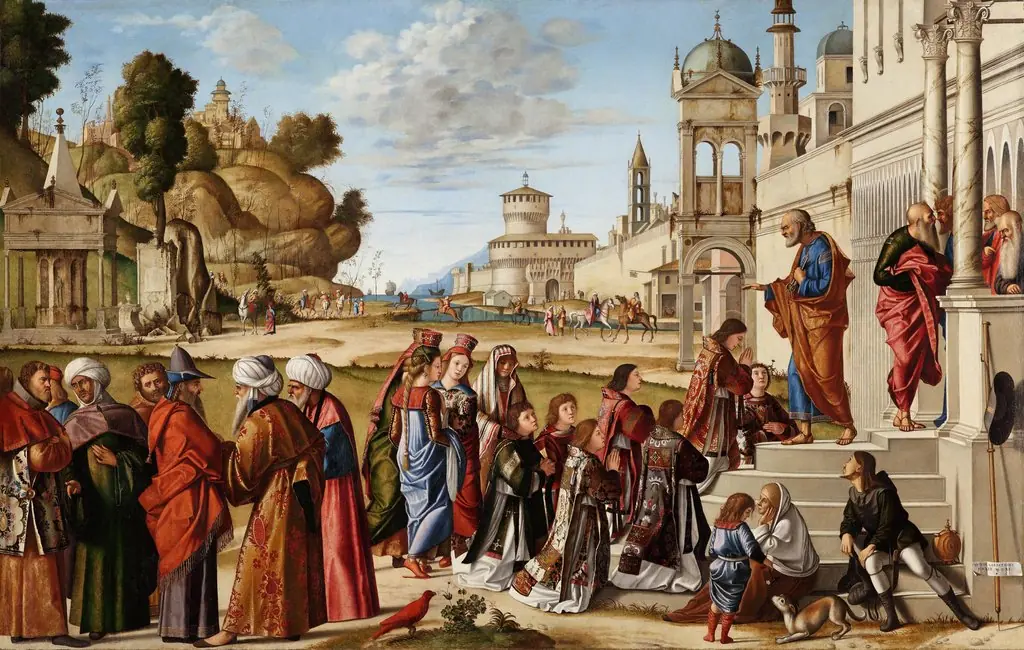 The Ordination of St. Stephen
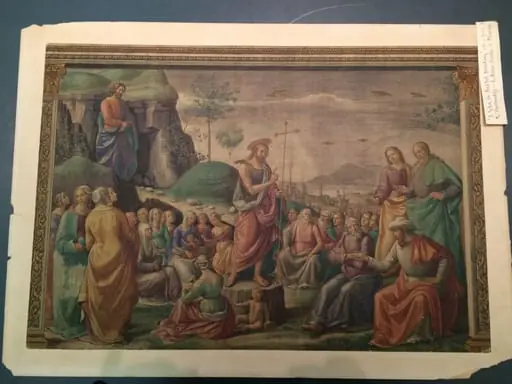 Copy after the Preaching of St. John the Baptist, Domenico Ghirlandaio in the Tornabuoni Chapel, Santa Maria Novella (Florence)
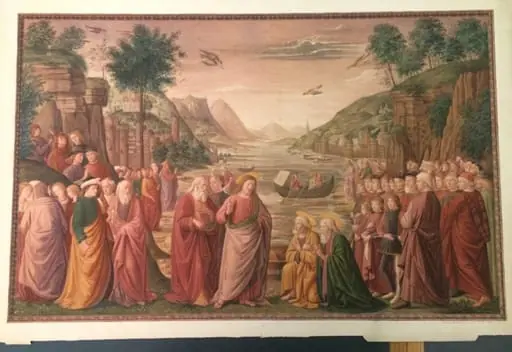 Copy after Calling of the Apostoles, Domenico Ghirlandaio in the Sistine Chapel, Vatican (Rome)
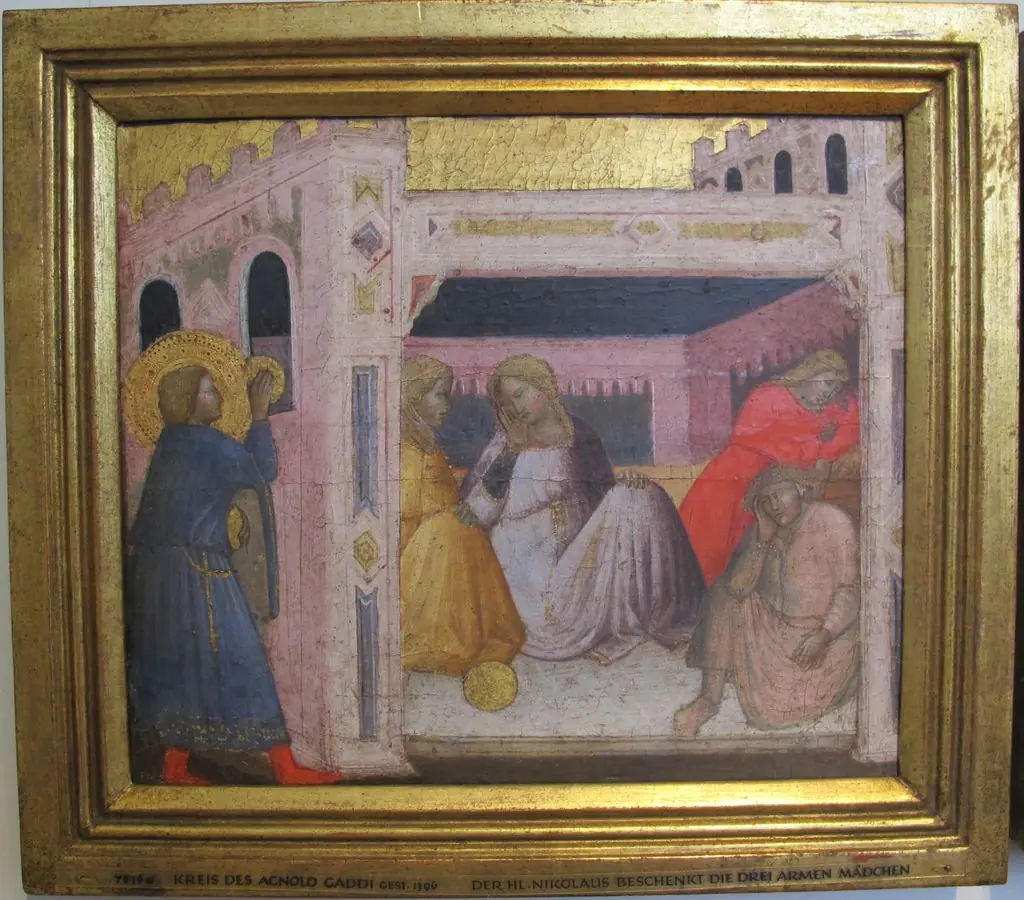 Stories of St. Nicholas. Saint Nicholas presenting Gifts to Three Pool girls
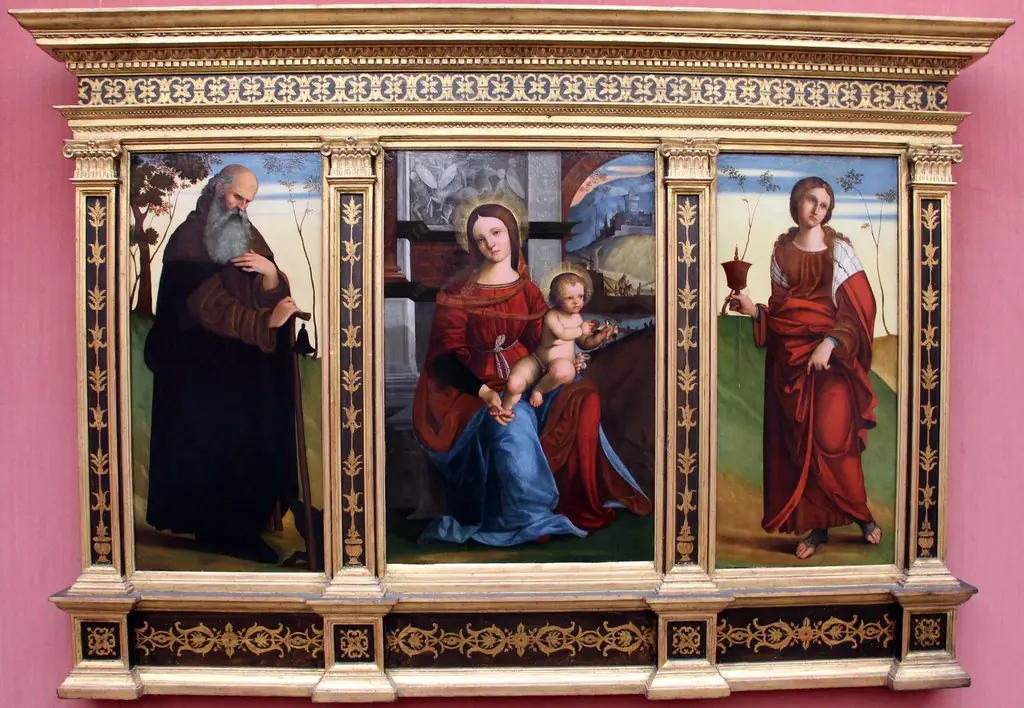 Triptychon, Maria mit Kind, Antonius Eremita, Maria Magdalena