Artwork
The Virgin in Glory
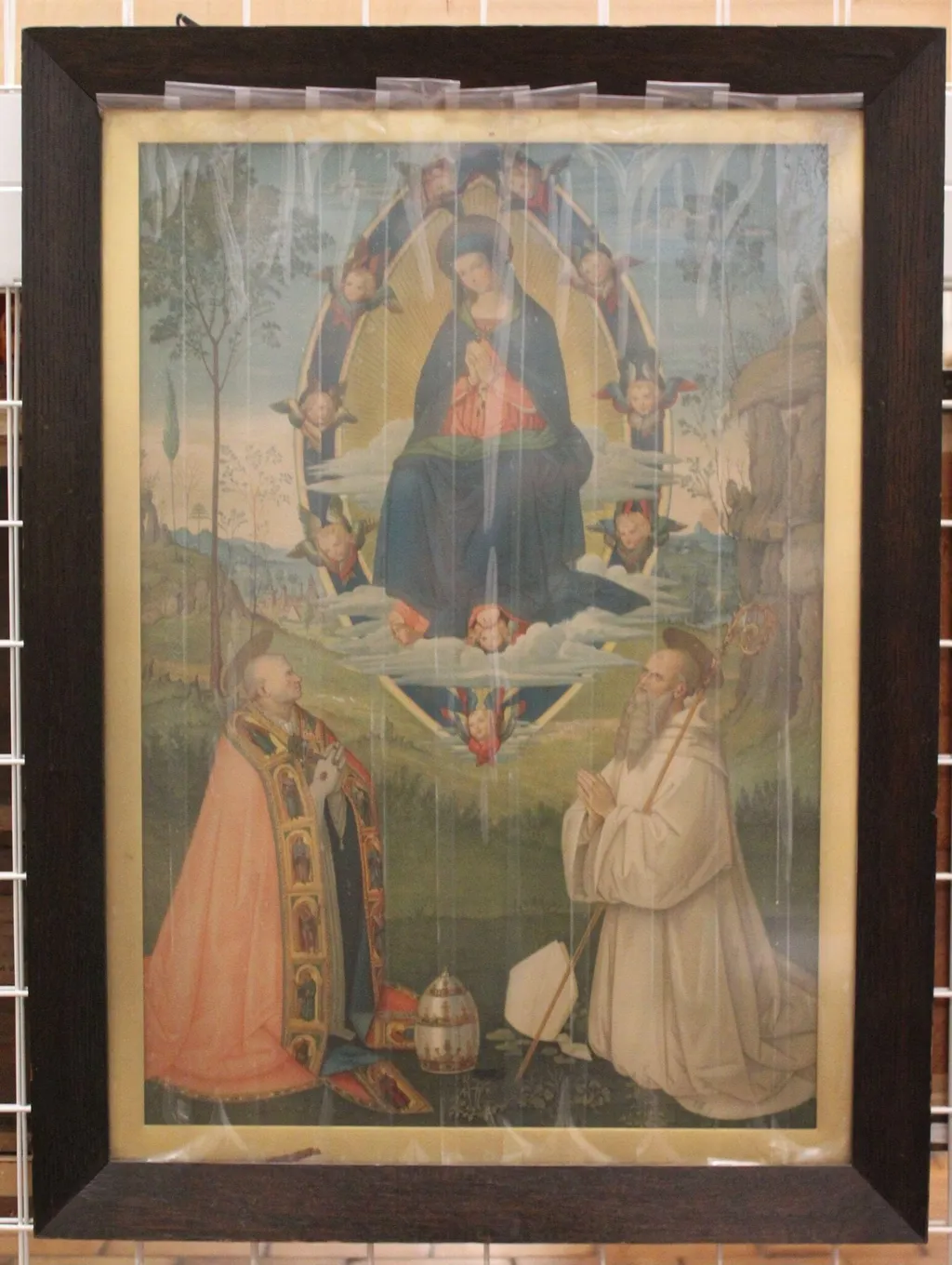
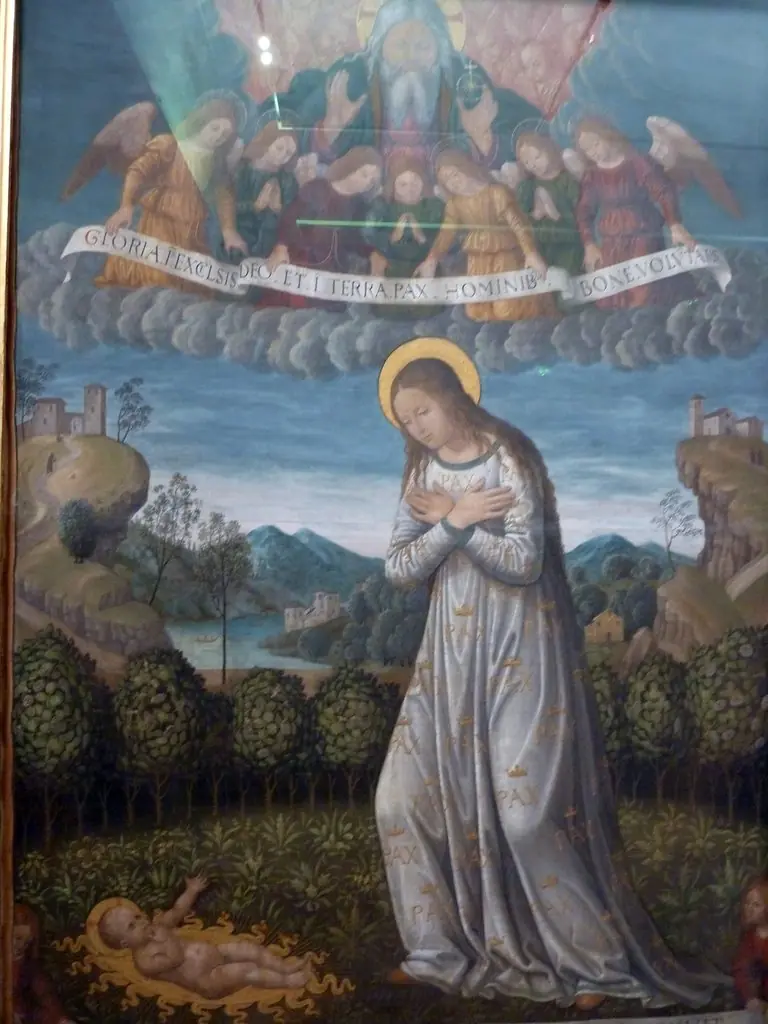
The Virgin in Glory is a print by the Impressionist artist Eliseo Fattorini. It dates from 1880 and is held in the collection of the Victoria and Albert Museum. This print is a chromolithograph, a color reproduction technique using multiple stone blocks, each inked for a specific hue.
About this work
Overview
This print is a chromolithograph, a color reproduction technique using multiple stone blocks, each inked for a specific hue.
This print is a chromolithograph, a color reproduction technique using multiple stone blocks, each inked for a specific hue. Created for the Arundel Society, it reproduces a devotional image originally found in a Renaissance fresco. The process relied on the chemical repulsion of grease and water to transfer precise color layers onto paper, enabling mass production of high-fidelity copies of historic artworks.
Subject & Meaning
The image depicts the Virgin Mary in a celestial setting, surrounded by angels and symbolic elements of divine glory. Rooted in Italian devotional traditions, the composition reflects medieval and Renaissance ideals of heavenly order and sacred majesty. Its purpose was not original invention but faithful transmission of a religious iconography familiar to congregations and scholars alike.
Technique & Style
Each color in the print required a separate stone, meticulously drawn with greasy crayon and chemically treated to accept ink only where intended. The result was a layered, nuanced image mimicking the brushwork of the original fresco. The style emulates early Italian painting—soft modeling, rich hues, and hierarchical composition—adapted for mechanical reproduction without artistic embellishment.
History & Provenance
The Arundel Society commissioned artists to copy frescoes from 14th to 16th-century Italian churches, then sent watercolor studies to printers for chromolithographic translation. Published between the 1850s and 1897, these prints were distributed to subscribers across Britain and beyond. Over 200,000 copies were circulated, making them among the most widely seen religious images of the Victorian era.
Context
The Society emerged during a period of renewed interest in medieval and Renaissance art, driven by the Oxford Movement and educational reformers seeking to elevate public taste. By making high-quality reproductions accessible and affordable, the Arundel Society aimed to bring sacred art into homes, schools, and parish buildings, bridging elite aesthetics and popular piety.
Legacy
Many chromolithographs from the Arundel Society remain in churches, schools, and community halls, often preserved as historical artifacts rather than artworks. Their presence reflects 19th-century efforts to democratize visual culture and reinforce religious imagery through mechanical reproduction, leaving a quiet but enduring imprint on British ecclesiastical interiors.
Artist & collection

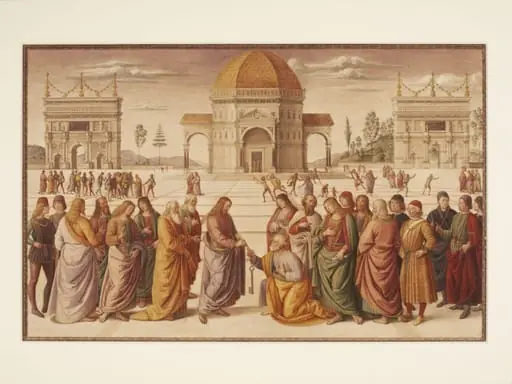 The Delivery of Keys to St Peter
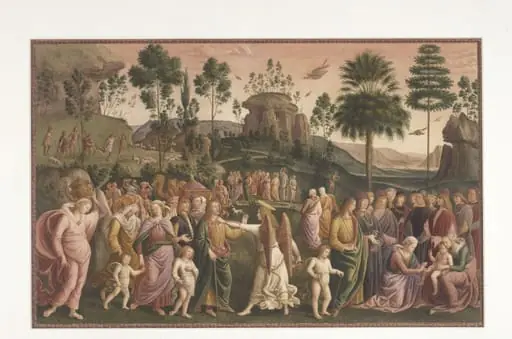 Copy after the painting Moses and the Angel by Perugino in the Collegio del Cambio, Perugia.
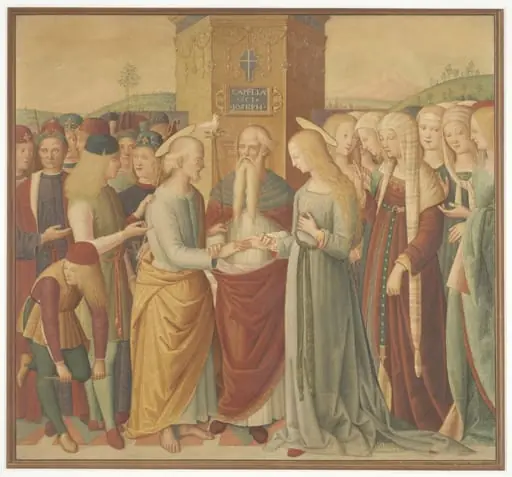 Copy after the painting Marriage of the Virgin by Perugino in S. Girolamo, Spello.
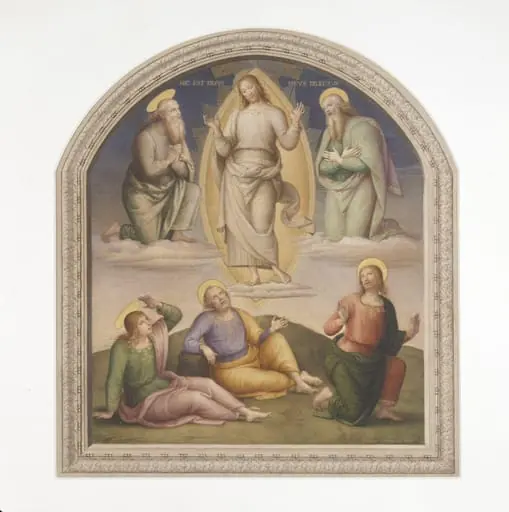 Copy after the painting The Transfiguration by Perugino in the Collegio del Cambio, Perugia.
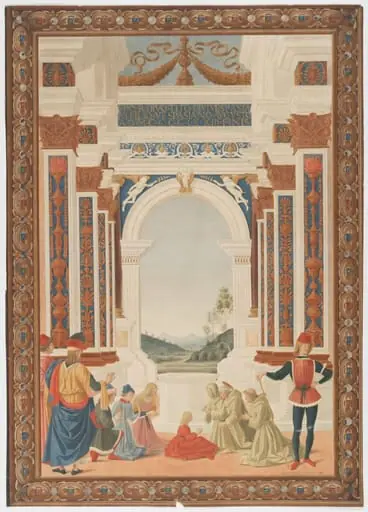 Copy after the painting St Bernard healing a man by Fiorenzo di Lorenzo in the Galleria Nazionale, Perugia.
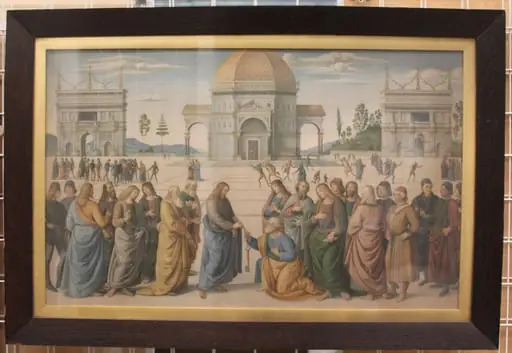 Christ's Charge to St Peter