Artwork
Copy after the painting The Transfiguration by Perugino in the Collegio del Cambio, Perugia.
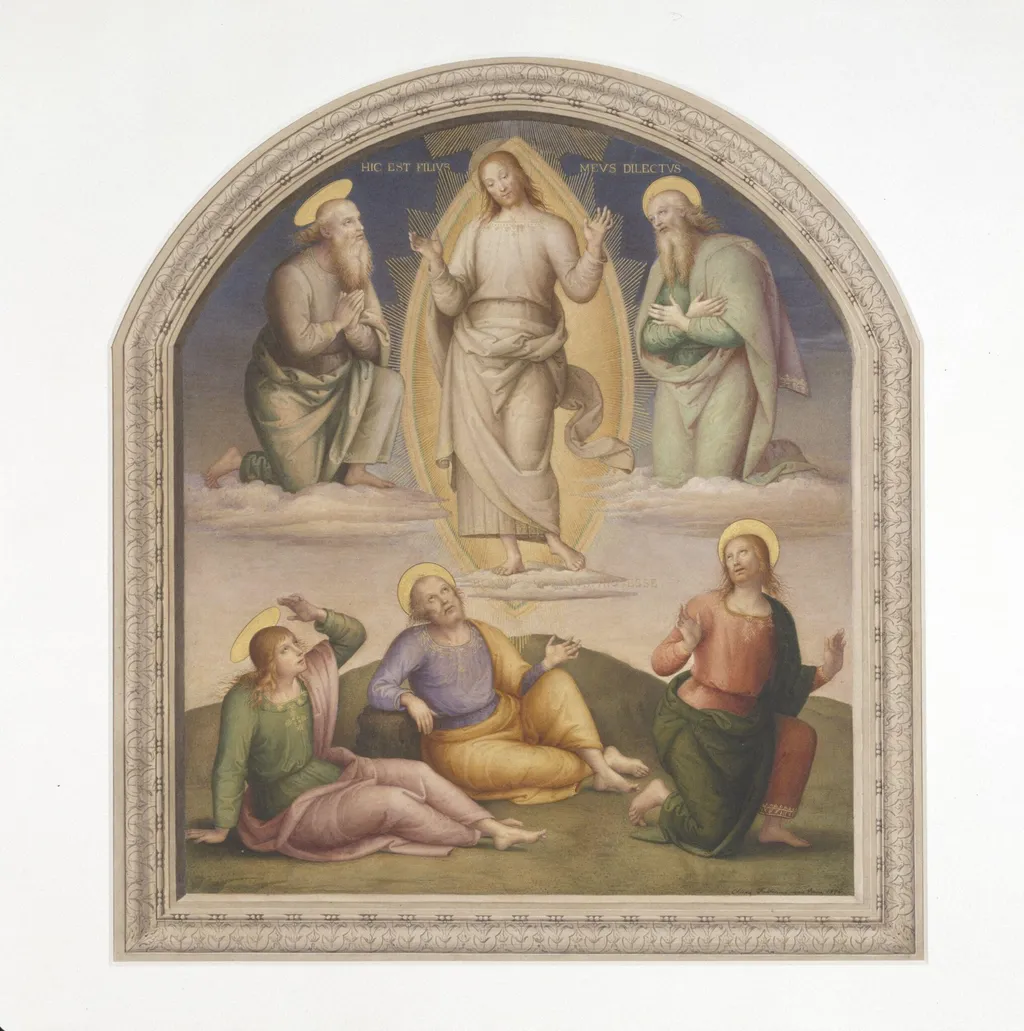
Copy after the painting The Transfiguration by Perugino in the Collegio del Cambio, Perugia. is a watercolor work on paper by the Impressionist artist Eliseo Fattorini. It dates from 1876 and is held in the collection of the Victoria and Albert Museum.
About this work
Overview
Eliseo Fattorini produced a watercolor replica of Perugino’s *Transfiguration* in 1876. The copy bears the artist’s signature and the notation “Rome,” indicating its place of execution. It was later transferred to the National Gallery in London in 1995, where it remains part of the collection.
Subject & Meaning
The composition mirrors the original scene of Christ’s transfiguration on a cloud‑capped hill. A luminous central figure with a golden halo raises his arms, while three kneeling figures below and two standing elders above gesture toward him, echoing the biblical moment of divine revelation.
Technique & Style
Executed in watercolor, the work employs a restrained palette of pale blues, greens, and golds. Soft washes create a hazy atmosphere, and a focused light surrounds the central figure, giving the impression of a subtle spotlight that emphasizes the spiritual focus.
History & Provenance
Created for the Arundel Society, the copy was reproduced as a chromolithograph in 1881 by Storch and Kramer, under the supervision of Professor L. Gruner. Its later transfer to the National Gallery of London in 1995 secured its public accessibility.
Context
Perugino’s original *Transfiguration* resides in the Collegio del Cambio in Perugia, a key example of High Renaissance devotional art. Fattorini’s watercolor reflects 19th‑century interest in disseminating Renaissance masterpieces through accurate reproductions for scholarly and educational purposes.
Artist & collection

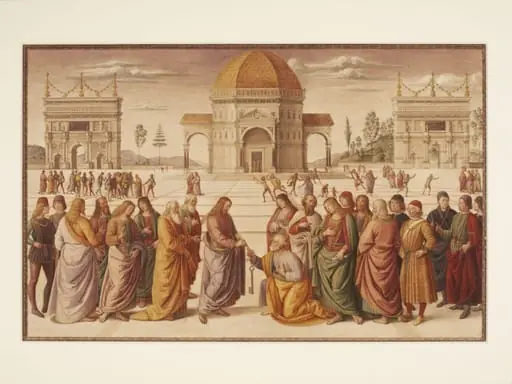 The Delivery of Keys to St Peter
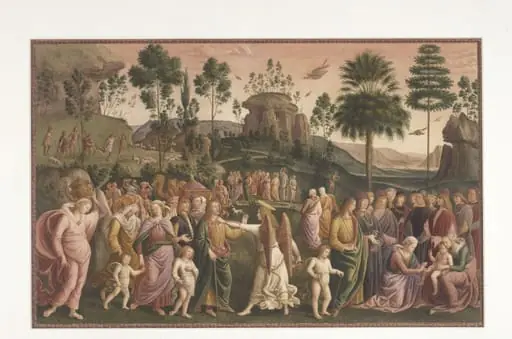 Copy after the painting Moses and the Angel by Perugino in the Collegio del Cambio, Perugia.
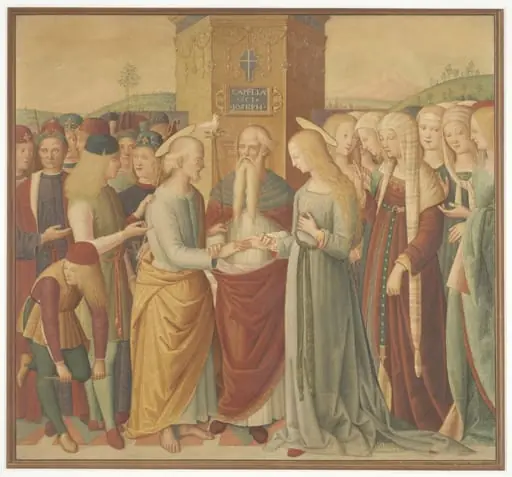 Copy after the painting Marriage of the Virgin by Perugino in S. Girolamo, Spello.
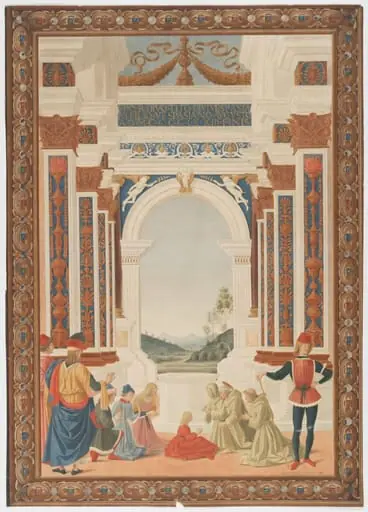 Copy after the painting St Bernard healing a man by Fiorenzo di Lorenzo in the Galleria Nazionale, Perugia.
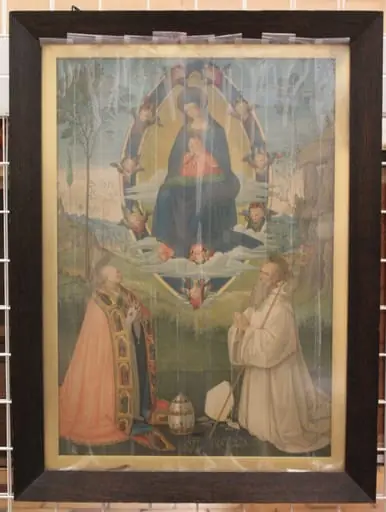 The Virgin in Glory
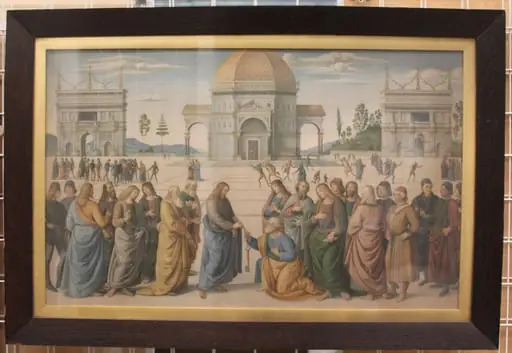 Christ's Charge to St Peter
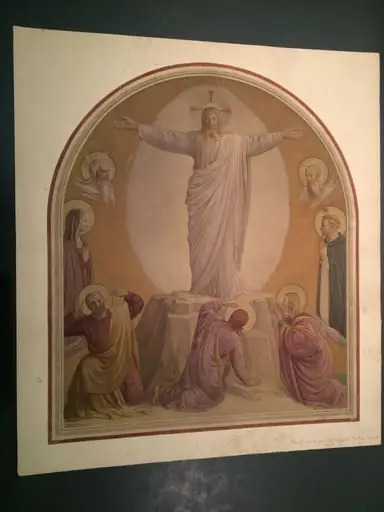 Copy after The Transfiguration, Fra Angelico in the Museo di San Marco (Florence)
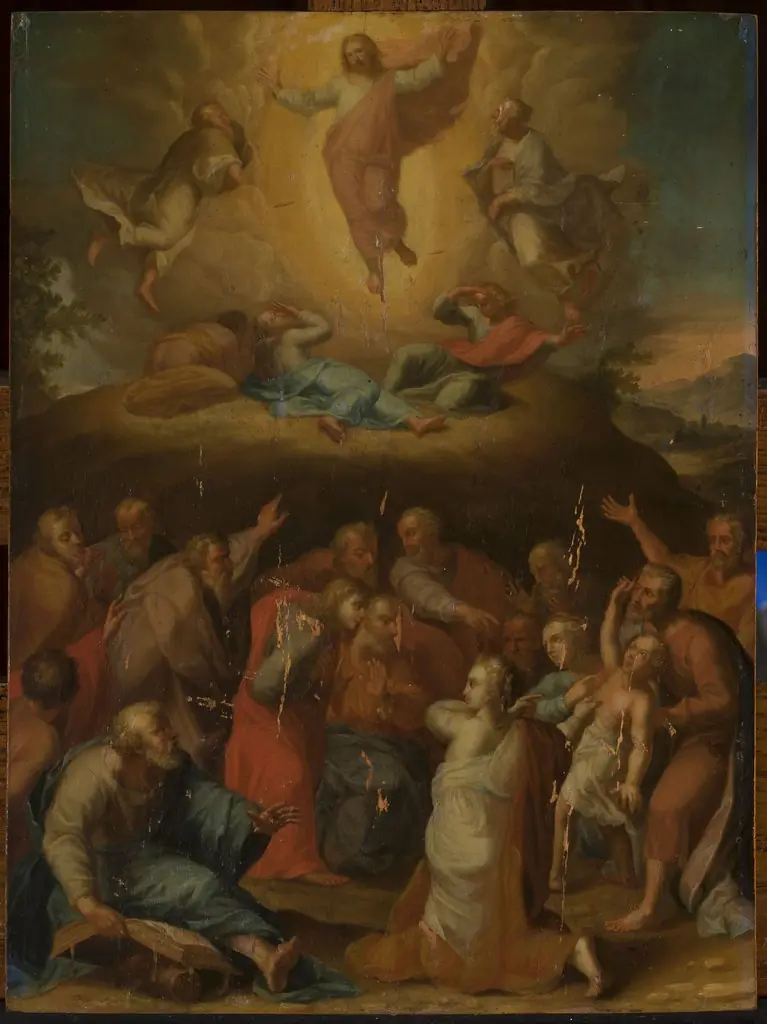 Transfiguration
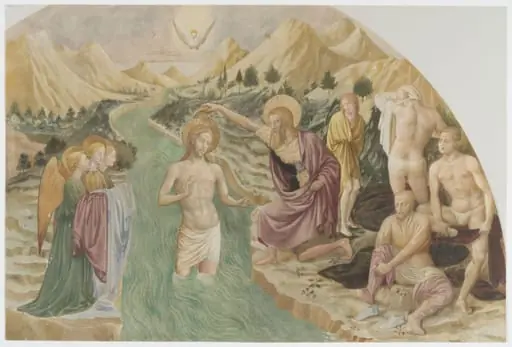 Copy after the painting Baptism of Christ by Masolino in Castiglione d'Olona
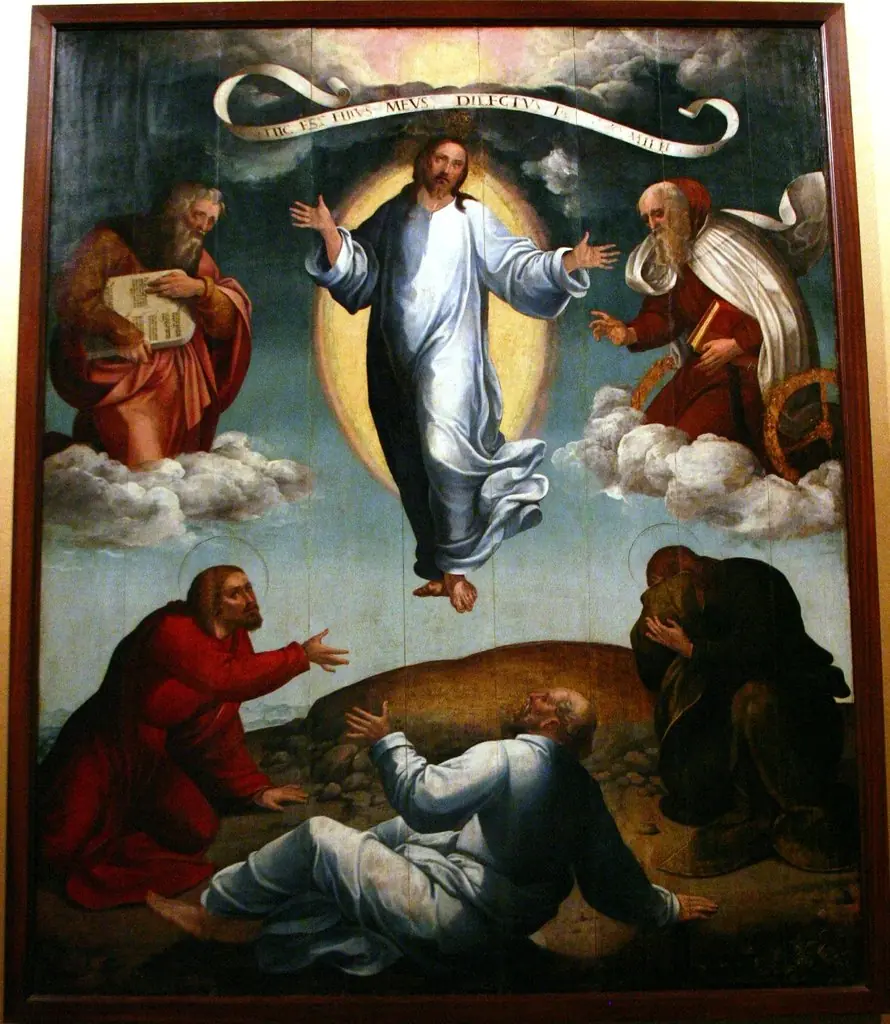 Transfiguration of Jesus Christ
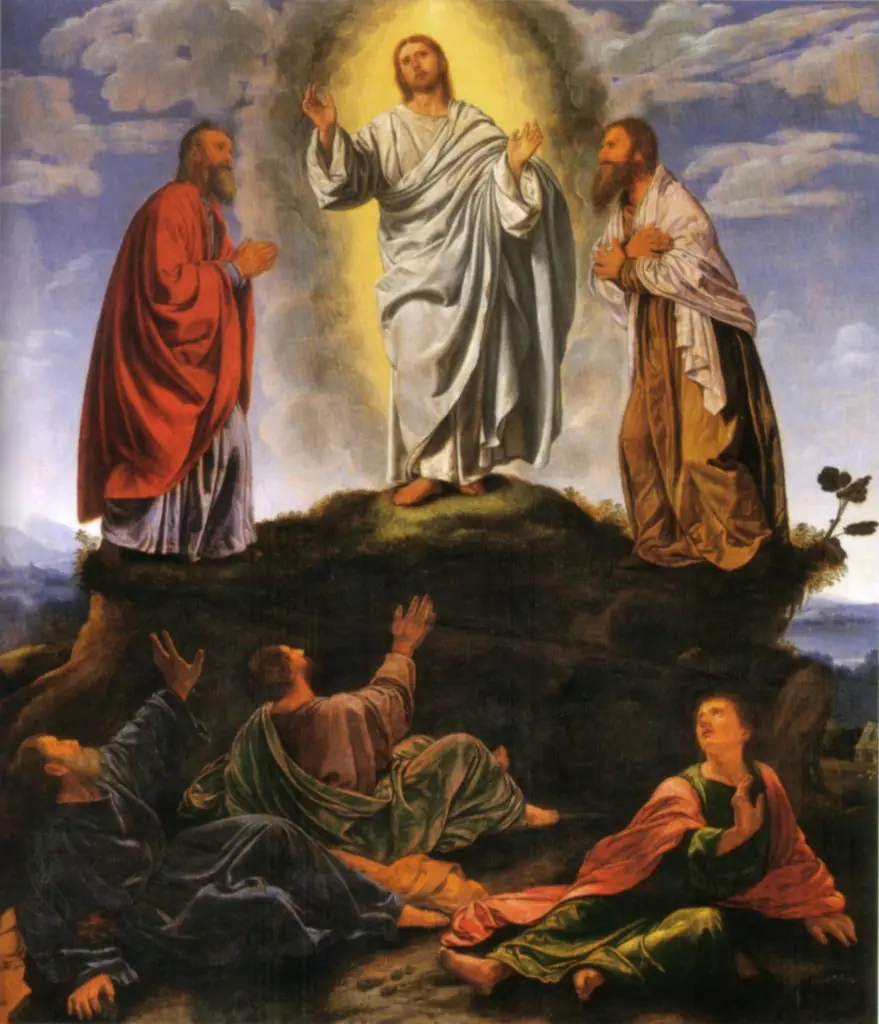 Transfiguration
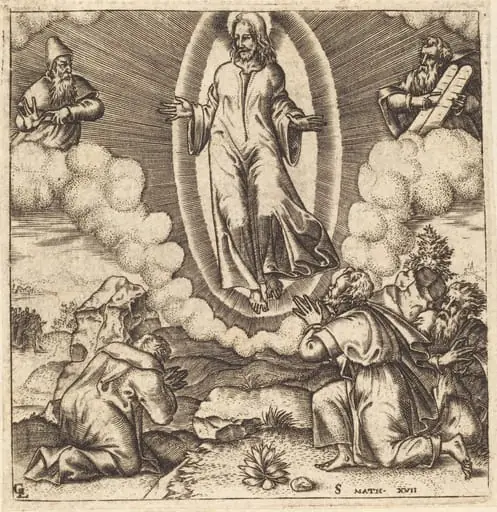 The Transfiguration
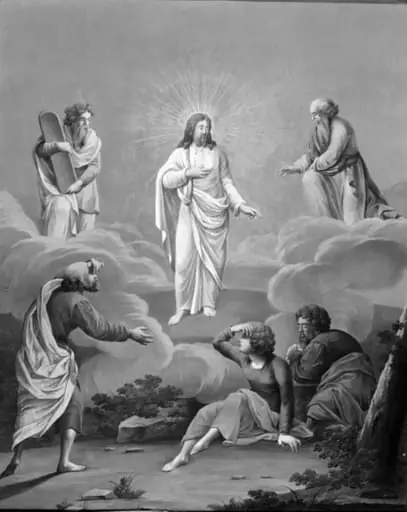 Transfigurationen
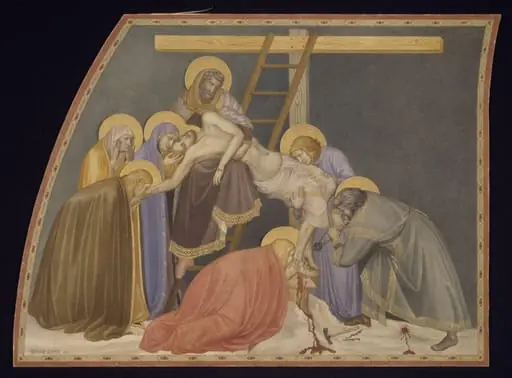 Copy after the painting Deposition from the Cross by P Lorenzetti in the Lower Church, San Francesco, Assisi
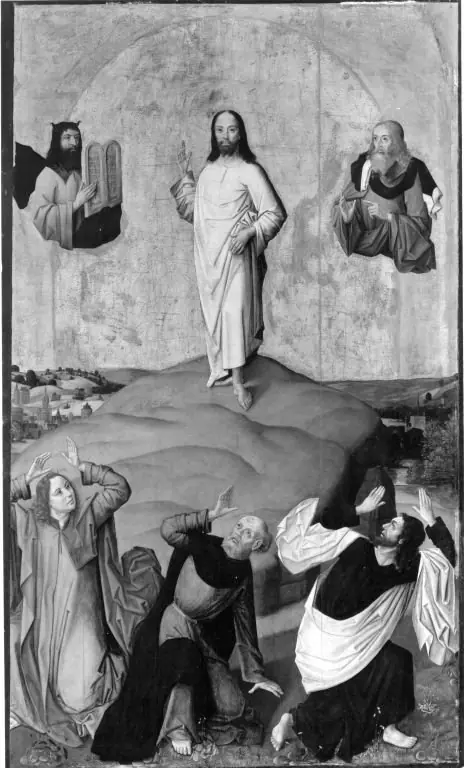 Transfiguration Christ