Artwork
The Forge of Vulcan
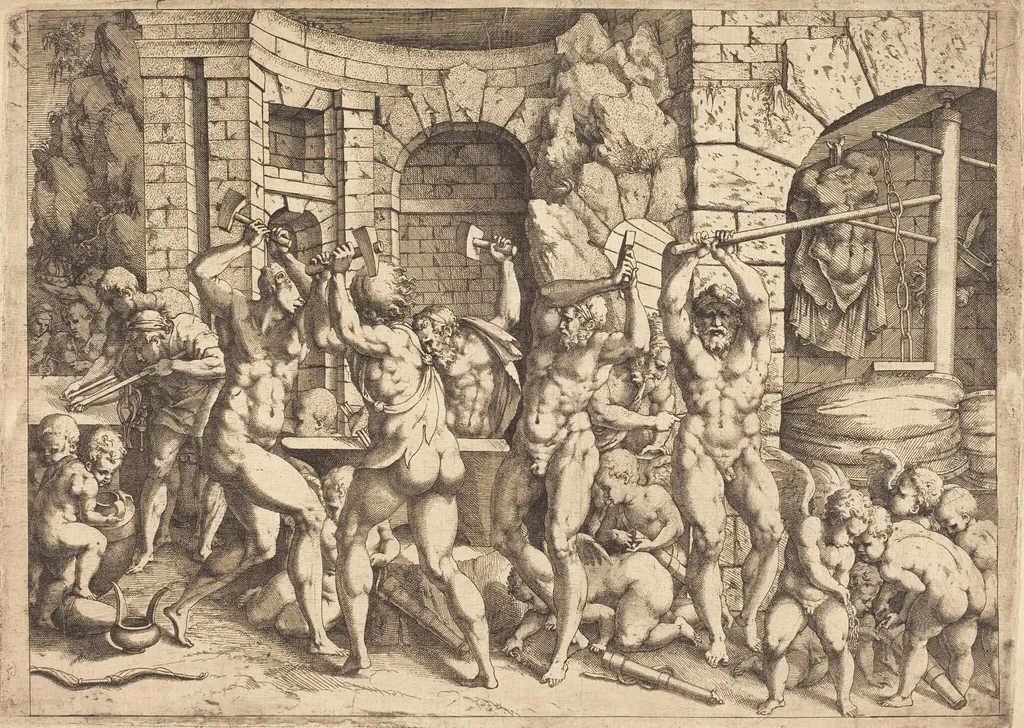
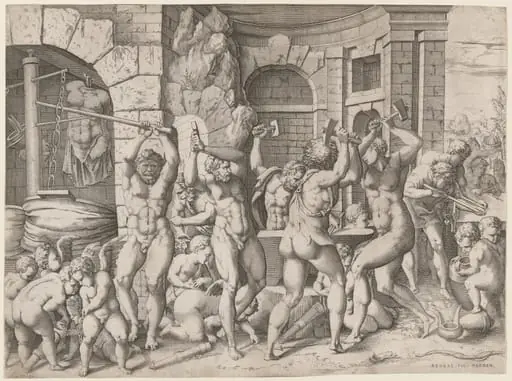
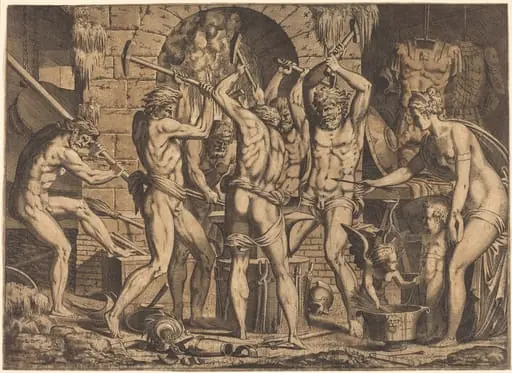
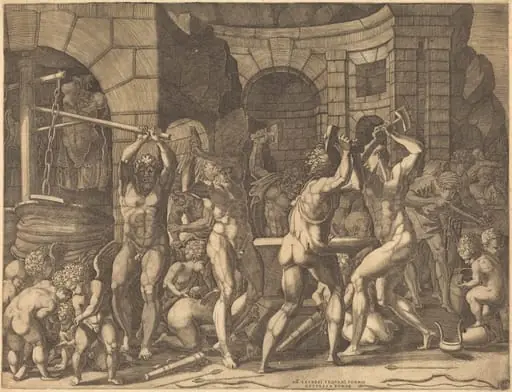
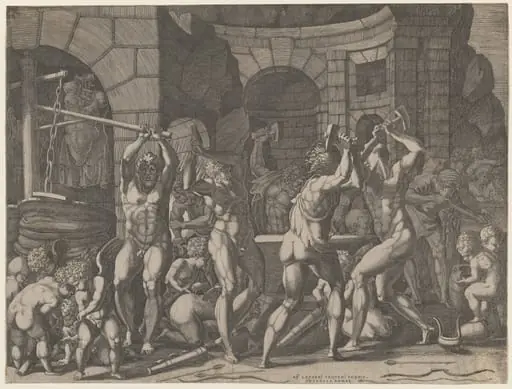
The Forge of Vulcan is an ink print by the Baroque artist Louis Elle I. It dates from 1650 and is held in the collection of the National Gallery of Art.
About this work
Overview
The Forge of Vulcan, an etching by Louis Elle I from 1650, presents a dynamic scene of industrious activity within a stone-walled environment.
Subject & Meaning
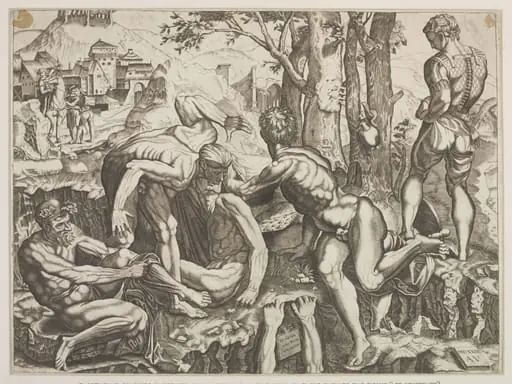
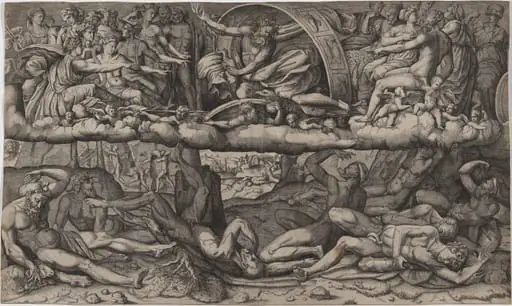
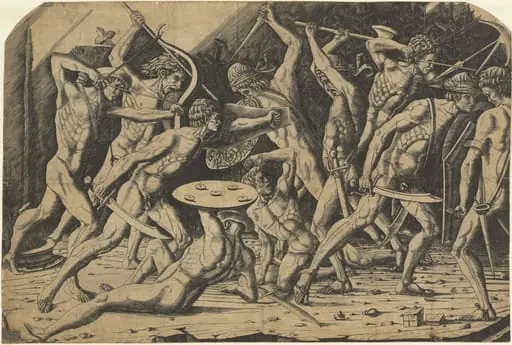
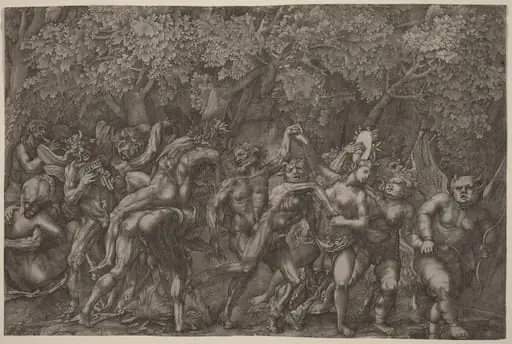
The etching depicts a group of robust, loincloth-clad men engaged in various strenuous tasks, including hammering and lifting, around a central massive hammer on a pedestal. While the scene is set in a forge, suggesting a literal interpretation of Vulcan's domain, its allegorical nature invites broader, open-ended interpretation, potentially symbolizing themes of labor, creation, or struggle.
Technique & Style
Executed as an etching, the work showcases Louis Elle I's mastery of the medium, capturing intricate details and textures of the stone setting and the figures' muscular physiques through precise line work and shading techniques.
History & Provenance
Created in 1650 by Louis Elle I, specific details regarding the etching's commission, early ownership, and exhibition history are not provided in the available information.
Context
Emerging in the mid-17th century, The Forge of Vulcan reflects the era's fascination with classical mythology and the depiction of physical labor, potentially influenced by or influencing contemporary artistic themes of industry and mythological subjects.
Legacy
The etching's impact on subsequent artistic works or its reception over time is not detailed in the provided information, leaving its legacy and influence subject to further art historical research.
Artist & collection