Artwork
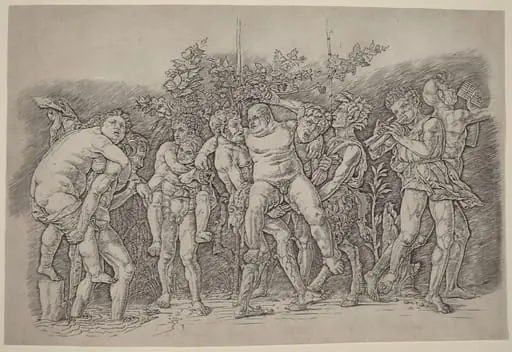
The March of Silenus
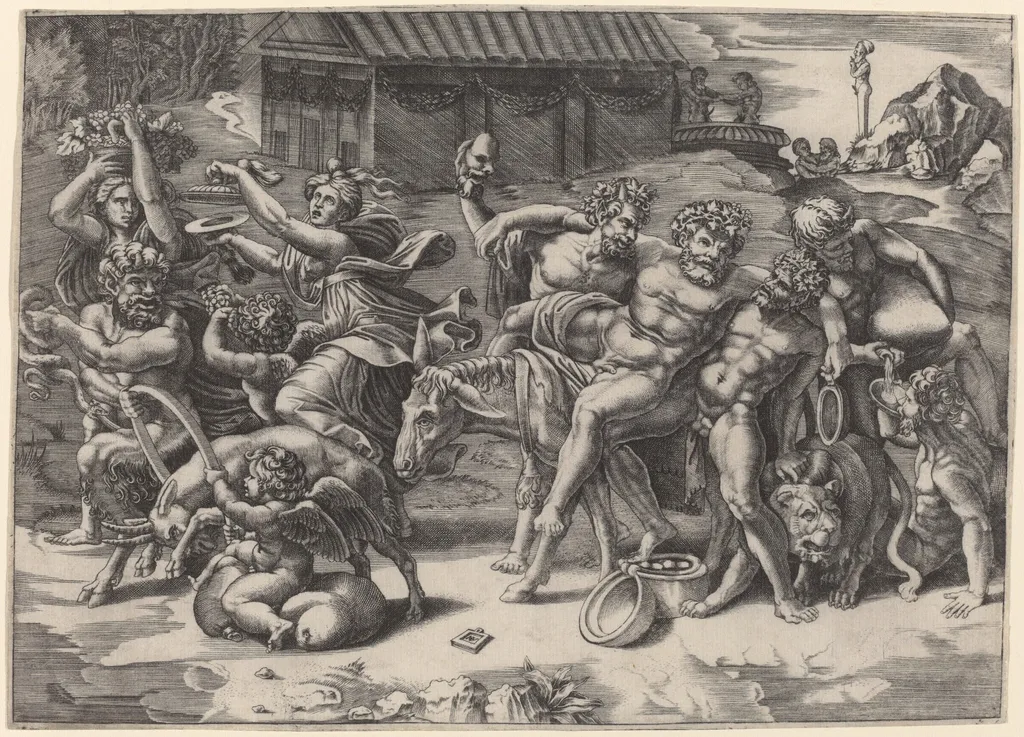
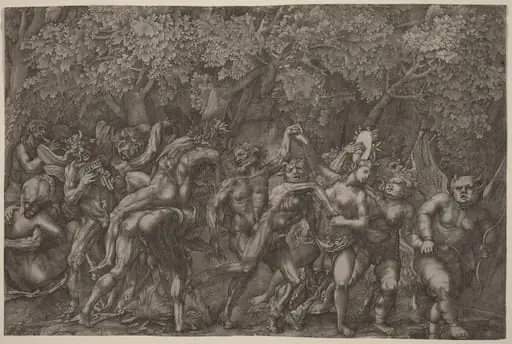
The March of Silenus is an ink print by the Renaissance artist Agostino dei Musi. It is held in the collection of the National Gallery of Art.
About this work
Overview
Created around 1550 by Agostino dei Musi, known as Agostino Veneziano, this engraving captures a mythological procession tied to Dionysian revelry.
Created around 1550 by Agostino dei Musi, known as Agostino Veneziano, this engraving captures a mythological procession tied to Dionysian revelry. As a skilled printmaker in early 16th-century Italy, he translated classical narratives into detailed monochrome compositions. The work exemplifies the Renaissance interest in antiquity and the technical potential of engraving as a reproductive and expressive medium.
Subject & Meaning
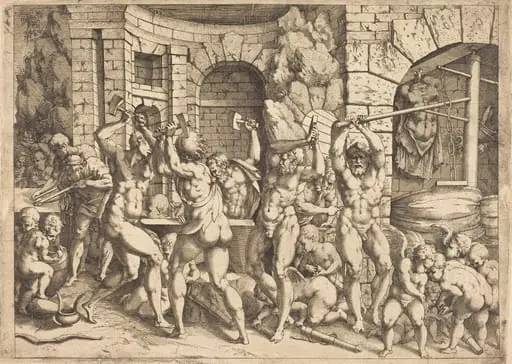
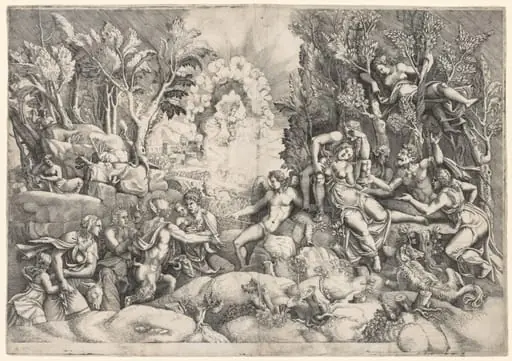
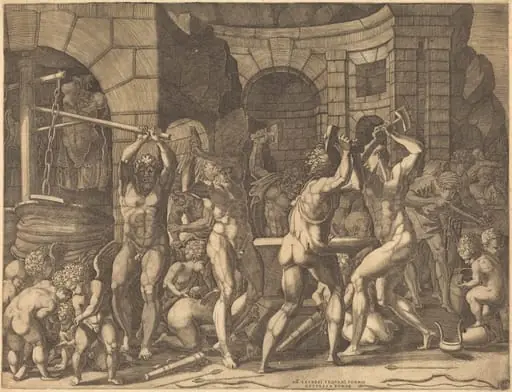
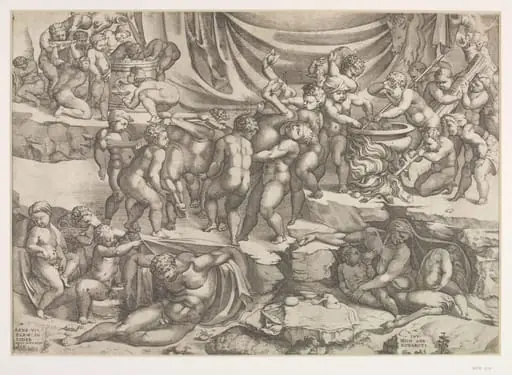
The scene centers on Silenus, a drunken, elderly companion of Dionysus, shown reclining atop a donkey, his wreath askew. Surrounding him are a chaotic mix of human and hybrid figures—dancers, revelers, and exhausted followers—engaged in acts of excess and abandon. The presence of wine jugs and food trays reinforces the theme of indulgence, while the distant statues suggest a sacred landscape corrupted by revelry.
Technique & Style
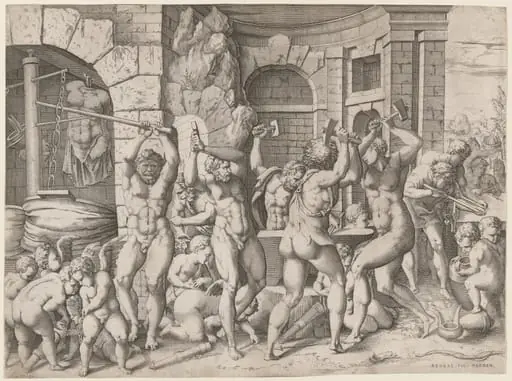
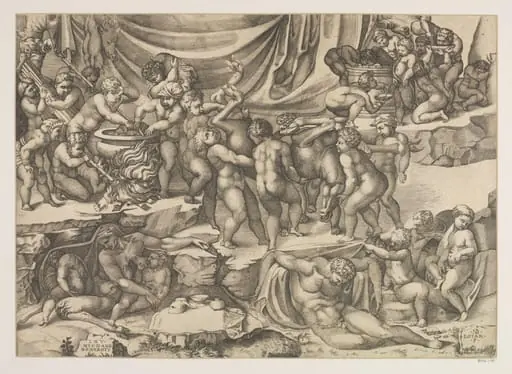
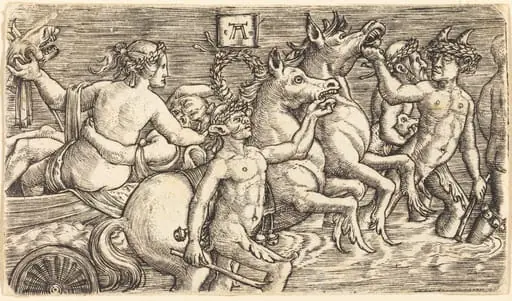
Agostino employed fine, controlled lines to render dense, dynamic movement within a compact space. Cross-hatching and delicate shading model forms and suggest depth, while the tight composition amplifies the sense of disorder. The precision of the engraving tool allows for intricate textures—fur, fabric, foliage—each contributing to the scene’s visceral energy without color or tone.
History & Provenance
The engraving emerged during a period when Italian printmakers were actively disseminating classical imagery through commercial prints. Agostino, trained in Venice and active in Rome, produced works for collectors and artists seeking accessible versions of mythological subjects. While its early ownership is undocumented, the print circulated widely among Northern European and Italian connoisseurs of the mid-1500s.
Context
This work reflects the Renaissance revival of classical mythology, particularly Dionysian themes popular in humanist circles. Engravings like this served as visual references for painters and sculptors, bridging antiquity and contemporary art. The crowded, energetic composition aligns with contemporaneous prints by Marcantonio Raimondi and other Roman engravers who adapted ancient narratives for a literate, elite audience.
Legacy
Agostino’s engraving contributed to the standardization of mythological iconography in print form. Its intricate detail and narrative density influenced later Northern European printmakers, particularly in the development of Mannerist compositions. Though not widely exhibited today, it remains a reference point in studies of Renaissance print culture and the transmission of classical themes through mechanical reproduction.
Artist & collection
Artist
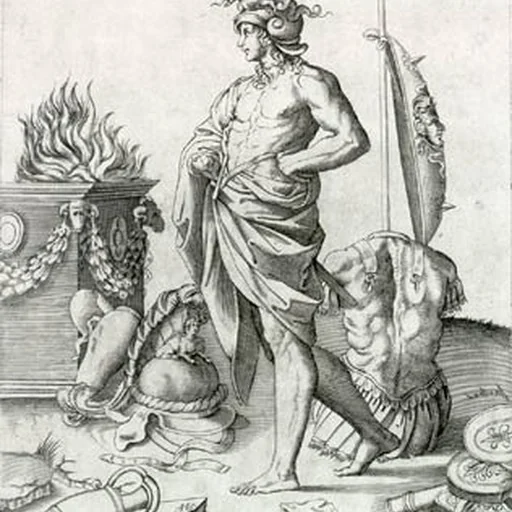
Agostino Veneziano ("Venetian Agostino"), whose real name was Agostino de' Musi (c. 1490 – c. 1540), was an important and prolific Italian engraver of the Renaissance.