Artwork
Thomas Wolsey, Cardinal
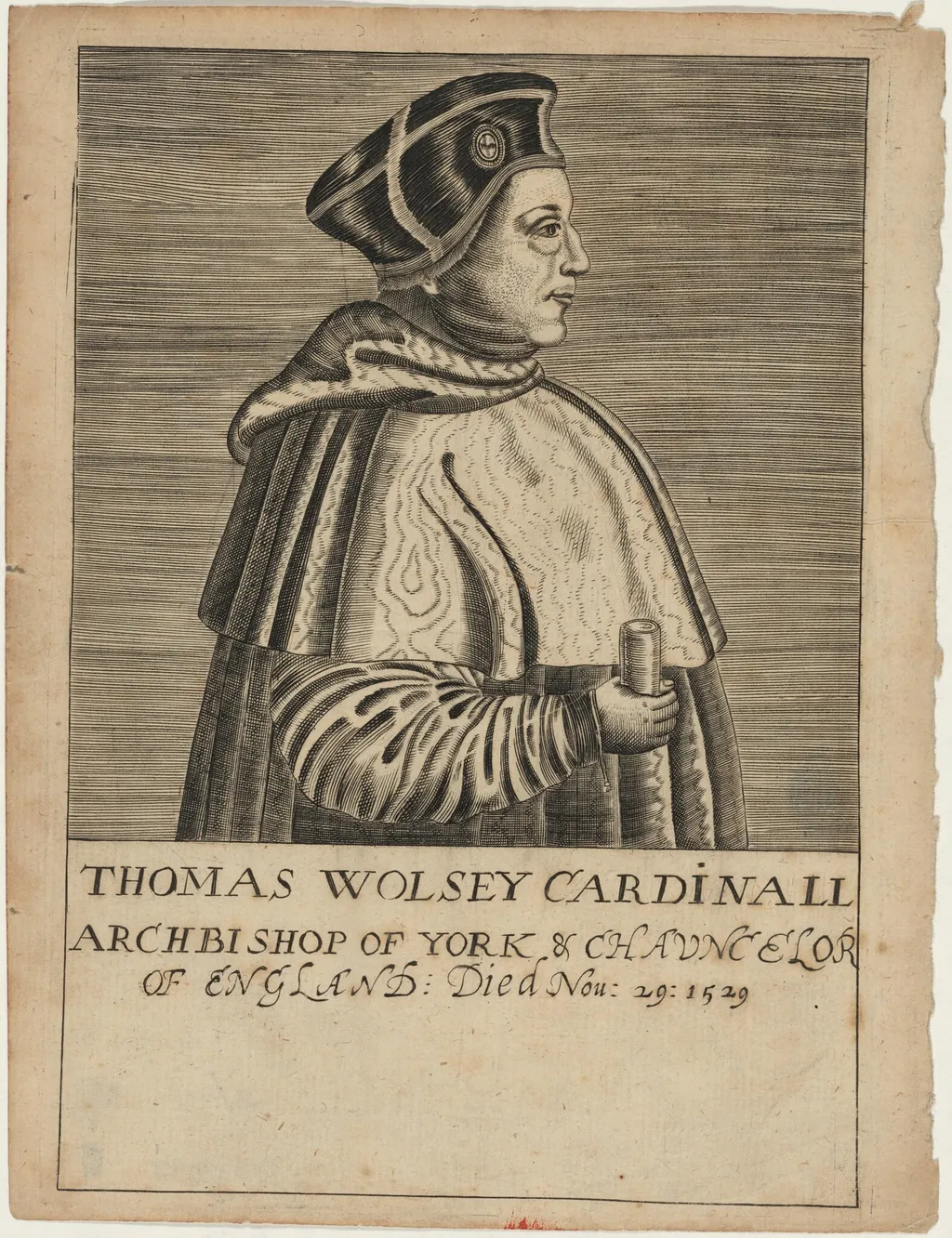
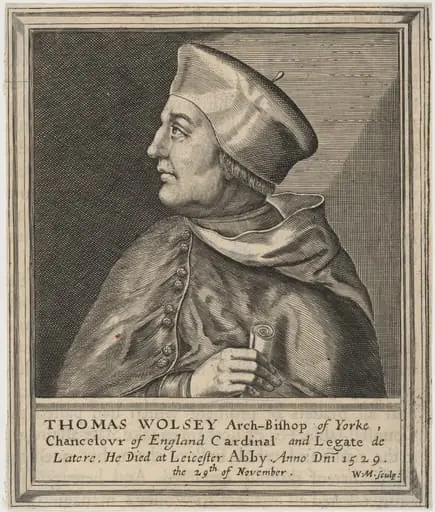
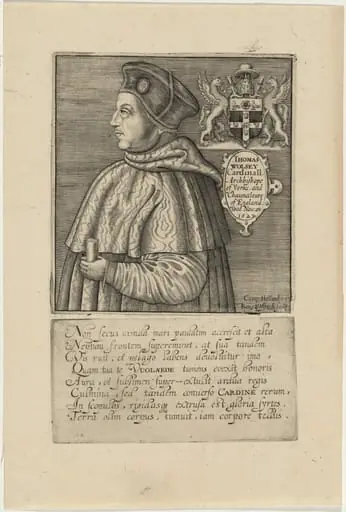
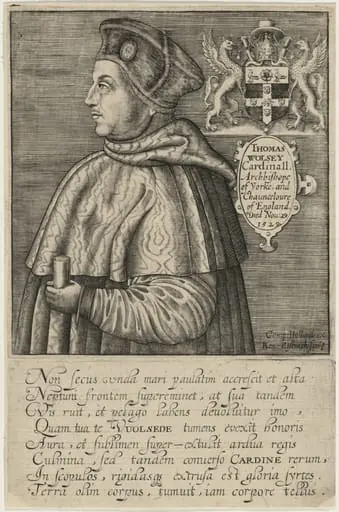
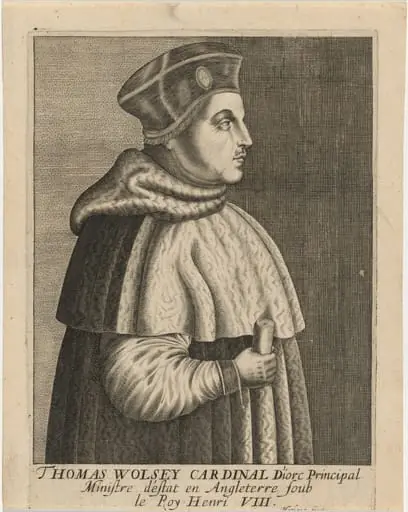
Thomas Wolsey, Cardinal is an ink print by the Renaissance artist Renold Elstrack. It dates from 1598 and is held in the collection of the National Gallery of Art.
About this work
Overview
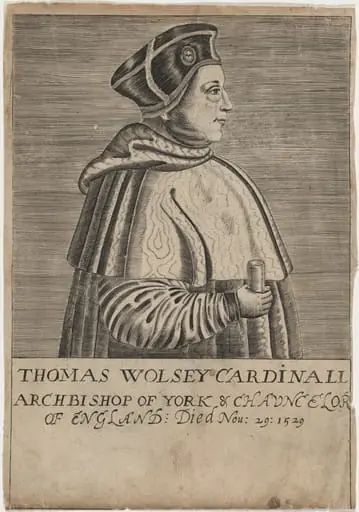
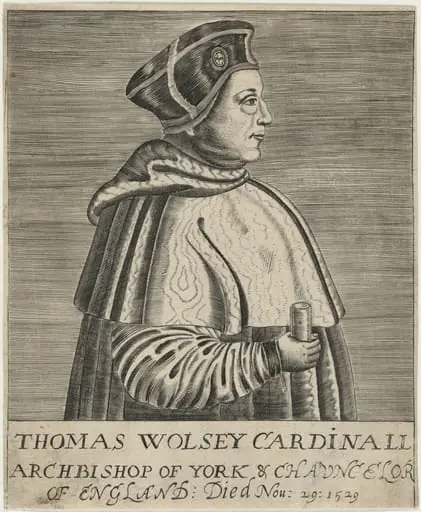
This black-and-white engraving, produced by Renold Elstrack in 1598, depicts Thomas Wolsey, a prominent English churchman and statesman.
This black-and-white engraving, produced by Renold Elstrack in 1598, depicts Thomas Wolsey, a prominent English churchman and statesman. Rendered in fine linear detail, the portrait emphasizes Wolsey’s formal attire and dignified bearing. The composition is minimal, with no background distractions, directing attention to his facial expression and elaborate garments. The work belongs to the tradition of posthumous portraiture, intended to preserve the image of a powerful historical figure.
Subject & Meaning
Thomas Wolsey served as Archbishop of York and Lord Chancellor under Henry VIII, wielding considerable political and religious influence. The engraving captures him in ecclesiastical regalia, including a jeweled hat and striped sleeves, symbols of his high rank. The object in his hand—likely a book or pastoral staff—reinforces his dual role as scholar and church leader. The stern expression conveys authority, reflecting his reputation as a formidable administrator.
Technique & Style
Elstrack employed engraving, a technique involving incised lines on a metal plate inked and pressed onto paper. Fine, controlled strokes model volume and texture, particularly in the folds of fabric and the contours of the face. The absence of color relies entirely on tonal variation and line density to suggest depth and materiality. The precision of the lines reflects the technical discipline characteristic of late 16th-century printmaking in England.
History & Provenance
Created nearly 20 years after Wolsey’s death in 1530, the engraving was made during a period of renewed interest in Tudor figures. Elstrack, one of England’s earliest professional engravers, often produced portraits of notable individuals for public circulation. This print likely served to commemorate Wolsey’s legacy amid shifting political and religious landscapes under Elizabeth I, when his role was reevaluated by contemporaries.
Context
In late 16th-century England, printed portraits of historical figures were increasingly used to shape public memory. Wolsey, once a symbol of papal power and royal favor, had become a cautionary tale after his fall from grace. Elstrack’s image, though neutral in tone, participates in this cultural project—preserving his likeness while aligning with the Protestant state’s selective remembrance of Catholic elites.
Legacy
Elstrack’s engraving remains one of the most widely reproduced visual records of Wolsey. Though not based on a contemporary likeness, it established a standard iconography that influenced later depictions. Its enduring presence in collections and publications underscores the role of print media in constructing historical identity, offering a tangible link between Tudor power and its posthumous representation.
Artist & collection