Artwork
Thomas Wolsey, Cardinal, Lord Chancellor, Archbishop of York
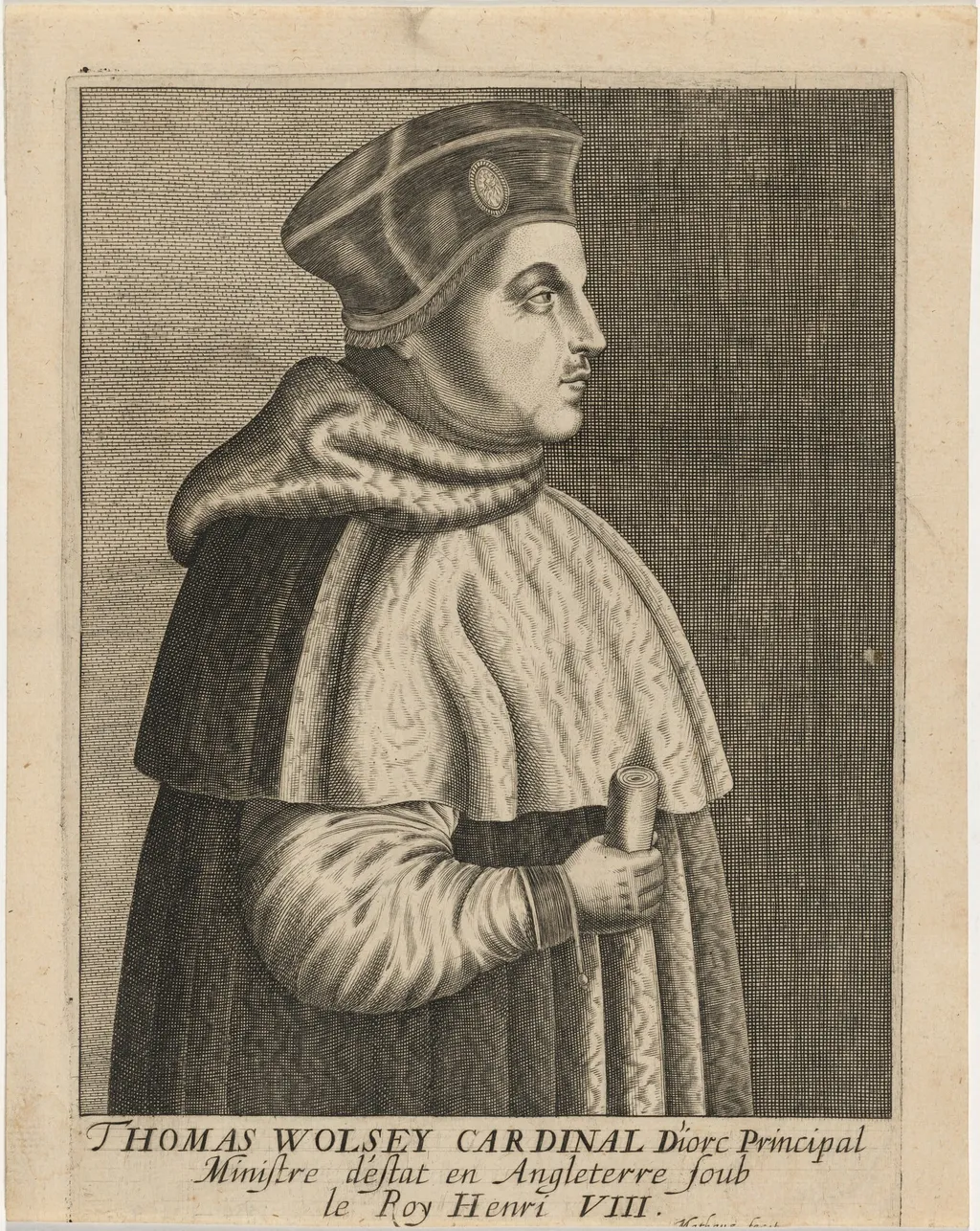
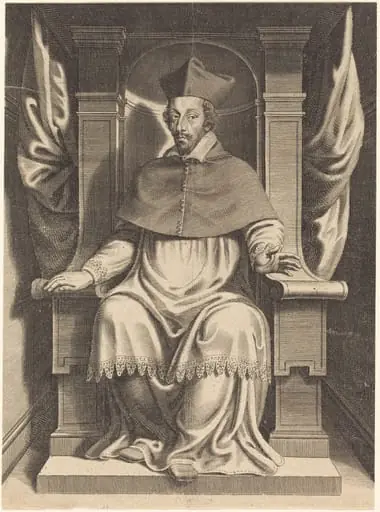
Thomas Wolsey, Cardinal, Lord Chancellor, Archbishop of York is an ink print by the Romanticist artist Unknown 19th Century. It dates from 1850 and is held in the collection of the National Gallery of Art. This black-and-white engraving depicts Thomas Wolsey, a powerful figure in early 16th-century England, dressed in ecclesiastical robes.
About this work
Overview
Rendered with fine, precise lines, the image captures his solemn expression and elaborate attire, including a tall, ornate hat and a draped shoulder fabric.
This black-and-white engraving depicts Thomas Wolsey, a powerful figure in early 16th-century England, dressed in ecclesiastical robes. Rendered with fine, precise lines, the image captures his solemn expression and elaborate attire, including a tall, ornate hat and a draped shoulder fabric. The background uses subtle tonal contrasts to suggest depth without narrative detail, focusing attention on the figure’s presence and dignity.
Subject & Meaning
Thomas Wolsey, Cardinal and Lord Chancellor to Henry VIII, is portrayed as a man of authority and intellectual gravity. The rolled document in his hand suggests his role in governance and diplomacy. His direct gaze to the right conveys alertness and resolve, reflecting his political influence. The formal attire underscores his dual status as both church leader and royal administrator, emphasizing institutional power over personal expression.
Technique & Style
The engraving employs fine, controlled lines to model form and texture, characteristic of Renaissance printmaking traditions. Shading is achieved through cross-hatching and delicate line density, not broad tonal areas. The precision of the work reflects craftsmanship typical of the early 1500s, not Romanticism, which emerged centuries later. The style prioritizes clarity and detail over emotional dramatization.
History & Provenance
This engraving likely dates from the 16th or early 17th century, produced after Wolsey’s fall from favor and death in 1530. Such portraits were circulated to document prominent figures, often for political or historical record. While the exact origin and printer are uncertain, similar engravings were used in biographical collections and ecclesiastical archives of the period.
Context
Wolsey’s image was reproduced in the decades following his downfall, as Tudor England reevaluated his legacy. Engravings like this served as visual anchors for historical memory, especially as written accounts proliferated. The format reflects the era’s reliance on print for disseminating the likenesses of powerful individuals, particularly those tied to church and state.
Legacy
Though not a Romantic work, this engraving endures as a key visual representation of Wolsey’s public persona. It influenced later portraiture and historical illustrations, reinforcing his image as a complex, formidable figure. Its technical precision and restrained composition continue to inform how early modern English elites are visually remembered in academic and museum contexts.
Artist & collection

Artist