Artwork
Interior of a Church
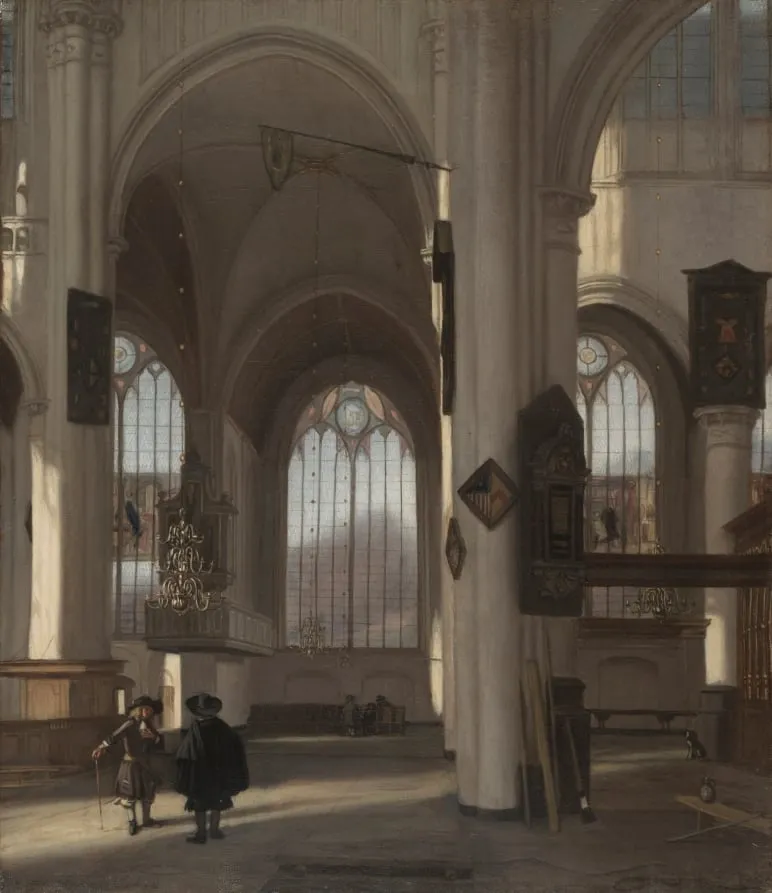
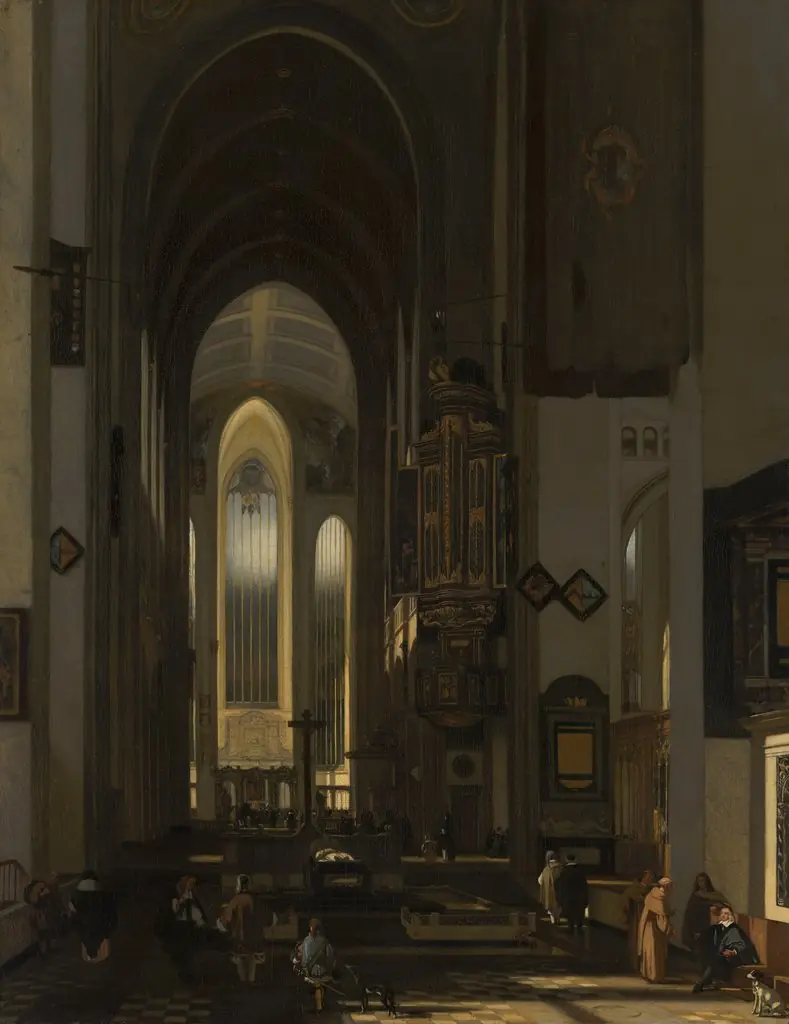
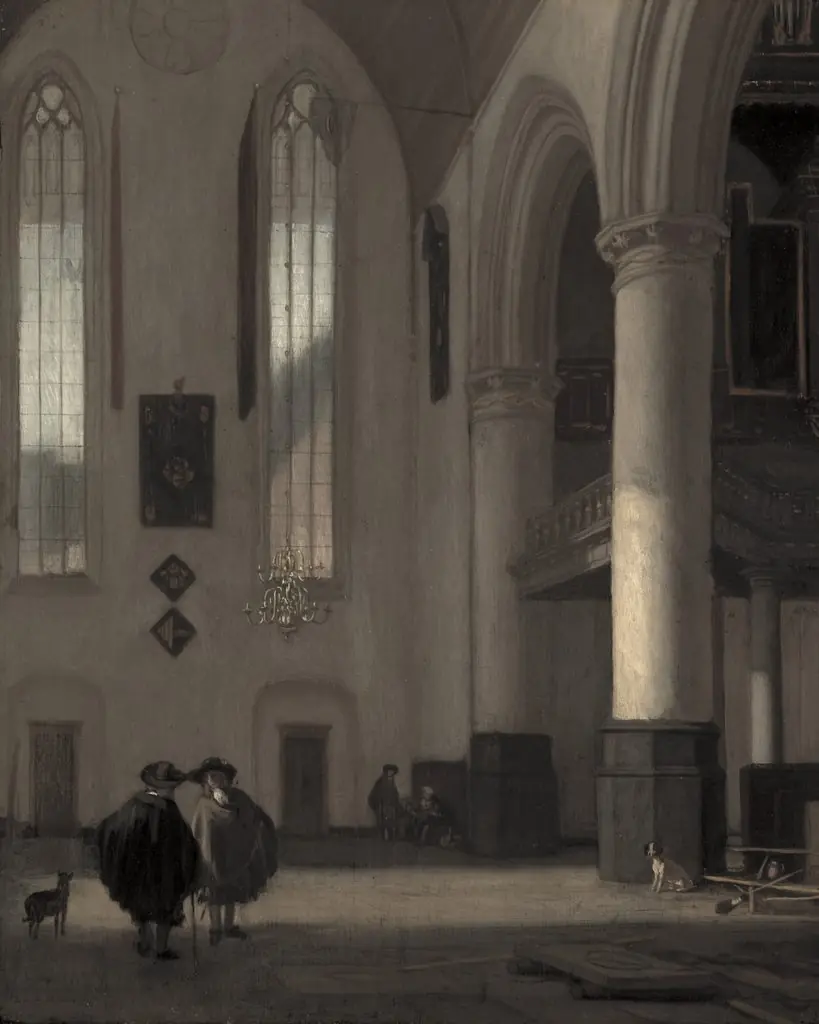
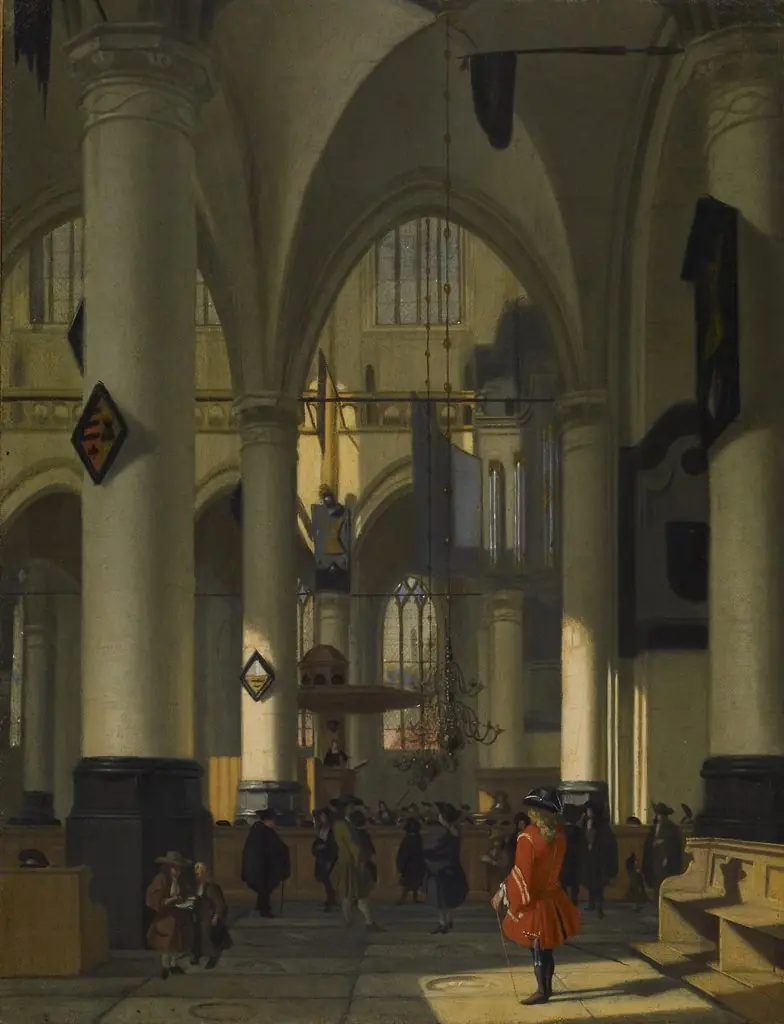
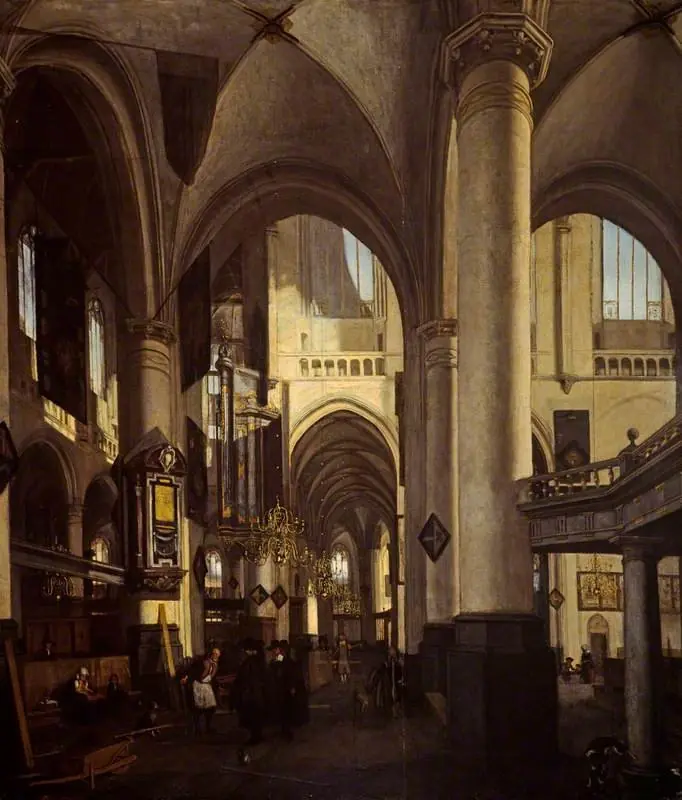
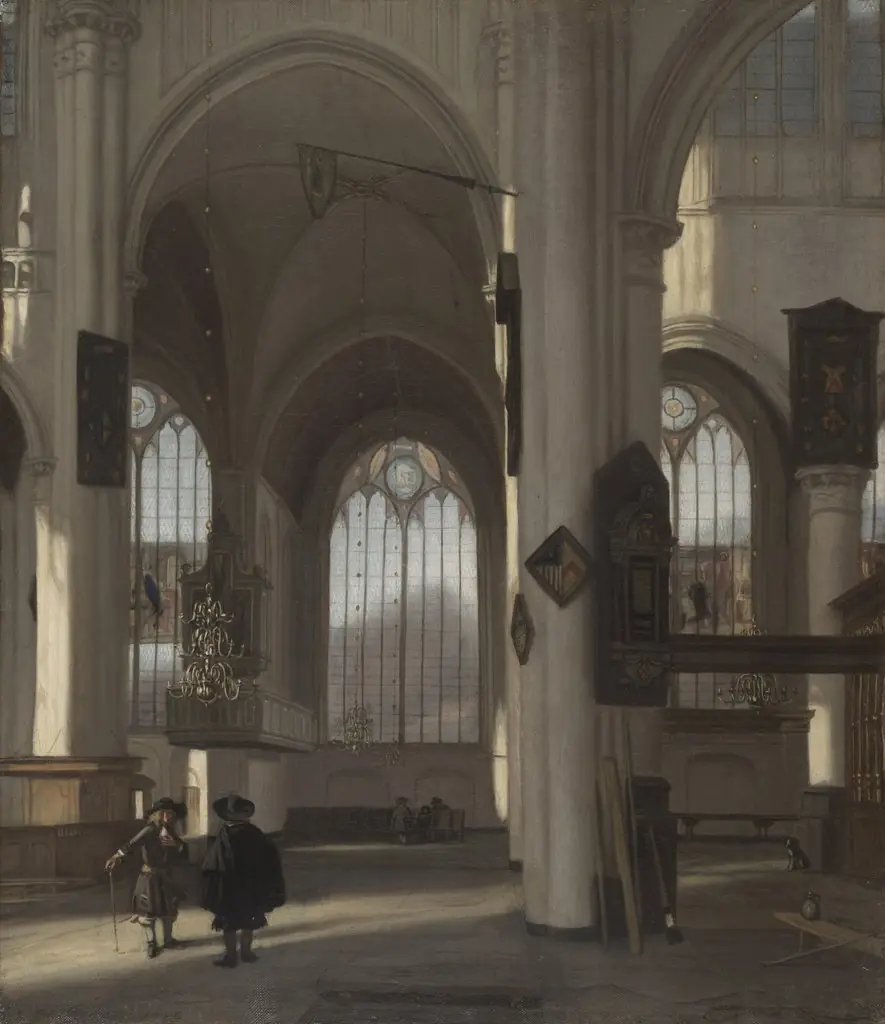
Interior of a Church is an unspecified painting by the Baroque artist Emanuel de Witte. It dates from 1680 and is held in the collection of the Cleveland Museum of Art.
About this work
Overview
Though not a literal record of any single building, its convincing spatial logic and architectural precision suggest a real location.
Emanuel de Witte’s painting presents a vast, empty church interior that blends observed detail with imaginative reconstruction. Though not a literal record of any single building, its convincing spatial logic and architectural precision suggest a real location. The composition invites contemplation through its quiet scale and controlled lighting, reflecting a broader Dutch interest in sacred spaces transformed by religious reform.
Subject & Meaning
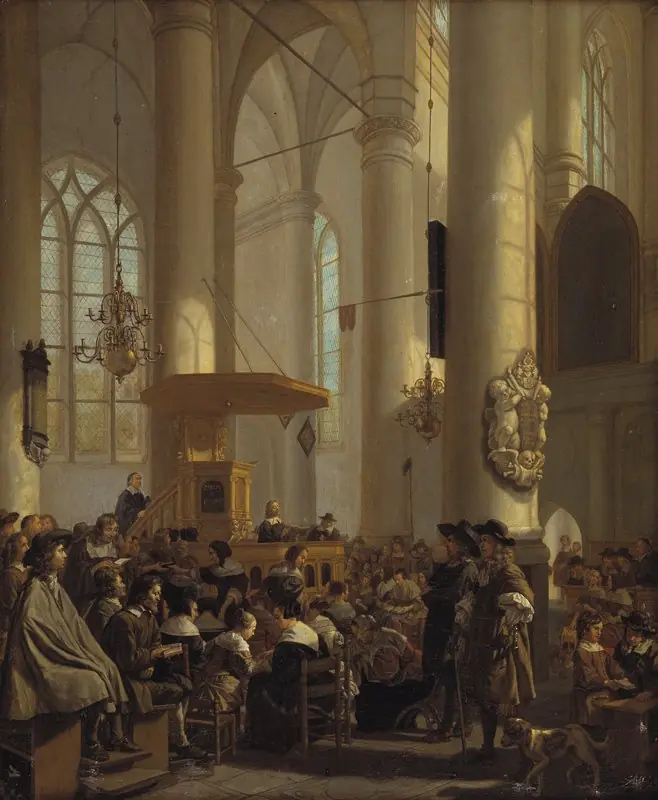
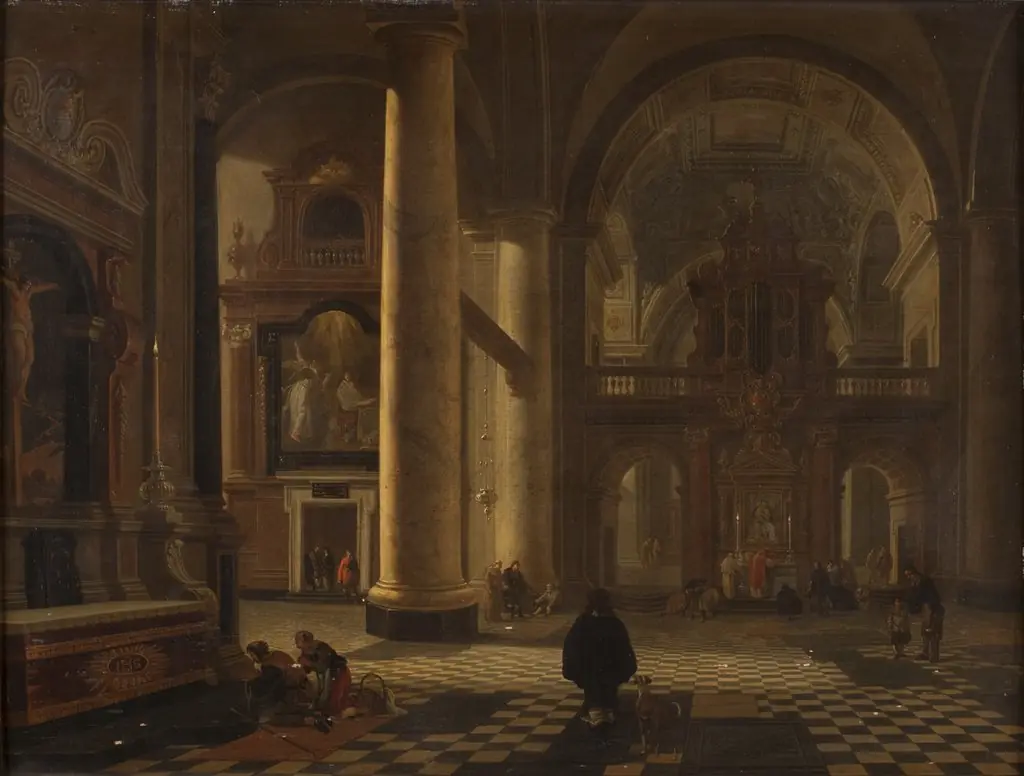
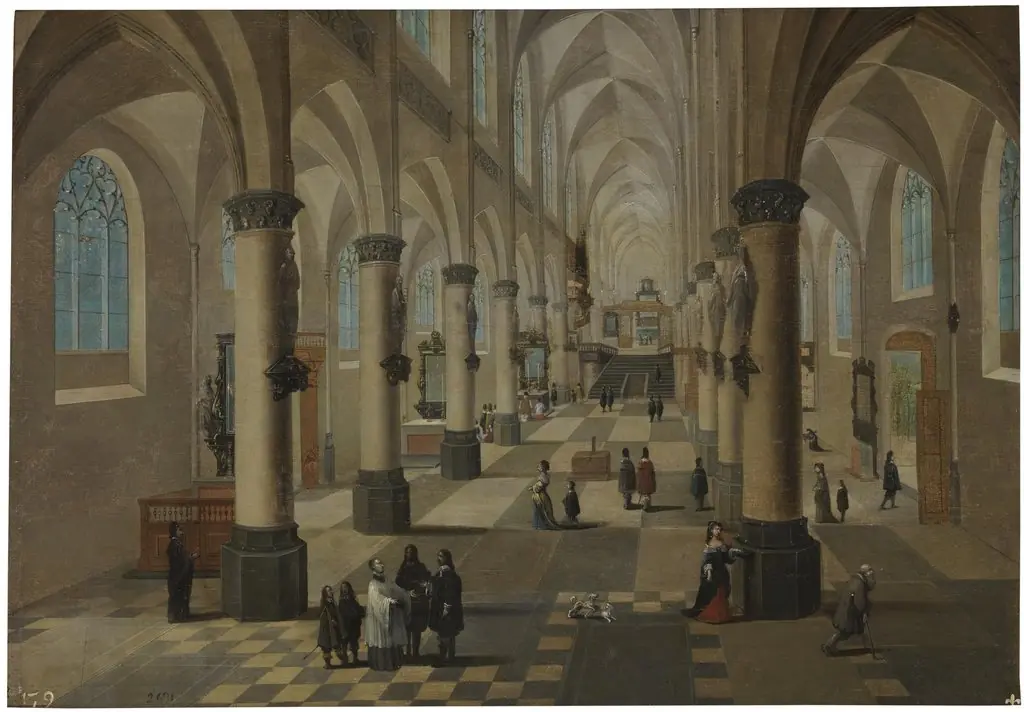
The painting captures a post-Reformation church stripped of Catholic ornamentation, its walls whitewashed and altars removed. Figures are sparse and distant, emphasizing solitude over ritual. This emptiness reflects the Protestant rejection of religious imagery, turning the architecture itself into the subject. The absence of icons shifts focus to the structure’s geometry and the quiet presence of worshippers, suggesting a new spiritual atmosphere defined by austerity and light.
Technique & Style
De Witte employs precise linear perspective to structure the vast interior, guiding the eye toward a receding nave. Light streams through high windows, casting sharp shadows that define the architecture’s contours. The contrast between bright walls and deep recesses demonstrates a refined understanding of chiaroscuro. Brushwork is restrained, favoring clarity over texture, allowing the play of light to dominate the visual experience without distraction.
History & Provenance
The painting draws architectural elements from Amsterdam’s Oude Kerk, a former Catholic church converted to Protestant use in the late 16th century. De Witte likely visited such spaces frequently, absorbing their spatial qualities. While the composition is composite, its details—arched doorways, vaulted ceilings—anchor it in the real architectural landscape of the Dutch Republic, making the imagined feel authentic.
Context
Following the Protestant Reformation, Dutch churches were stripped of statues, paintings, and altars deemed idolatrous. This left behind vast, luminous interiors that artists found compelling for their geometric clarity and atmospheric potential. De Witte’s work aligns with a genre that transformed religious desecration into aesthetic inquiry, reflecting a society redefining sacred space through architecture rather than ornament.
Legacy
De Witte’s approach influenced later Dutch interior painters by demonstrating how light and perspective could convey mood without narrative. His method of blending real architectural fragments into imagined spaces became a model for depicting sacred and secular interiors alike. The quiet dignity of these empty churches continues to inform how art engages with the legacy of religious change in Northern Europe.
Artist & collection

Artist
Emanuel de Witte was born circa 1617 in Alkmaar, the son of Pieter de Wit, a local schoolmaster.

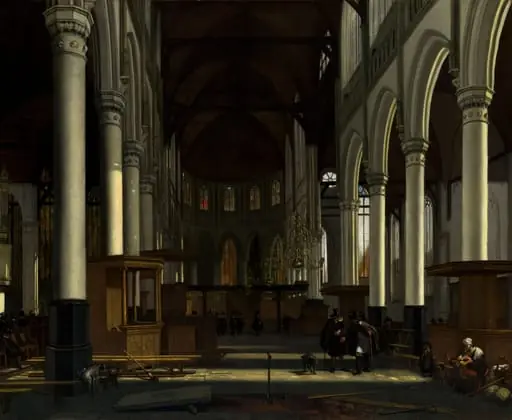 The Interior of the Oude Kerk, Amsterdam
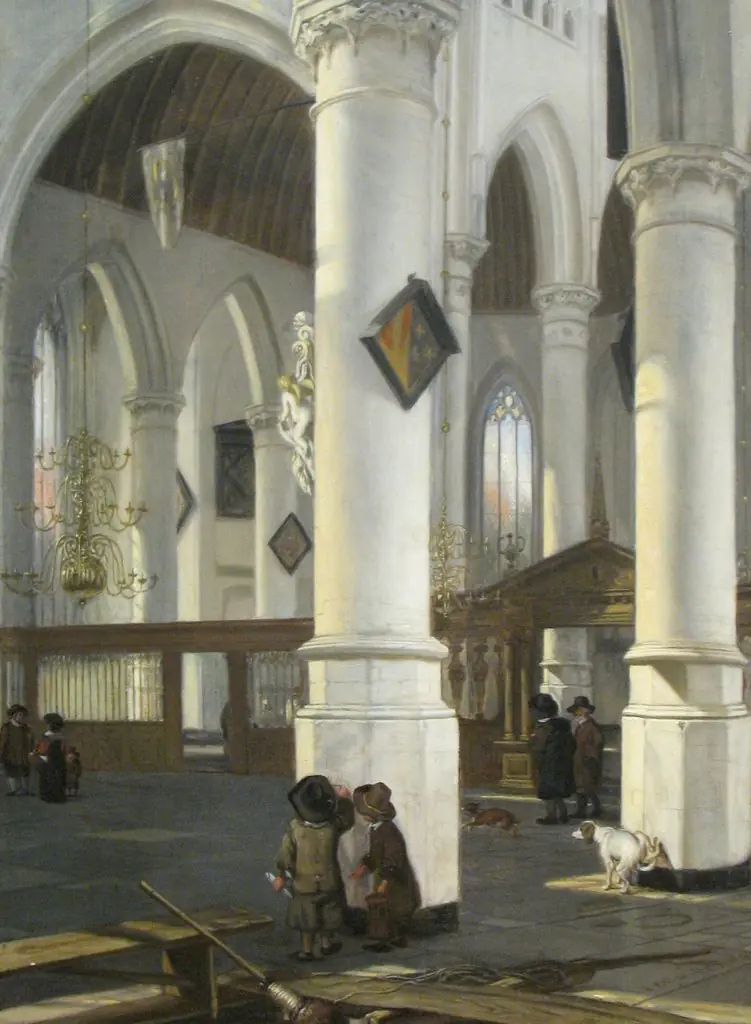 Interior of the Oude Kerk, Delft
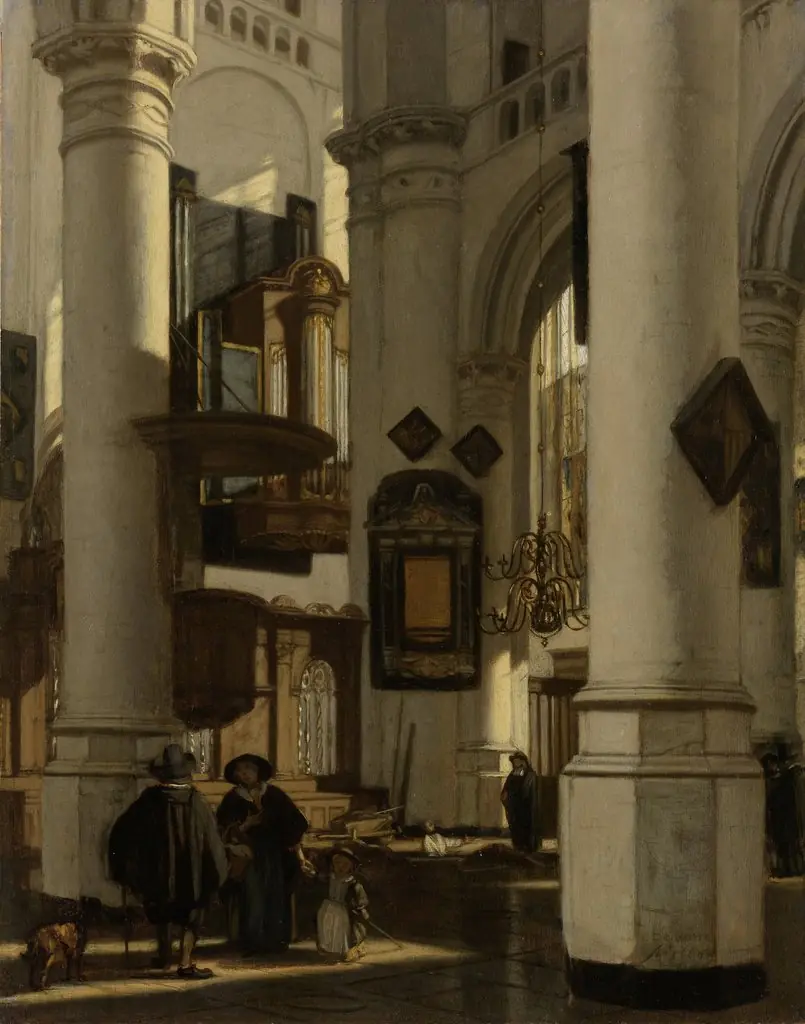 Interior of a Protestant, Gothic Church, with a Gravedigger in the Choir
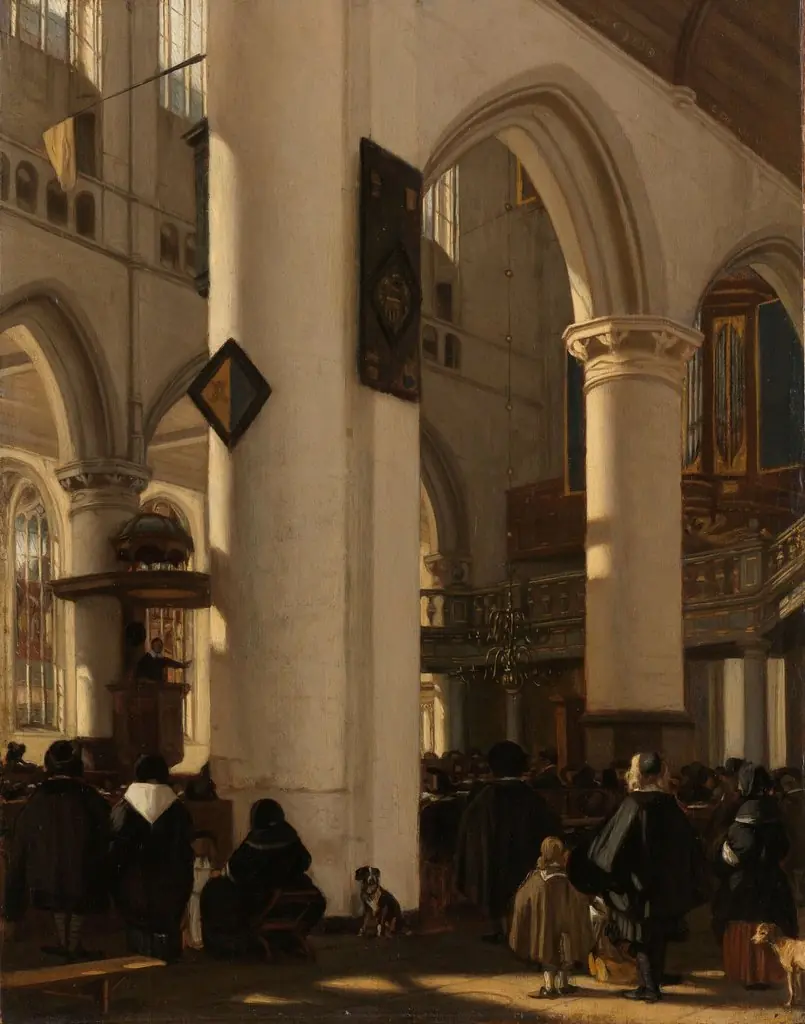 Interior of a Protestant, Gothic Church during a Service
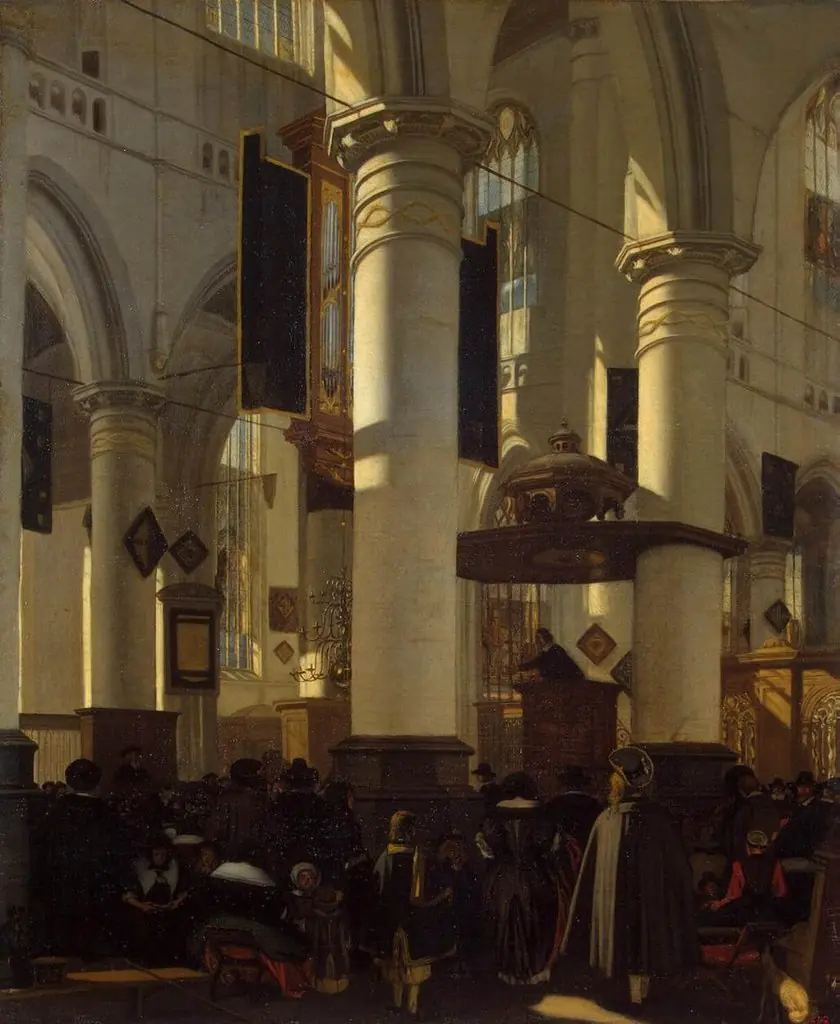 Interior of a Church
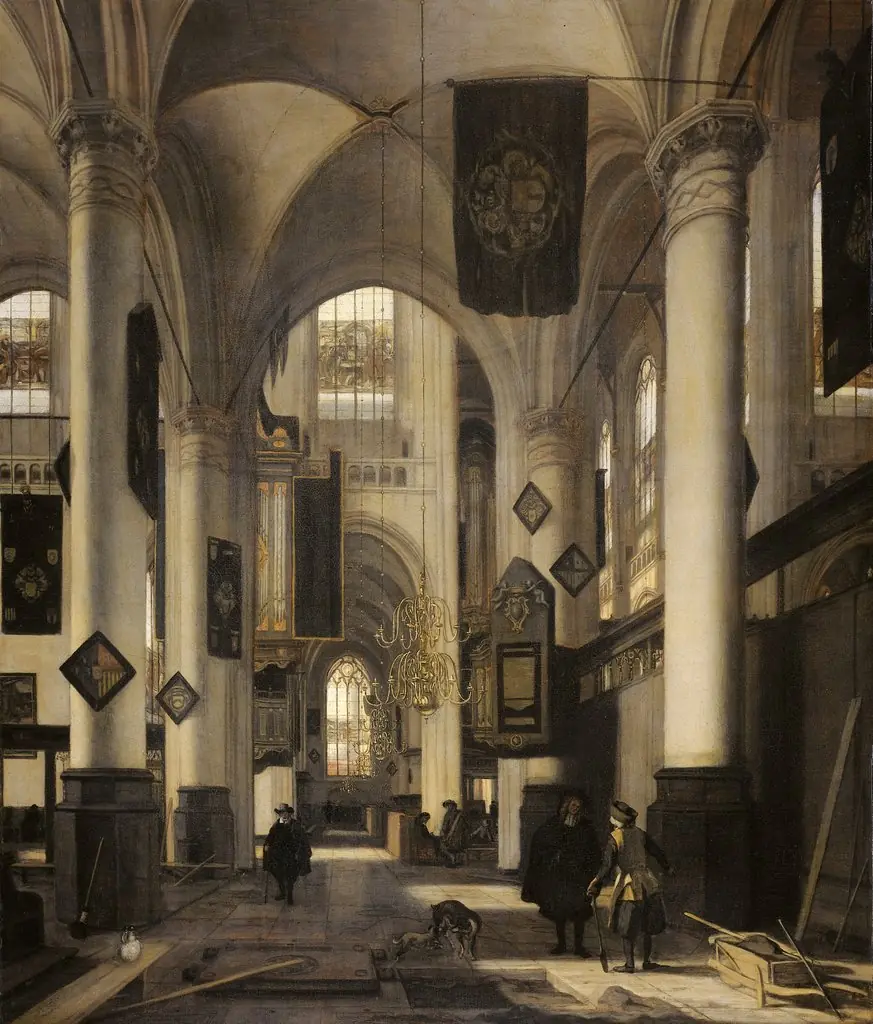 Interior of a Protestant Gothic Church
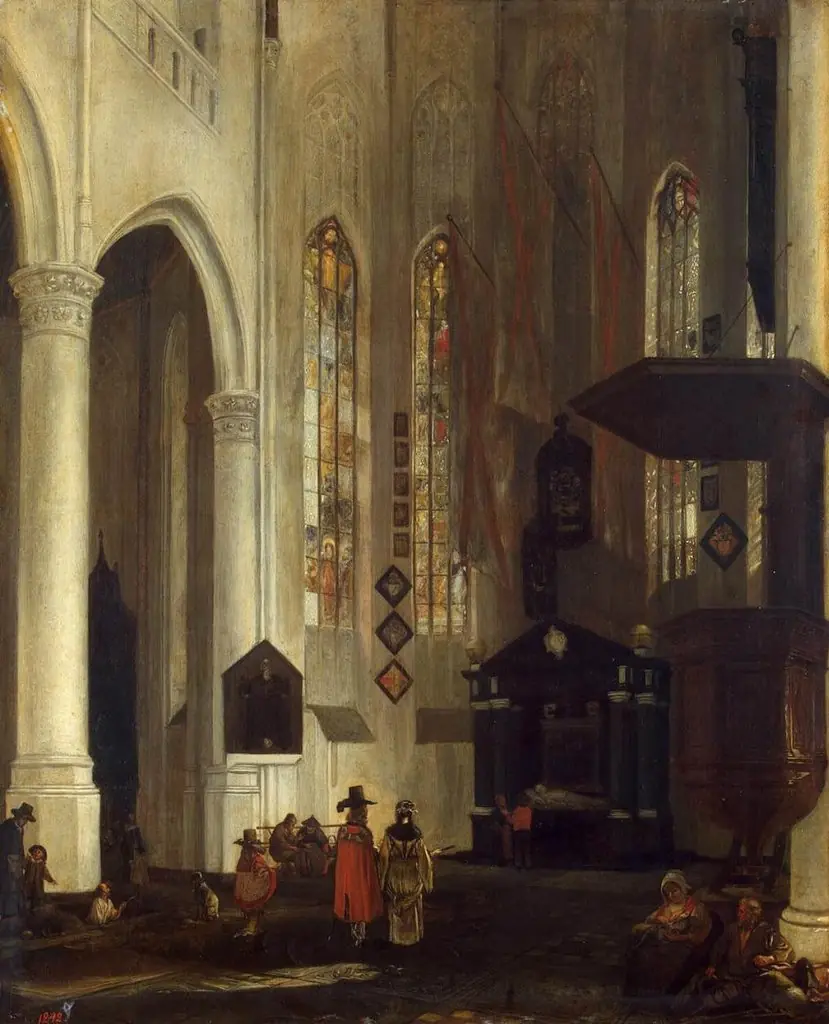 Old Church (Oudekerk) in Delft with the Tomb of Admiral Pieter Pieterszoon Hein (Heyn)
 Interior of a Church