Artwork
Untitled
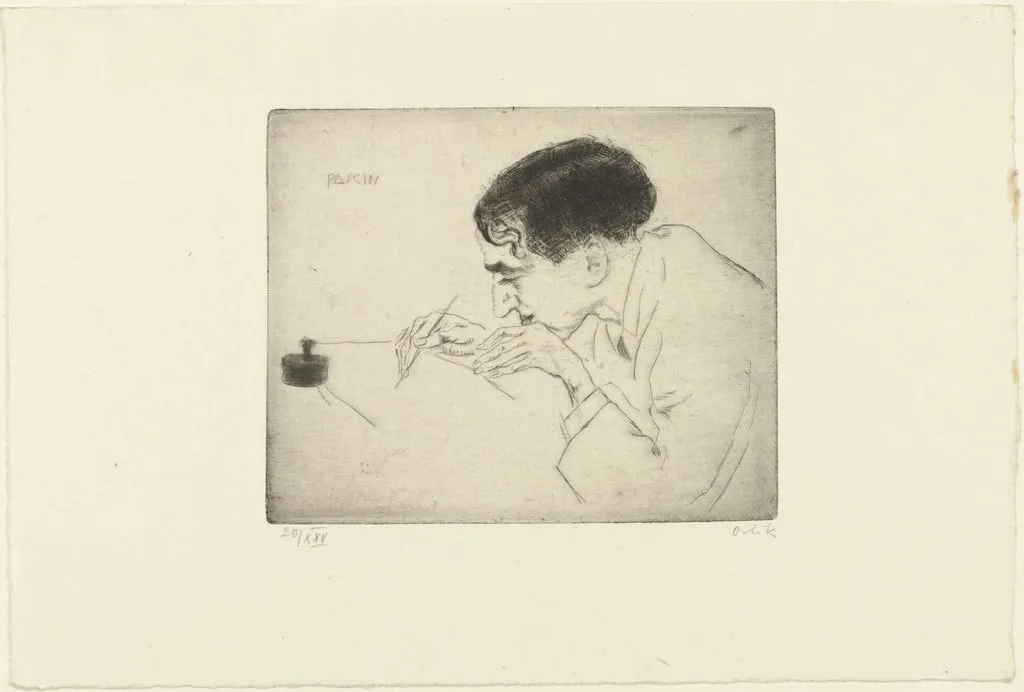
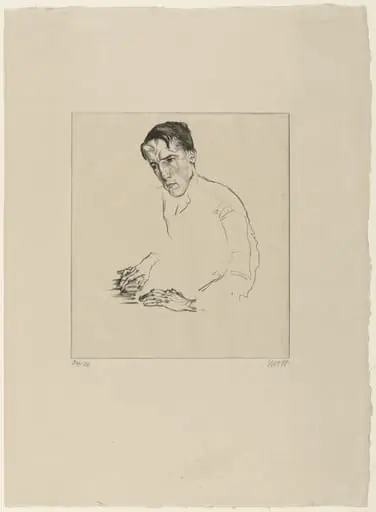
Untitled is an ink print by Emil Orlik. It dates from 1911 and is held in the collection of the Museum of Modern Art.
About this work
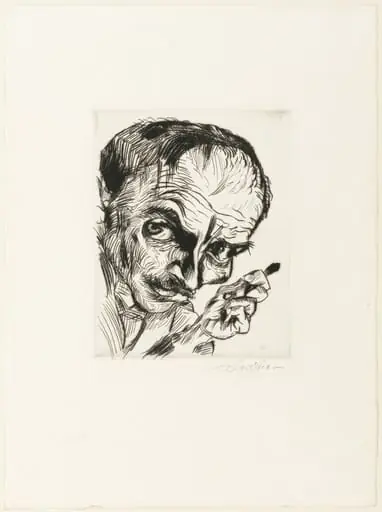
He’s holding a small object—maybe a top or a tool—between his fingers, with a pencil in his other hand.
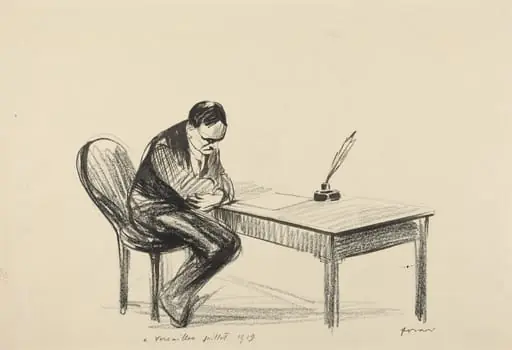
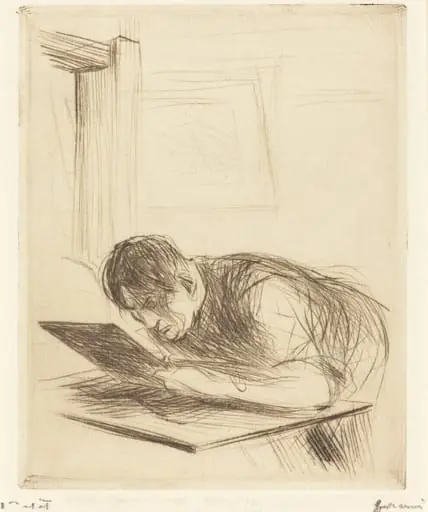
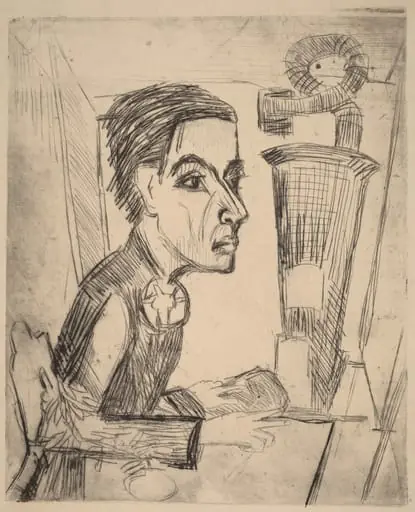
This sketch shows a man leaning over a table, deep in thought. He’s holding a small object—maybe a top or a tool—between his fingers, with a pencil in his other hand. The lines are loose and quick, like he was drawing fast.
The artist signed it in the corner, and the date looks like 1911. The whole thing feels rough and sketchy, like a quick study.
If you like this style, check out etching, drypoint, aquatint next.
Overview
Created in 1911, this print by Emil Orlik combines etching, drypoint, and roulette to produce a textured, spontaneous image. Though untitled, it captures a solitary figure in a moment of quiet concentration. The work is part of The Museum of Modern Art’s collection and reflects Orlik’s engagement with printmaking as a medium for direct, expressive observation.
Subject & Meaning
The figure, seated at a table, holds a small object between his fingers while a pencil rests in his other hand. His posture suggests introspection, as if pausing mid-creation. The ambiguity of the object—possibly a toy, tool, or artifact—invites interpretation without defining it. The scene conveys the quiet ritual of making, emphasizing thought over action.
Technique & Style
Orlik employed etching for fine lines, drypoint for rich, scratchy textures, and roulette for dotted tonal effects. The result is a loose, energetic composition that feels immediate, as if drawn in real time. The roughness of the marks avoids polish, prioritizing the artist’s hand and the physicality of the process over refinement.
History & Provenance
Emil Orlik, active across Prague, Vienna, and Berlin, produced this work during a period of intense printmaking experimentation. The piece entered The Museum of Modern Art’s collection as part of its broader effort to document early 20th-century graphic art. Its provenance traces directly to the artist’s studio, with no known prior owners before institutional acquisition.
Context
In 1911, European artists were redefining printmaking beyond reproduction, embracing it as a vehicle for personal expression. Orlik’s work aligned with contemporaries exploring spontaneity and materiality. His exposure to Japanese prints and German Expressionist circles informed this approach, favoring immediacy over traditional finish.
Legacy
This print exemplifies Orlik’s role in elevating printmaking as a standalone artistic language. Its informal quality influenced later generations of artists who valued process over polish. While not widely reproduced, it remains a key example of early modernist graphic work in American museum collections.
Artist & collection
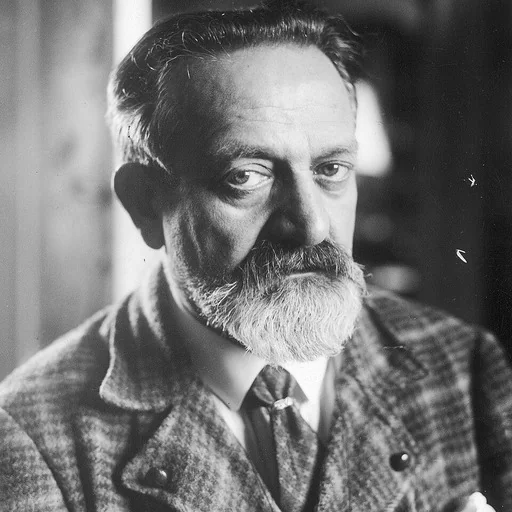
Artist
Emil Orlik (21 July 1870 – 28 September 1932) was a Czech-German painter, etcher and lithographer. He lived and worked in Prague, Austria and Germany.