Artwork
Ferry at Afsnee
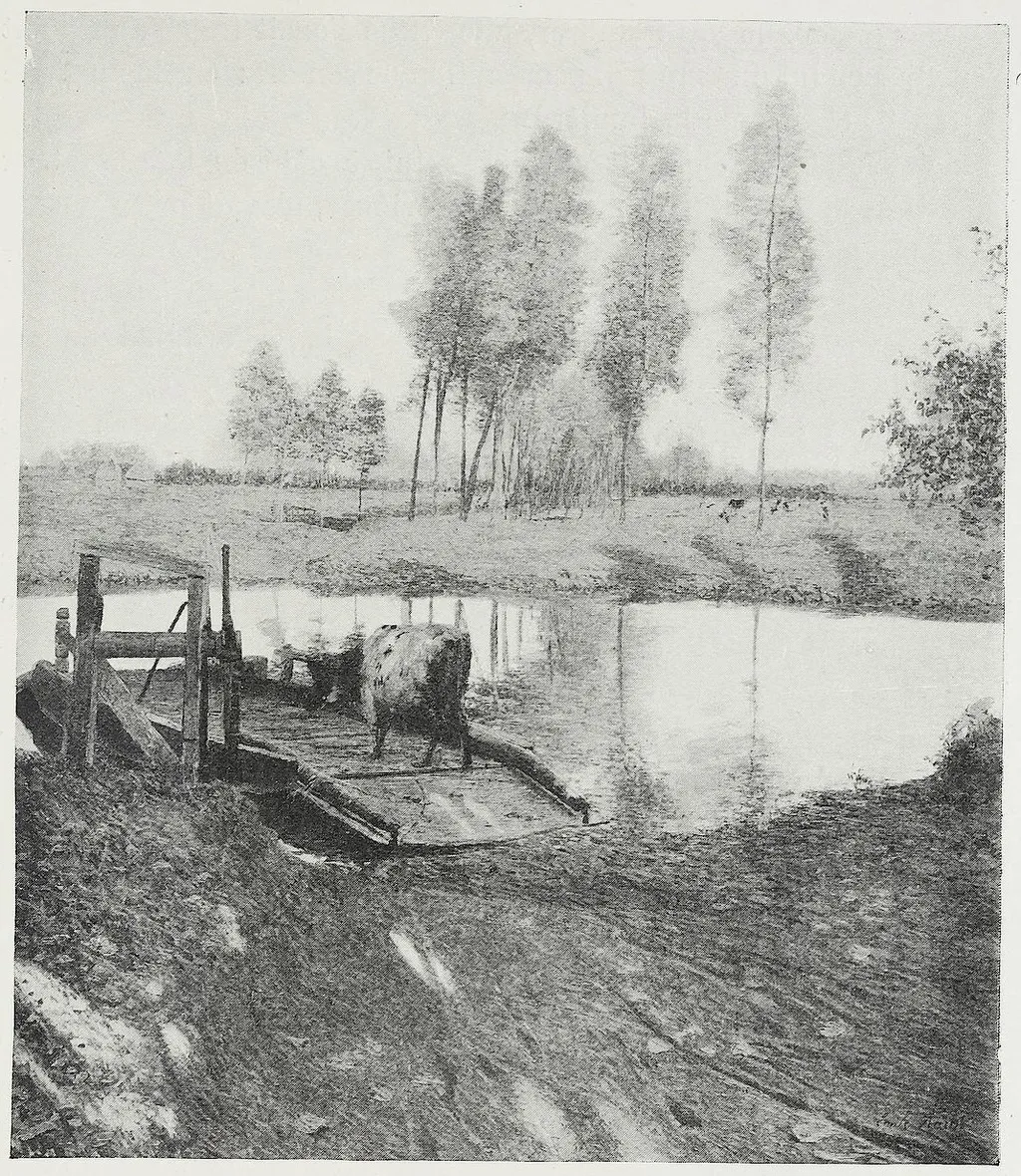
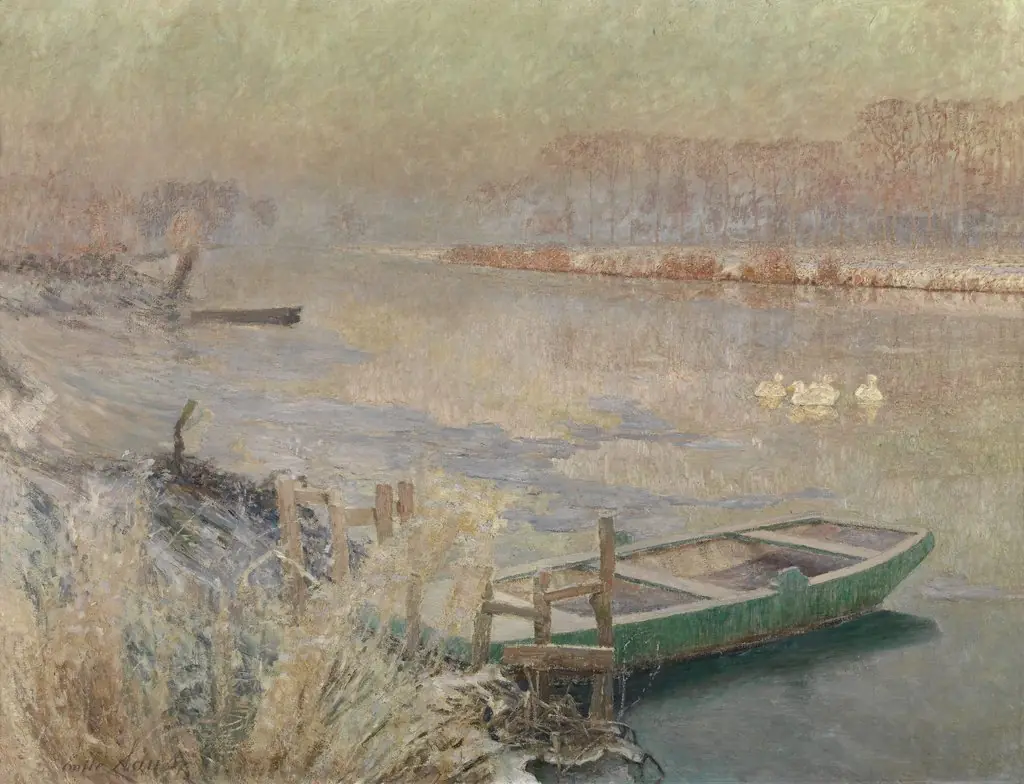
Ferry at Afsnee is an oil painting by the Impressionist artist Emile Claus. It dates from 1896 and is held in the collection of the Gemäldegalerie Alte Meister.
About this work
Overview
The scene conveys stillness through restrained movement and muted tones, reflecting Claus’s interest in natural light and rural tranquility.
Painted in 1896, Ferry at Afsnee is an oil-on-canvas work by Belgian artist Emile Claus. It depicts a quiet river crossing near the village of Afsnee in Flanders. The composition centers on a modest ferry boat, barely moving across still water, with a solitary figure standing on its deck. The scene conveys stillness through restrained movement and muted tones, reflecting Claus’s interest in natural light and rural tranquility.
Subject & Meaning
The painting presents a mundane moment—a ferry crossing—elevated through deliberate stillness. There is no narrative drama or human activity beyond the lone passenger. The absence of motion and the quiet atmosphere suggest contemplation, perhaps an ode to the rhythm of rural life. Claus avoids romanticizing the scene, instead honoring its quiet dignity through understated observation.
Technique & Style
Claus employs thick, visible brushwork to build texture in the water, trees, and sky, creating a tactile surface that enhances the painting’s somber mood. The palette is dominated by soft grays, muted greens, and earthy browns, with no sharp contrasts. Light is diffused, as if filtered through overcast skies, unifying the scene in a hazy, atmospheric veil characteristic of his luminist approach.
History & Provenance
Completed in 1896, the painting entered the collection of the Gemäldegalerie Alte Meister in Dresden, where it remains today. While not widely exhibited outside Germany, it is recognized within scholarly circles as a key example of Claus’s transition from dark tonalism to a more luminous, impressionistic style. Its acquisition reflects early 20th-century European interest in Belgian regional realism.
Context
In the late 19th century, Belgian artists like Claus sought to move beyond academic traditions by capturing everyday rural life with sensitivity to light and atmosphere. Ferry at Afsnee aligns with broader European trends toward naturalism and plein air painting, yet retains a distinctly Flemish quietude. It reflects a cultural moment when provincial scenes gained artistic legitimacy outside urban centers.
Legacy
Though not among Claus’s most reproduced works, Ferry at Afsnee exemplifies his contribution to Belgian luminism. It influenced later regional painters who prioritized mood over narrative. The painting’s restrained palette and emphasis on atmospheric harmony continue to be studied as a quiet counterpoint to the more dramatic landscapes of contemporaneous Impressionists.
Artist & collection

 Le Canal à Pont-Saint-Maxence
 Canal at Pont Sainte-Maxence
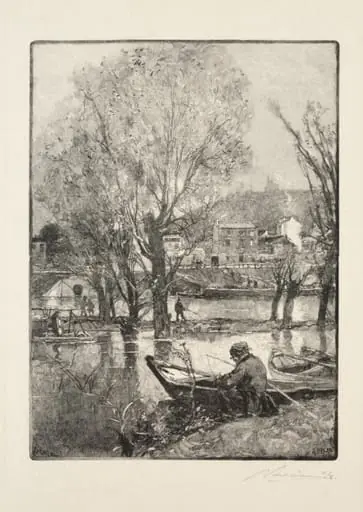 Un coin de l'Île de Billancourt
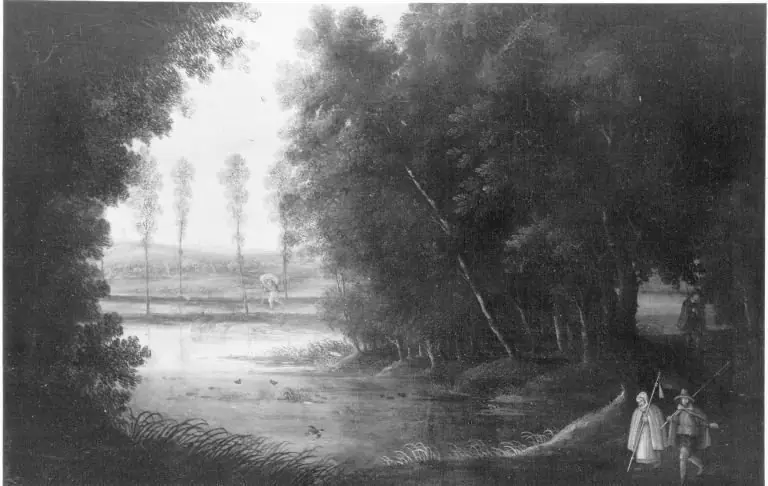 Pilger im Wald
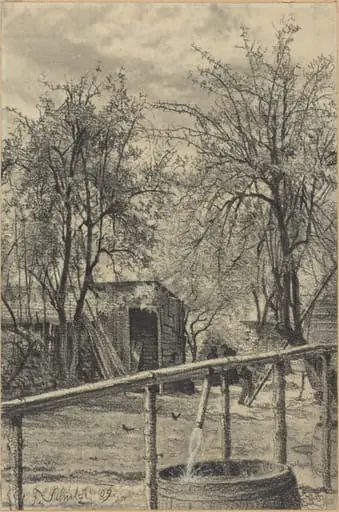 A Corner of a Rental Garden
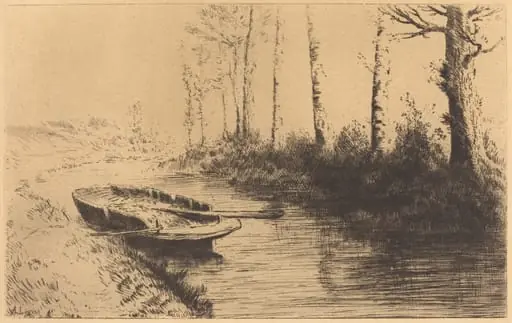 Canal Seen by Morning Light (Le canal: Effet du matin)
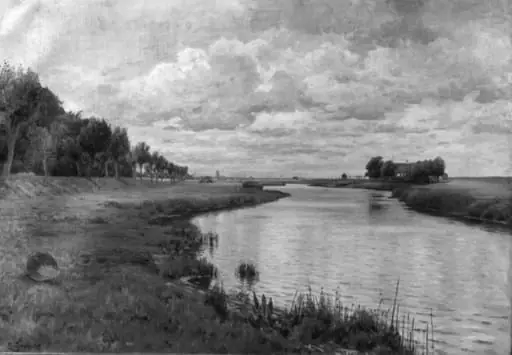 Pramåens udløb ved Vallø Strand
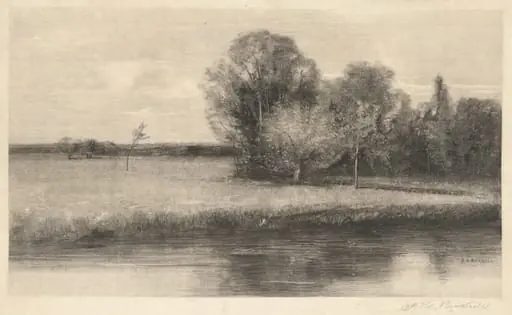 A Sun-dappled Meadow by a River
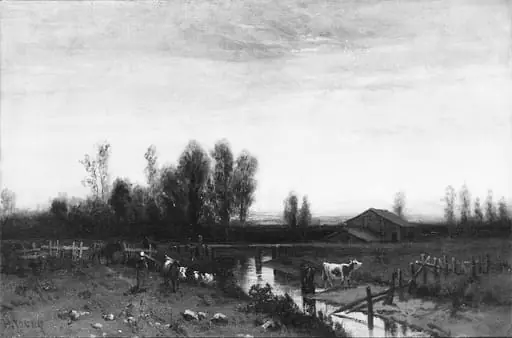 Sunset
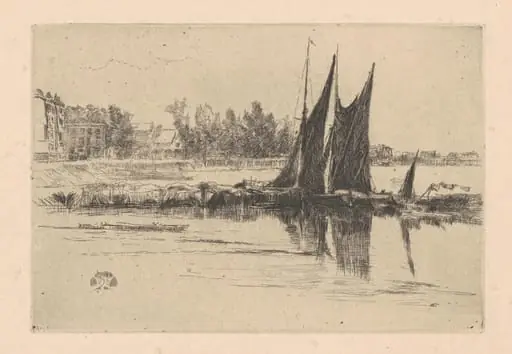 Hurlingham
 Stags at the Waterside
 Evening on a River with a Boatman