Artwork
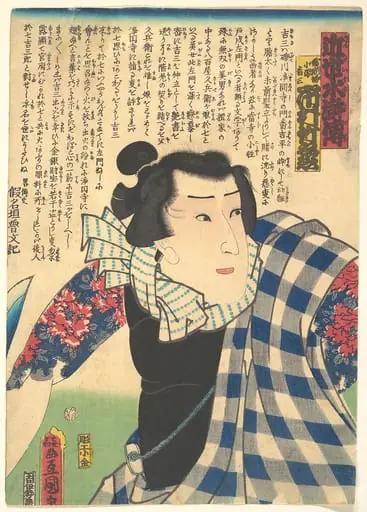
「中村玉七」(初代)|Memorial Portrait of the Actor Nakamura Tamashichi
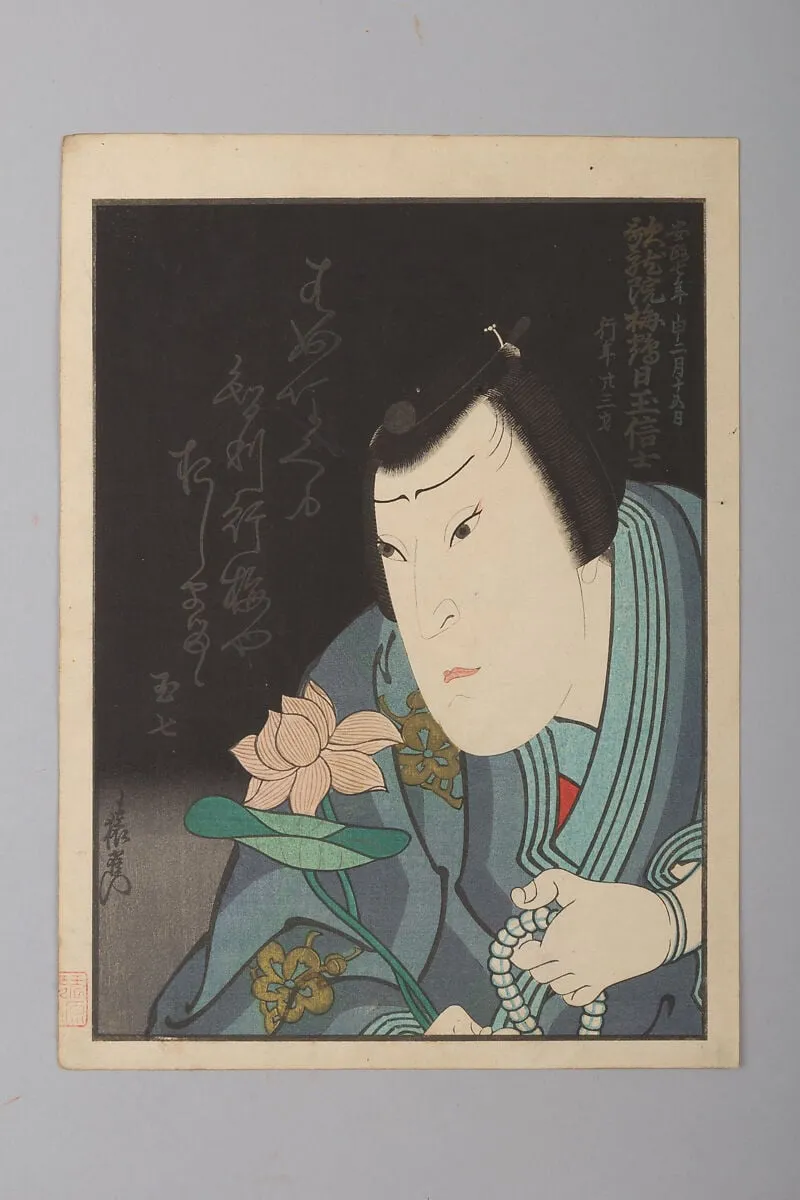
「中村玉七」(初代)|Memorial Portrait of the Actor Nakamura Tamashichi is an ink print by the Impressionist artist Enjaku 猿雀. It dates from 1860 and is held in the collection of the Metropolitan Museum of Art. This 1860 woodblock print by Enjaku commemorates the first-generation actor Nakamura Tamashichi.
About this work
Overview
This 1860 woodblock print by Enjaku commemorates the first-generation actor Nakamura Tamashichi.
This 1860 woodblock print by Enjaku commemorates the first-generation actor Nakamura Tamashichi. Executed in nishiki-e technique, it features ink and color on paper in a vertical chūban format. The work is part of The Metropolitan Museum of Art’s collection and exemplifies the memorial portraiture tradition in ukiyo-e, honoring deceased kabuki performers through stylized imagery rather than mere likeness.
Subject & Meaning
The portrait depicts Nakamura Tamashichi in formal attire—a blue robe with white stripes—holding a pink lotus, a symbol of purity and spiritual transition in Buddhist tradition. His solemn expression, bound hair, and small black hat convey dignity and stillness. The image functions not as a lifelike record but as a devotional tribute, aligning the actor’s legacy with themes of impermanence and reverence.
Technique & Style
The print employs fine cross-hatching to model volume and shadow, particularly in the folds of the robe and the contours of the face. Bold black backgrounds isolate the figure, heightening emotional gravity. Japanese text flanks the composition, likely identifying the actor, the artist, and the publisher. The vivid lotus contrasts sharply with the dark tones, serving as both visual anchor and symbolic focal point.
History & Provenance
Created shortly after Nakamura Tamashichi’s death, the print was produced for public veneration during the Edo period’s actor memorial culture. It was published by a known ukiyo-e house and circulated among theater patrons. The Metropolitan Museum of Art acquired it as part of its broader collection of Japanese prints, preserving its role as a cultural artifact of Edo-era performance traditions.
Context
In mid-19th century Edo, memorial portraits of popular kabuki actors were common following their deaths. These prints fulfilled both commercial and spiritual roles, allowing audiences to mourn publicly and reaffirm their connection to the theatrical world. Enjaku’s work reflects this practice, blending artistic convention with ritual function, distinct from portraits of living performers.
Legacy
The print remains a key example of how ukiyo-e artists adapted commercial techniques to serve commemorative purposes. Its restrained palette and symbolic elements influenced later memorial imagery in Japanese printmaking. While not widely reproduced, it continues to inform scholarly understanding of Edo-period actor veneration and the intersection of art, death, and popular culture.
Artist & collection

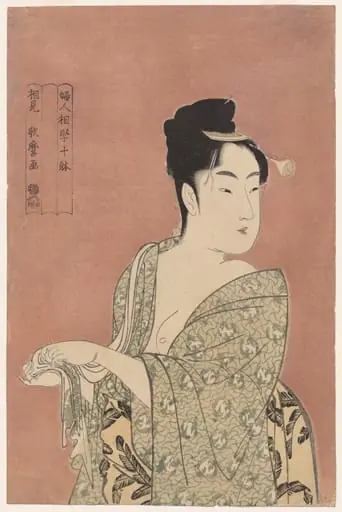 The Flirtatious Type, from Ten Types in the Physiognomy of Women
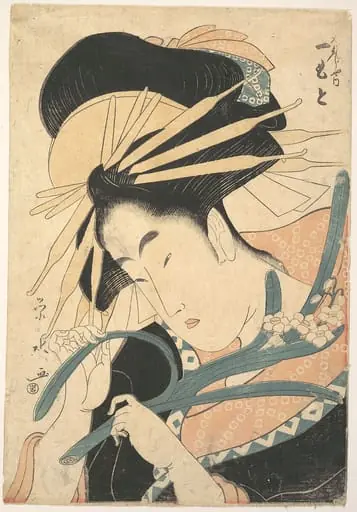 Untitled
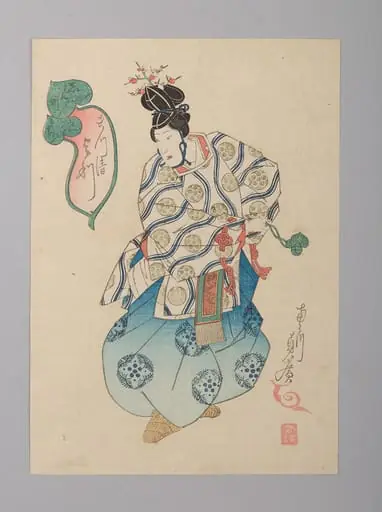 「しん町砂もち まつ清 よつ」|Yotsu of the Matsukiyo Brothel Performing as a Shirabyōshi, from the series Sacred Dances in Shinmachi
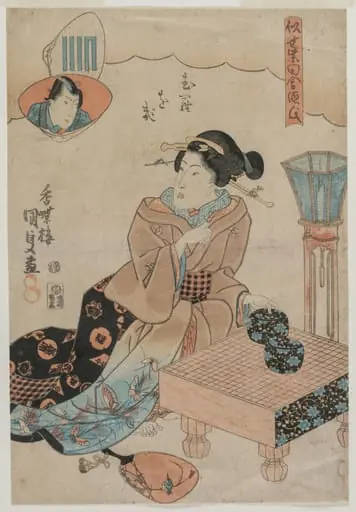 Muraogi, from the series The False Murasaki's Rustic Genji (Nise Murasaki Inaka Genji)
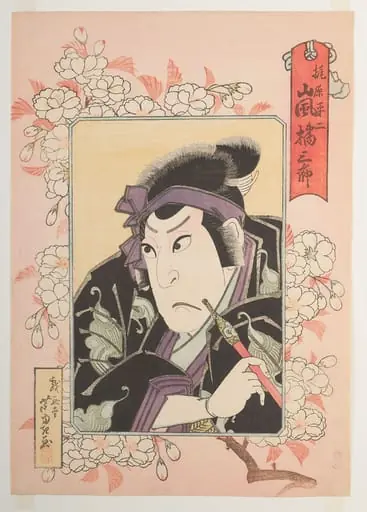 戯画堂芦幸画 二代目嵐橘三郎 「ひらかな盛衰記」|Kabuki Actor Arashi Kitsusaburō II as Kajiwara Heiji, in the play Hiragana seisuiki (Records of the Battles between the Minamoto and Taira Clans in the Japanese Syllabary)
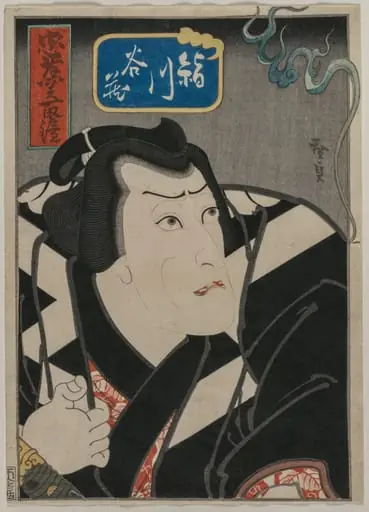 Kinugawa Tanizō in A Mirror of Brave and Loyal Wrestlers (Chūkō Sekitori Kagami)
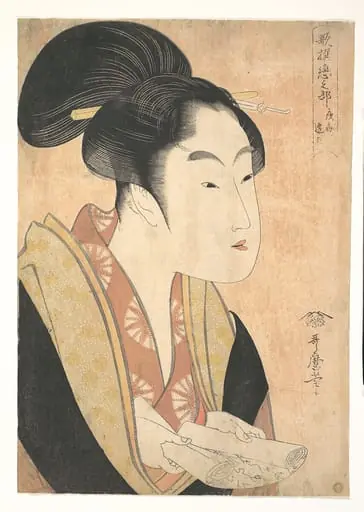 歌撰恋之部 夜毎に逢恋|A Young Woman Reading A Letter
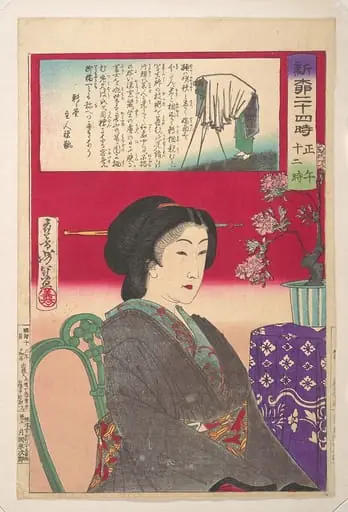 新柳二十四時 午前十二時|Twenty-Four Hours at Shinbashi/Yanagibashi: 12 Noon. (Shinyanagi nijūyo-ji, gozen jūni-ji)
 「湯灌場子僧吉三 市川竹之丞」(五代目) 「近世水滸伝」|Ichimura Takenojō V as Yukanba Kozō Kichiza, from A Modern Water Margin (Kinsei suikoden)