Artwork
戯画堂芦幸画 二代目嵐橘三郎 「ひらかな盛衰記」|Kabuki Actor Arashi Kitsusaburō II as Kajiwara Heiji, in the play Hiragana seisuiki (Records of the Battles between the Minamoto and Taira Clans in the Japanese Syllabary)
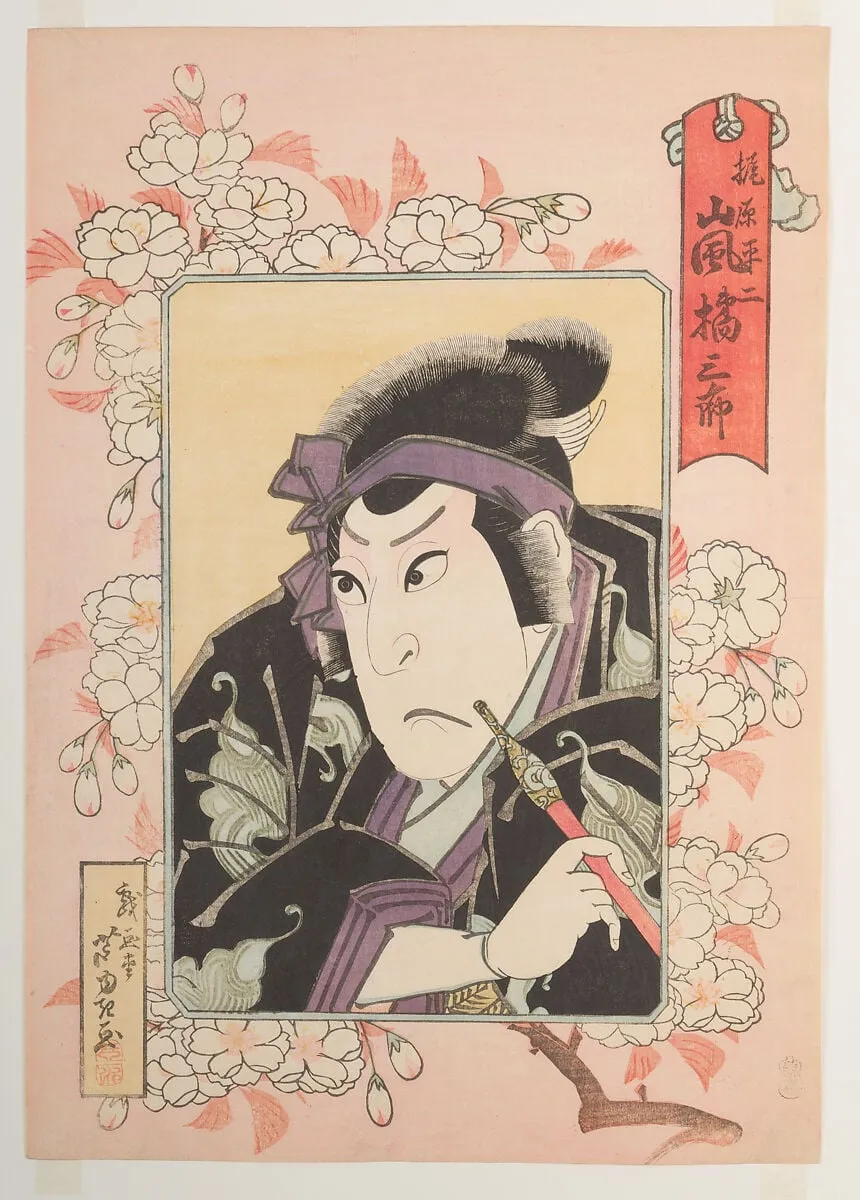
戯画堂芦幸画 二代目嵐橘三郎 「ひらかな盛衰記」|Kabuki Actor Arashi Kitsusaburō II as Kajiwara Heiji, in the play Hiragana seisuiki (Records of the Battles between the Minamoto and Taira Clans in the Japanese Syllabary) is an ink print by the Romanticist artist Gigadō Ashiyuki. It dates from 1827 and is held in the collection of the Metropolitan Museum of Art.
About this work
Overview
Created in 1827 by the ukiyo-e artist Gigadō Ashiyuki, this woodblock print portrays the kabuki performer Arashi Kitsusaburō II in the role of Kajiwara Heiji from the stage piece Hiragana seisuiki. Executed in ink and color on paper, the image is part of the Metropolitan Museum of Art’s collection of Japanese prints.
Subject & Meaning
The figure is dressed in a striking black‑purple costume and holds a sword, embodying the samurai character Kajiwara Heiji. His face is rendered with the conventional kabuki makeup palette—pale skin, dark eyebrows and a vivid red mouth—conveying a solemn, heroic demeanor appropriate to the historical drama of the Minamoto‑Taira conflicts.
Technique & Style
Ashiyuki employs crisp, linear outlines and flat areas of saturated color to isolate the actor from a minimal decorative border. The composition includes pink blossoms and green foliage that frame the central figure, while a small red placard on the right identifies the performer, exemplifying the clear, graphic aesthetic of late‑Edo period actor prints.
History & Provenance
The print was produced during the Bunsei era, a period of prolific kabuki portraiture. It entered the Metropolitan Museum of Art’s collection through acquisition in the early twentieth century, where it remains catalogued as an example of Ashiyuki’s work for the popular publisher Gigadō.
Context
Hiragana seisuiki dramatized the legendary battles between the Minamoto and Taira clans, using the Japanese syllabary as a narrative device. Kabuki actors such as Arashi Kitsusaburō II specialized in heroic warrior roles, and prints like this served both as promotional material for performances and as collectible souvenirs for theatergoers.
Artist & collection

Artist
Gigadō Ashiyuki was a designer of ukiyo-e style Japanese woodblock prints in Osaka, who was active from about 1813 to 1833.

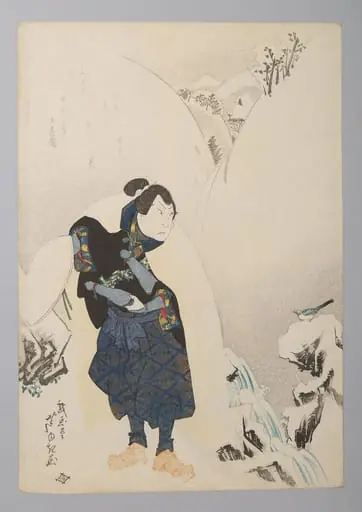
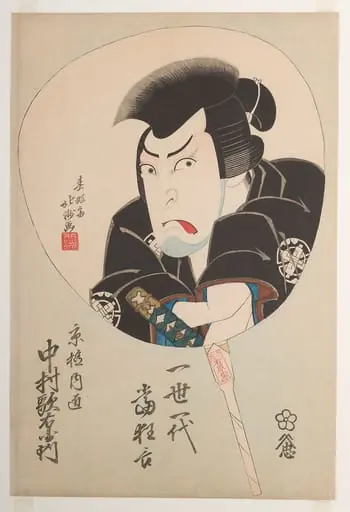 春好斎北洲画 三代目中村歌右衛門 『一世一代当狂言』|Kabuki Actor Nakamura Utaemon III as the Sword Master Kyōgoku Takumi, from the series Issei ichidai atari Kyōgen (Hits of a Lifetime of Kyōgen)
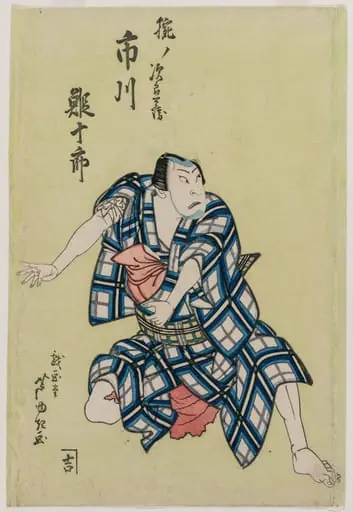
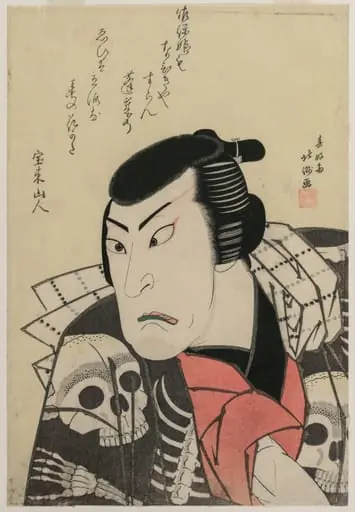 Actor Ichikawa Ebijūrō I as Tōken (China Dog) Jūbei, in the play Red and Purple, Rich Dyes of Osaka (Benimurasaki ai de someage)
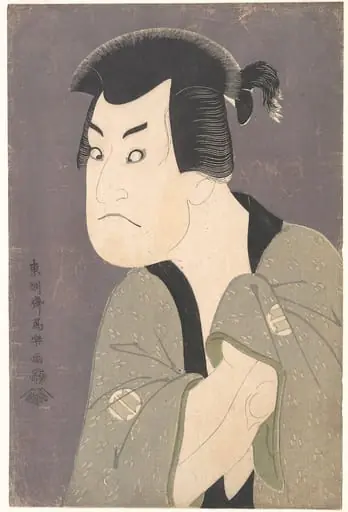 東洲斎写楽画 三世坂田半五郎の藤川水右衛門 『花菖蒲文禄曽我』|Sakata Hangorō III as Fujikawa Mizuemon in the Play "Hana Ayame Bunroku Soga"
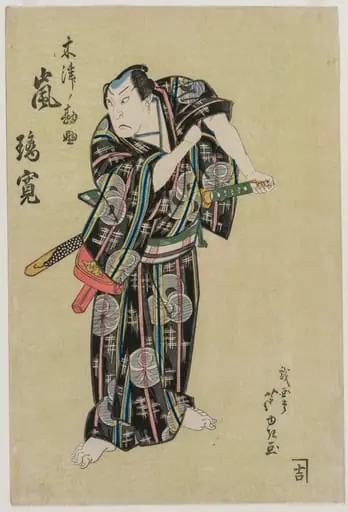
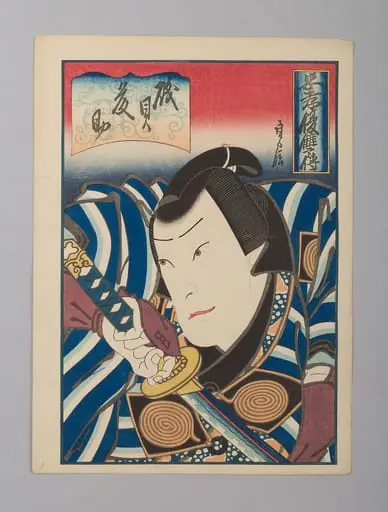 「忠孝復讐傳 磯貝藤助」二代目嵐璃珏|The Actor Arashi Rikaku II as Isogai Tōsuke, from the series Lives of Men who Carried Out Revenge for Loyalty or Filial Piety
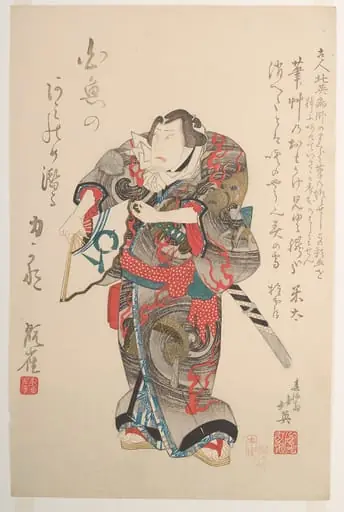 四代目中村歌右衛門 「関取千両幟」|The Actor Nakamura Utaemon IV as the Wrestler Iwakawa Jirokichi
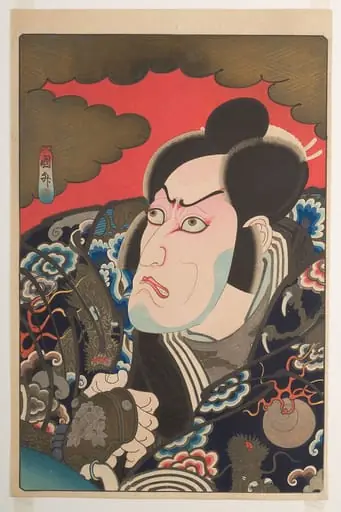 歌川国升画 五代目市川海老蔵 「熊谷次郎直実」|Kabuki Actor Ichikawa Ebizō V as Kumagai Jirō Naozane
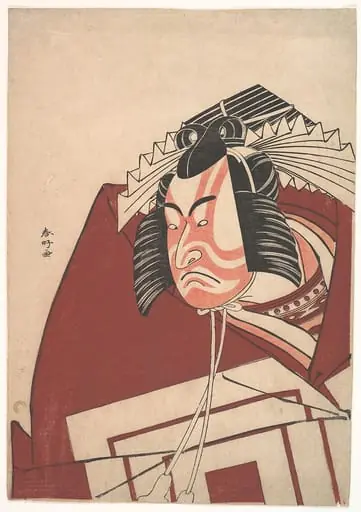 勝川春好画 二代目市川門之助|Ichikawa Monnosuke II in a Shibaraku Performance
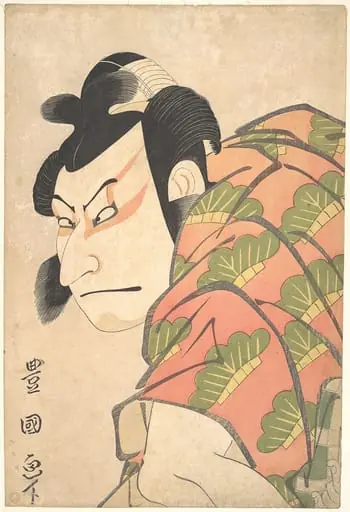 Untitled
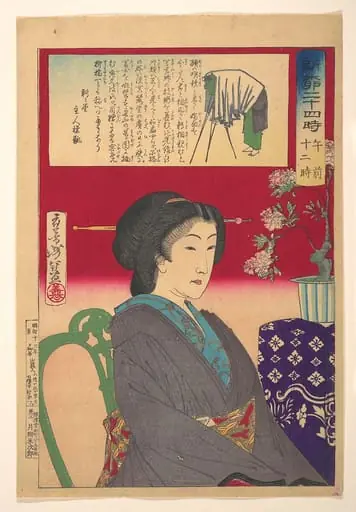 新柳二十四時 午前十二時|Twenty-Four Hours at Shinbashi/Yanagibashi: 12 Noon. (Shinyanagi nijūyo-ji, gozen jūni-ji)
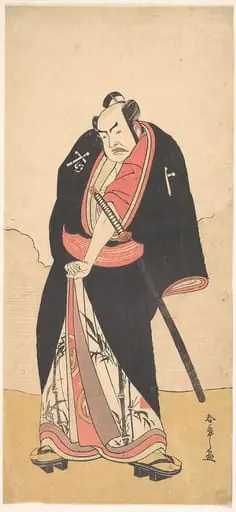 二代目中村助五郎|Kabuki Actor Nakamura Sukegorō II as Kaminari Shōkurō