Artwork
「しん町砂もち まつ清 よつ」|Yotsu of the Matsukiyo Brothel Performing as a Shirabyōshi, from the series Sacred Dances in Shinmachi
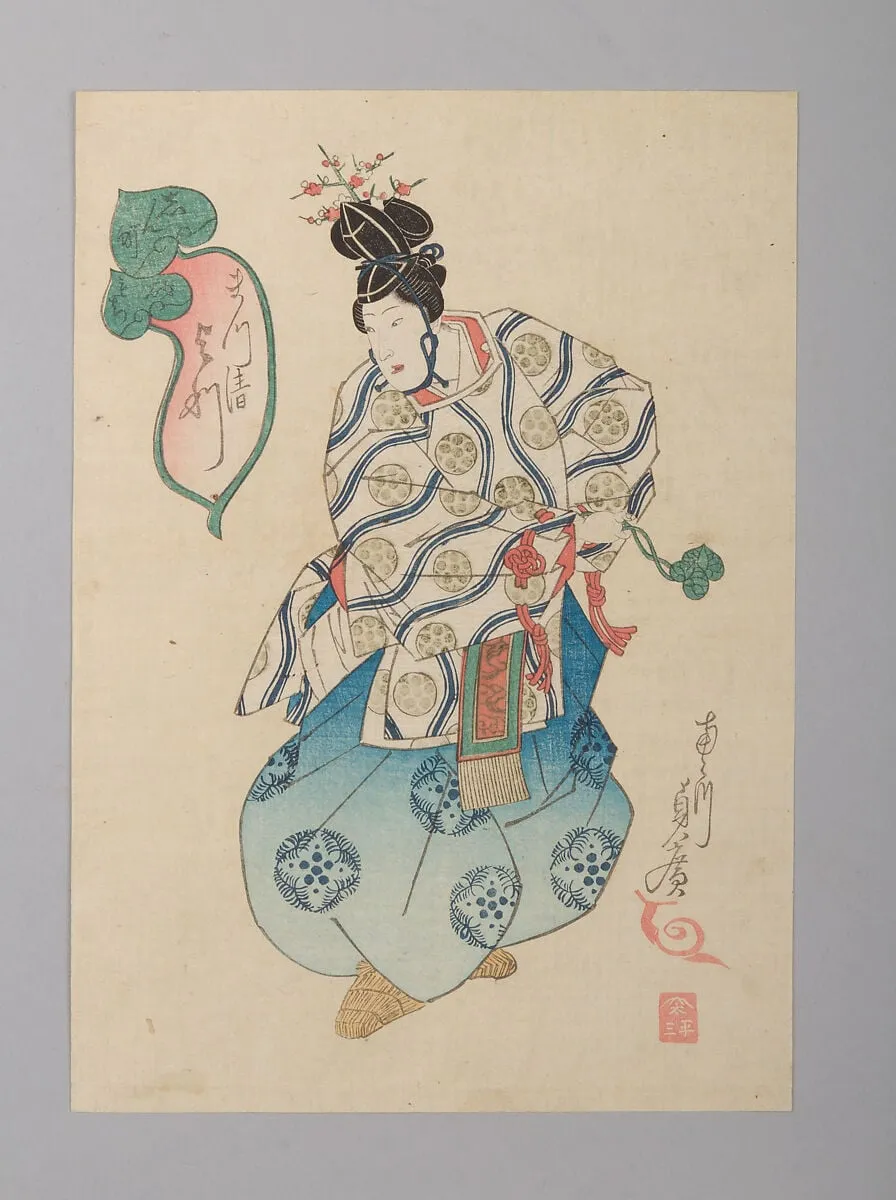
「しん町砂もち まつ清 よつ」|Yotsu of the Matsukiyo Brothel Performing as a Shirabyōshi, from the series Sacred Dances in Shinmachi is an ink print by the Romanticist artist Gochōtei Sadahiro 五蝶亭貞広. It dates from 1841 and is held in the collection of the Metropolitan Museum of Art.
About this work
Overview
The vertical chūban format was common for ukiyo-e prints of this era, designed for intimate viewing and collection.
Created in 1841 by Gochōtei Sadahiro, this woodblock print is part of the series Sacred Dances in Shinmachi, depicting a courtesan from the Matsukiyo brothel in Kyoto’s Shinmachi district. Rendered in nishiki-e, a multicolor printing technique, it captures a moment of theatrical performance. The vertical chūban format was common for ukiyo-e prints of this era, designed for intimate viewing and collection.
Subject & Meaning
The figure, Yotsu, is portrayed as a shirabyōshi—a female performer known for dancing in male attire during the Heian and Kamakura periods. By adopting this historical role, the print blurs the line between courtesan and performer, evoking cultural memory while celebrating the artistry of urban entertainment. The inclusion of Japanese text on a leaf suggests a poetic or narrative reference, anchoring the image in a literary or theatrical tradition.
Technique & Style
The print employs fine linework and layered pigments typical of mid-19th century nishiki-e. Bright blues and whites dominate the costume, contrasted with the dark wig and green fan tassel, creating visual rhythm. The background leaf with red calligraphy adds subtle naturalism, while the intricate patterns on the robe reflect the precision of woodblock carving. The composition balances theatricality with restrained elegance, characteristic of Sadahiro’s approach.
History & Provenance
Produced during a period of flourishing urban culture in Kyoto, the print was likely distributed as a collectible image among merchants and literati. It entered the collection of The Metropolitan Museum of Art through established channels of Japanese art acquisition in the late 19th or early 20th century. Its survival in good condition reflects its value as both artistic and cultural documentation of Edo-period entertainment.
Context
Shinmachi was one of Kyoto’s licensed pleasure quarters, where courtesans were trained in music, poetry, and dance. The shirabyōshi role, though historically rooted in court performance, was revived in urban theaters and brothels as a symbol of refined artistry. This print situates Yotsu within that tradition, merging historical homage with contemporary spectacle, reflecting the fluid boundaries between class, gender, and performance in Edo-period Japan.
Legacy
As part of a series that reimagined historical performance styles through the lens of urban courtesan culture, this print contributes to the broader ukiyo-e tradition of blending past and present. It preserves a specific moment in Kyoto’s entertainment history, offering insight into how courtesans negotiated identity through costume and role. Today, it remains a key example of how print culture documented the performative dimensions of social life.
Artist & collection

 Untitled
 青楼美人合|The Courtesans, from the Series, "Seiro Bijin Awase Carver End Shigoro" (sic.)
 Untitled
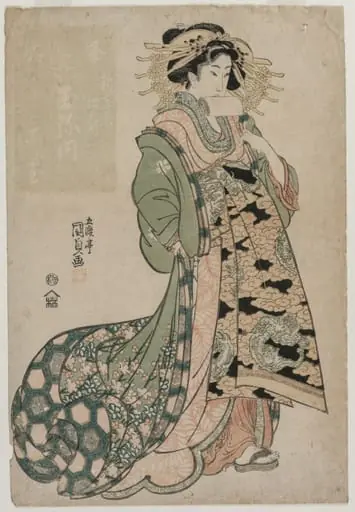 The Courtesan Shiratama of the Tamaya
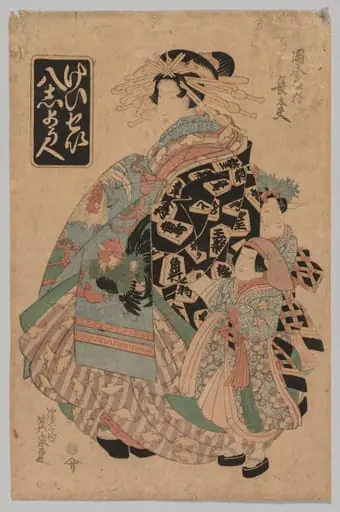 Chōdayu of the Okamotoya from the series ?
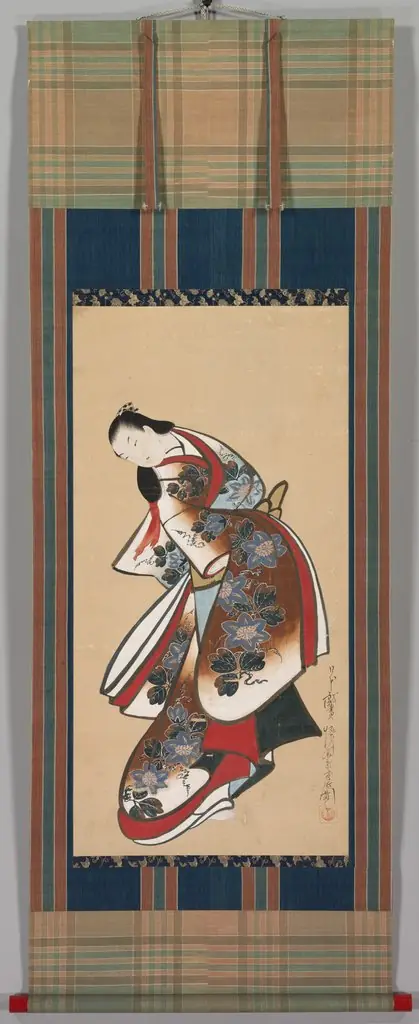 Courtesan
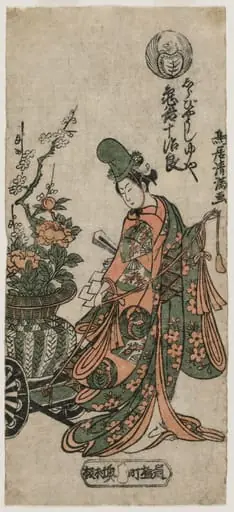 Kametani Jujiro as the Shirabyoshi Dancer Yuya
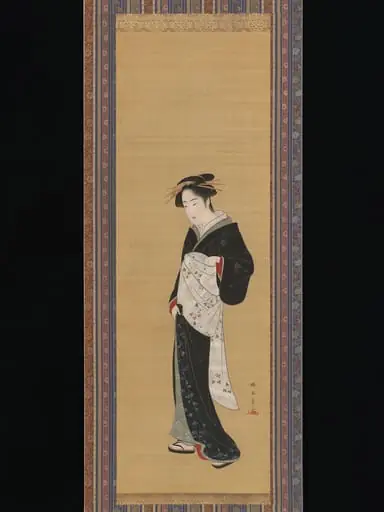 勝川春章筆 立姿美人図|Woman in a Black Kimono
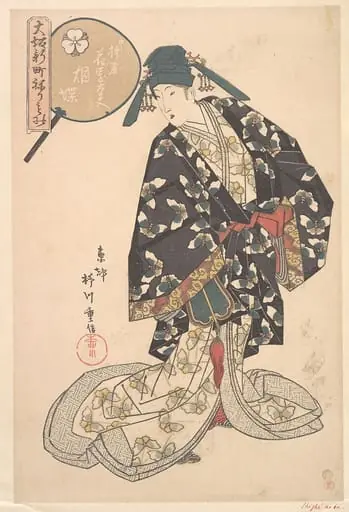 Untitled
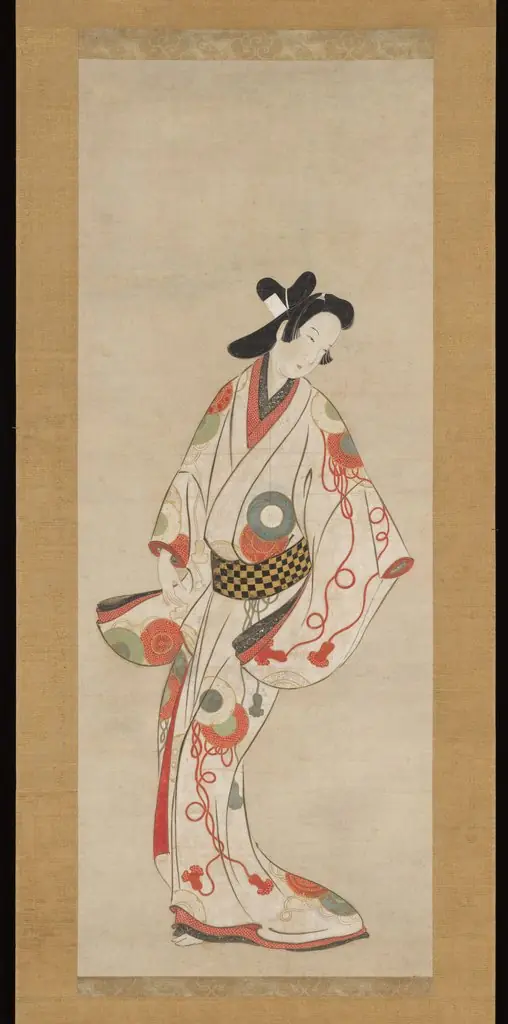 Elegantly Garbed Male Youth
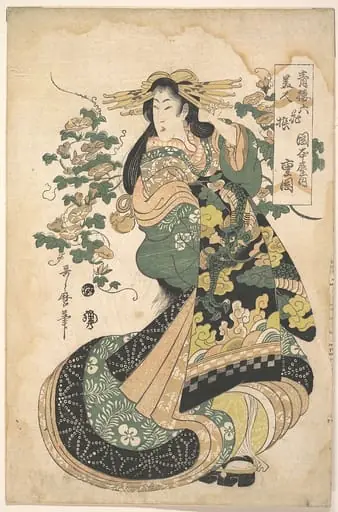 青楼美人 六花撰 岡本屋内 重岡|A Courtesan with Morning-glories on the Background
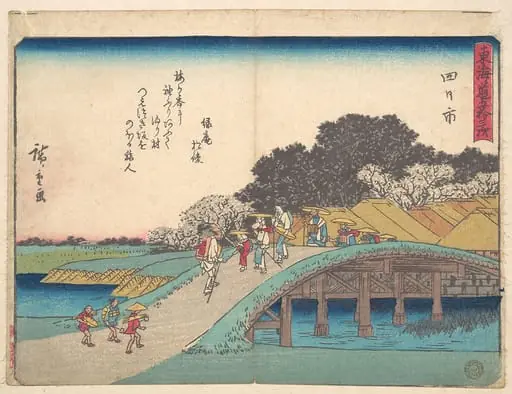 東海道五十三次 四日市|Yokkaichi