Artwork
Radstadt near Tauern
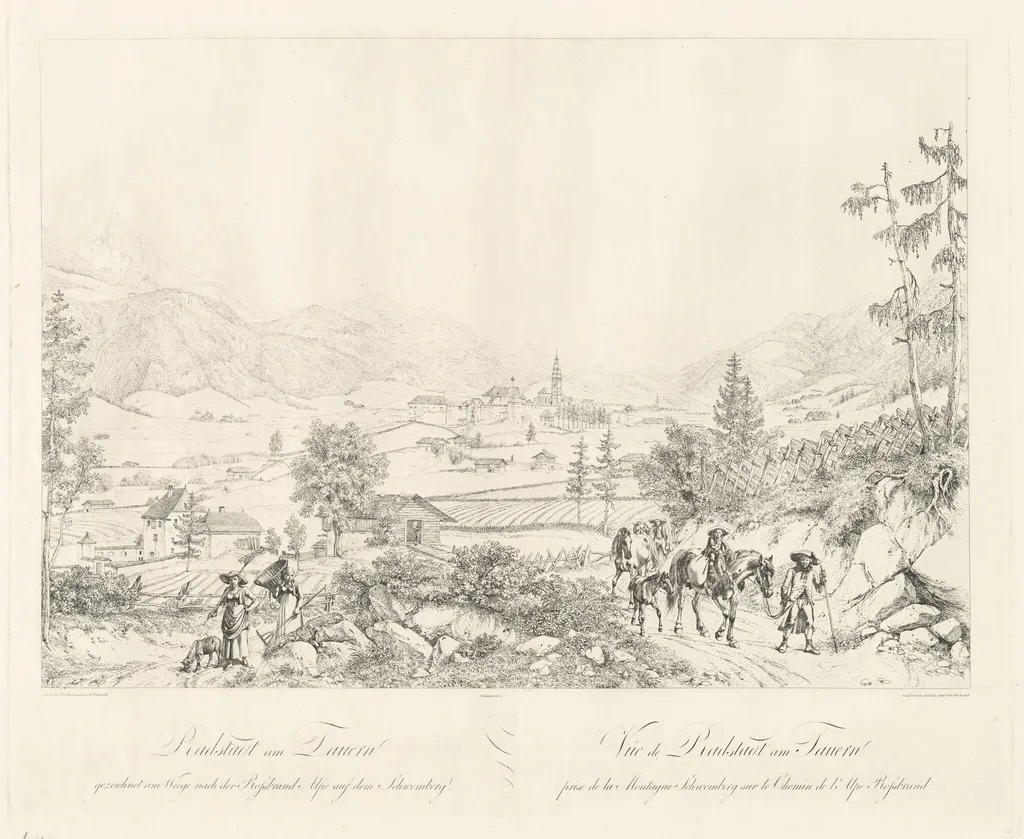
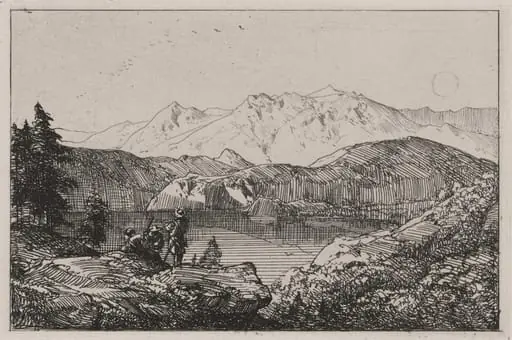
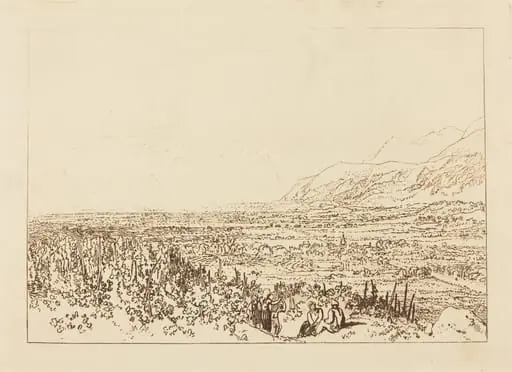
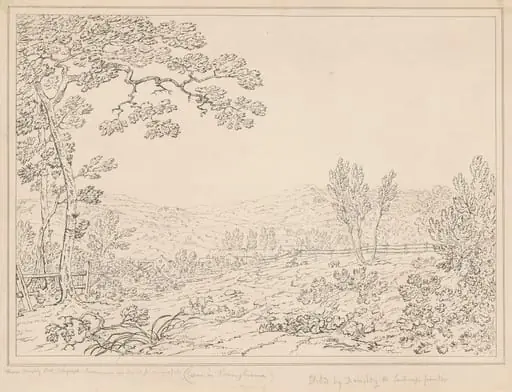
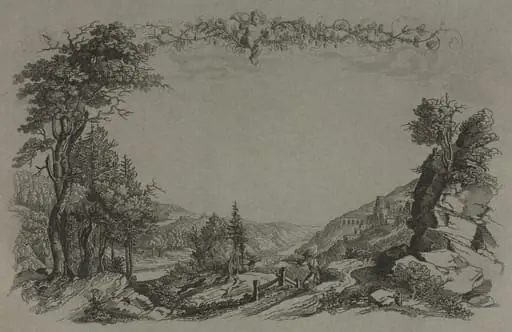
Radstadt near Tauern is an ink print by the Romanticist artist Johann Christoph Erhard. It dates from 1818 and is held in the collection of the National Gallery of Art.
About this work
Overview
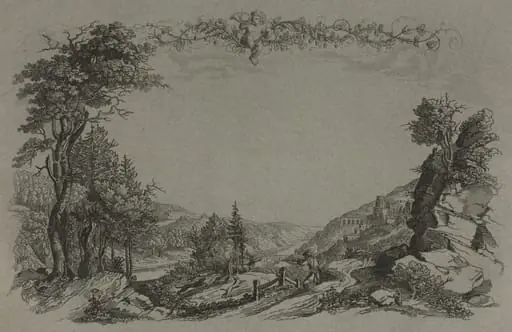
Created in 1818 by Johann Christoph Erhard, this etching depicts the Austrian village of Radstadt nestled within the Tauern mountain range. Rendered on laid paper, the work captures a tranquil rural scene with precise linework characteristic of the etching technique. The composition balances human activity with the surrounding landscape, emphasizing quiet daily life amid natural terrain.
Subject & Meaning
The scene portrays ordinary village life: two women stand near a dog in the foreground, while a group of men on horseback travels a winding path.
The scene portrays ordinary village life: two women stand near a dog in the foreground, while a group of men on horseback travels a winding path. Small dwellings, a church with a prominent steeple, and cultivated fields extend into the distance. The image conveys no dramatic narrative but instead offers a contemplative record of place, suggesting harmony between settlement and environment in early 19th-century Austria.
Technique & Style
Erhard employed etching to achieve fine, controlled lines that define textures—from the folds of clothing to the branching of trees and the roughness of stone paths. The process involved incising a metal plate with acid, then inking and pressing it onto paper. The resulting print retains the delicacy of hand-drawn detail, typical of topographical prints of the period, where accuracy and subtlety were prioritized over dramatic effect.
History & Provenance
The print was made in 1818 during a period when topographical views were widely produced for both scholarly and private collections. While specific ownership history is not documented, such works were often circulated among travelers, cartographers, and regional patrons interested in documenting the Austrian landscape. Its survival reflects the enduring interest in precise visual records of rural Europe.
Context
In the early 1800s, as travel became more accessible and regional identities gained attention, artists like Erhard documented towns and valleys with increasing detail. Radstadt, situated in the Salzburger Land, was part of a broader cultural effort to map and preserve local scenery. These prints served as both geographic references and quiet celebrations of place, distinct from grand historical or mythological subjects.
Legacy
Erhard’s etching contributes to a body of work that shaped how Austrian landscapes were visually understood in the 19th century. Though not widely exhibited today, such prints remain valuable for historians studying regional life, land use, and the evolution of printmaking. Their quiet precision offers insight into a time when the everyday landscape was observed with care and recorded with patience.
Artist & collection
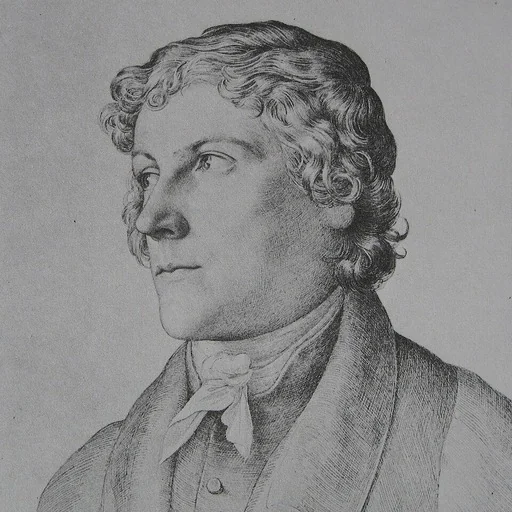
Artist
Johann Christoph Erhard (1795–1822) was a German artist, born in Nuremberg.