Artwork
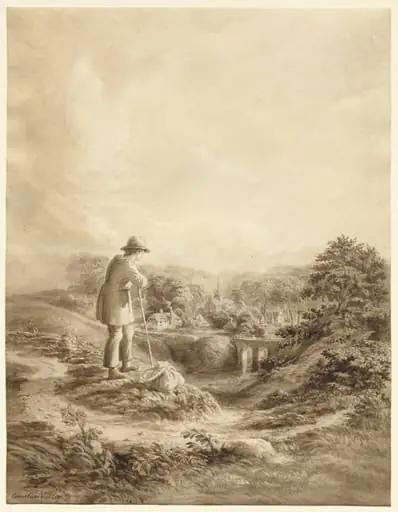
Old Man Before the Log Bridge
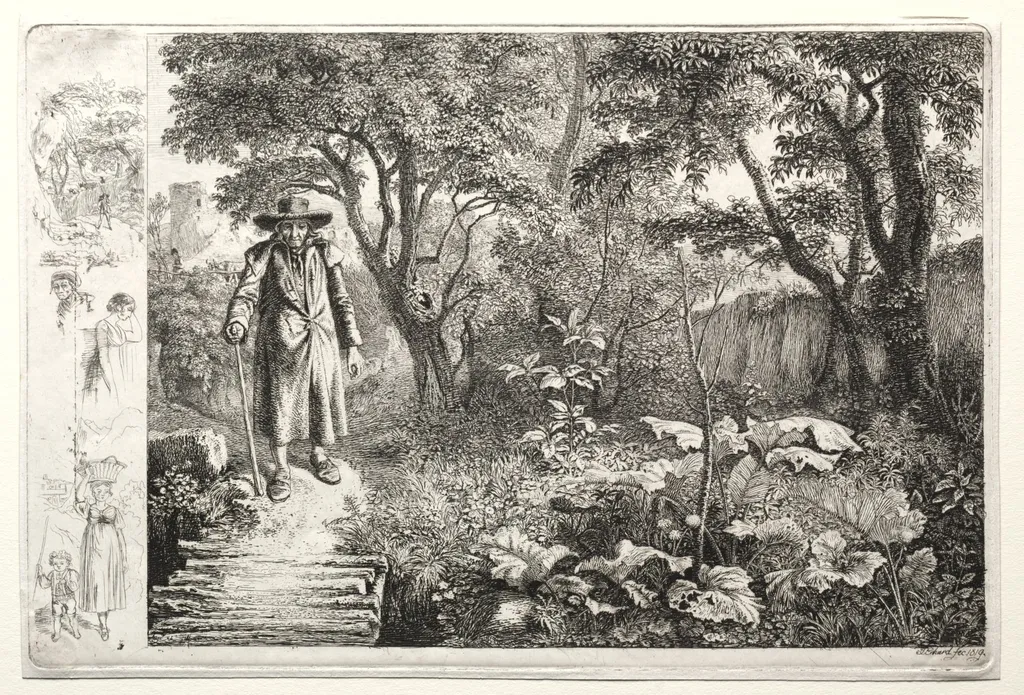
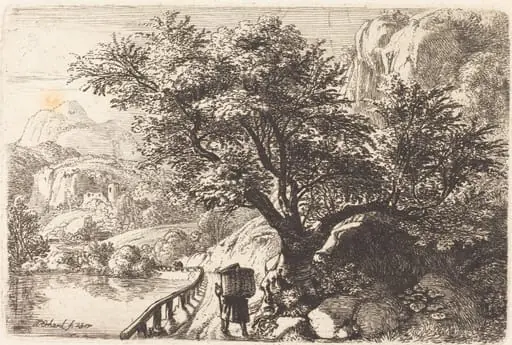
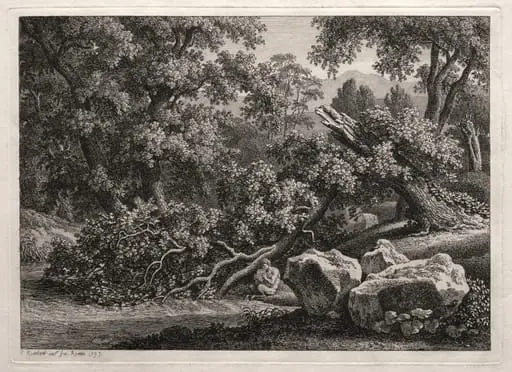
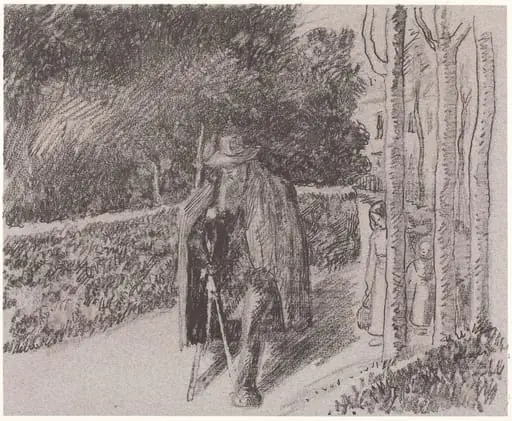
Old Man Before the Log Bridge is a print by the Romanticist artist Johann Christoph Erhard. It dates from 1819 and is held in the collection of the Cleveland Museum of Art.
About this work
Overview
This etching is one of four in Johann Erhard’s 'Salzburg landscapes with large figures,' a series that pairs solitary human figures with quiet, natural settings. Unlike typical pastoral scenes, the work avoids idealization, instead presenting a subdued, introspective mood. The elderly man’s solitary approach to a simple log bridge suggests a quiet transition, not a celebration of nature.
Subject & Meaning
The lone old man walking toward the bridge is not merely a figure in a landscape but a symbolic presence. The bridge, neither grand nor ornate, functions as a threshold—possibly between life and death. Erhard’s choice to isolate the figure emphasizes solitude and inevitability, reinforcing a view of existence as fragile and transient, without divine or natural reassurance.
Technique & Style
Erhard employed fine, controlled etching lines to render texture in bark, stone, and foliage, while using tonal contrast to shape space without dramatic chiaroscuro. The composition is deliberately restrained: the horizon is low, the sky muted, and the figure small against the land. This understated handling amplifies the emotional weight, avoiding theatricality in favor of quiet unease.
History & Provenance
Created shortly before Erhard’s mental decline and suicide in 1822, the print reflects a personal and artistic turning point.
Created shortly before Erhard’s mental decline and suicide in 1822, the print reflects a personal and artistic turning point. Though produced for a series intended for wider circulation, its somber tone diverged from popular tastes of the time. Its survival in private and institutional collections suggests later recognition of its psychological depth, though it was never widely celebrated in his lifetime.
Context
Erhard worked within a tradition of German landscape printmaking that valued observation over ornament. Yet his work diverged from contemporaries by rejecting pastoral harmony. His imagery aligns with emerging Romantic sensibilities that acknowledged nature’s indifference, yet his pessimism was more personal, shaped by inner turmoil rather than philosophical abstraction.
Legacy
Though largely overlooked during his lifetime, Erhard’s later works, including this print, have been reevaluated for their emotional precision. They offer a quiet counterpoint to the grandeur of Romantic landscape art, revealing how solitude and decay could be rendered with restraint. His influence is subtle but present in later artists who favored psychological depth over scenic spectacle.
Artist & collection
Artist
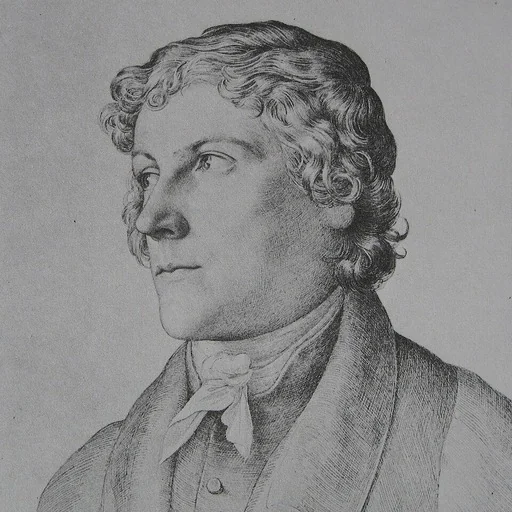
Johann Christoph Erhard (1795–1822) was a German artist, born in Nuremberg.