Artwork
Untitled
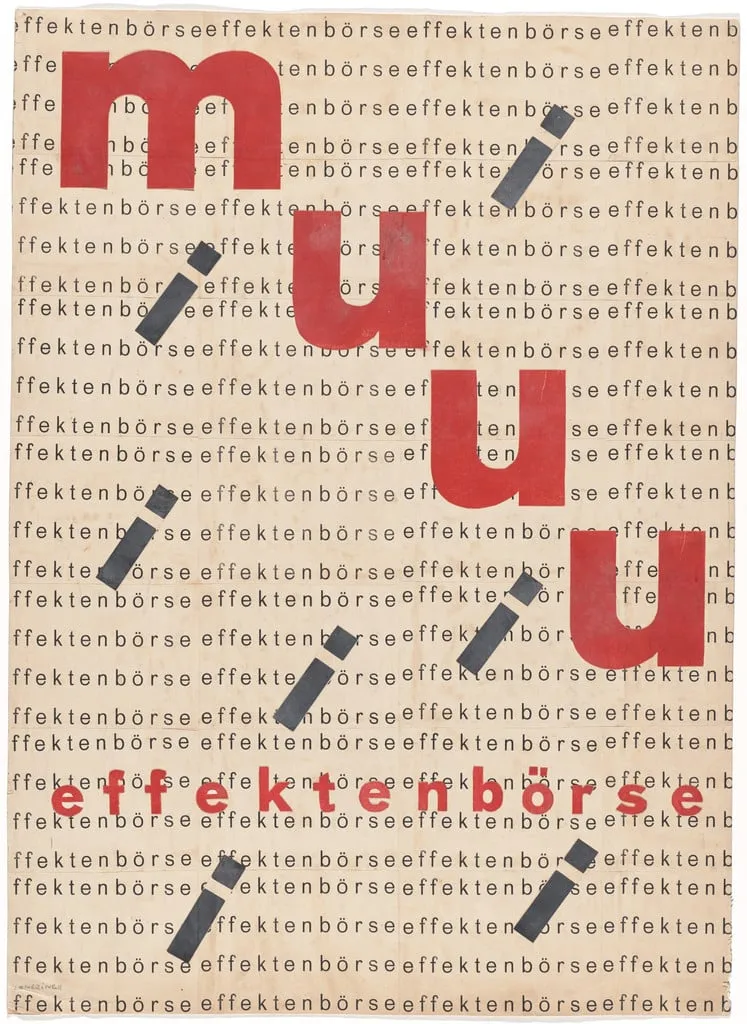
Untitled is a paint drawing by Erich Comeriner. It dates from 1928 and is held in the collection of the Museum of Modern Art.
About this work
Overview
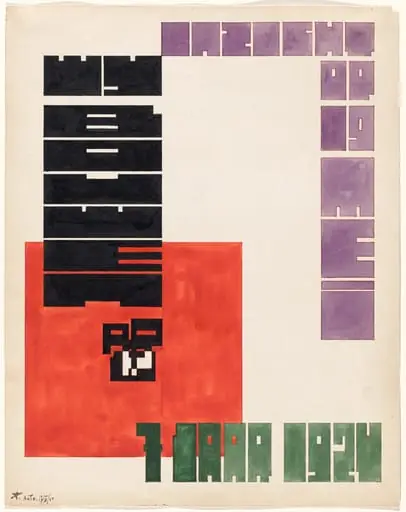
Created around 1928 by Erich Comeriner, this work is a mixed-media drawing composed of cut and pasted painted paper on letterpress material. It resides in the collection of The Museum of Modern Art. The composition integrates fragments of printed text with hand-painted elements, forming a layered, fragmented structure that blurs the line between typography and abstract form.
Subject & Meaning
The piece avoids direct narrative, instead evoking linguistic dislocation. The scattered black rectangles suggest erased or missing text, while the three bold red letters—M, U, J—interrupt the field like isolated symbols. Their tilt and chromatic intensity draw attention without clear semantic resolution, inviting contemplation of language’s instability and the fragmentation of meaning.
Technique & Style
The technique reflects early 20th-century experimental practices, merging collage with typographic manipulation to challenge conventional reading.
Comeriner employed cut-and-paste methods using printed letterpress sheets, overpainting portions to obscure or alter their original content. The background features faint gray text on a pale tan ground, contrasting with the saturated red letters and stark black shapes. The technique reflects early 20th-century experimental practices, merging collage with typographic manipulation to challenge conventional reading.
History & Provenance
The work dates from the late 1920s, a period when artists in Europe were exploring photomontage and textual abstraction. Comeriner, active in Germany during this time, engaged with avant-garde circles that questioned traditional forms. The piece entered MoMA’s collection as part of its broader effort to document interwar experimental drawing practices.
Context
Emerging amid Dada and early Constructivist movements, the work reflects a broader interest in deconstructing language and print media. Artists of the era used found text to critique mass communication and explore visual rhythm over semantic clarity. Comeriner’s approach aligns with these concerns, treating words as material rather than carriers of fixed meaning.
Legacy
Though not widely exhibited, the piece contributes to the understanding of interwar graphic experimentation. Its use of typography as visual element influenced later developments in concrete poetry and conceptual art. The work remains a quiet but significant example of how printed matter was repurposed to question perception and communication in modernist art.
Artist & collection