Artwork
Untitled
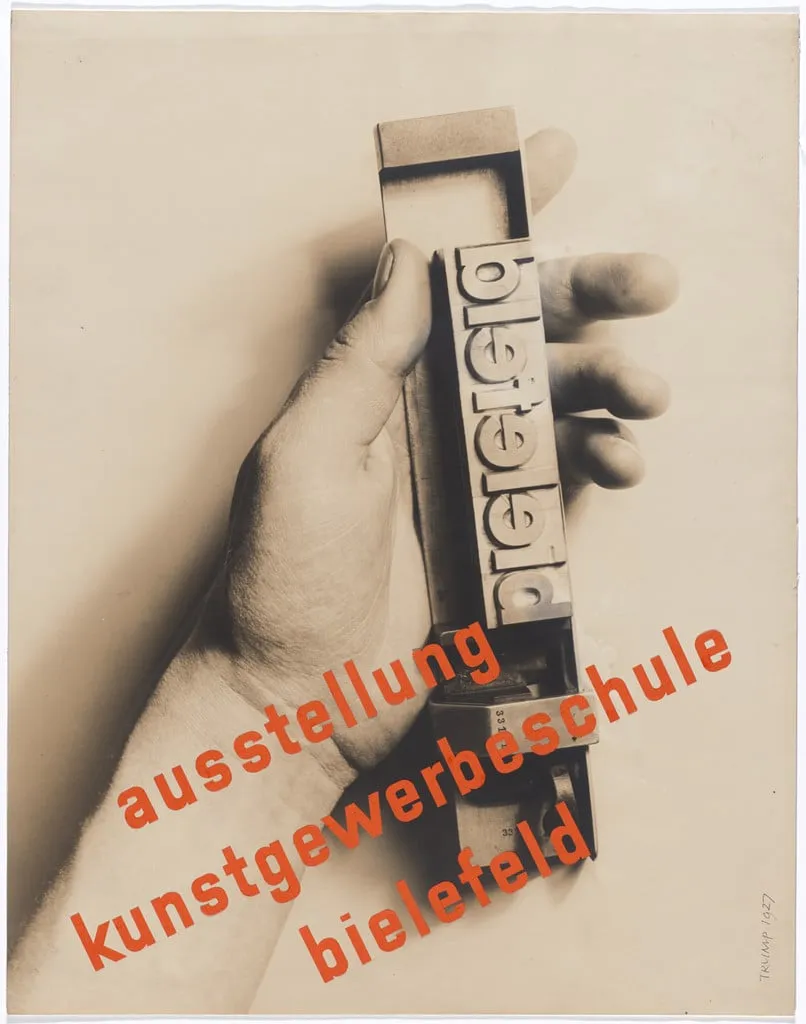
Untitled is a silver drawing by Georg Trump. It dates from 1927 and is held in the collection of the Museum of Modern Art.
About this work
Overview
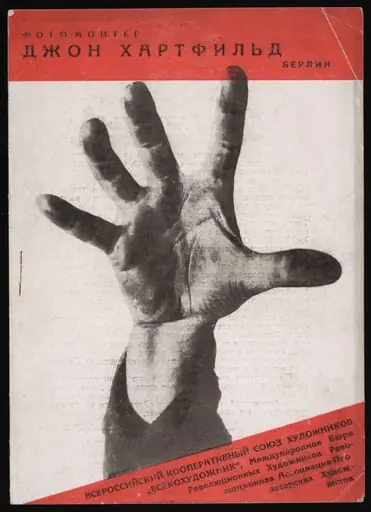
This gelatin silver print, made in 1927 by Georg Trump, incorporates cut-and-pasted painted paper to alter the photographic surface. It presents a close-up of a hand gripping a metal printing block, rendered in monochrome with deliberate tonal contrast. The composition avoids decorative elements, directing attention to the physical interaction between hand and tool.
Subject & Meaning
The image centers on the act of printing rather than its outcome. The hand, holding a block inscribed with 'bielefeld' in reverse, suggests the mechanical process of transfer. The reversed lettering implies the print’s future inversion, emphasizing the labor behind reproduction and the materiality of typographic production.
Technique & Style
Trump combined photographic printing with manual collage, applying painted paper to modify the print’s surface. The stark black-and-white palette enhances texture: the grain of the hand’s skin, the metallic sheen of the block, and the rough edges of the cut paper. Negative space within the letters creates visual tension, reinforcing the theme of absence and imprint.
History & Provenance
The work was produced in 1927 during Trump’s engagement with experimental print practices in Germany. It entered The Museum of Modern Art’s collection through its early focus on photography as a medium of artistic inquiry, not merely documentation. Its preservation reflects institutional interest in hybrid techniques of the interwar period.
Context
Created amid the rise of New Objectivity and Bauhaus-influenced design, the piece aligns with contemporaneous explorations of industrial aesthetics and typographic form. Unlike commercial printing, Trump’s approach foregrounds the artist’s hand, bridging craft and mechanical reproduction in a moment when both were being redefined.
Legacy
The work remains a quiet example of how photographers and printmakers in the 1920s interrogated the boundaries between image, object, and process. Its inclusion in MoMA’s collection helped legitimize such hybrid practices within the broader narrative of modernist photography, influencing later investigations into materiality and reproduction.
Artist & collection