Artwork
Untitled
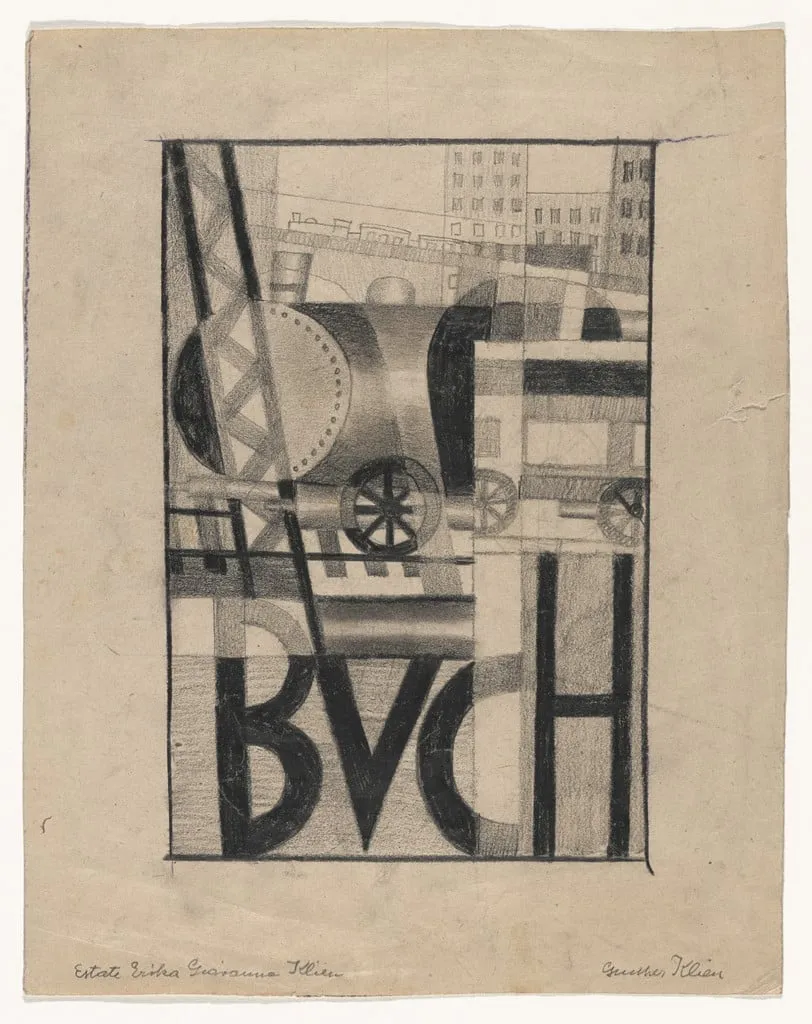
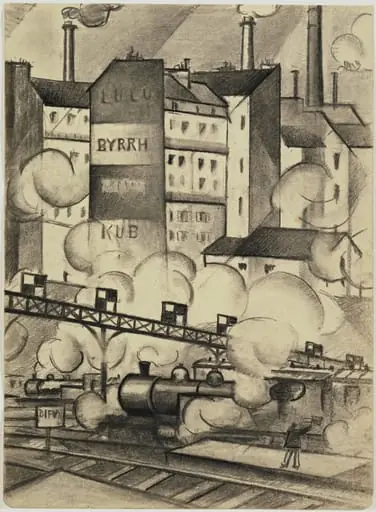
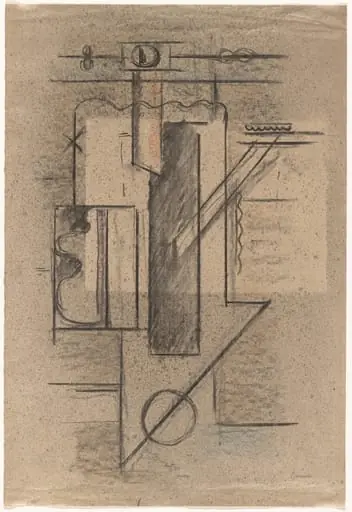
Untitled is a graphite drawing by Erika Giovanna Klien. It dates from 1926 and is held in the collection of the Museum of Modern Art.
About this work
Overview
The composition balances dense, dark areas with open, lighter spaces, suggesting structure without literal representation.
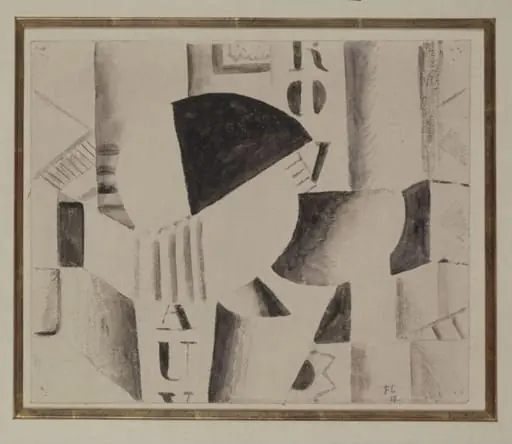
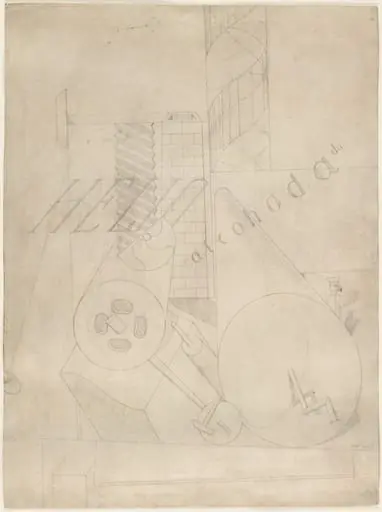
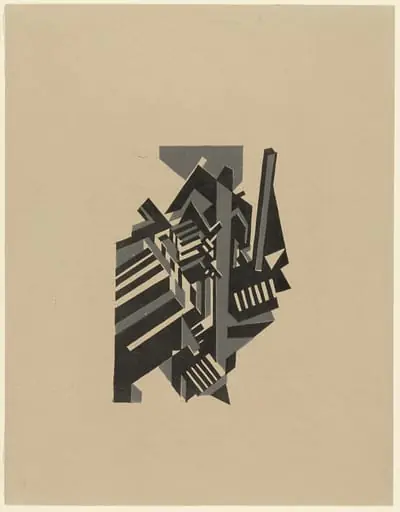
Created in 1926, this pencil and crayon drawing by Erika Giovanna Klien is part of The Museum of Modern Art’s collection. It presents an abstracted urban environment composed of angular forms and layered lines. The composition balances dense, dark areas with open, lighter spaces, suggesting structure without literal representation. The work’s material simplicity contrasts with its complex visual rhythm.
Subject & Meaning
The drawing evokes an industrial cityscape through geometric fragments—gears, blocks, and rising tracks—without depicting recognizable buildings or figures. The letters 'B.V.C.H.' appear centrally, possibly referencing a name, acronym, or coded signal, but their exact meaning remains unresolved. The image suggests mechanical order, yet its fractured layout implies instability or deconstruction of urban logic.
Technique & Style
Klien employed pencil and crayon to build form through bold outlines and dense cross-hatching, creating texture and depth without gradation. Areas of heavy shading contrast with untouched paper, emphasizing contrast over realism. The lines are deliberate and sharp, resembling technical drafting rather than expressive brushwork, lending the image an architectural or schematic quality.
History & Provenance
The work was produced during Klien’s time in Vienna, where she engaged with avant-garde circles and explored abstraction influenced by Constructivism and early modernist design. It entered MoMA’s collection in the mid-20th century as part of efforts to document international experimental drawing practices of the 1920s.
Context
Made in the aftermath of World War I, the drawing reflects broader artistic interest in mechanization and urban transformation. Klien’s approach aligns with contemporaries who reduced natural forms to geometric units, echoing trends in Bauhaus and Viennese modernism. The absence of human figures underscores a focus on structure over narrative.
Legacy
Though not widely exhibited, the work contributes to understanding how female artists in interwar Europe engaged with abstraction and industrial themes. Its preservation in MoMA’s collection affirms its role in the broader narrative of modernist drawing, where line and form were used to interrogate the built environment.
Artist & collection
Artist
Erika Giovanna Klien (1900–1957) was an Austrian artist, born in Borgo Valsugana.