Artwork
Illustration to The Oakmen
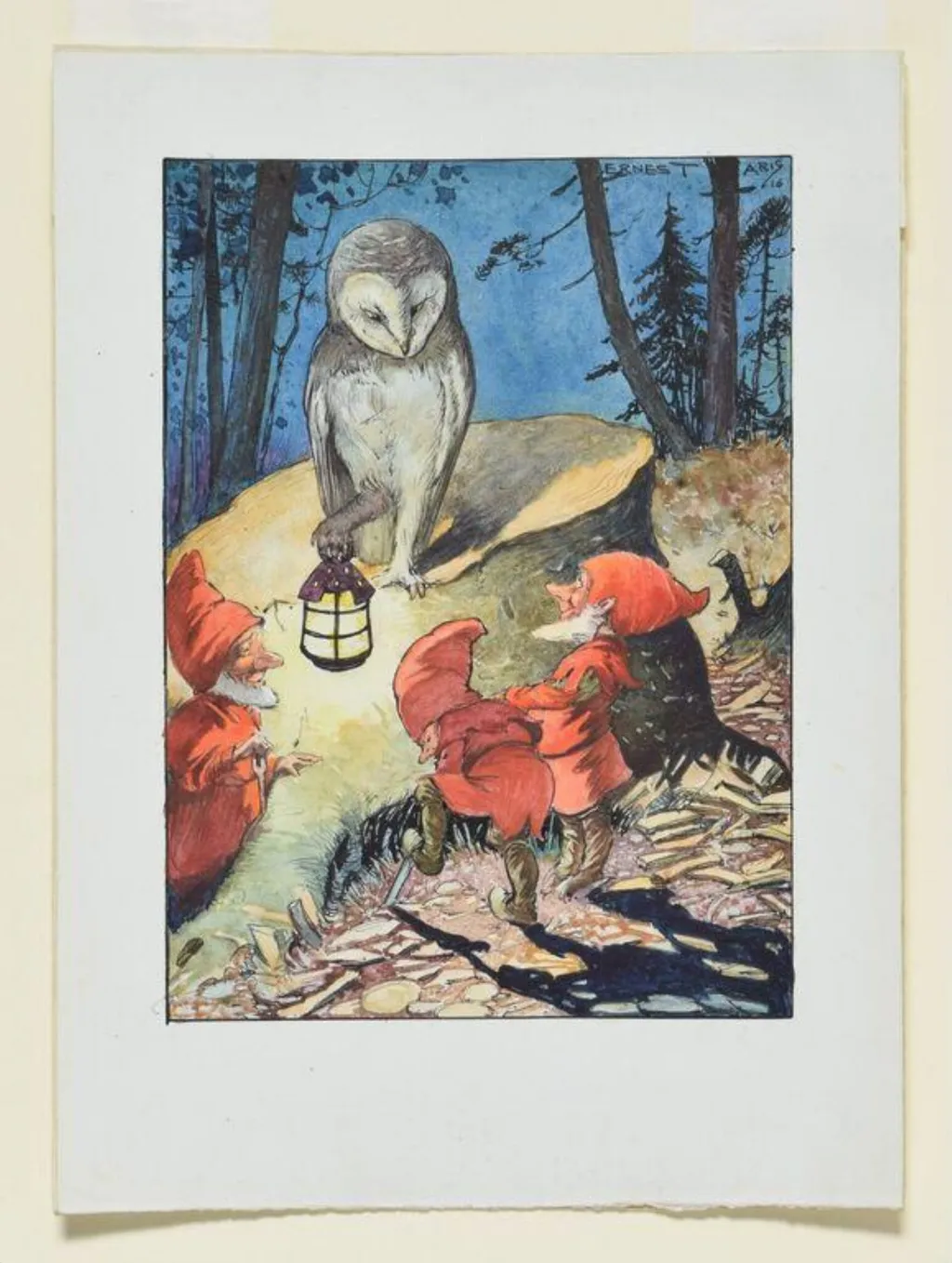
Illustration to The Oakmen is a watercolor work on paper by the Art Nouveau artist Ernest Aris. It dates from 1916 and is held in the collection of the Victoria and Albert Museum.
About this work
This watercolour from 1916 shows a scene straight from a children’s book. Ernest Aris was a pro at turning stories into lively pictures. He drew for magazines and hundreds of children’s books.
Aris began with portraits and teaching art. By 1909 he was illustrating The Graphic and writing his own books too.
If you like his style, check out more work by Ernest Aris.
Overview
Trained at Bradford School of Art and the Royal College of Art, he began as a portraitist and teacher before shifting to illustration.
Ernest Aris (1882–1963) was a British illustrator whose career spanned commercial art, children’s literature, and advertising. Trained at Bradford School of Art and the Royal College of Art, he began as a portraitist and teacher before shifting to illustration. By the early 1900s, he was regularly contributing to periodicals and publishing his own illustrated books, eventually producing over 170 titles and contributing to hundreds more.
Subject & Meaning
This watercolour depicts a scene from a children’s tale involving oakmen—mythical forest figures rooted in folklore. Created in 1916, the image reflects Aris’s ability to translate literary fantasy into vivid, accessible imagery. The subject likely originated from Beatrix Potter’s unpublished letter-story, which she entrusted to him as her eyesight declined, preserving the whimsical tone of her original narrative through his illustrative style.
Technique & Style
Aris worked primarily in watercolour, employing delicate washes and fine linework to render detailed, atmospheric scenes. His style combined naturalistic elements with gentle stylization, suited to children’s narratives. The 1916 illustration demonstrates his skill in balancing narrative clarity with lyrical detail, using soft tones and precise brushwork to evoke a quiet, enchanted woodland setting.
History & Provenance
The watercolour was created in 1916 during a period when Beatrix Potter, unable to continue illustrating due to declining vision, sought an illustrator to complete her unpublished oakmen story. Aris, already established in children’s publishing, was chosen for his sensitivity to her tone. The piece likely served as a preparatory study for a potential book project, though it was never formally published under Potter’s name.
Context
In early 20th-century Britain, illustrated children’s books flourished alongside mass-market advertising. Aris’s work bridged these worlds, appearing in magazines, toy packaging, and promotional items like Cadbury’s Cococubs. His illustrations reflected a broader cultural shift toward visual storytelling for young audiences, where fantasy and domestic charm were key selling points for publishers and advertisers alike.
Legacy
Aris’s prolific output helped define the visual language of British children’s publishing between the wars. Though less remembered today than contemporaries like Beatrix Potter, his illustrations reached wide audiences through books, games, and advertisements. His ability to adapt literary themes into commercially viable imagery left a quiet but enduring mark on the era’s graphic culture.
Artist & collection
Artist
Alfred Ernest Walter George Aris, FZS, SGA, also known by the pen names Robin A Hood and Dan Crow, (1882–1963), was a writer and illustrator of children's books.

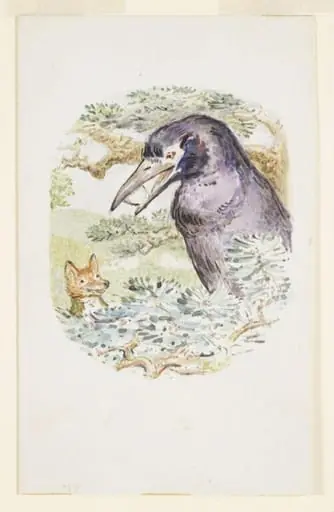 The Fox and the Crow
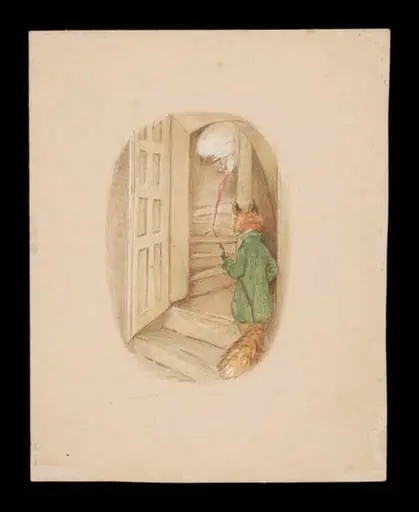 The fox following the stork up a staircase
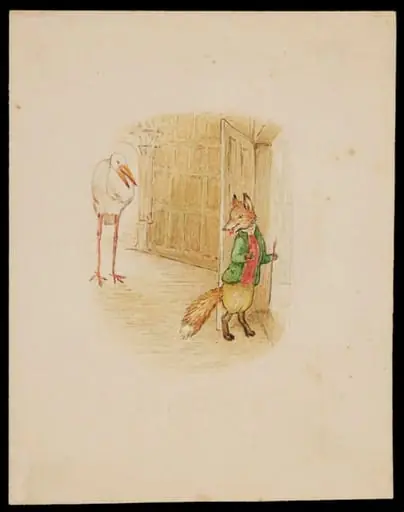 The fox taking leave of the stork
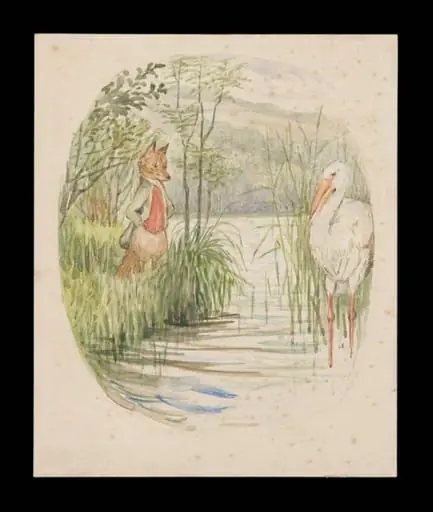 The fox looking over the stream at the stork
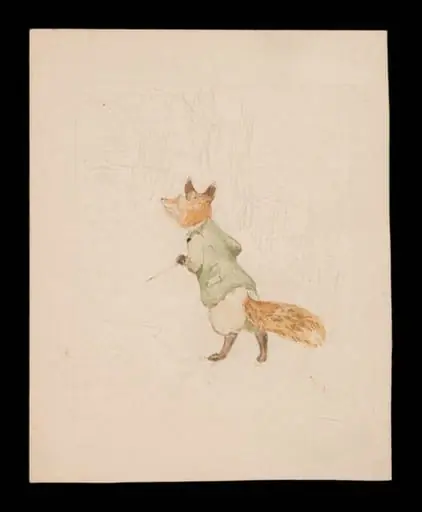 A fox walking through a wood
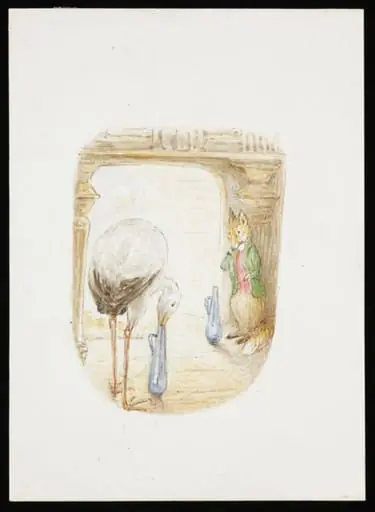 The fox watching the stork feeding from a narrow-necked jar
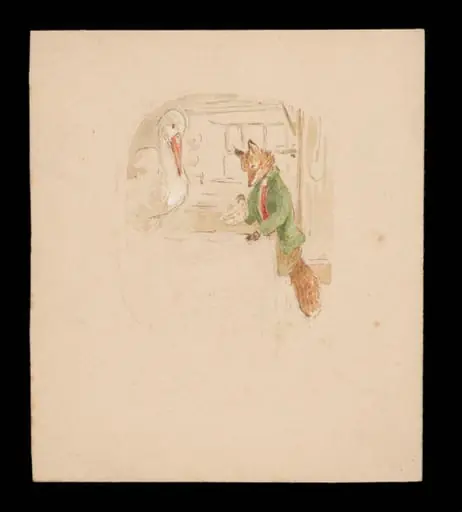 The fox pouring tea
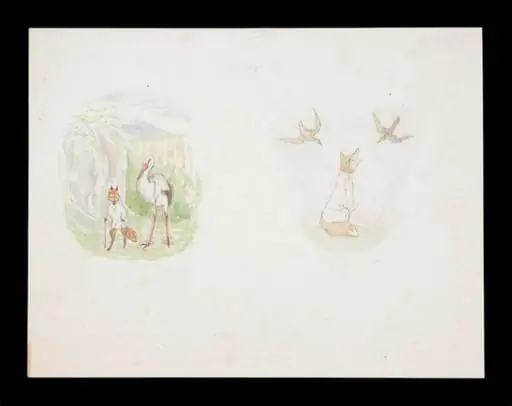 A fox in a glade with a stork; a fox looking up at two birds
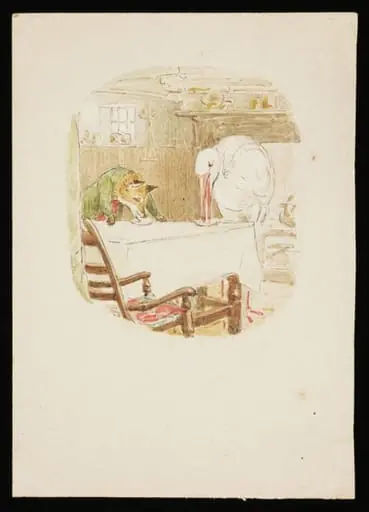 The fox and the stork eating a meal
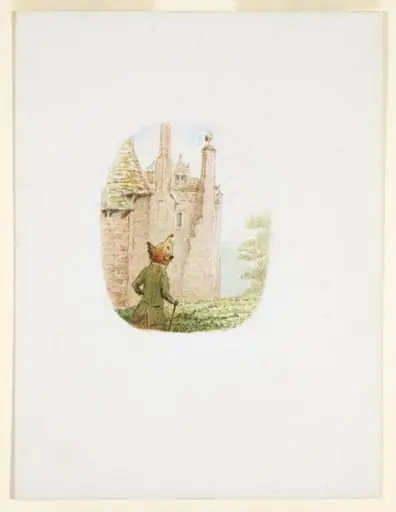 The fox looks up at the stork standing on top of a tower
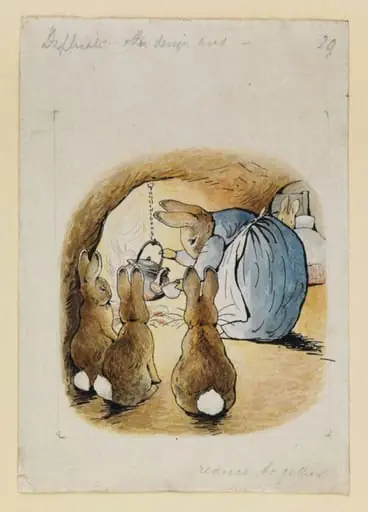 Mrs Rabbit pouring out the tea for Peter while her children look on: variant illustration for The tale of Peter Rabbit
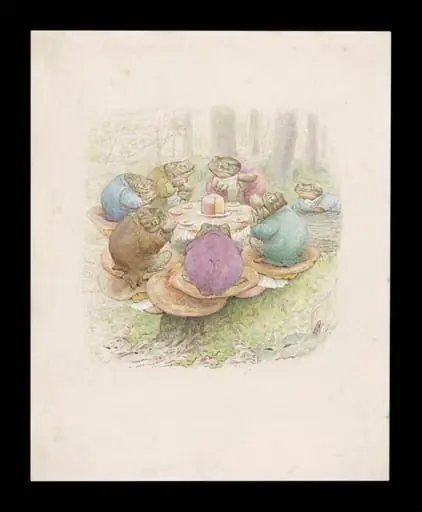 The Toads' Tea Party
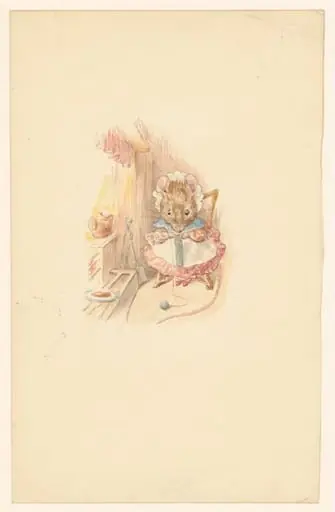 A mouse knitting
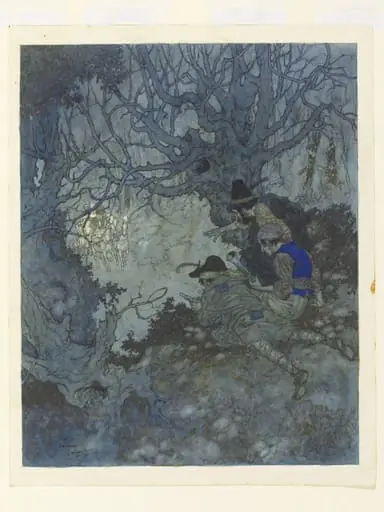 Drawing for illustration to 'The Snow Queen'
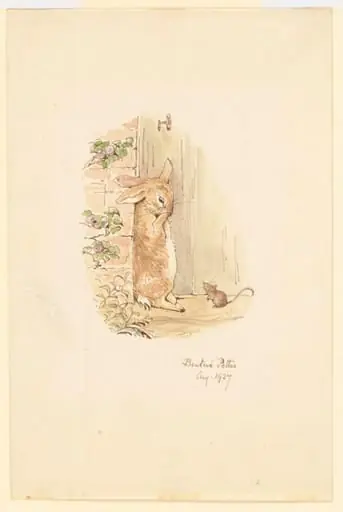 Peter by the door in the wall
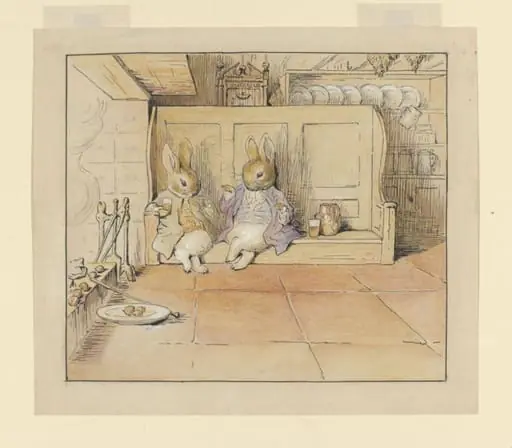 "Gentlemen came every day"
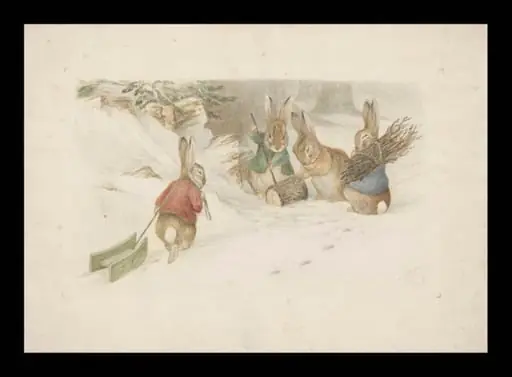 Four rabbits in the snow
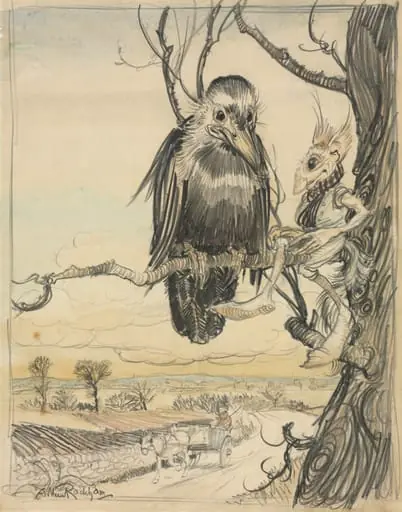 A Squirrel and a Crow
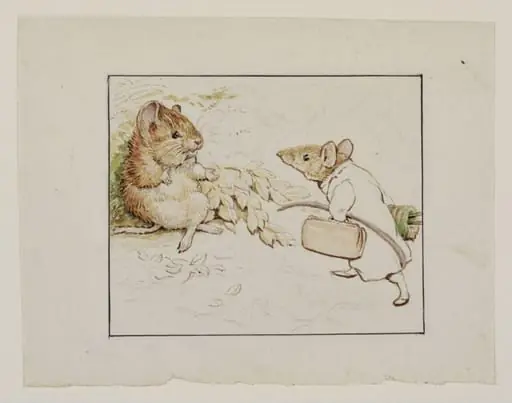 Untitled