Artwork
The View from Eze
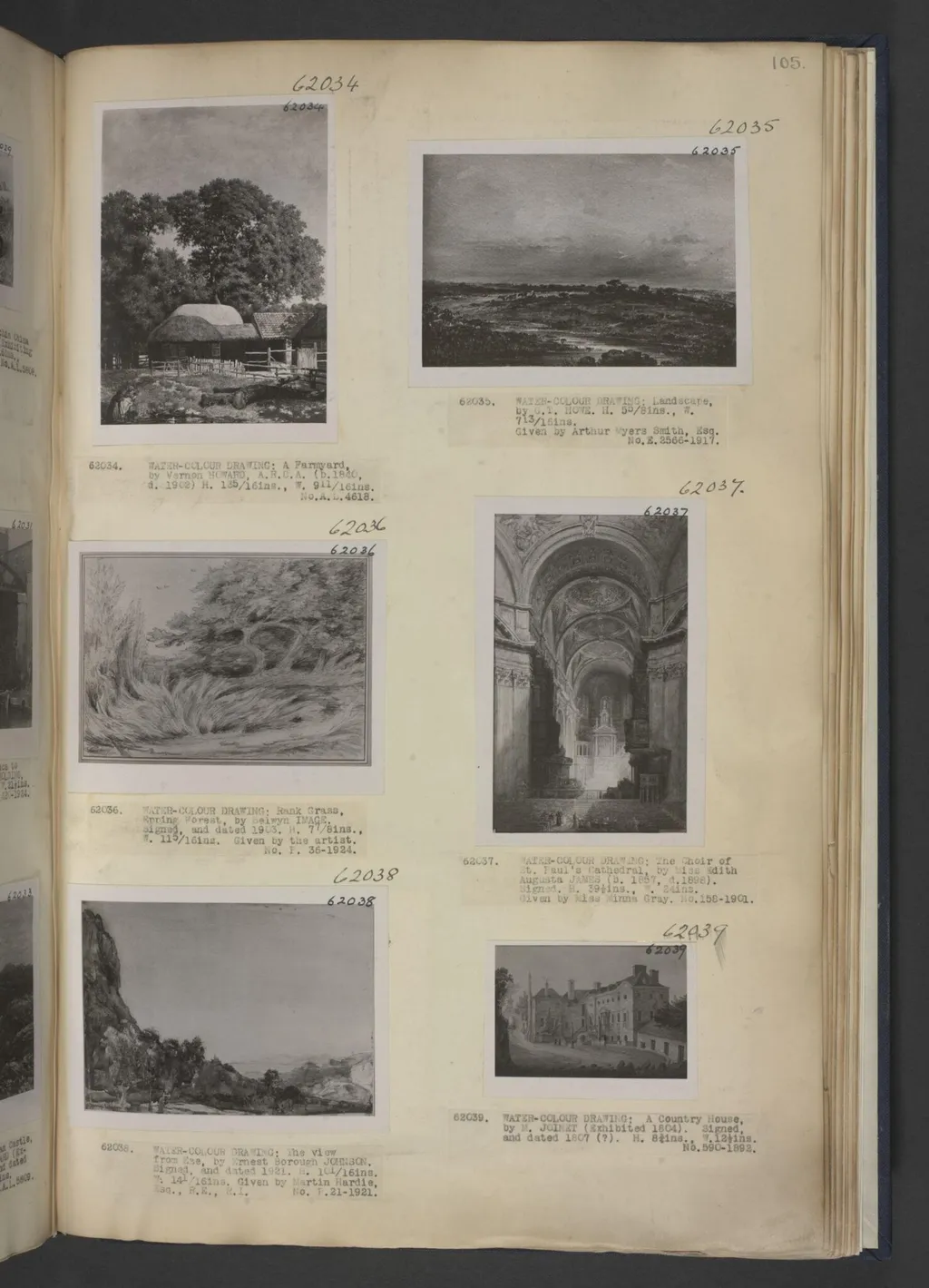
The View from Eze is a watercolor work on paper by Ernest Borough Johnson. It dates from 1921 and is held in the collection of the Victoria and Albert Museum.
About this work
Overview
Created in 1921, The View from Eze is a watercolour by Ernest Borough Johnson, capturing a landscape near the village of Eze on the French Riviera.
Created in 1921, The View from Eze is a watercolour by Ernest Borough Johnson, capturing a landscape near the village of Eze on the French Riviera. The work is part of the Victoria and Albert Museum’s collection, where it is held as an example of early 20th-century British watercolour practice. Its intimate scale and spontaneous handling reflect a tradition of travel sketching, valuing immediacy over polished finish.
Subject & Meaning
The painting depicts a rugged hillside dotted with dense vegetation, a narrow path ascending toward a solitary white structure at the summit. The composition suggests a quiet journey through terrain, with the building hinting at human presence without narrative detail. The scene conveys solitude and observation rather than grandeur, emphasizing the artist’s personal encounter with the landscape rather than its symbolic or historical weight.
Technique & Style
Johnson employed loose, rapid watercolour strokes to evoke texture and movement. Rocks are rendered with jagged, dry brushwork, while foliage appears as soft, layered washes. The sky and distant hills blend gently into one another, creating atmospheric depth. The sketch-like quality—unrefined edges, minimal detail—conveys a sense of spontaneity, as if the scene was recorded in real time during a walk.
History & Provenance
The painting was completed during Johnson’s travels in southern France and entered the Victoria and Albert Museum’s collection shortly after its creation. It was likely acquired as part of a broader effort to document British watercolourists’ engagement with continental landscapes. Its preservation reflects institutional interest in amateur and professional sketchwork from the interwar period.
Context
In the early 1920s, watercolour remained a favored medium for British artists seeking to record travel and nature with immediacy. Johnson’s work aligns with a tradition of topographical watercolours, influenced by 19th-century practices but embracing looser, more personal techniques. The View from Eze reflects a broader cultural interest in the Mediterranean as a site of quiet retreat and artistic renewal after the First World War.
Legacy
Though not widely exhibited, the painting endures as a representative example of modest, observational watercolour from the period. It contributes to the understanding of how British artists engaged with European landscapes outside formal academic frameworks. Its presence in the V&A underscores the museum’s commitment to preserving works that value personal expression over monumental achievement.
Artist & collection

Artist
Esther Harriet Borough Johnson née George (1866–1958) was a British painter.

 Jamestown, St. Helena
 Grey Day, Rottingdean
 The Elm Walk. A Wooded Park
 Morning after the first snowstorm in late autumn, Savoy Alps, Lake of Geneva
 Landscape
 Ullswater Head, Patterdale Hall
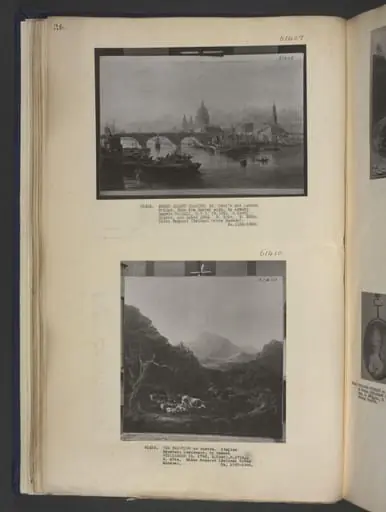 St. Paul's and London Bridge from the Surrey side
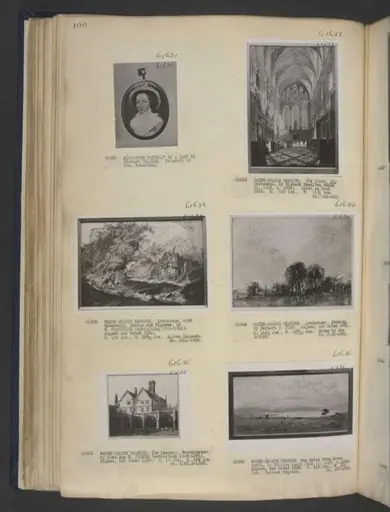 Ben Nevis from above Navin
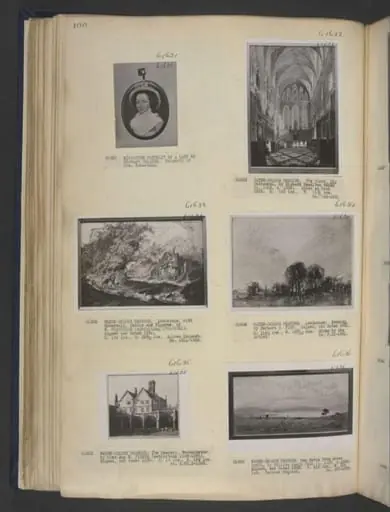 The Deanery, Westminster
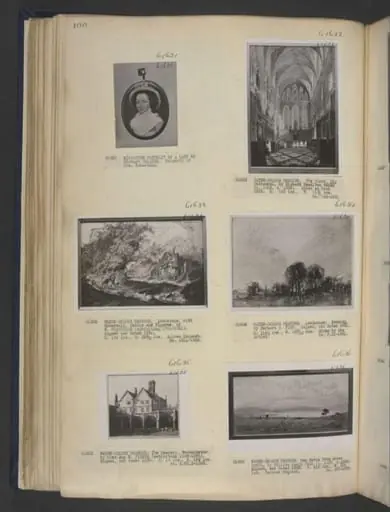 The choir, Ely Cathedral
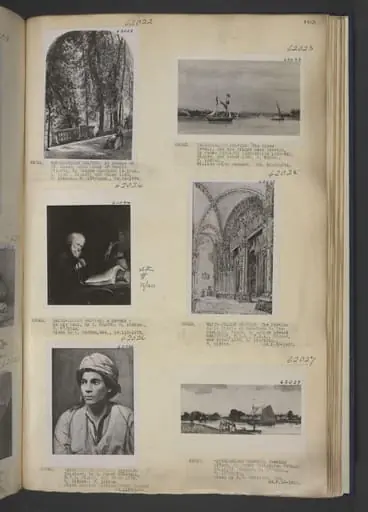 An Egyptian Muleteer
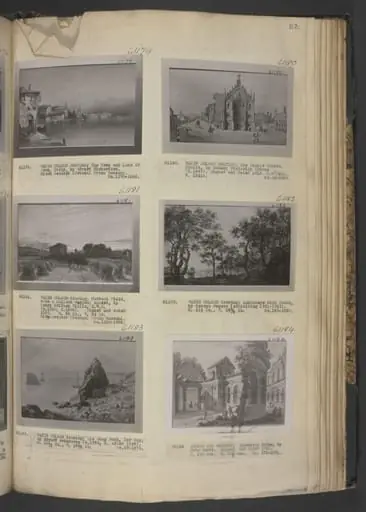 Town and lake of Como, Italy
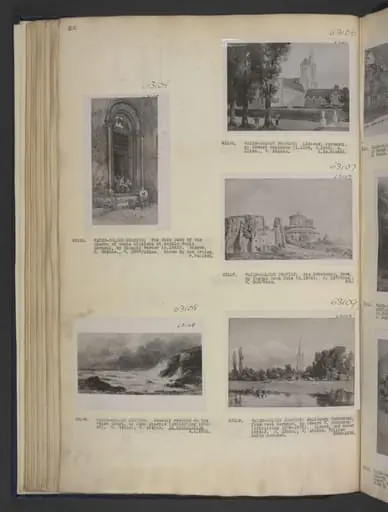 The Side Door of the Church of Santa Giuliana at Aquila Degli Abruzzi
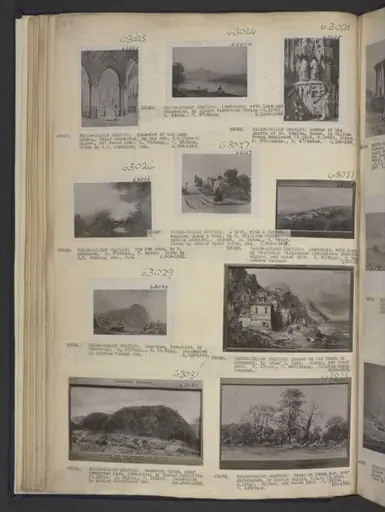 Houses on the Coast of Normandy
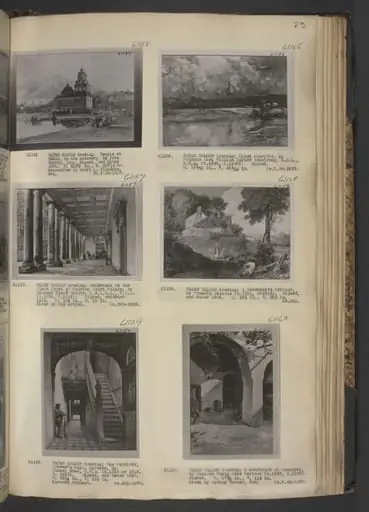 Temple at Nasik, on the Godavery
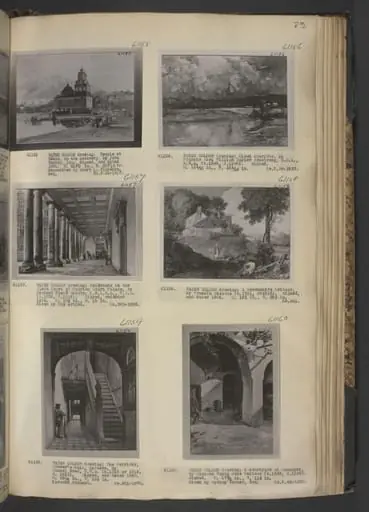 A Devonshire Cottage
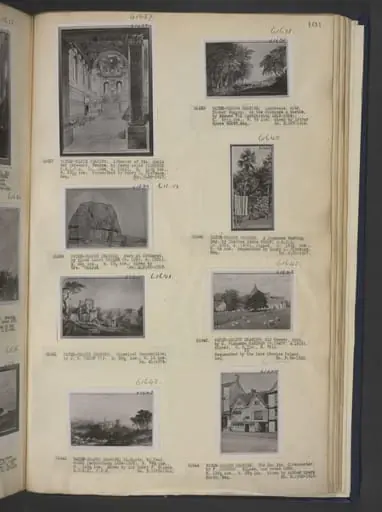 Classical composition
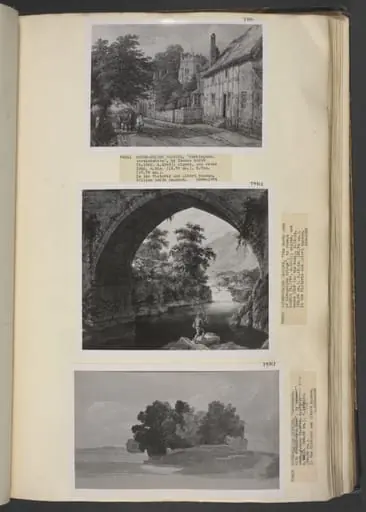 Clubbington in Warwickshire
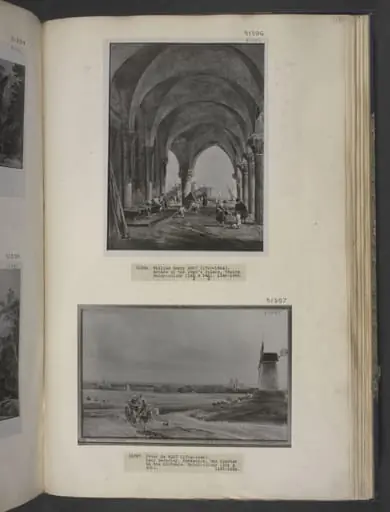 Near Beverley, Yorkshire, the Minster in the Distance
 Arcade, Doge's Palace, Venice