Artwork
Grey Day, Rottingdean
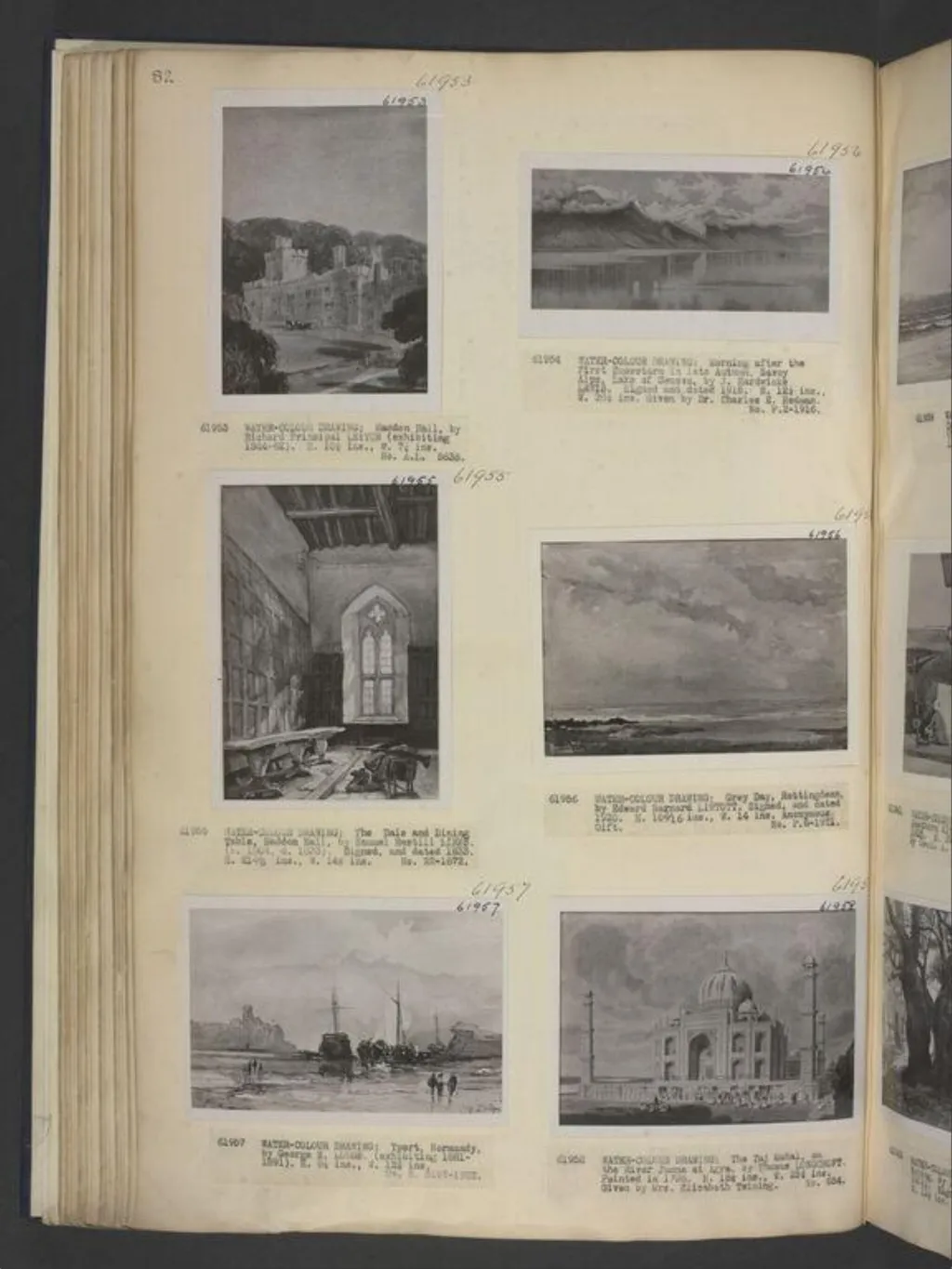
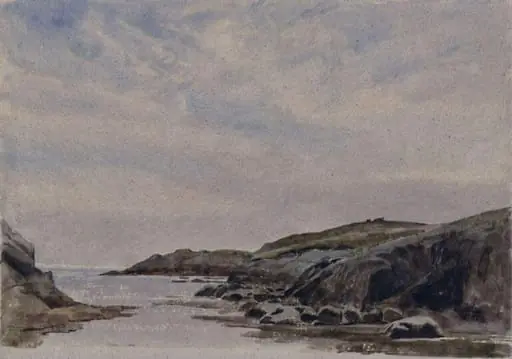
Grey Day, Rottingdean is a watercolor work on paper by the Impressionist artist Lintott. It dates from 1920 and is held in the collection of the Victoria and Albert Museum.
About this work
Overview
Grey Day, Rottingdean is a watercolour executed in 1920 by the British artist Lintott. The work bears the artist’s signature and date, confirming its authorship. It measures a modest size typical of the medium and presents a coastal landscape rendered in a restrained palette.
Subject & Meaning
The composition depicts a desolate shoreline under an overcast sky. A solitary structure stands near the water’s edge, framed by a few scattered trees. The muted greys and blues convey a quiet, introspective atmosphere, suggesting the melancholy of a day when light is subdued and the sea appears somber.
Technique & Style
Lintott employs delicate washes to blend sky and sea, creating a seamless transition between the two elements. Soft, smooth brushstrokes build subtle tonal variations, while careful modulation of light and shadow gives the scene a sense of depth despite the limited colour range. The overall effect is one of atmospheric restraint.
History & Provenance
Signed and dated by the artist, the watercolour entered the collection of the Victoria and Albert Museum, where it is catalogued among Lintott’s early 20th‑century works. Its provenance traces back to the artist’s own studio, reflecting his interest in coastal subjects during the post‑World War I period.
Artist & collection