Artwork
Mirror of the Goddess
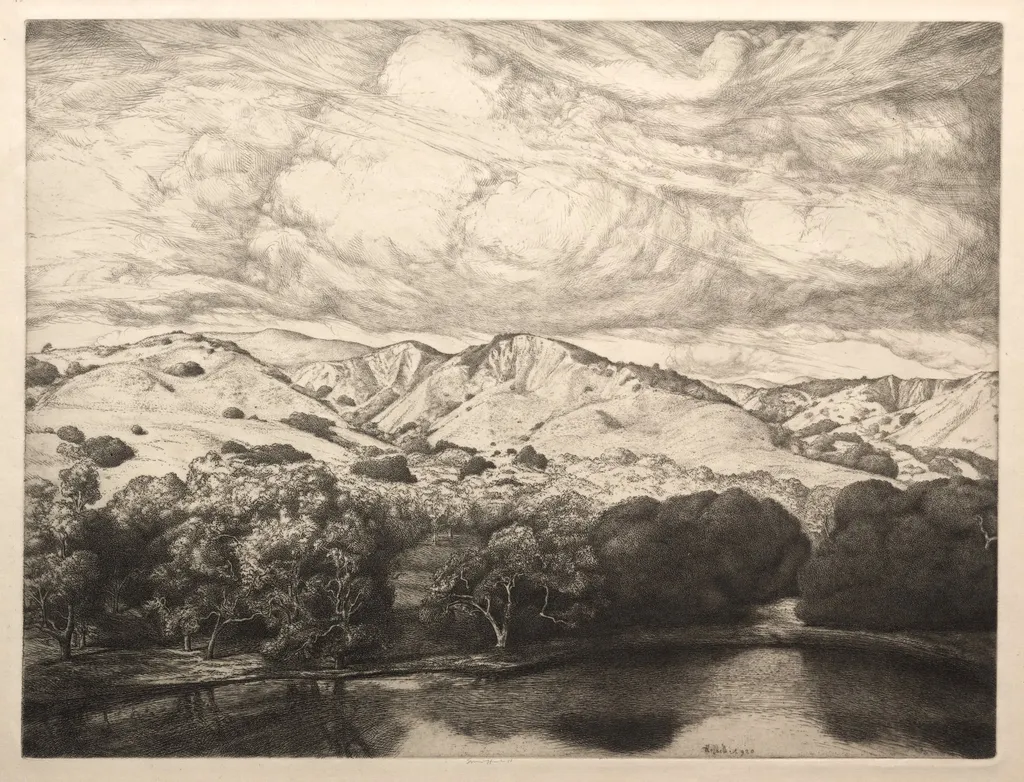
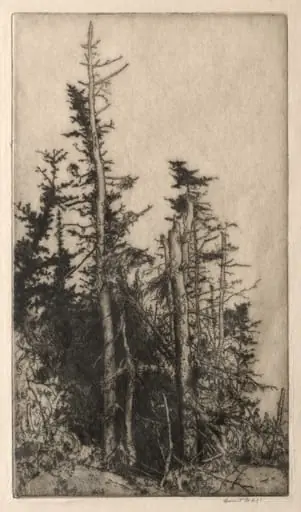
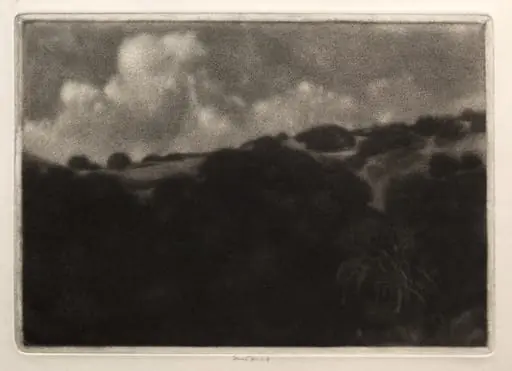
Mirror of the Goddess is a print by Ernest Haskell. It dates from 1920 and is held in the collection of the Cleveland Museum of Art.
About this work
Overview
Haskell’s use of ink and subtle tonal shifts gives the scene a contemplative atmosphere, blending natural observation with expressive abstraction.
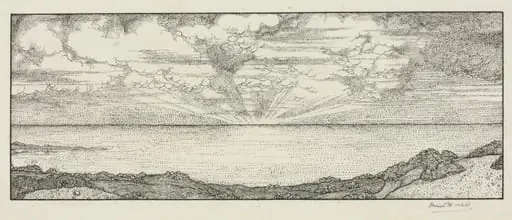
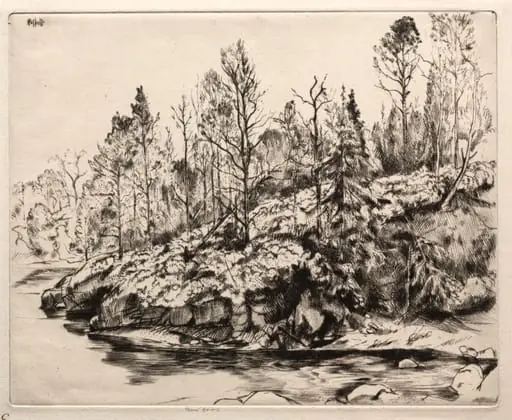
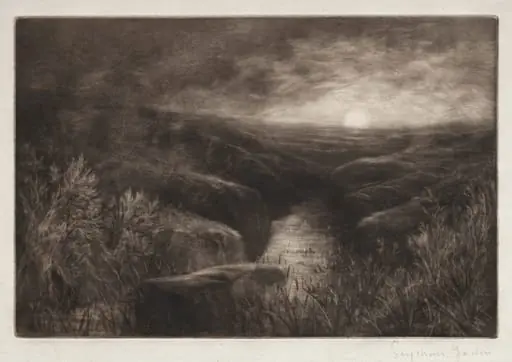
Created in 1920 by Ernest Haskell, Mirror of the Goddess is a monotype print depicting a tranquil landscape. The work is part of the collection at The Cleveland Museum of Art. Its quiet composition centers on a still lake, framed by wooded hills and a dynamic sky. Haskell’s use of ink and subtle tonal shifts gives the scene a contemplative atmosphere, blending natural observation with expressive abstraction.
Subject & Meaning
The scene presents a serene, unpopulated landscape where water mirrors the surrounding trees and sky. The title, Mirror of the Goddess, suggests a spiritual or mythic resonance, implying nature as a sacred reflection. No human figures appear, allowing the environment itself to serve as the subject—an embodiment of stillness and elemental presence, inviting quiet contemplation rather than narrative.
Technique & Style
Haskell employed a monotype process, applying ink to a plate and transferring it to paper, allowing for unique textural effects. Fine, deliberate lines define tree trunks and hill contours, while layered washes create depth in the sky. The clouds are rendered with swirling, fluid strokes that suggest movement, contrasting with the stillness of the water. The technique emphasizes atmosphere over detail, favoring mood over precision.
History & Provenance
The print was made in 1920 during Haskell’s active period as a printmaker and illustrator. It entered The Cleveland Museum of Art’s collection through documented acquisition, though specific prior ownership details are not widely recorded. The work reflects Haskell’s interest in American landscape traditions and his engagement with early 20th-century printmaking revival movements.
Context
In the early 1920s, American artists were reexamining printmaking as a serious medium, moving beyond reproduction toward personal expression. Haskell’s work aligns with this trend, drawing from tonalist and impressionist influences while avoiding overt symbolism. The emphasis on atmosphere and natural harmony reflects broader cultural interests in introspection and the sublime in nature during the postwar era.
Legacy
Mirror of the Goddess remains a quiet example of Haskell’s contribution to American printmaking. While not widely exhibited, it exemplifies his ability to convey emotional depth through restrained technique. The work continues to be studied for its nuanced handling of light and texture, offering insight into lesser-known avenues of early 20th-century landscape art beyond the more prominent movements of the time.
Own this work as a print
Artist & collection

Artist
Ernest Haskell was an American artist and illustrator, internationally famous in his lifetime and remembered for his etchings, as well as engravings, pen-and-ink drawings, lithographs and watercolors.