Artwork
The Ostrich
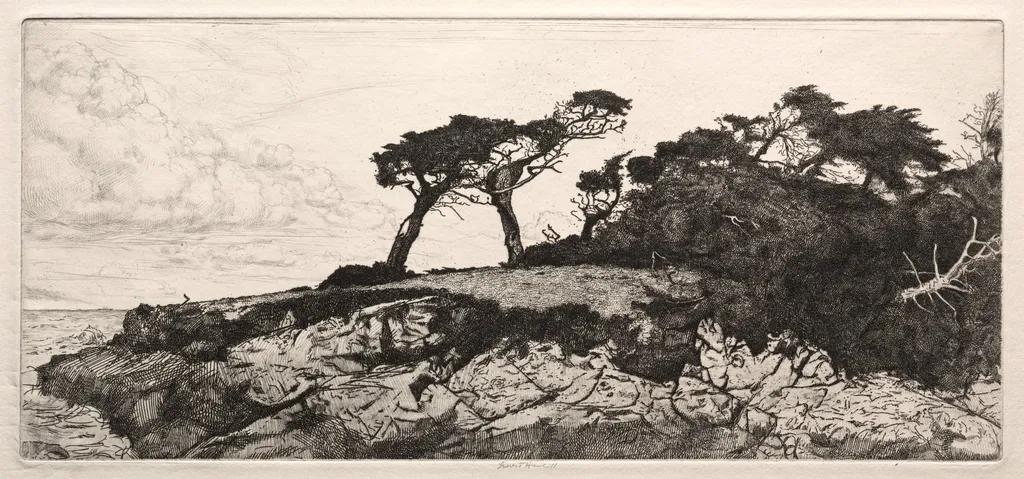
The Ostrich is a print by Ernest Haskell. It dates from 1910 and is held in the collection of the Cleveland Museum of Art.
About this work
Overview
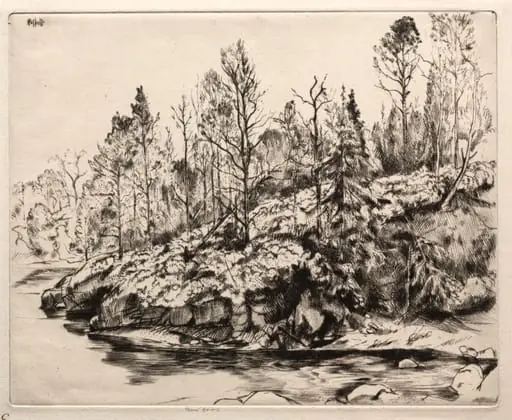
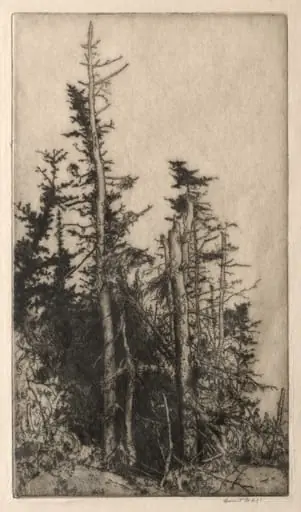
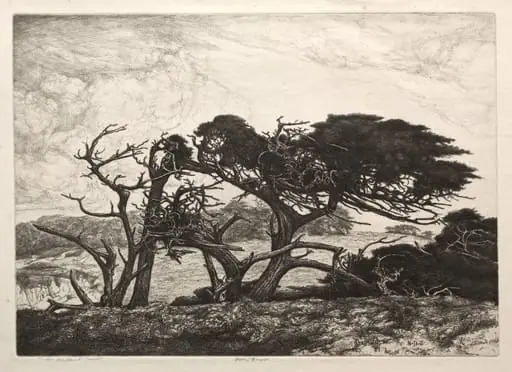
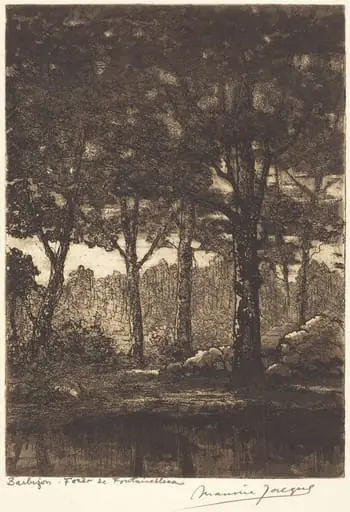
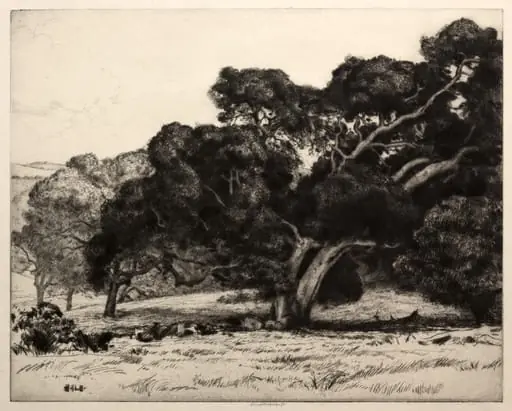
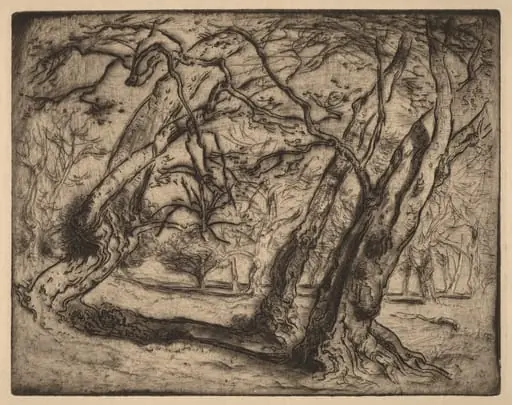
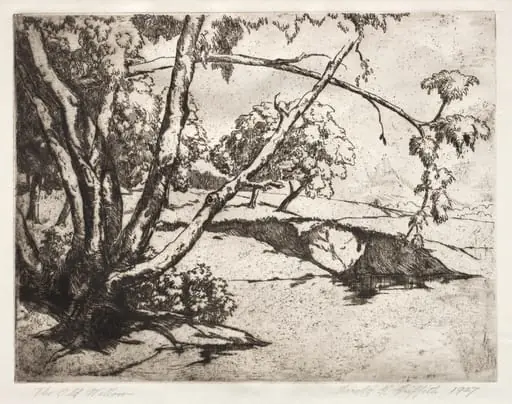
The Ostrich is a print by Ernest Haskell, dated around 1910, and is part of the collection at The Cleveland Museum of Art. Though the title suggests a focus on the bird, the work instead presents a quiet landscape. It reflects Haskell’s interest in natural forms and atmospheric tone, aligning with early 20th-century American printmaking traditions that emphasized mood over narrative.
Subject & Meaning
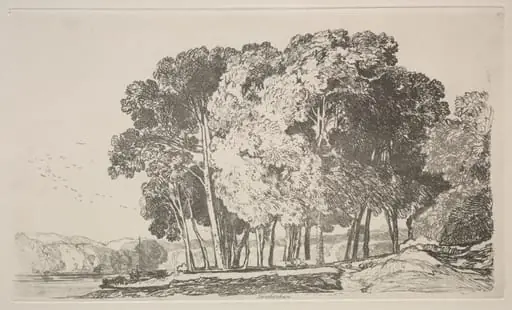
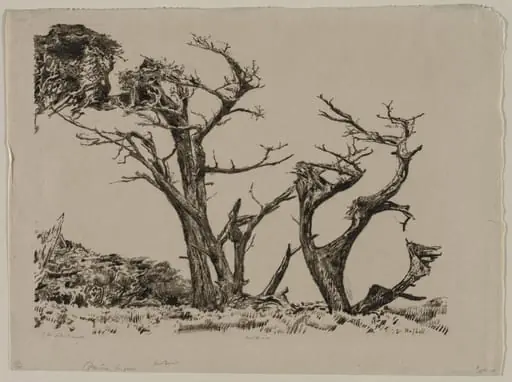
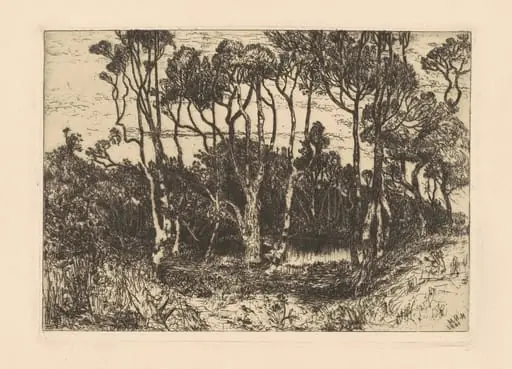
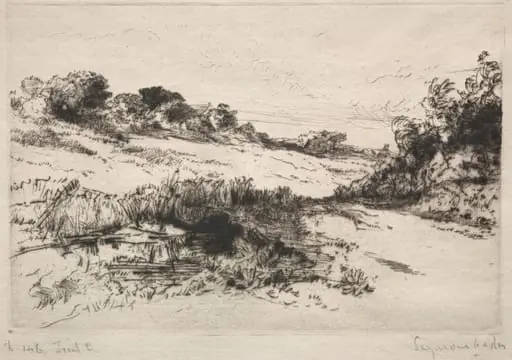
The scene depicts a rocky outcrop cloaked in dense vegetation, framed by distant trees and a still body of water under a cloudy sky. No ostrich is visually present; the title may reference an obscure allusion or serve as a poetic device. The composition invites contemplation, suggesting solitude and the quiet persistence of nature, without overt symbolism or dramatic tension.
Technique & Style
Haskell employs chiaroscuro to model form through subtle contrasts of light and shadow, enhancing the volume of the rock and foliage. The print’s tonal range—dark earth tones against pale sky and water—creates depth without sharp lines. The technique favors atmospheric gradation over detail, characteristic of tonalist approaches in American printmaking of the period.
History & Provenance
Its provenance traces back to Haskell’s active years in New York and his association with print societies that promoted etching and drypoint.
The work entered The Cleveland Museum of Art’s collection as part of its broader acquisition of early 20th-century American prints. Its provenance traces back to Haskell’s active years in New York and his association with print societies that promoted etching and drypoint. No record indicates public exhibition prior to its museum acquisition, suggesting it was likely a private or limited circulation piece.
Context
Created during a time when American artists were turning away from European academic styles, The Ostrich reflects the tonalist movement’s emphasis on mood and subdued color. Haskell’s work aligns with contemporaries like James McNeill Whistler and George Inness, who sought emotional resonance through landscape rather than literal representation, responding to industrialization with introspective imagery.
Legacy
Though not widely reproduced or studied, The Ostrich remains a quiet example of Haskell’s contribution to American printmaking. It illustrates how lesser-known artists engaged with tonalism and atmospheric effects, preserving a nuanced strand of early modern American art that prioritized stillness and observation over spectacle or narrative.
Artist & collection

Artist
Ernest Haskell was an American artist and illustrator, internationally famous in his lifetime and remembered for his etchings, as well as engravings, pen-and-ink drawings, lithographs and watercolors.