Artwork
Untitled
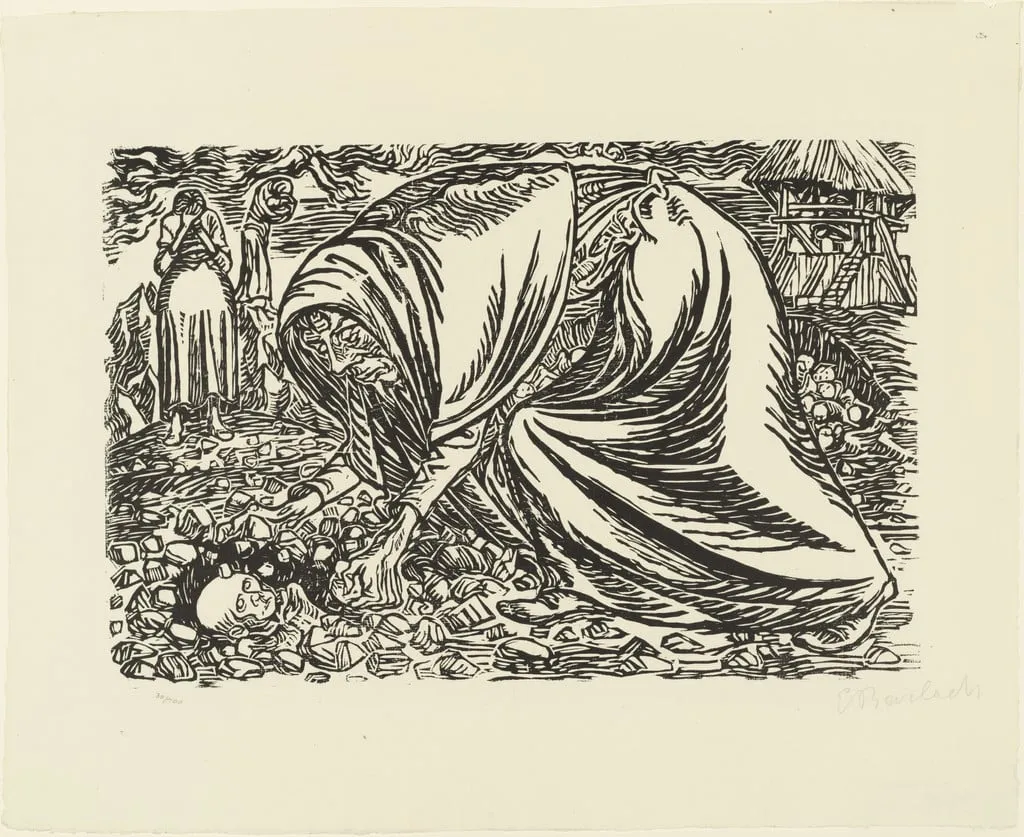
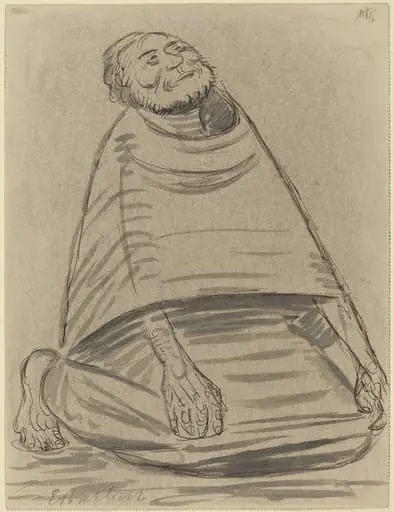
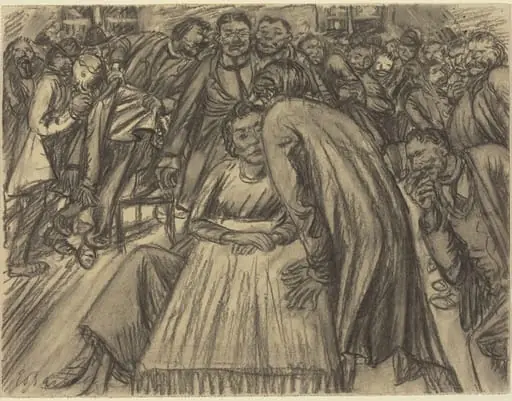
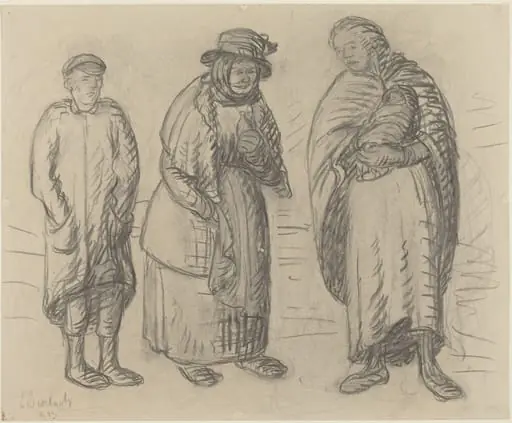
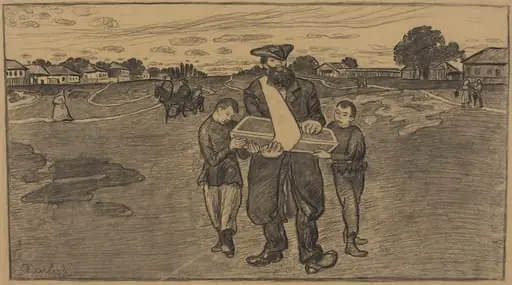
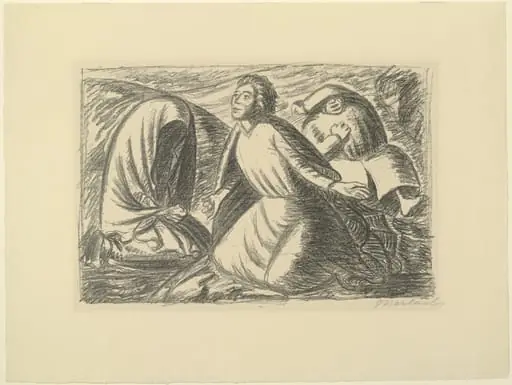
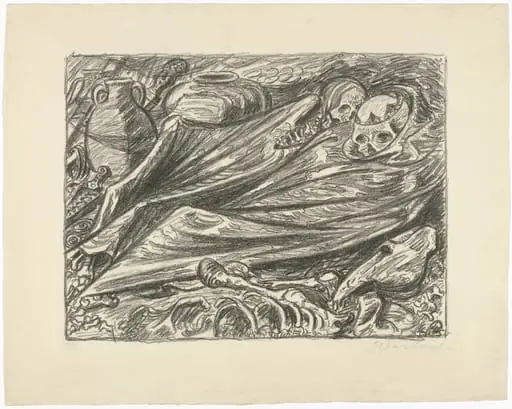
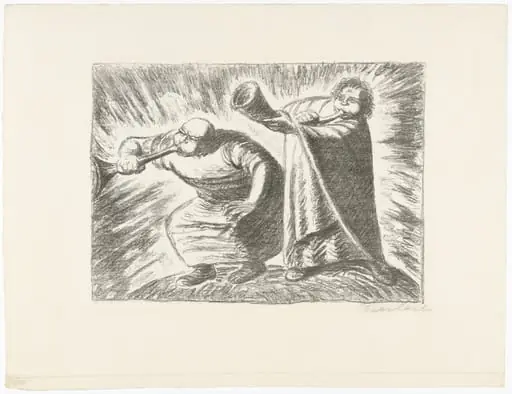
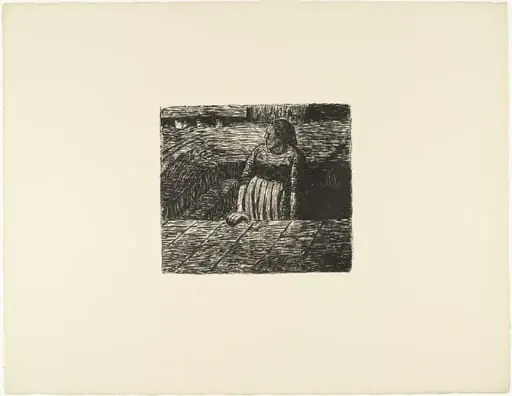
Untitled is an ink print by Ernst Barlach. It dates from 1919 and is held in the collection of the Museum of Modern Art.
About this work
Overview
Ernst Barlach produced this 1919 woodcut in the immediate aftermath of World War I, as he turned toward themes of suffering and quiet resilience.
Ernst Barlach produced this 1919 woodcut in the immediate aftermath of World War I, as he turned toward themes of suffering and quiet resilience. Working in printmaking, sculpture, and literature, he developed a visual language that fused observed reality with emotional intensity. This piece belongs to a series that challenged prevailing social norms and later drew condemnation from Nazi authorities, who deemed his work ideologically unacceptable.
Subject & Meaning
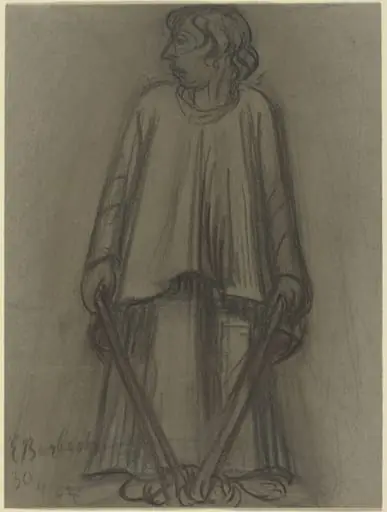
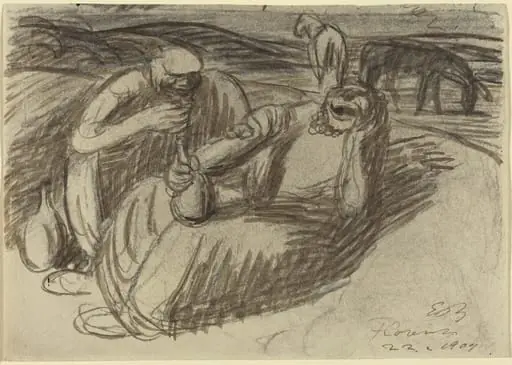
The scene depicts a group of figures in a dim forest clearing: a seated person wrapped in a heavy cloak, a standing figure nearby, a tethered horse, and a child lying on the ground. The arrangement suggests exhaustion, vigilance, or mourning. No narrative is spelled out, but the stillness and isolation evoke a sense of communal endurance amid loss. The absence of overt action invites contemplation rather than drama.
Technique & Style
Barlach carved directly into a woodblock, using bold, uneven lines to create deep shadows and textured surfaces. The roughness of the cuts amplifies the emotional weight of the scene, rejecting polished realism in favor of expressive distortion. The high contrast between inked areas and blank space heightens the sense of isolation and gravity, characteristic of German Expressionist printmaking of the era.
History & Provenance
Created in 1919, this woodcut emerged from Barlach’s postwar artistic shift toward humanist themes. By the 1930s, Nazi officials classified his work as 'degenerate,' removing it from museums and banning its exhibition. Many of his prints were destroyed or dispersed, making surviving examples rare. This piece survived through private collections, preserving its testimony against ideological censorship.
Context
Barlach’s work developed alongside broader German Expressionist movements that rejected prewar idealism in favor of raw emotional truth. The trauma of World War I deeply influenced his imagery, as did his pacifist convictions. His focus on marginalized or weary figures contrasted sharply with nationalist propaganda, positioning his art as a quiet counter-narrative to the era’s militarism.
Legacy
Barlach’s woodcuts, including this one, remain significant for their unflinching humanity and technical innovation. Though suppressed during the Nazi regime, his work was later reclaimed as a vital part of 20th-century German art. The rawness of his carving technique and his commitment to depicting vulnerability continue to influence artists engaged with themes of war, memory, and resilience.
Artist & collection
Artist
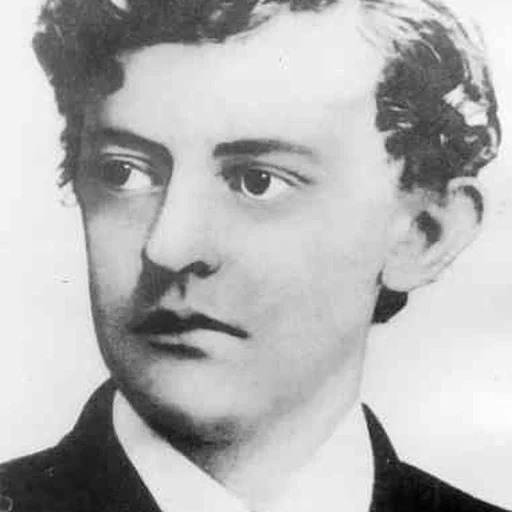
Ernst Heinrich Barlach (2 January 1870 – 24 October 1938) was a German expressionist sculptor, medallist, printmaker and writer.