Artwork
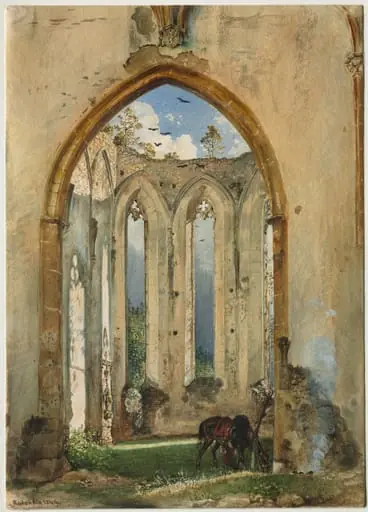
A Portal of a Church
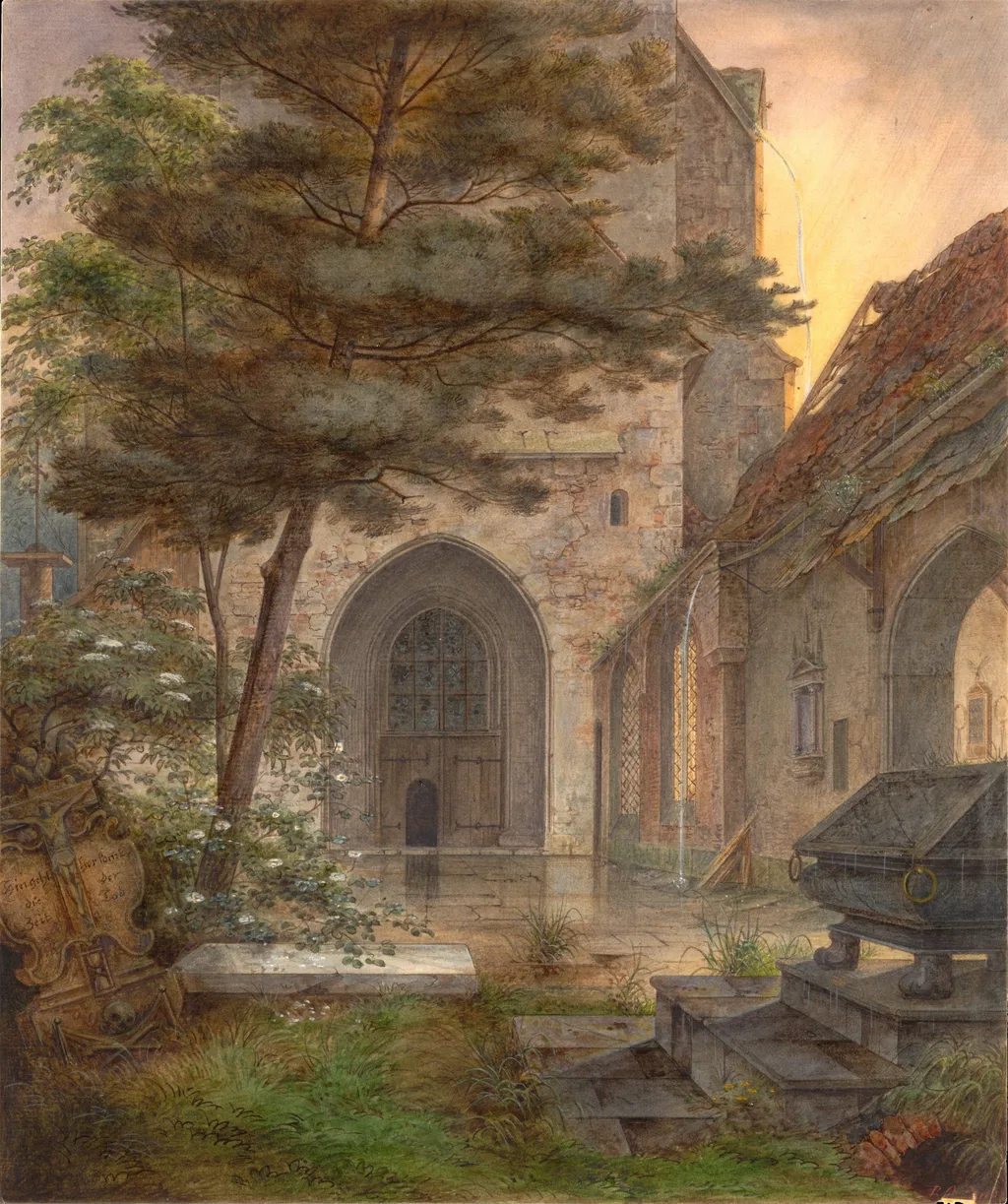
A Portal of a Church is an unspecified painting by the Biedermeier artist Ernst Ferdinand Oehme. It dates from 1850 and is held in the collection of the Metropolitan Museum of Art.
About this work
Overview
Ernst Ferdinand Oehme painted *A Portal of a Church* circa 1850, capturing the quiet grandeur of a Gothic church entrance.
Ernst Ferdinand Oehme painted *A Portal of a Church* circa 1850, capturing the quiet grandeur of a Gothic church entrance. Though associated with the Romantic tradition, the work aligns with the Biedermeier sensibility—reserved, detailed, and focused on intimate, contemplative moments. The scene avoids dramatic narrative, instead offering a still, meditative view of architecture nestled within nature. It is now part of The Metropolitan Museum of Art’s collection.
Subject & Meaning
The painting centers on a weathered stone archway with a wooden door, framed by dense, softly rendered vegetation. No figures appear, emphasizing solitude and timelessness. The portal, neither grand nor ruined, suggests a threshold between the secular and sacred, rendered with quiet reverence. The absence of human presence invites reflection rather than devotion, aligning with Biedermeier’s preference for understated spiritual quietude.
Technique & Style
Oehme employed fine brushwork to articulate the texture of carved stonework and the delicate interplay of leaves and branches. Light filters through the canopy in warm, diffused tones, casting subtle shadows that model the arch’s contours. The sky, painted in pale gold, enhances the sense of late afternoon stillness. His technique prioritizes atmospheric harmony over theatrical contrast, reflecting a restrained Romanticism rooted in observation.
History & Provenance
Created in the mid-19th century, the painting emerged during a period when German artists increasingly turned to local landscapes and architectural remnants as subjects of quiet contemplation. It entered The Metropolitan Museum of Art’s collection through documented acquisition, likely as part of broader efforts to expand European Romantic and Biedermeier holdings in the early 20th century.
Context
In the 1850s, German art was shifting from grand historical themes toward domestic and architectural intimacy. Biedermeier artists like Oehme favored serene, uneventful scenes that resonated with middle-class values of order and tranquility. This painting reflects that trend, using the church not as a symbol of institutional power but as a peaceful, enduring presence within the natural world.
Legacy
Oehme’s *A Portal of a Church* exemplifies a quiet strand of 19th-century German painting that valued precision and mood over spectacle. While not widely known outside specialist circles, it remains a representative work of Biedermeier aesthetics—emphasizing restraint, craftsmanship, and the emotional weight of ordinary architectural forms. Its preservation in a major museum underscores its role in documenting this nuanced artistic current.
Own this work as a print
Artist & collection
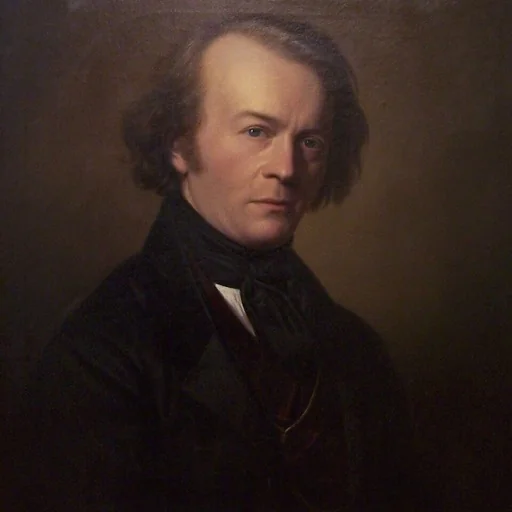
Artist
Ernst Ferdinand Oehme (23 April 1797, Dresden – 10 April 1855, Dresden) was a German Romantic painter and illustrator who specialized in moody landscapes with architectural elements.

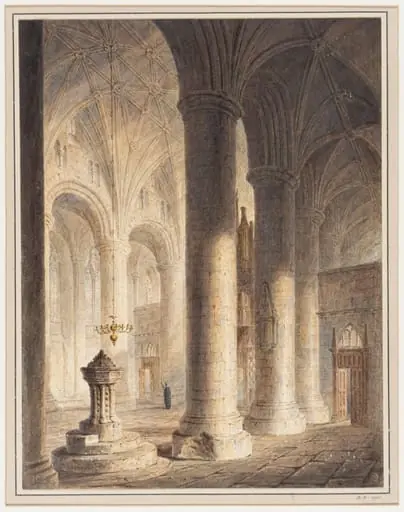 Tewkesbury Abbey
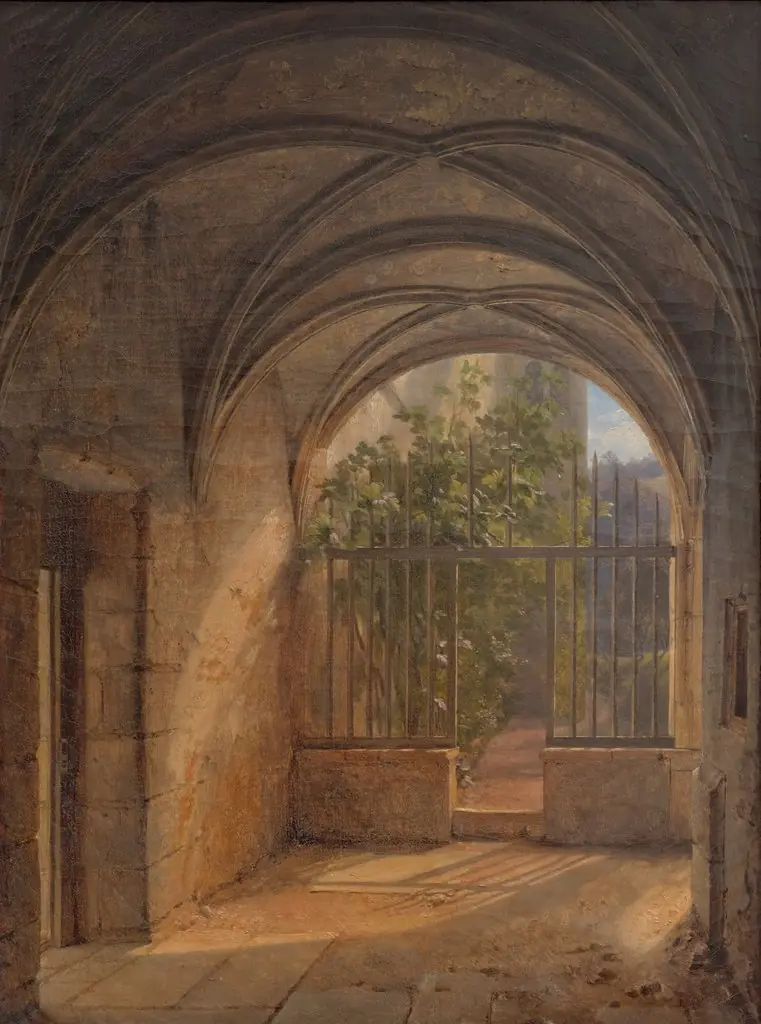 Monastery Interior
 Interior of St Wolfgang's Church in Rothenburg
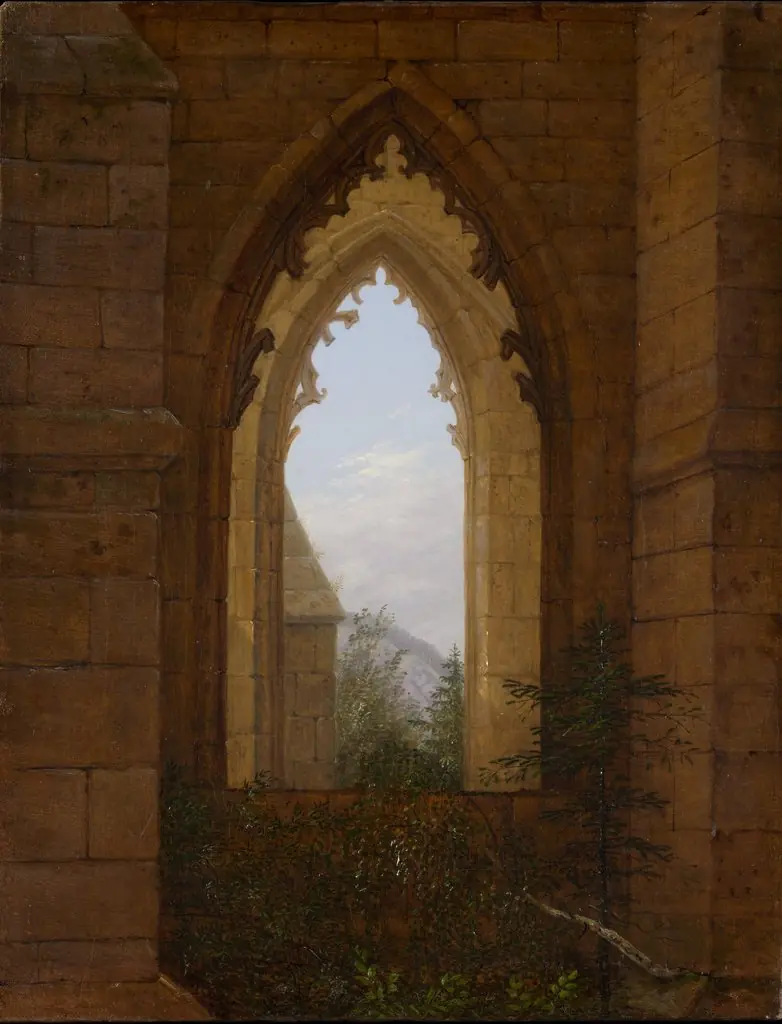 Gothic Windows in the Ruins of the Monastery at Oybin
 In a town
 Doorway of a ruined abbey
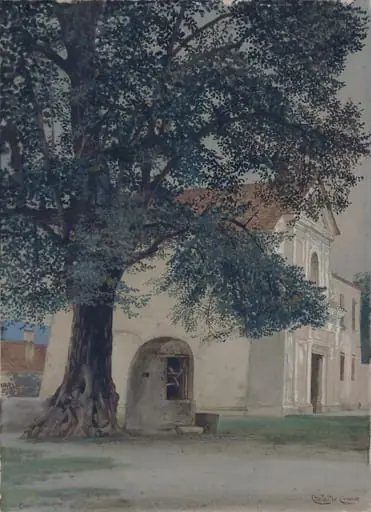 View at La Cava, near Salerno, South Italy
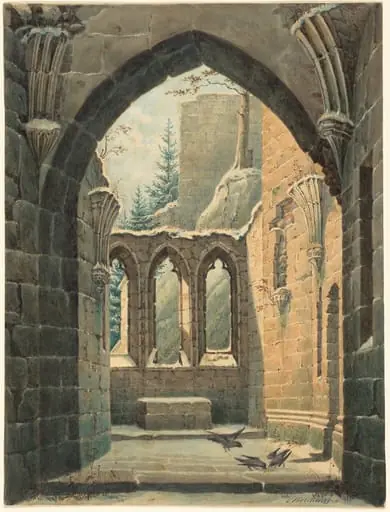 Ruins of the Oybin Monastery in Winter
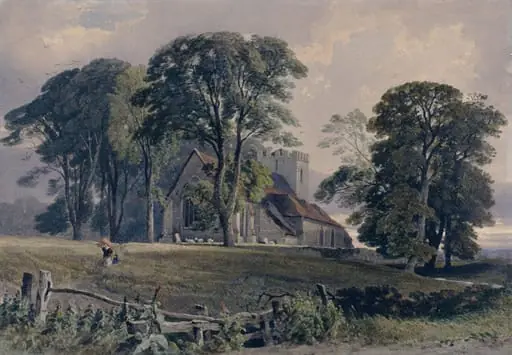 A Country Church
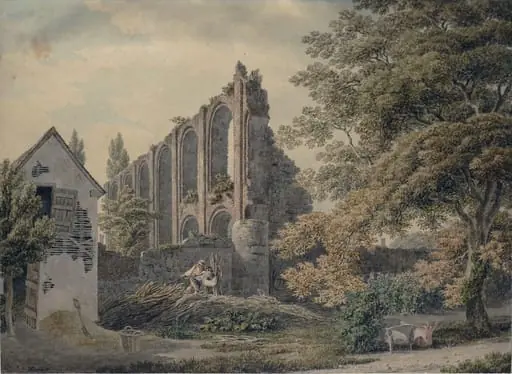 Ruins of St. Botolph's Church, Colchester
 Ruin of a Church
 A Mill in Odense