Artwork
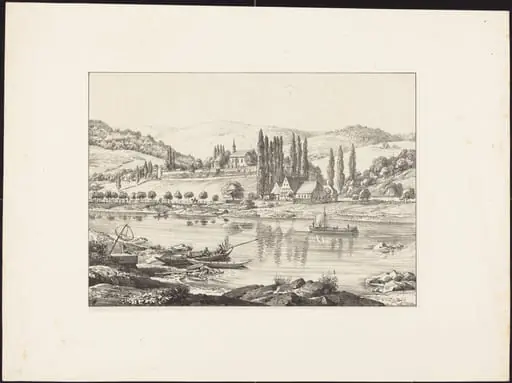
The Convent of Neuburg from Haarlass
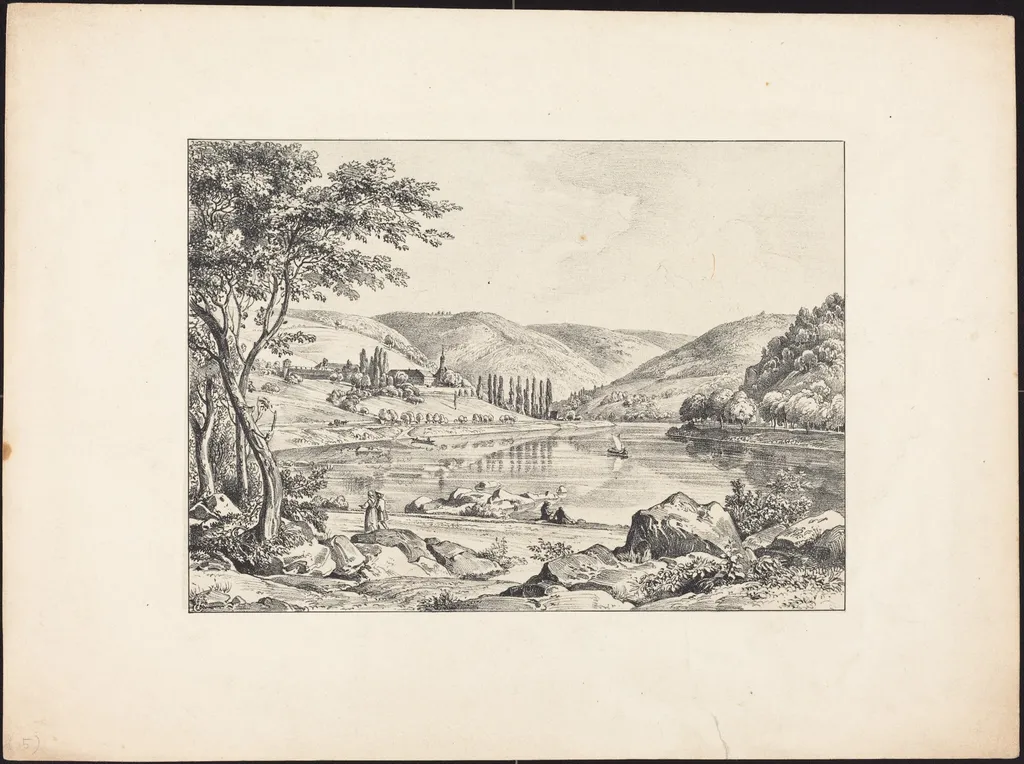
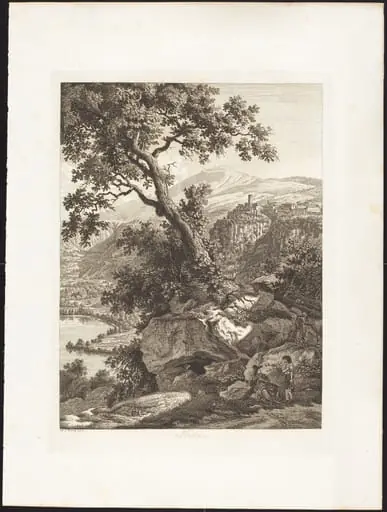
The Convent of Neuburg from Haarlass is an ink print by the Romanticist artist Ernst Fries. It dates from 1829 and is held in the collection of the National Gallery of Art.
About this work
Overview
The Convent of Neuburg from Haarlass is a 1829 lithograph on chine collé by Ernst Fries, a German artist associated with Heidelberg Romanticism.
Subject & Meaning
The print depicts a serene river landscape with a village and church steeple on the far bank, and a solitary figure standing near the water's edge, gazing out over the surrounding terrain.
Technique & Style
Fries employed fine lines to capture details such as water ripples and rock textures, a characteristic technique of early 19th-century prints, reflecting a blend of Romantic and emerging Realist influences.
History & Provenance
Created when Fries was likely in his early thirties, this work is part of a body of art produced before his death at age 32, showcasing his skill across mediums.
Artist & collection
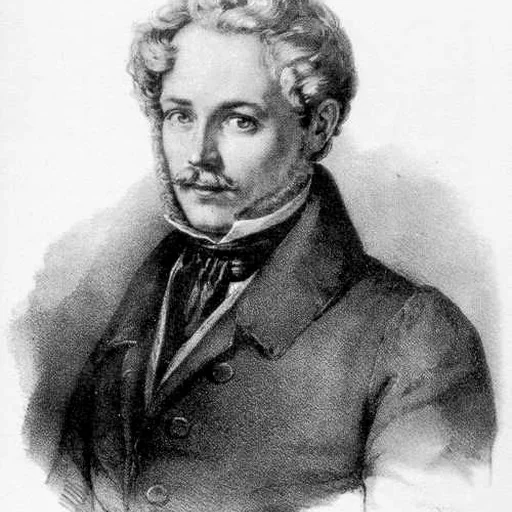
Artist
Ernst Fries (22 June 1801, Heidelberg – 11 October 1833, Karlsruhe) was a German painter, draftsman, watercolourist, etcher, printmaker, and lithograph.

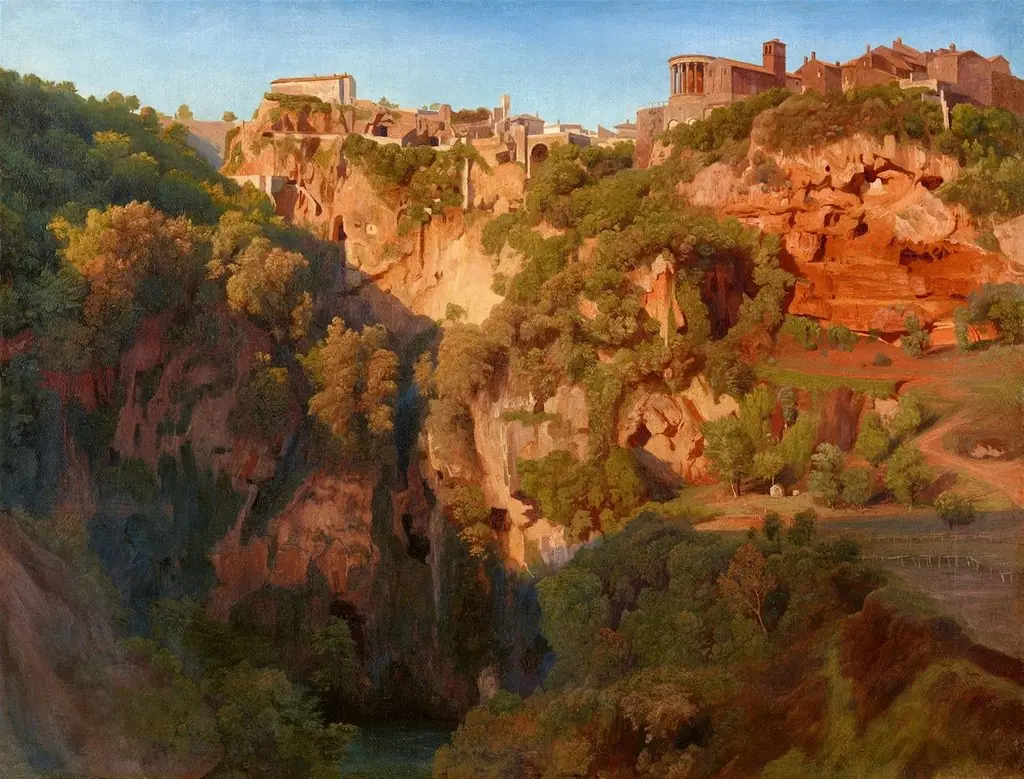 The Waterfalls at Tivoli with the Ponte Lupo, Temple of Vesta, and Temple of Sibyl The Waterfalls at Tivoli with the Ponte Lupo, Temple of Vesta, and Temple of Sibyl
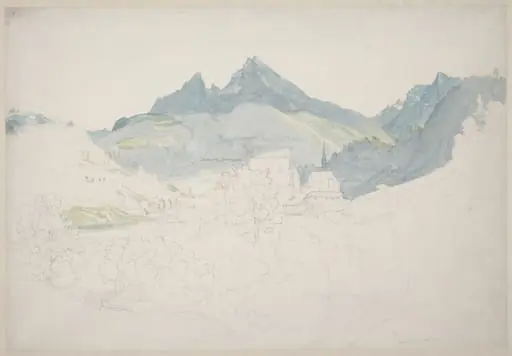 Berchtesgaden with the Watzmann Peak in the Distance
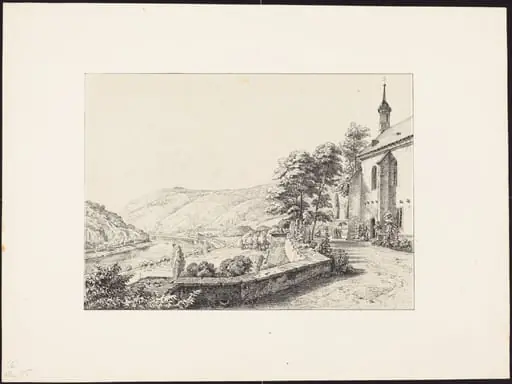 The Convent Terrace
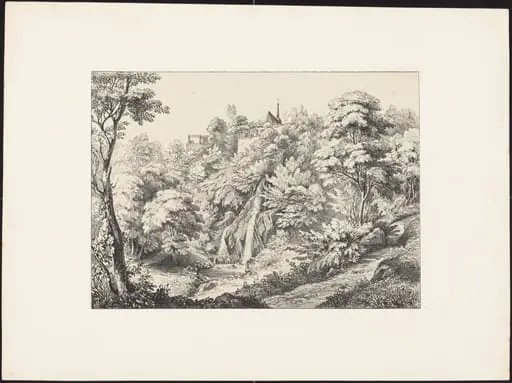 Rear View of the Convent with Waterfall
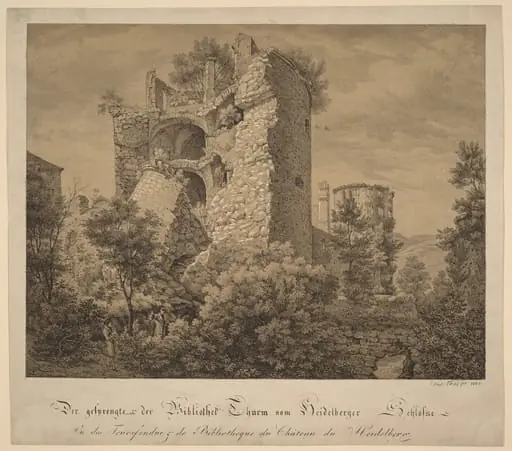 Der Gesprengte und der Bibliotheke Thurm von Heidelberger Schloß (The Exploded Tower and the Library of Heidelberg Castle)
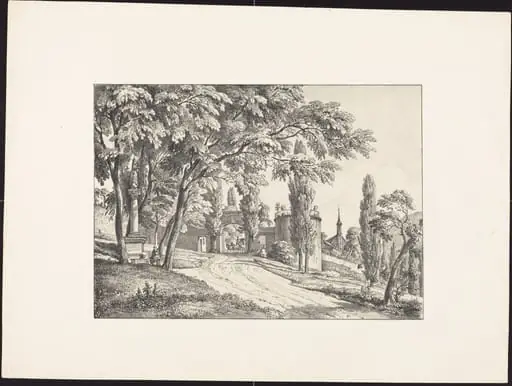 Entrance to the Convent Courtyard
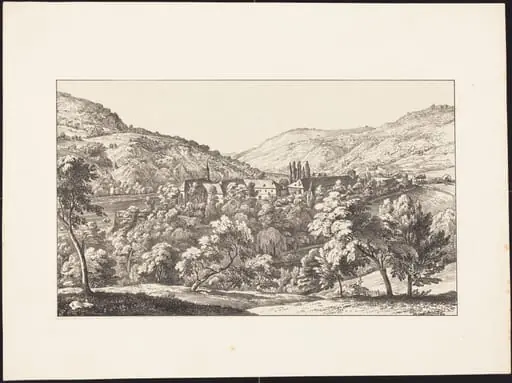 View of the Convent of Neuberg from the Summit
 The Convent of Neuberg from Schlierbach