Artwork
View of the Convent of Neuberg from the Summit
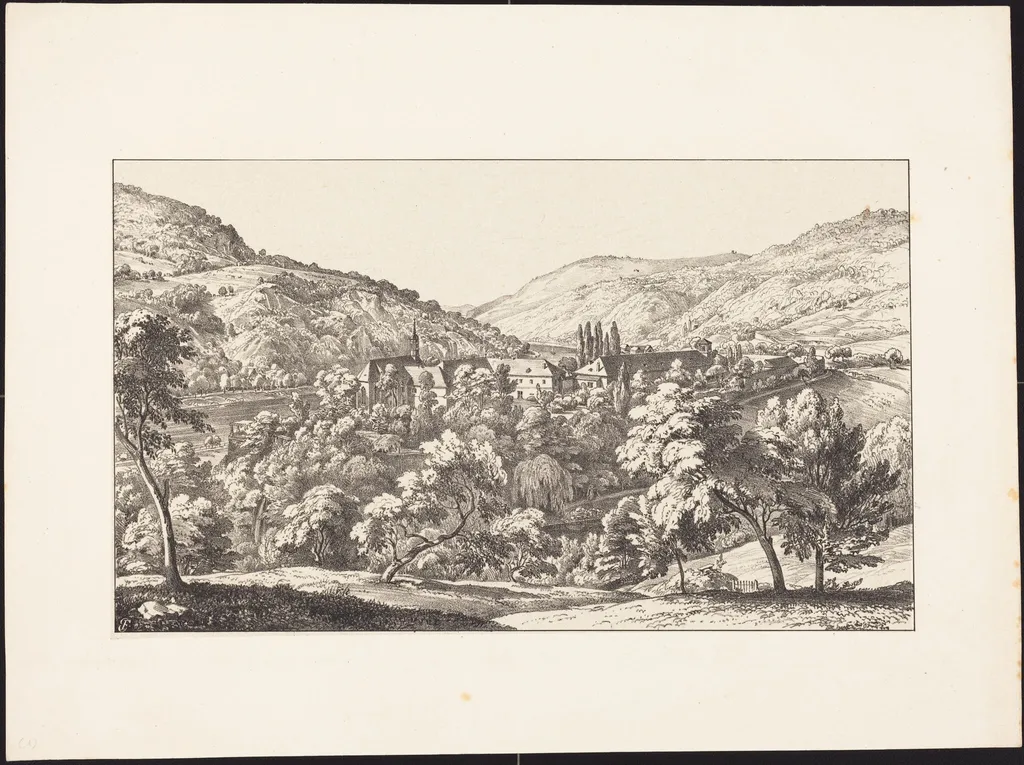
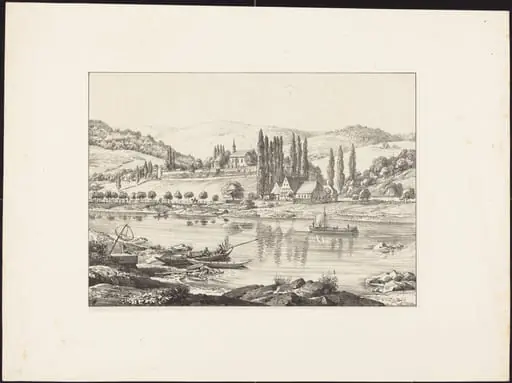
View of the Convent of Neuberg from the Summit is an ink print by the Romanticist artist Ernst Fries. It dates from 1829 and is held in the collection of the National Gallery of Art.
About this work
Overview
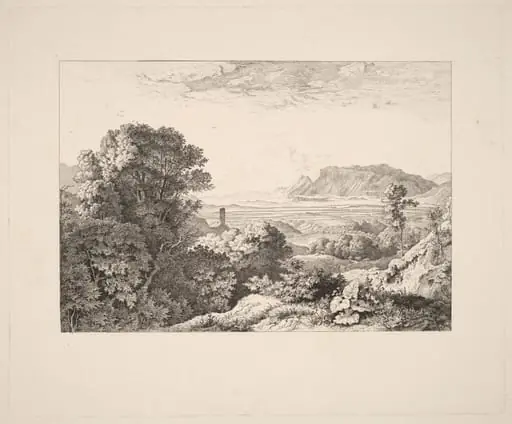
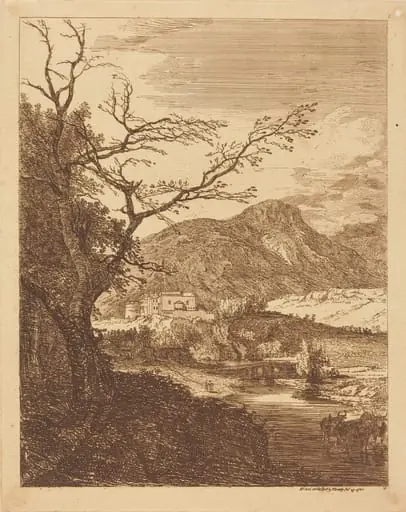
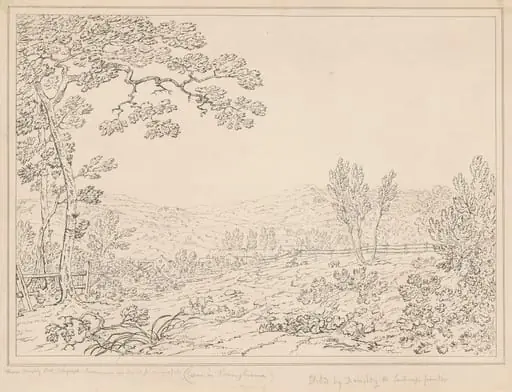
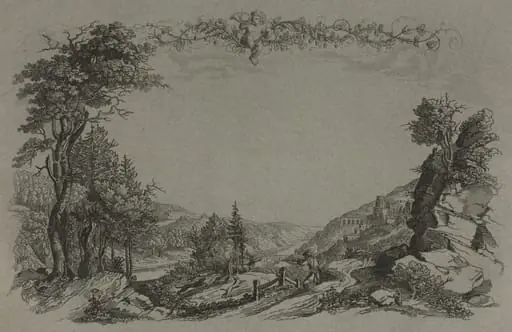
Ernst Fries produced the lithographic print *View of the Convent of Neuberg from the Summit* in 1829. Executed on chine collé, the work presents a wintery village scene set within a valley, its rooftops and trees blanketed in snow. The composition balances natural and built elements, offering a calm perspective from an elevated viewpoint.
Subject & Meaning
The image captures a modest settlement framed by rising hills, with a central church spire rising above the clustered houses. A winding path, flanked by leafless branches, leads the eye through the composition, suggesting a quiet journey through the landscape. The snowy atmosphere emphasizes stillness and the passage of time within a rural setting.
Technique & Style
The piece reflects a transitional aesthetic, retaining Romantic sensitivity to nature while moving toward a more precise, realist observation.
Fries employed lithography on a thin paper support (chine collé), allowing fine linear work that mimics hand‑drawn detail. Delicate lines delineate individual leaves, shadows, and architectural features, while the tonal contrasts convey the crispness of snow. The piece reflects a transitional aesthetic, retaining Romantic sensitivity to nature while moving toward a more precise, realist observation.
History & Provenance
Created during the later phase of the Heidelberg Romanticism circle, the print marks Fries’s shift from painting to printmaking. Although specific ownership records are limited, the work has been documented in 19th‑century collections of German landscape prints and remains cited in studies of Fries’s oeuvre as an example of his print practice.
Context
The early 1820s saw German artists exploring the interplay between idealized scenery and emerging realist concerns. Fries’s focus on a specific convent and its surrounding village aligns with contemporary interest in documenting regional architecture and topography, situating the work within broader debates about nature, national identity, and artistic representation.
Legacy
*View of the Convent of Neuburg from the Summit* illustrates Fries’s contribution to the development of lithography as a vehicle for detailed landscape imagery. The print’s meticulous rendering of winter light and architecture influenced later German printmakers who sought to balance poetic atmosphere with observational accuracy.
Artist & collection
Artist
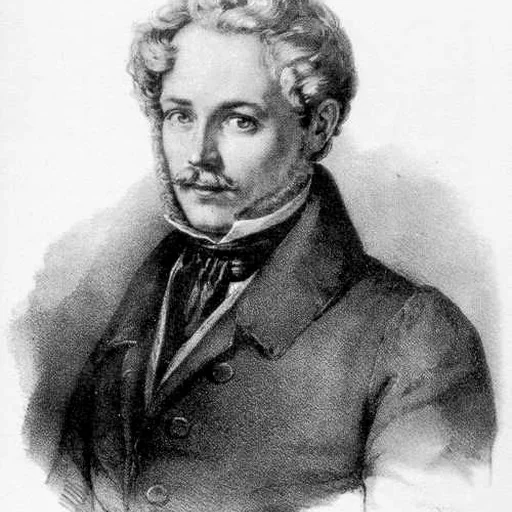
Ernst Fries (22 June 1801, Heidelberg – 11 October 1833, Karlsruhe) was a German painter, draftsman, watercolourist, etcher, printmaker, and lithograph.

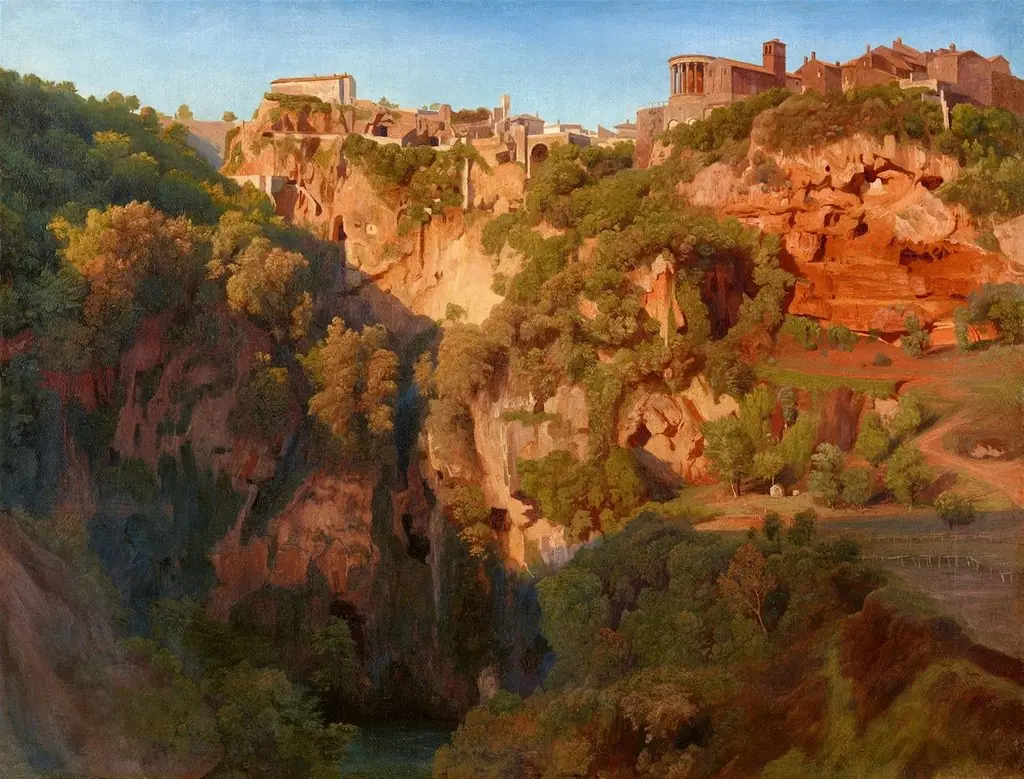 The Waterfalls at Tivoli with the Ponte Lupo, Temple of Vesta, and Temple of Sibyl The Waterfalls at Tivoli with the Ponte Lupo, Temple of Vesta, and Temple of Sibyl
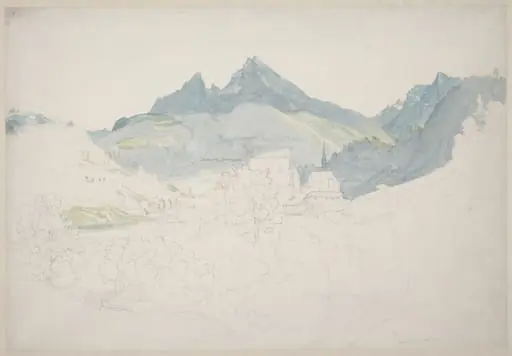 Berchtesgaden with the Watzmann Peak in the Distance
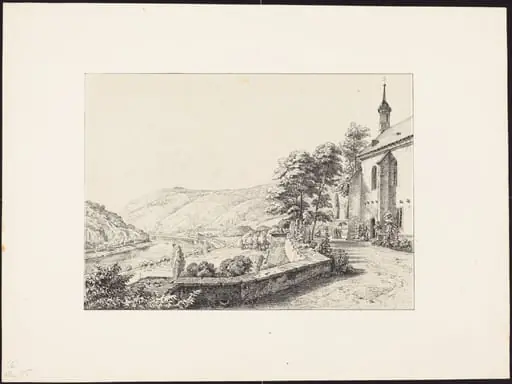 The Convent Terrace
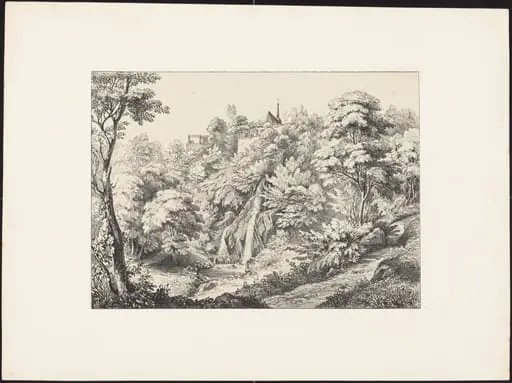 Rear View of the Convent with Waterfall
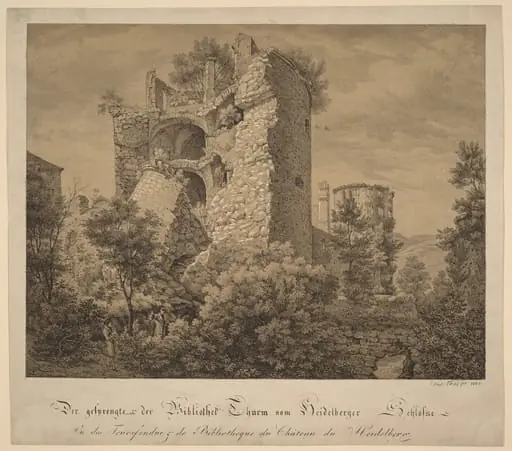 Der Gesprengte und der Bibliotheke Thurm von Heidelberger Schloß (The Exploded Tower and the Library of Heidelberg Castle)
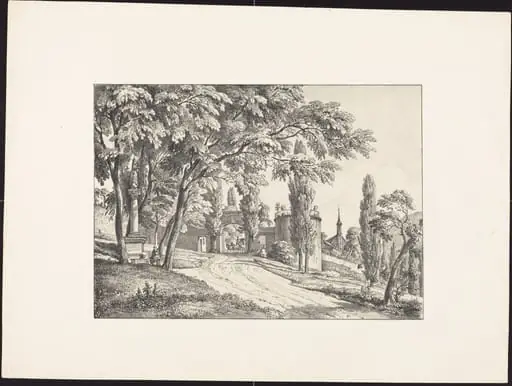 Entrance to the Convent Courtyard
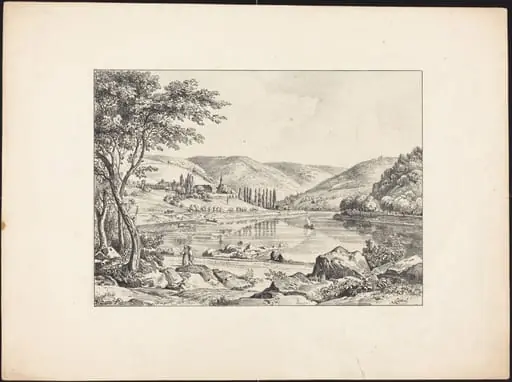 The Convent of Neuburg from Haarlass
 The Convent of Neuberg from Schlierbach